

Motmot

マガン 対 カリガネ

Anser albifrons 対 Anser erythropus

マガンとカリガネのクイズ
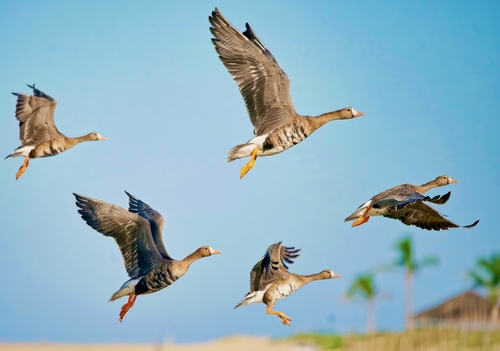
マガン (Anser albifrons) マガン
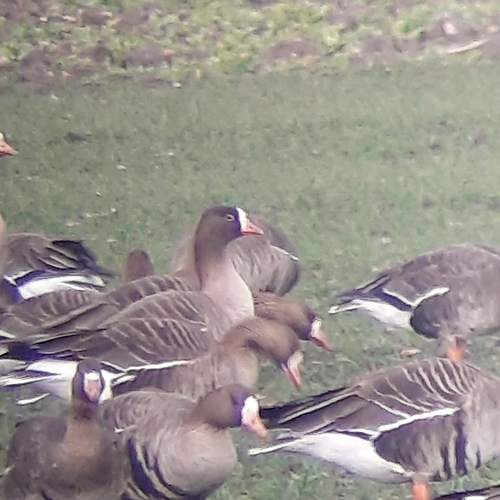
カリガネ (Anser erythropus) カリガネ

メディア

読み込み中…

要点

マガンとカリガネを区別する最も信頼できるフィールドマークは、Lesserに見られる明確な黄色のアイリングと、頭頂に達するより広範な白い顔のブレイズの存在です。Greaterにはこれがありません。サイズも強い手がかりです:Lesserは著しく小さく、マガモよりわずかに大きい程度ですが、Greaterはより大きく、首が長いガンです。両種はオレンジ色の脚とくちばしの基部に白いブレイズを持っていますが、Lesserの小さく、よりコンパクトな構造と独特のアイリングは、どの年齢でも診断的です。飛行中または静止中は、Lesserの短いくちばしと丸い頭を探し、対してGreaterの長く、ピンクがかったくちばしとより傾斜のある顔を見てください。未熟な鳥と成鳥は混同されることがありますが、アイリングと顔のブレイズはすべての羽色で信頼できます。

識別のコツ

  1. 黄色のアイリング(Lesserのみ): 最も診断的なマーク—カリガネのすべての年齢と羽色に存在し、Greaterにはありません。良い光の中で探してください。
  2. 顔のブレイズの形状: Lesserの白いブレイズは頭頂まで伸びており、広く高い額を形成します;Greaterのブレイズは小さく、頭頂には達しません。
  3. サイズと構造: Lesserは非常に小さく、コンパクトな体、短い首、丸い頭を持ち、マガモよりわずかに大きい程度です。Greaterは明らかにより大きく、首が長く、体も長いです。
  4. くちばしの形状と色: Lesserのくちばしは短く、太く、ガンとしては相対的に小さいです;Greaterのくちばしは長く、ピンクがかっており、より目立ちます。くちばしの色は変動しますが、構造は一貫しています。
  5. 腹部の縞模様: 両種は腹部に黒い縞模様を示しますが、その範囲は非常に変動し、区別には信頼できません。
  6. 脚の色: 両方ともオレンジ色の脚を持っています—これを区別には使用しないでください。
  7. 上翼の覆羽: 両方ともハイイロガンとは異なり、マウスグレーの上翼の覆羽を持っていますが、これではLesserをGreaterから区別できません。
  8. 飛行中の印象: Lesserはコンパクトに見え、短い首と丸い頭を持っています;Greaterは飛行中や地上で長く、重そうに見えます。
  9. 幼鳥/未熟な鳥: 黄色のアイリングと顔のブレイズの形状は信頼できます;これらの年齢での区別のための特異な上翼や飛行のマークは記載されていません。
  10. 鳴き声: Greaterの高音のカッカッという声が記載されていますが、Lesserの声は詳細に記載されていません—注意して使用してください。
  11. 生息地と文脈: Lesserはヨーロッパとアジアのほとんどで非常に稀です;Greaterの群れの中にいる小さく、コンパクトな白前ガンは常にアイリングとブレイズを確認する必要があります。
  12. 性別と年齢: 両性は似ています;サイズと顔の特徴はすべての年齢と性別で信頼できます。
  13. 落とし穴: 腹部の縞模様や脚の色に頼らないでください。くちばしの色は重なることがありますが、くちばしのサイズと形状は一貫しています。
  14. 照明: 黄色のアイリングは鈍い均一な光の中で最も明らかです;明るい太陽の下では見えにくくなることがあります。
  15. ハイイロガンとの比較: 両方の白前ガンはオレンジ色の脚とマウスグレーの上翼を持っていますが、ハイイロガンの肉色の脚と青灰色の上翼とは異なります—これらのマークをGreaterとLesserを区別するために必要なものと混同しないでください。

大きさ

マガンはかなり大きく、長さ64–81 cm、翼幅130–165 cm、体重は最大3.3 kgです。カリガネははるかに小さく、長さ53–66 cm、翼幅120–135 cm、体重は約1.8 kgです。フィールドでは、Lesserはしばしばマガモよりわずかに大きい程度に見えますが、Greaterは典型的で頑丈なガンです。両種が一緒にいるときにその違いが最も明らかですが、単独でもLesserのコンパクトさと短い首が際立ちます。

羽色

両種はオレンジ色の脚、マウスグレーの上翼の覆羽、くちばしの基部に白いブレイズを共有していますが、重要な違いがあります。成鳥のカリガネは目立つ黄色のアイリングと、頭頂まで伸びる白い顔のブレイズを持っていますが、Greaterではブレイズが顔の下部で止まり、アイリングはありません。両方とも黒い腹部の縞模様を示しますが、その範囲は変動し、区別には信頼できません。くちばしの色は異なります:Greaterは通常ピンクがかったくちばしを持ち(時には爪の部分に暗い色合いがあることもあります)、Lesserのくちばしは短く、太く、しばしばピンクがかっていますが、相対的に小さいです。幼鳥と未熟な羽色は飛行のマークについて詳細に記載されていませんが、顔のパターンとアイリングはすべての年齢で最良の手がかりです。Greaterの亜種内には上翼の覆羽の縞模様に微妙な違いがありますが、これらはLesserから区別するためには関連性がありません。

行動

行動はこれら二種の間で強い区別要因ではありません。両方とも群れを作り、しばしば見られ、開けた野原や湿地で餌を食べます。Lesserは短い首とコンパクトな体型のため、より警戒しているように見えることがありますが、これは微妙で、構造的および羽色のマークと組み合わせて使用するのが最良です。

生息環境

生息地の重複は広範で、特に移動と冬において顕著です。両種は北方のツンドラ地域で繁殖し、開けた湿地、湖、農地で冬を越します。Lesserはヨーロッパとアジアでは非常に稀で、小さく散在する繁殖集団と再導入の試みしかありません。ヨーロッパのほとんどでは、Lesserに出会うことは広く分布しているGreaterと比較して異常です。

声

マガンは高音のカッカッという鳴き声で知られ、しばしば「ヘー、ヘー」と表現され、音符の間に明確な区切りがあります。Lesserの声については詳細な記述がないため、鳴き声は特異で知られている場合を除き、信頼できる区別要因ではありません。

より良い説明を送る

比較と同じ項目を使ってください。文章はすぐに公開されます。

The most reliable field mark to separate Greater and Lesser White-fronted Geese is the presence of a distinct yellow eye-ring and a more extensive white facial blaze reaching the crown on the Lesser, which the Greater lacks. Size is also a strong clue: Lesser is notably smaller, barely larger than a Mallard, while Greater is a bulkier, longer-necked goose. Both species have orange legs and a white blaze at the bill base, but the Lesser’s smaller, more compact structure and unique eye-ring are diagnostic at any age. In flight or at rest, look for the Lesser’s shorter bill and rounder head, versus the Greater’s longer, pinkish bill and more sloping face. Immature and adult birds can be confused, but the eye-ring and facial blaze are reliable in all plumages.

  1. Yellow eye-ring (Lesser only): The most diagnostic mark—present in all ages and plumages of Lesser White-fronted Goose, absent in Greater. Look for it in good light.
  2. Facial blaze shape: Lesser’s white blaze extends up to the crown, forming a broad, high forehead; Greater’s blaze is smaller and does not reach the crown.
  3. Size and structure: Lesser is much smaller, with a compact body, short neck, and rounder head—barely larger than a Mallard. Greater is noticeably bulkier, longer-necked, and longer-bodied.
  4. Bill shape and color: Lesser’s bill is short, stubby, and proportionally small for a goose; Greater’s bill is longer, pinkish, and more prominent. Bill color is variable but structure is consistent.
  5. Belly barring: Both species show black bars on the belly, but the extent is highly variable and not reliable for separation.
  6. Leg color: Both have orange legs—do not use this for separation.
  7. Upperwing coverts: Both have mouse-grey upperwing coverts, unlike Greylag Goose, but this does not separate Lesser from Greater.
  8. Jizz in flight: Lesser appears compact, with a short neck and rounded head; Greater looks longer and heavier in flight and on the ground.
  9. Juvenile/immature birds: The yellow eye-ring and facial blaze shape remain reliable; no distinctive upperwing or flight marks are described for separation at these ages.
  10. Vocalization: Greater’s high-pitched cackle is described, but Lesser’s voice is not detailed—use with caution.
  11. Habitat and context: Lesser is much rarer in most of Europe and Asia; a small, compact white-fronted goose in a flock of Greaters should always be checked for eye-ring and blaze.
  12. Sex and age: Both sexes are similar in each species; size and facial features are reliable across all ages and sexes.
  13. Pitfalls: Do not rely on belly barring or leg color. Bill color can overlap, but bill size and shape are consistent.
  14. Lighting: The yellow eye-ring is most obvious in dull, even light; in bright sun it may be harder to see.
  15. Comparison with Greylag: Both white-fronted geese have orange legs and mouse-grey upperwings, unlike Greylag’s flesh-colored legs and bluish-grey upperwings—do not confuse these marks with those needed to separate Greater from Lesser.

Greater White-fronted Goose is substantially larger: 64–81 cm in length with a 130–165 cm wingspan, and weighs up to 3.3 kg. Lesser White-fronted Goose is much smaller, at 53–66 cm length, 120–135 cm wingspan, and about 1.8 kg. In the field, Lesser often appears only slightly larger than a Mallard, while Greater is a classic, robust goose. The difference is most obvious when both species are together, but even singly, Lesser’s compactness and short neck stand out.

Both species share orange legs, mouse-grey upperwing coverts, and a white blaze at the bill base, but key differences exist. Adult Lesser White-fronted Geese have a conspicuous yellow eye-ring and a white facial blaze that extends up to the crown, unlike Greater, where the blaze stops lower on the face and there is no eye-ring. Both show black belly bars, but the extent is variable and not reliable for separation. Bill color differs: Greater usually has a pinkish bill (sometimes with a hint of dark at the nail), while Lesser’s bill is shorter and stubbier, often pinkish but proportionally smaller. Juvenile and immature plumages are not described in detail for flight marks, but the facial pattern and eye-ring remain the best clues at all ages. Subtle differences in upperwing covert barring exist within Greater’s subspecies, but these are not relevant for separating from Lesser.

Behavior is not a strong separator between these two species. Both are gregarious, often seen in flocks, and feed in open fields or wetlands. Lesser may appear more alert and upright due to its shorter neck and compact build, but this is subtle and best used in combination with structural and plumage marks.

Habitat overlap is extensive, especially in migration and winter. Both species breed in northern tundra regions and winter in open wetlands, lakes, and agricultural fields. Lesser is much rarer in Europe and Asia, with only small, scattered breeding populations and reintroduction attempts. In most of Europe, encountering a Lesser is unusual compared to the widespread Greater.

Greater White-fronted Goose is known for its high-pitched cackling calls, often described as 'he-he', with a distinct break between notes. There is no detailed description of Lesser’s voice in the notes, so vocalization is not a reliable separator unless the call is distinctive and known.

変更を破棄しますか?

保存していない編集があります。今離れると失われます。

マガン · カリガネ · 苦手な鳥