

Motmot

マガン 対 オカヨシガモ

Anser albifrons 対 Mareca strepera

マガンとオカヨシガモのクイズ
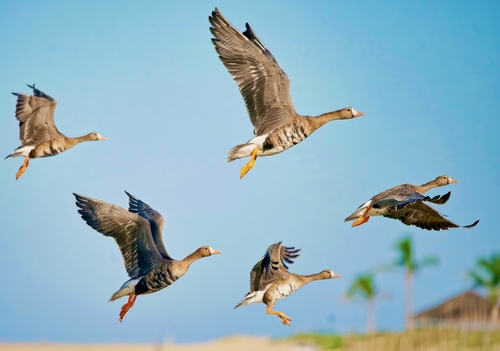
マガン (Anser albifrons) マガン
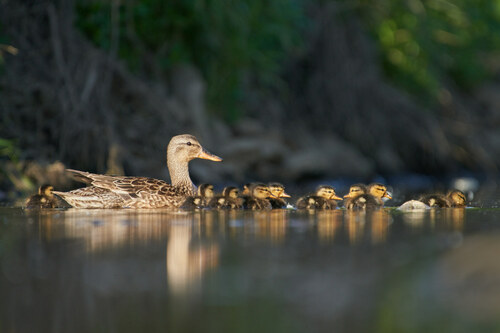
オカヨシガモ (Mareca strepera) オカヨシガモ

メディア

読み込み中…

要点

The most reliable field mark to separate Greater White-fronted Goose from Gadwall is the overall shape and size: Greater White-fronted Goose is a large, heavy-bodied goose with a thick neck and pinkish or orange bill, while Gadwall is a much smaller, slimmer duck with a flatter bill and a striking white wing patch (speculum) visible in flight. In flight, juvenile and adult Gadwalls show a brilliant white speculum on the trailing edge of the wing, while Greater White-fronted Goose shows pale wing bars and a broad white tail tip, especially in the European subspecies. On the ground, the goose's orange legs, white face blaze, and barred underparts contrast with the Gadwall's more subtly patterned, mostly gray-brown plumage. Both species can occur together on wetlands, but their structure and wing patterns are distinct at any age.

識別のコツ

  1. Size and Structure: Greater White-fronted Goose is much larger and bulkier than Gadwall, with a long neck and deep chest. Gadwall is a medium-sized duck with a flat, sloping forehead and shorter neck.
  2. Bill Shape and Color: The goose has a thick, triangular bill that is pinkish or orange-yellow (sometimes with a dark nail), while Gadwall's bill is flatter, narrower, and dark with orange edges in females.
  3. Wing Pattern in Flight (All Ages): Gadwall always shows a brilliant white speculum (inner secondary panel) in flight, bordered by chestnut and black; this is a key duck feature. Greater White-fronted Goose lacks a speculum but shows pale wing bars (from white-tipped coverts) and a broad white tail tip (especially in European birds).
  4. Face Pattern: Greater White-fronted Goose has a distinctive white blaze at the base of the bill, extending up onto the face (but not as far as in Lesser White-fronted Goose). Gadwall never shows a white face blaze.
  5. Underparts: Adult Greater White-fronted Goose shows dark belly bars and blotches on a pale gray breast and belly; Gadwall has a plain or lightly marked belly (female white, male grayish), never barred.
  6. Leg Color: The goose has bright orange legs; Gadwall's legs are duller, usually yellowish or grayish.
  7. Tail Pattern: In the goose, the tail is dark with a broad white tip and sides (especially in European birds); Gadwall's tail is plain, without a strong white tip.
  8. Plumage Texture: The goose's upperparts are uniformly gray-brown with pale fringes (more obvious in European subspecies), while Gadwall males are finely patterned gray with a black rear and chestnut wing coverts; females are mottled brown.
  9. Sexual Dimorphism: Gadwall shows clear male/female differences (male gray, female brown), while both sexes of the goose look similar.
  10. Voice: Listen for the goose's loud, nasal cackling 'he-he' calls, versus Gadwall's quieter grunts and quacks.
  11. Feeding Behavior: Geese graze on land or swim slowly; Gadwall dabbles or dives for food, often upending in shallow water.
  12. Habitat Context: If the bird is feeding in a grassy field, goose is more likely; if dabbling in a marsh or lake, Gadwall is more likely.
  13. Flock Structure: Geese often form loose, noisy flocks; Gadwall is less gregarious, often in pairs or small groups.
  14. Pitfalls: Juvenile Gadwall can look plain and brown, but still show the white speculum in flight. Juvenile geese lack strong belly bars but still have the white face blaze and orange legs.
  15. When Marks Fail: In poor light, rely on size, shape, and wing pattern in flight. The white speculum of Gadwall is visible even at a distance, while the goose's face blaze and orange legs are reliable up close.

大きさ

Greater White-fronted Goose is much larger: 64–81 cm long, wingspan 130–165 cm, and weighs 1.93–3.31 kg [wikipedia][avonet]. Gadwall is 47–58 cm long, wingspan 78–85 cm, and weighs 0.85–0.99 kg [wikipedia][avonet]. The goose is bulkier, with a deeper chest and longer neck, while Gadwall is compact and duck-shaped. Even at a distance, the size gap is obvious if both are seen together.

羽色

Juvenile and adult Gadwall of both sexes show a brilliant white speculum (the inner secondary feathers) on the trailing edge of the wing, visible in flight and often at rest. This white panel is absent in Greater White-fronted Goose, which instead shows pale wing bars formed by broad white tips to the greater coverts (especially in the European subspecies, A. a. albifrons) and a broad white tail tip. Gadwall males in breeding plumage are patterned gray with a black rear end and chestnut wing coverts, while females are mottled brown with a white belly and orange-edged bill. Greater White-fronted Goose adults have a gray-brown body, white face blaze at the bill base, and dark belly bars (variable, but often present); legs are bright orange. The goose's upperwing coverts are mouse-colored, and the tail is dark with a broad white tip (narrower in Greenland birds). Bill color in the goose is pinkish or orange-yellow, never dark like a Gadwall's. Gadwall never shows a white face blaze or belly bars.

行動

Greater White-fronted Goose is typically seen grazing on land or swimming in loose flocks, often with other geese. Its movements are heavy and deliberate, both on water and in flight. Gadwall is a dabbling duck, feeding by tipping up or occasionally diving, often in small flocks or pairs. Gadwalls are less gregarious than some ducks, and their feeding is more active and agile compared to the goose's grazing. In flight, Gadwall is quick and agile, while the goose is slower and more labored.

生息環境

Both species can occur on open wetlands, lakes, and marshes, but Greater White-fronted Goose is more likely to be seen in open fields or grazing areas near water, especially in migration and winter. Gadwall prefers marshes, lakes with dense fringing vegetation, and is often seen dabbling in shallow water. The goose is more terrestrial, while Gadwall is almost always on or near water.

声

Greater White-fronted Goose gives a high-pitched cackling call, often described as 'he-he', with a distinct break between notes. Gadwall is generally quiet except during courtship; females give a high-pitched quack, and males produce a soft grunt or whistle. The goose's calls are louder, more nasal, and more likely to be heard from a distance.

より良い説明を送る

比較と同じ項目を使ってください。文章はすぐに公開されます。

The most reliable field mark to separate Greater White-fronted Goose from Gadwall is the overall shape and size: Greater White-fronted Goose is a large, heavy-bodied goose with a thick neck and pinkish or orange bill, while Gadwall is a much smaller, slimmer duck with a flatter bill and a striking white wing patch (speculum) visible in flight. In flight, juvenile and adult Gadwalls show a brilliant white speculum on the trailing edge of the wing, while Greater White-fronted Goose shows pale wing bars and a broad white tail tip, especially in the European subspecies. On the ground, the goose's orange legs, white face blaze, and barred underparts contrast with the Gadwall's more subtly patterned, mostly gray-brown plumage. Both species can occur together on wetlands, but their structure and wing patterns are distinct at any age.

  1. Size and Structure: Greater White-fronted Goose is much larger and bulkier than Gadwall, with a long neck and deep chest. Gadwall is a medium-sized duck with a flat, sloping forehead and shorter neck.
  2. Bill Shape and Color: The goose has a thick, triangular bill that is pinkish or orange-yellow (sometimes with a dark nail), while Gadwall's bill is flatter, narrower, and dark with orange edges in females.
  3. Wing Pattern in Flight (All Ages): Gadwall always shows a brilliant white speculum (inner secondary panel) in flight, bordered by chestnut and black; this is a key duck feature. Greater White-fronted Goose lacks a speculum but shows pale wing bars (from white-tipped coverts) and a broad white tail tip (especially in European birds).
  4. Face Pattern: Greater White-fronted Goose has a distinctive white blaze at the base of the bill, extending up onto the face (but not as far as in Lesser White-fronted Goose). Gadwall never shows a white face blaze.
  5. Underparts: Adult Greater White-fronted Goose shows dark belly bars and blotches on a pale gray breast and belly; Gadwall has a plain or lightly marked belly (female white, male grayish), never barred.
  6. Leg Color: The goose has bright orange legs; Gadwall's legs are duller, usually yellowish or grayish.
  7. Tail Pattern: In the goose, the tail is dark with a broad white tip and sides (especially in European birds); Gadwall's tail is plain, without a strong white tip.
  8. Plumage Texture: The goose's upperparts are uniformly gray-brown with pale fringes (more obvious in European subspecies), while Gadwall males are finely patterned gray with a black rear and chestnut wing coverts; females are mottled brown.
  9. Sexual Dimorphism: Gadwall shows clear male/female differences (male gray, female brown), while both sexes of the goose look similar.
  10. Voice: Listen for the goose's loud, nasal cackling 'he-he' calls, versus Gadwall's quieter grunts and quacks.
  11. Feeding Behavior: Geese graze on land or swim slowly; Gadwall dabbles or dives for food, often upending in shallow water.
  12. Habitat Context: If the bird is feeding in a grassy field, goose is more likely; if dabbling in a marsh or lake, Gadwall is more likely.
  13. Flock Structure: Geese often form loose, noisy flocks; Gadwall is less gregarious, often in pairs or small groups.
  14. Pitfalls: Juvenile Gadwall can look plain and brown, but still show the white speculum in flight. Juvenile geese lack strong belly bars but still have the white face blaze and orange legs.
  15. When Marks Fail: In poor light, rely on size, shape, and wing pattern in flight. The white speculum of Gadwall is visible even at a distance, while the goose's face blaze and orange legs are reliable up close.

Greater White-fronted Goose is much larger: 64–81 cm long, wingspan 130–165 cm, and weighs 1.93–3.31 kg [wikipedia][avonet]. Gadwall is 47–58 cm long, wingspan 78–85 cm, and weighs 0.85–0.99 kg [wikipedia][avonet]. The goose is bulkier, with a deeper chest and longer neck, while Gadwall is compact and duck-shaped. Even at a distance, the size gap is obvious if both are seen together.

Juvenile and adult Gadwall of both sexes show a brilliant white speculum (the inner secondary feathers) on the trailing edge of the wing, visible in flight and often at rest. This white panel is absent in Greater White-fronted Goose, which instead shows pale wing bars formed by broad white tips to the greater coverts (especially in the European subspecies, A. a. albifrons) and a broad white tail tip. Gadwall males in breeding plumage are patterned gray with a black rear end and chestnut wing coverts, while females are mottled brown with a white belly and orange-edged bill. Greater White-fronted Goose adults have a gray-brown body, white face blaze at the bill base, and dark belly bars (variable, but often present); legs are bright orange. The goose's upperwing coverts are mouse-colored, and the tail is dark with a broad white tip (narrower in Greenland birds). Bill color in the goose is pinkish or orange-yellow, never dark like a Gadwall's. Gadwall never shows a white face blaze or belly bars.

Greater White-fronted Goose is typically seen grazing on land or swimming in loose flocks, often with other geese. Its movements are heavy and deliberate, both on water and in flight. Gadwall is a dabbling duck, feeding by tipping up or occasionally diving, often in small flocks or pairs. Gadwalls are less gregarious than some ducks, and their feeding is more active and agile compared to the goose's grazing. In flight, Gadwall is quick and agile, while the goose is slower and more labored.

Both species can occur on open wetlands, lakes, and marshes, but Greater White-fronted Goose is more likely to be seen in open fields or grazing areas near water, especially in migration and winter. Gadwall prefers marshes, lakes with dense fringing vegetation, and is often seen dabbling in shallow water. The goose is more terrestrial, while Gadwall is almost always on or near water.

Greater White-fronted Goose gives a high-pitched cackling call, often described as 'he-he', with a distinct break between notes. Gadwall is generally quiet except during courtship; females give a high-pitched quack, and males produce a soft grunt or whistle. The goose's calls are louder, more nasal, and more likely to be heard from a distance.

変更を破棄しますか?

保存していない編集があります。今離れると失われます。

マガン · オカヨシガモ · 苦手な鳥