

Motmot

マガン 対 シジュウカラガン

Anser albifrons 対 Branta hutchinsii

マガンとシジュウカラガンのクイズ
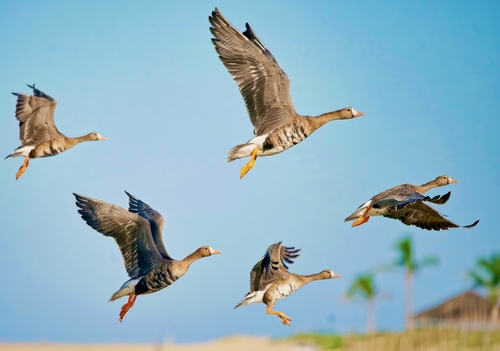
マガン (Anser albifrons) マガン
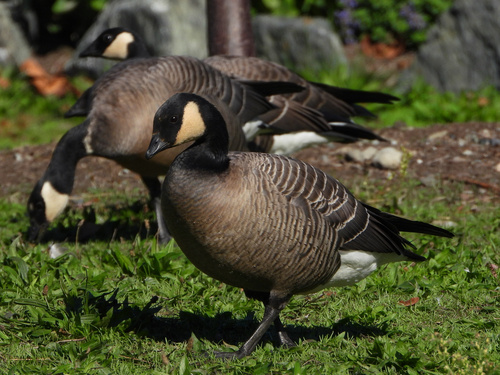
シジュウカラガン (Branta hutchinsii) シジュウカラガン

メディア

読み込み中…

要点

マガンとシジュウカラガンを区別する最も信頼できるフィールドマークは、くちばしの色と顔のパターンの組み合わせです:マガンはピンクがかったくちばしと、くちばしの基部に白いブレイズがありますが、シジュウカラガンは黒いくちばしと黒い首に白い顎ひもがあります。飛んでいるときや休んでいるとき、マガンはオレンジ色の脚と、腹部に縞模様のあるより均一な茶色の体を示しますが、シジュウカラガンは黒い脚と、目を引く黒い首と頭を持つ茶色の体をしています。幼鳥と成鳥の翼のパターンはこの2種の間で強く診断的ではありませんが、全体的な構造と顔のパターンが重要です。サイズは重なることがありますが、マガンは一般的にすべてのシジュウカラガンの亜種の中で最大で、より大きくてがっしりとしています。

識別のコツ

  1. 顔のパターンが重要:マガンはくちばしの基部に白いブレイズがあり(目には達しない)、シジュウカラガンは黒い首と頭に白い顎ひもがあります。これはすべての年齢と距離で最も信頼できるマークです。
  2. くちばしの色と形:マガンはピンクがかった(時にはオレンジ-黄色の)くちばしを持ち、比較的短くて太いです;シジュウカラガンは黒いくちばしを持ち、特に最小の亜種では短くて太いです。くちばしの色は良い光の下で遠くからでも見えます。
  3. 脚の色:マガンは明るいオレンジ色の脚を示します;シジュウカラガンは黒い脚を持っています。これは鳥が歩いたり立ったりしているときに特に役立ちます。
  4. 腹部の縞模様:成鳥のマガンは腹部に黒い斑点や縞模様を示すことが多いですが、これは変動があり、幼鳥にはありません。シジュウカラガンは腹部の縞模様を示しません。
  5. 飛行中の上翼パターン:マガン(特に指名亜種)は上翼の覆い羽に淡いフリンジと太い白い翼帯を示します;シジュウカラガンは強い淡いフリンジや翼帯のないより均一な暗い上翼を持っています。これは微妙で、近くの良い光で見るのが最適です。
  6. 体の色と側面のライン:マガンは広く明るい白い側面のラインと、一般的に暖かい茶色の体を持っています;シジュウカラガンは側面のラインがなく、より均一な茶色です。
  7. 尾のパターン:マガンは広い白い先端と側面を持つ暗い尾を持っています;シジュウカラガンは強い白い先端のないより均一な尾を持っています。
  8. 首と頭の色:シジュウカラガンは黒い首と頭を持ち、茶色の体と強く対照的です;マガンは茶色の首と頭を持ち、くちばしの基部にのみ白いブレイズがあります。
  9. サイズと構造:マガンは一般的に大きく、長い首を持っていますが、大きなシジュウカラガンの亜種との重なりに注意してください。サイズは直接比較または経験をもってのみ使用してください。
  10. 飛行中の印象:マガンは翼が長く、重く、より鈍重に見えます;シジュウカラガンはコンパクトで、短い首を持ち、しばしばより速く羽ばたきます。
  11. 声:マガンは高音で笑う「へへ」という呼び声を出します;シジュウカラガンは高音の鳴き声やきしむ声を出しますが、距離があると混同されることがあります。
  12. 幼鳥の混乱:若いマガンは腹部の縞模様がありませんが、白いブレイズとピンクがかったくちばしを示します;幼鳥のシジュウカラガンは常に顎ひもと黒いくちばしを持っています。
  13. 他のガンとの混合:シジュウカラガンはカナダガンと一緒に見られることが多いです;マガンは他の灰色のガンと一緒にいることがあります。混合群れでは常に顔とくちばしのパターンを確認してください。
  14. 季節と性別:両性は両種で似ています;これらのマークの季節的変動は最小限です。年間を通じて構造的および顔の特徴に焦点を当ててください。
  15. 落とし穴:腹部の縞模様だけに頼らないでください(マガンでは変動があり、幼鳥にはありません);マガンの白いブレイズとシジュウカラガンの顎ひもを混同しないでください—位置と範囲が異なります。

大きさ

マガンは通常、長さ64–81 cm、翼幅130–165 cm、体重1.93–3.31 kgで、より大きいです [wikipedia][avonet]。シジュウカラガンは全体的に小さく、ほとんどの亜種は63–65 cmの長さ範囲、翼幅108–111 cm、体重1.4–2.38 kgです(ただし、最大の亜種はマガンのサイズ範囲の下限に近づくことがあります) [wikipedia][avonet]。ただし、一部のシジュウカラガンの亜種(特にB. h. hutchinsii)は小さなマガンとサイズが重なる可能性があるため、サイズだけでは常に決定的ではありません。

羽色

すべての年齢において、マガンはくちばしの基部に特徴的な白いブレイズ(目には達しない)、オレンジ色の脚、ピンクがかったくちばしを示します。成鳥は腹部に変動する黒い縞模様を持ち、一般的に均一な茶色の体を持ち、上部には淡いフリンジと広い白い側面のラインがあります。飛行中、上翼の覆い羽はマウス色で淡いフリンジがあり、より大きな覆い羽には目立つ白い先端があり、太い翼帯を形成しています(特に指名亜種で)。幼鳥と未成熟の個体は強い腹部の縞模様がありませんが、顔のパターンとくちばしの色を保持しています。対照的に、シジュウカラガンは耳から耳までくちばしの下に走る白い顎ひもを持つ黒い頭と首、黒いくちばしと脚、くちばしの基部に白いブレイズがなく、腹部の縞模様もありません。体はより均一な茶色で、上翼にはマガンに見られる太い翼帯がありません。幼鳥は成鳥に似ていますが、やや鈍い羽毛を持つことがあります;顎ひもは常に存在します。年齢特有の上翼パターンはこの2種の間で強く診断的ではないため、顔とくちばしに焦点を当ててください。

行動

両種は群れで見られることが多いですが、マガンは動きがややがっしりとして鈍重に見えることがあり、餌を食べるときにより水平な姿勢を持っています。シジュウカラガンはよりコンパクトで、短い首とより直立した姿勢を持ち、特に警戒しているときにそうです。飛行中、マガンは翼が長く、体が重く見えますが、シジュウカラガンはよりコンパクトで、より速く羽ばたくことがあります。両種は開けた野原や湿地で草を食べますが、シジュウカラガンはカナダガンと混ざることが多く、識別が難しくなることがあります。

生息環境

両種は開けた湿地、湖、農地に生息し、特に渡りや冬の間に見られます。マガンは他の灰色のガンとの混合群れで見られる可能性が高いですが、シジュウカラガンはカナダガンと一緒に見られることが多いです。北アメリカでは、シジュウカラガンは西部と北部でより一般的ですが、両者は渡りや冬の生息地で広く重なることがあります。生息地だけでは診断的ではありません。

声

マガンは高音で笑うようなまたはカッカッという呼び声を出し、「へへ」と表現され、音符の間に特徴的な休止があります。シジュウカラガンはカナダガンに比べて高音の鳴き声やきしむ声を出しますが、マガンと比較するとそれほど特徴的ではありません。声は役立ちますが、視覚的なマークと組み合わせて使用するのが最適です。

より良い説明を送る

比較と同じ項目を使ってください。文章はすぐに公開されます。

The most reliable field mark to separate Greater White-fronted Goose from Cackling Goose is the combination of bill color and face pattern: Greater White-fronted has a pinkish bill and a white blaze at the base of the bill, while Cackling Goose has a black bill and a white chinstrap across the black neck. In flight or at rest, Greater White-fronted shows orange legs and a more uniformly brownish body with belly barring, while Cackling Goose has black legs and a brownish body with a striking black neck and head. Juvenile and adult wing patterns are not strongly diagnostic between these two, but overall structure and face pattern are key. Size can overlap, but Greater White-fronted is generally larger and bulkier than all but the largest Cackling subspecies.

  1. Face pattern is key: Greater White-fronted Goose has a white blaze at the base of the bill (not reaching the eye), while Cackling Goose has a white chinstrap across a black neck and head. This is the most reliable mark at all ages and distances.
  2. Bill color and shape: Greater White-fronted has a pinkish (sometimes orange-yellow) bill that is relatively short and thick; Cackling Goose has a black bill that is shorter and stubbier, especially in the smallest subspecies. Bill color is visible even at a distance in good light.
  3. Leg color: Greater White-fronted shows bright orange legs; Cackling Goose has black legs. This is especially useful when birds are walking or standing.
  4. Belly barring: Adult Greater White-fronted often show black blotches or bars on the belly, but this can be variable and is absent in juveniles. Cackling Goose never shows belly barring.
  5. Upperwing pattern in flight: Greater White-fronted (especially nominate subspecies) shows pale fringes to upperwing coverts and a bold white wing bar; Cackling Goose has more uniform dark upperwings without strong pale fringes or wing bars. This is subtle and best seen in close, good light.
  6. Body color and flank line: Greater White-fronted has a broad, bright white flank line and a generally warmer brown body; Cackling Goose is more uniformly brown with no flank line.
  7. Tail pattern: Greater White-fronted has a dark tail with a broad white tip and sides; Cackling Goose has a more uniform tail without a strong white tip.
  8. Neck and head color: Cackling Goose has a solid black neck and head, contrasting sharply with the brown body; Greater White-fronted has a brown neck and head with only the white blaze at the bill base.
  9. Size and structure: Greater White-fronted is generally larger and longer-necked, but beware overlap with large Cackling subspecies. Use size only in direct comparison or with experience.
  10. Jizz in flight: Greater White-fronted appears longer-winged, heavier, and more ponderous; Cackling Goose is compact, short-necked, and often flaps more rapidly.
  11. Voice: Greater White-fronted gives a high-pitched, laughing 'he-he' call; Cackling Goose gives higher-pitched yelps or squeaks, but these can be confused at a distance.
  12. Juvenile confusion: Young Greater White-fronted lack belly barring but still show the white blaze and pinkish bill; juvenile Cackling always has the chinstrap and black bill.
  13. Mixing with other geese: Cackling Goose often occurs with Canada Geese; Greater White-fronted may be with other gray geese. Always check for face and bill pattern in mixed flocks.
  14. Season and sex: Both sexes are similar in both species; seasonal variation is minimal for these marks. Focus on structural and facial features year-round.
  15. Pitfalls: Do not rely on belly barring alone (variable in Greater White-fronted, absent in juveniles); do not confuse the white blaze of Greater White-fronted with the chinstrap of Cackling—location and extent are different.

Greater White-fronted Goose is typically larger, measuring 64–81 cm in length, with a wingspan of 130–165 cm and a weight of 1.93–3.31 kg [wikipedia][avonet]. Cackling Goose is smaller overall, with most subspecies in the 63–65 cm length range, a wingspan of 108–111 cm, and weight from 1.4–2.38 kg (though the largest subspecies can approach the lower end of Greater White-fronted's size range) [wikipedia][avonet]. However, beware that some Cackling Goose subspecies (especially B. h. hutchinsii) can overlap in size with small Greater White-fronted, so size alone is not always definitive.

For all ages, Greater White-fronted Goose shows a distinctive white blaze at the base of the bill (not extending up to the eye), orange legs, and a pinkish bill. Adults have variable black barring on the belly and a generally uniform brownish body with pale fringes on the upperparts and a broad white flank line. In flight, the upperwing coverts are mouse-colored with pale fringes, and the greater coverts have prominent white tips forming a bold wing bar (especially in the nominate subspecies). Juveniles and immatures lack strong belly barring but retain the face pattern and bill color. Cackling Goose, by contrast, has a black head and neck with a white chinstrap that runs from ear to ear under the bill, black bill and legs, and a brownish body with no white blaze at the bill base and no belly barring. The body is more uniform brown, and the upperwing lacks the bold wing bars seen in Greater White-fronted. Juveniles resemble adults but may have slightly duller plumage; the chinstrap is always present. No age-specific upperwing pattern is strongly diagnostic between these two, so focus on face and bill.

Both species are gregarious and often found in flocks, but Greater White-fronted Goose may appear slightly bulkier and more ponderous in movement, with a more horizontal posture when feeding. Cackling Goose is more compact, with a shorter neck and a more upright stance, especially when alert. In flight, Greater White-fronted appears longer-winged and heavier-bodied, while Cackling Goose is more compact and may flap more rapidly. Both species graze in open fields and wetlands, but Cackling Goose often mixes with Canada Geese, which can complicate identification.

Both species occur in open wetlands, lakes, and agricultural fields, especially during migration and winter. Greater White-fronted Goose is more likely to be found in mixed flocks with other gray geese, while Cackling Goose is often seen with Canada Geese. In North America, Cackling Goose is more common in the west and north, but both can overlap widely in migration and wintering areas. Habitat alone is not diagnostic.

Greater White-fronted Goose gives a high-pitched, laughing or cackling call described as 'he-he', with a distinctive break between notes. Cackling Goose has a higher-pitched, yelping or squeaky call compared to Canada Goose, but this is less distinctive when compared to Greater White-fronted. Voice can help, but is best used in combination with visual marks.

変更を破棄しますか?

保存していない編集があります。今離れると失われます。

マガン · シジュウカラガン · 苦手な鳥