

Motmot

オウゴンゴシキドリ 対 ナナイロフウキンチョウ

Capito auratus 対 Tangara chilensis

オウゴンゴシキドリとナナイロフウキンチョウのクイズ
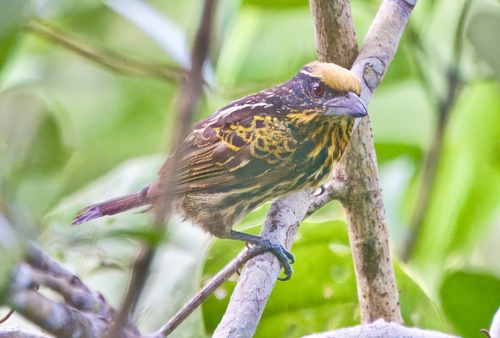
オウゴンゴシキドリ (Capito auratus) オウゴンゴシキドリ
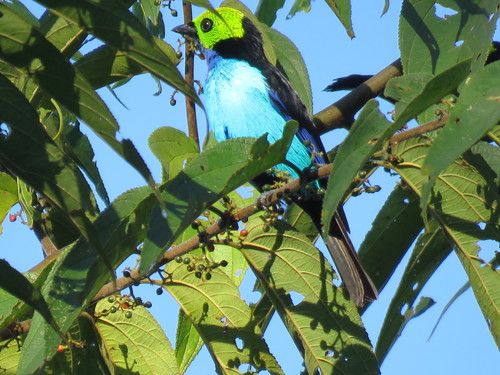
ナナイロフウキンチョウ (Tangara chilensis) ナナイロフウキンチョウ

メディア

読み込み中…

要点

オウゴンゴシキドリとナナイロフウキンチョウを区別する最も信頼できるフィールドマークは、頭部と腹部の色です:オウゴンゴシキドリは黄色からオレンジの冠と喉(亜種によっては喉に赤が含まれることがあります)を持ち、黄色の筋模様がある厚い黒い体と、黒い側面の筋模様がある淡い黄色の腹を持っています。一方、ナナイロフウキンチョウは明るいライトグリーンの頭と空色の腹部で瞬時に認識されます。Barbetはより大きくてずんぐりした体形をしており、重くて短いくちばしを持っていますが、ナナイロフウキンチョウはより小さく、繊細で、細い黒いくちばしを持っています。両種は黒い上面を持っていますが、Barbetの黄色い翼の模様と顔のパターンはユニークです。オウゴンゴシキドリの雌や幼鳥は翼により多くの筋模様や黄色を示すことがありますが、決してタンジャーの緑と青の組み合わせを示すことはありません。飛んでいる時や止まっている時、色のブロックとくちばしの形が最も早く分かる手がかりです。

識別のコツ

  1. 頭の色: ナナイロフウキンチョウは常に明るいライトグリーンの頭を持っていますが、オウゴンゴシキドリは黄色からオレンジ(時には赤みがかることもあります)の冠と喉を持っています。これはどの年齢でも最も早いフィールドマークです。
  2. 腹部の色: ナナイロフウキンチョウの腹部は空色で、決して黄色ではありません。オウゴンゴシキドリは黒い筋模様がある淡い黄色の腹を持ち(雌では胸にも)、決して青ではありません。
  3. くちばしの形と色: オウゴンゴシキドリは厚くて短い灰色のくちばしを持ち、広い黒い先端があります;ナナイロフウキンチョウのくちばしは細く、尖っていて、完全に黒です。くちばしの形は特に止まっている時や餌を食べている時に明らかです。
  4. サイズと構造: オウゴンゴシキドリはより大きく、ずんぐりしており、厚みがあります。大きな頭と重いくちばしを持っています。ナナイロフウキンチョウはより小さく、軽く、全体的に繊細です。
  5. 翼の模様: オウゴンゴシキドリは大きな翼の覆羽に黄色の斑点や帯、羽毛の縁に黄色、三次羽に黄色の先端を示します。ナナイロフウキンチョウの翼は黒で、黄色の模様はありません。
  6. 顔のパターン: オウゴンゴシキドリは黒いマスクを持ち、狭い黄色の眉が肩の上に平行に伸びています;ナナイロフウキンチョウは眉やマスクがなく、きれいな緑の頭だけです。
  7. 側面と胸の筋模様: 雌のGilded Barbetsや一部の雄は側面(雌では胸にも)に黒い筋模様を示しますが、これはナナイロフウキンチョウには決して見られません。
  8. 尾の色: ナナイロフウキンチョウは黄色と赤、またはすべて赤の尾(亜種によって異なる)を持ち、これは飛んでいる時や止まっている時に目立つ明るい斑点です。オウゴンゴシキドリの尾は黒で、上面と混ざります。
  9. 目の色: オウゴンゴシキドリは暗いマルーンの虹彩を持っています;ナナイロフウキンチョウの目の色はフィールドでは特徴的ではありません。
  10. 足の色: 両方とも灰色がかった足を持っており、役に立つ区別にはなりません。
  11. 性別/年齢の変異: 雌のGilded Barbetsは翼により多くの黄色とオレンジを持ち、より多くの筋模様を示しますが、やはりタンジャーの緑と青の組み合わせは決して示しません。幼鳥のタンジャーとバーベットは詳細には記述されていませんが、重要な色のブロックで重複する証拠はありません。
  12. 行動: オウゴンゴシキドリはより慎重で直立しています;ナナイロフウキンチョウは敏捷で、しばしば混成群れにいます。
  13. 生息地: 両者は一緒に生息することがありますが、Barbetは河川沿いや山のふもとの森林により結びついているかもしれません。
  14. 声: メモには記載されていません;ここでの区別に声を頼らないでください。
  15. 落とし穴: 照明が悪いと、Barbetの黄色は淡く見えることがありますが、タンジャーの青と緑はどのBarbetとも一致しません。くちばしの形とサイズは、距離があっても常に信頼できます。

大きさ

オウゴンゴシキドリは明らかに大きくてずんぐりしており、長さ約20 cm(8インチ)に達しますが、ナナイロフウキンチョウは13.5〜15 cm(5.3〜6インチ)です。Barbetはまた重く、厚みがあり、大きな頭と頑丈で短いくちばしを持っていますが、ナナイロフウキンチョウは軽く(21 g)、より細く、相対的に小さく尖った黒いくちばしを持っています。このサイズと構造の違いは、距離があっても混成群れの中でも明らかです。

羽色

どちらの種についても年齢特有の翼や飛行パターンは記述されていないため、全体的な羽毛に焦点を当てます。成鳥のオウゴンゴシキドリは、主に黒で、黄色からオレンジの冠と喉(喉は亜種によって赤またはオレンジになることがあります)、翼に黄色の筋模様、側面に黒い筋模様のある淡い黄色の腹を持っています。雌は似ていますが、翼の覆羽により多くの黄色とオレンジを持ち、顔や背中に黄色がかった筋模様、胸や側面により広範な黒い筋模様があります;一部の西部の雌は黒い筋模様のある喉を持っています。すべての年齢と性別のナナイロフウキンチョウは明らかに多色です:ライトグリーンの頭、空色の腹部、黒い上面、亜種によっては黄色と赤、またはすべて赤の尾を持っています。タンジャーのくちばしは常に黒ですが、Barbetのくちばしは灰色で広い黒い先端があります。Barbetのマルーンの目とタンジャーの鮮やかな色のブロックも役立ちます。要約すると、Barbetはタンジャーの緑と青の組み合わせを決して示さず、タンジャーはBarbetの黄色/オレンジの冠や黄色の翼の模様を持ちません。

行動

両種は主に果実食性で、湿った森林の樹冠または亜樹冠に生息します。オウゴンゴシキドリはずんぐりしているため、しばしばより直立して止まり、慎重に動き、時には長時間止まっていることがあります。ナナイロフウキンチョウはより活発で敏捷で、しばしば混成種の群れに見られ、葉の間を素早く移動し、アクロバティックに餌を探します。Barbetの重い体型と遅い動きは、タンジャーの軽快でエネルギッシュな行動と対照的です。

生息環境

両種は北部および西部アマゾニア(ボリビア、ブラジル、コロンビア、エクアドル、ペルー、ベネズエラ)全体で似たようなアマゾン低地および山のふもとの森林生息地を共有しています。オウゴンゴシキドリは河川沿いの森林やアンデスの低い山のふもとにより密接に結びついていますが、ナナイロフウキンチョウは湿った熱帯および亜熱帯の森林に広く分布しています。両者は同じ一般的な地域に見られることがありますので、生息地だけでは診断にはなりませんが、Barbetはやや高い場所や河川沿いの森林にいる可能性が高いです。

より良い説明を送る

比較と同じ項目を使ってください。文章はすぐに公開されます。

The most reliable field mark to separate Gilded Barbet from Paradise Tanager is the head and underparts color: Gilded Barbet has a yellow to orange crown and throat (with some red in the throat depending on subspecies), a thickset black body with yellow streaks, and a pale yellow belly with black flank streaks, while Paradise Tanager is instantly recognized by its bright light green head and sky-blue underparts. The Barbet is larger and bulkier, with a heavy, stubby bill, compared to the smaller, more delicate tanager with a slender black bill. Both species have black upperparts, but the Barbet’s yellow wing markings and facial pattern are unique. Females and immatures of Gilded Barbet can show more streaking and yellow on the wings, but never the green-blue combination of the tanager. In flight or perched, the color blocks and bill shape are the quickest clues.

  1. Head color: Paradise Tanager always has a bright light green head, while Gilded Barbet has a yellow to orange (sometimes reddish) crown and throat. This is the fastest field mark at any age.
  2. Underparts color: Paradise Tanager’s underparts are sky blue, never yellow. Gilded Barbet has a pale yellow belly with black streaking on the flanks (and chest in females), never blue.
  3. Bill shape and color: Gilded Barbet has a thick, stubby, grey bill with a broad black tip; Paradise Tanager’s bill is slender, pointed, and entirely black. Bill shape is especially obvious when perched or feeding.
  4. Size and structure: Gilded Barbet is larger, bulkier, and more thickset, with a big head and heavy bill. Paradise Tanager is smaller, lighter, and more delicate overall.
  5. Wing markings: Gilded Barbet shows yellow spots or bars on the greater wing coverts, yellow edging to remiges, and yellow tips to tertials. Paradise Tanager’s wings are black, lacking any yellow markings.
  6. Facial pattern: Gilded Barbet has a black mask with narrow yellow eyebrows extending as parallel lines over the mantle; Paradise Tanager lacks any eyebrow or mask, just a clean green head.
  7. Flank and chest streaking: Female and some male Gilded Barbets show black streaking on the flanks (and chest in females), which is never present in Paradise Tanager.
  8. Rump color: Paradise Tanager has a yellow and red or all red rump (depending on subspecies), which is a bright patch visible in flight or when perched. Gilded Barbet’s rump is black, blending with the upperparts.
  9. Eye color: Gilded Barbet has dark maroon irides; Paradise Tanager’s eye color is not distinctive in the field.
  10. Leg color: Both have greyish legs, not a useful separator.
  11. Sex/age variation: Female Gilded Barbets have more yellow and orange on the wings and more streaking, but still never show the tanager’s green-blue combination. Immature tanagers and barbets are not described in detail, but no evidence suggests they overlap in key color blocks.
  12. Behavior: Gilded Barbet is more deliberate and upright; Paradise Tanager is agile and often in mixed flocks.
  13. Habitat: Both can occur together, but Barbet may be more tied to riverine or foothill forests.
  14. Voice: Not described in the notes; do not rely on vocalization for separation here.
  15. Pitfalls: In poor light, the Barbet’s yellow may appear pale, but the tanager’s blue and green will not be matched by any Barbet. Bill shape and size are always reliable, even at a distance.

Gilded Barbet is noticeably larger and bulkier, reaching about 20 cm (8 in) in length, compared to the Paradise Tanager’s 13.5–15 cm (5.3–6 in). The Barbet is also heavier and more thickset, with a large head and robust, stubby bill, while the Paradise Tanager is lighter (21 g), more slender, and has a proportionally smaller, pointed black bill. This size and structure difference is apparent even at a distance or in mixed flocks.

No age-specific wing or flight pattern is described for either species, so focus is on overall plumage. Adult Gilded Barbet is mostly black above with a yellow to orange crown and throat (throat can be red or orange by subspecies), yellow streaks on the wings, and a pale yellow belly with black streaking on the flanks. Females are similar but have more yellow and orange on the wing coverts, yellowish streaking on the face and back, and more extensive black streaking on the chest and flanks; some western females have a black-streaked throat. Paradise Tanager of all ages and sexes is unmistakably multicolored: light green head, sky-blue underparts, black upperparts, and a rump that is yellow and red or all red depending on subspecies. The tanager’s bill is always black, while the Barbet’s is grey with a broad black tip. The Barbet’s maroon eyes and the tanager’s brilliant color blocks are also useful. In summary, the Barbet never shows the green-blue combination of the tanager, and the tanager never has the yellow/orange crown or yellow wing markings of the Barbet.

Both species are primarily frugivorous and occur in the canopy or subcanopy of humid forests. Gilded Barbet, being bulkier, often perches more upright and moves deliberately, sometimes pausing for long periods. Paradise Tanager is more active, agile, and often seen in mixed-species flocks, moving quickly through foliage and foraging acrobatically. The Barbet’s heavy build and slower movements contrast with the tanager’s light, energetic behavior.

Both species share similar Amazonian lowland and foothill forest habitats across much of northern and western Amazonia (Bolivia, Brazil, Colombia, Ecuador, Peru, Venezuela). Gilded Barbet is more closely tied to riverine forests and the lower foothills of the Andes, while Paradise Tanager is widespread in humid tropical and subtropical forests. Both can be found in the same general regions, so habitat alone is not diagnostic, but the Barbet may be more likely in slightly higher or riverine forests.

変更を破棄しますか?

保存していない編集があります。今離れると失われます。

オウゴンゴシキドリ · ナナイロフウキンチョウ · 苦手な鳥