

Motmot

オウゴンゴシキドリ 対 ムナグロノジコ

Capito auratus 対 Spiza americana

オウゴンゴシキドリとムナグロノジコのクイズ
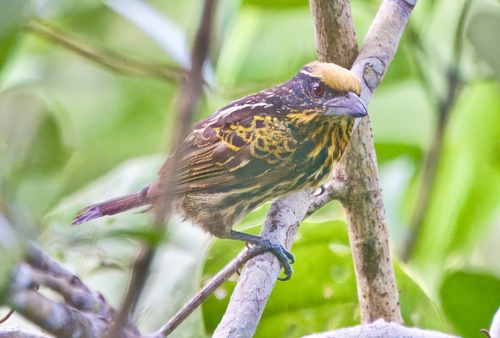
オウゴンゴシキドリ (Capito auratus) オウゴンゴシキドリ
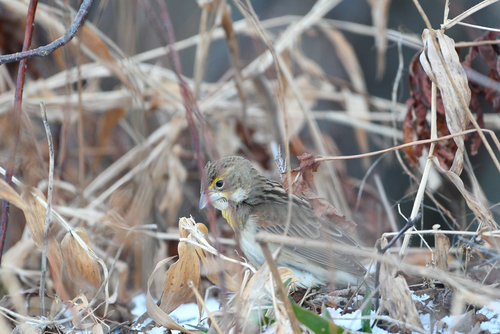
ムナグロノジコ (Spiza americana) ムナグロノジコ

メディア

読み込み中…

要点

オウゴンゴシキドリとムナグロノジコを区別する最も信頼できるフィールドマークは、全体の構造と頭の模様です:オウゴンゴシキドリは、ずんぐりとした大きな頭を持ち、短いくちばしと主に黒い上半身を持つ鳥であり、一方ムナグロノジコは、細身でスズメのような鳥で、淡い円錐形のくちばしと特徴的な黄色の眉と胸を持っています。すべての年齢において、オウゴンゴシキドリは黄色の斑点のある黒い翼と大胆で対照的な顔のマスクを示しますが、ムナグロノジコは黒い筋模様のある茶色がかった上面と錆色の肩の斑点を持っています。両種の雌と幼鳥は混乱を引き起こす可能性がありますが、バルベットの重い体型と独特の翼の模様は常に際立っています。生息地と文脈も強力な手がかりです:オウゴンゴシキドリはアマゾンとオリノコ流域の森林の鳥であり、ムナグロノジコは北アメリカの草原や畑に見られます。

識別のコツ

  1. Structure: オウゴンゴシキドリはずんぐりとした体型で大きな頭と短いくちばしを持ち、淡い円錐形のくちばしを持つ細身のスズメのようなムナグロノジコとは異なります。この違いは、距離があっても明らかです。
  2. Wing Pattern (all ages): オウゴンゴシキドリは常に、より大きなカバーの黄色の斑点と羽毛の黄色の縁取りを持つ黒い翼を示します。ムナグロノジコの翼は暗く、錆色の肩の斑点がありますが、黄色の斑点や大胆な模様は決して示しません。
  3. Head Pattern: オウゴンゴシキドリは黒い顔のマスクと大胆な黄色の眉を持っていますが、ムナグロノジコは目の上に黄色の線がありますが、黒いマスクや眉の線は決してありません;成鳥のオスは黒い喉の斑点と灰色の頬/冠を持ち、雌/幼鳥は頭が茶色がかっています。
  4. Upperparts: オウゴンゴシキドリの上面、尾、翼は主に黒ですが、ムナグロノジコの上面は茶色がかっており、黒い筋模様と肩に錆色の斑点があります。
  5. Underparts: オウゴンゴシキドリは黒い筋模様のある淡い黄色の腹部を持ち(雌では胸にも)、ムナグロノジコは雌/幼鳥に筋模様のある明るい下半身と成鳥のオスには黄色の胸を持っています。
  6. Throat and Crown (sex/age): オウゴンゴシキドリの喉は赤からオレンジに変わり(時には西部の雌では黒い筋模様がある)、冠は深い黄色から赤みがかったオレンジになります。ムナグロノジコのオスは黒い喉の斑点を持ち、雌/幼鳥は無地または軽く筋模様のある喉を持っています。
  7. Bill Color: オウゴンゴシキドリは広く黒い先端の灰色のくちばしを持っています;ムナグロノジコのくちばしは大きく淡い円錐形で、暗い模様はありません。
  8. Eye Color: オウゴンゴシキドリは暗いマルーンの虹彩を持っています;ムナグロノジコの目の色は指定されていませんが、フィールドマークではありません。
  9. Leg Color: オウゴンゴシキドリは灰色がかった脚を持っています;ムナグロノジコの脚の色は指定されていませんが、特徴的ではありません。
  10. Sexual Dimorphism: 雌のGilded Barbetsは翼のカバーにより多くの黄色/オレンジがあり、耳の部分と背中に黄色がかった筋模様がありますが、ずんぐりとした体型と黒と黄色の翼の模様は依然として示しています。雌/幼鳥のDickcisselsは茶色がかっており、筋模様があり、スズメに似ています。
  11. Flight Jizz: オウゴンゴシキドリは飛行中に重くて短い尾を持つように見え、しばしば森林の木の間を移動します。ムナグロノジコは細身で、体に対して翼のスパンが長く、開けた国を飛びます。
  12. Habitat: オウゴンゴシキドリはアマゾンとオリノコ流域の熱帯森林にのみ見られ、ムナグロノジコは開けた畑、草原、農地の鳥です。
  13. Vocalization: ムナグロノジコの歌と鳴き声のみが記述されています;飛行中のバズ音の「fpppt」と、露出した止まり木からの鋭く繰り返される歌はムナグロノジコの診断的な特徴です。
  14. Geographic Range: 北アメリカの草原で見られた場合、それはムナグロノジコです;アマゾンまたはオリノコの森林にいる場合、それはオウゴンゴシキドリです。
  15. Common Pitfall: 雌/幼鳥のDickcisselsはスズメに似ることがあり、非常に悪い光や遠くからの視界を除いてオウゴンゴシキドリと混同されることはほとんどありません。バルベットの構造と翼の模様は常に際立っています。

大きさ

オウゴンゴシキドリは明らかに大きくてずんぐりとしており、約20 cm(8インチ)の長さに達し、ずんぐりとした体と大きな頭を持っています。ムナグロノジコは小さくて軽く、長さは14〜16 cm(5.5〜6.3インチ)で、約27 gの重さです。ムナグロノジコの翼のスパンは体に対してわずかに長い(25〜26 cm)ですが、全体的な印象は細身のスズメサイズの鳥です。フィールドでは、バルベットの頑丈な体型と短い尾が、ムナグロノジコのより繊細でフィンチのようなプロポーションに対して際立っています。

羽色

幼鳥と雌のムナグロノジコは、上面が茶色がかっており、黒い筋模様と筋模様のある脇腹を持ち、スズメに似ており、オウゴンゴシキドリの大胆な頭と翼の模様が欠けています。すべての年齢において、オウゴンゴシキドリは黒い上面、翼、尾を持ち、翼のカバーに黄色の斑点と羽毛の黄色の縁取りがあり、マントルの上を平行に伸びる大胆な黄色の眉があります。成鳥のオスのムナグロノジコは黒い喉の斑点と黄色の胸を持っていますが、上面は茶色がかっており、筋模様があり、肩に錆色の斑点があり、黒いマスクや黄色の翼の斑点はありません。雌のオウゴンゴシキドリは翼のカバーにより多くの黄色とオレンジがあり、耳の部分と背中に黄色がかった筋模様がありますが、ずんぐりとした体型と黒と黄色の翼の模様は常に保持しています。飛行中、ムナグロノジコは錆色の肩の斑点のある暗い翼を示しますが、黄色の斑点や大胆な顔のマスクは欠けています。オウゴンゴシキドリの下半身は淡い黄色で、脇腹に黒い筋模様がありますが、ムナグロノジコの下半身は雌と幼鳥に筋模様があり、成鳥のオスには黄色の胸があります。

行動

オウゴンゴシキドリは通常、熱帯森林の中部から上部で見られ、果物を探しながらゆっくりと意図的に移動します。長時間静かに止まっていることがあり、開けた国ではめったに見られません。対照的に、ムナグロノジコは通常、開けた畑や草原に見られ、しばしばフェンスや高い雑草に目立つように止まっており、特に繁殖期以外では群れで見られる可能性が高いです。ムナグロノジコの飛行は強くて直接的で、特徴的な鳴き声を伴うことがよくあります。

生息環境

オウゴンゴシキドリは西アマゾンとオリノコ流域の熱帯湿潤低地森林と森林に制限されており、アンデスの低い山麓を含みます。開けた国や草原では決して見られません。ムナグロノジコは中西部アメリカの草原や農地で繁殖し、冬には中央および南アメリカ北部の開けた生息地に移動します。もし鳥がアマゾニアの森林の内部や端にいる場合、それはほぼ確実にオウゴンゴシキドリです;開けた畑や草原にいる場合、特に北アメリカでは、それはムナグロノジコです。

声

ムナグロノジコは特徴的なバズ音の飛行呼び声(「fpppt」)と鋭く繰り返される歌(「dick dick ciss ciss ciss」)を持ち、しばしば露出した止まり木から発せられます。オウゴンゴシキドリの鳴き声は提供されたメモには記述されていないため、声はムナグロノジコの診断的な特徴です。

より良い説明を送る

比較と同じ項目を使ってください。文章はすぐに公開されます。

The most reliable field mark to separate Gilded Barbet from Dickcissel is overall structure and head pattern: Gilded Barbet is a thickset, large-headed bird with a stubby bill and a mostly black upper body, while Dickcissel is a slim, sparrow-like bird with a pale, conical bill and a distinctive yellow eyebrow and breast. In all ages, Gilded Barbet shows black wings with yellow spotting and a bold, contrasting facial mask, whereas Dickcissel has brownish upperparts with black streaks and a rust shoulder patch. Females and immatures of both species can cause confusion, but the barbet's heavy build and unique wing pattern remain distinctive. Habitat and context are also strong clues: Gilded Barbet is a forest bird of the Amazon and Orinoco basins, while Dickcissel is found in North American grasslands and fields.

  1. Structure: Gilded Barbet is thickset with a large head and stubby bill, unlike the slim, sparrow-like Dickcissel with its pale, conical bill. This difference is obvious even at a distance.
  2. Wing Pattern (all ages): Gilded Barbet always shows black wings with yellow spotting on the greater coverts and yellow edging on the remiges. Dickcissel's wings are dark with a rust shoulder patch but never show yellow spotting or bold patterning.
  3. Head Pattern: Gilded Barbet has a black facial mask and bold yellow eyebrows that run as parallel lines over the mantle. Dickcissel has a yellow line over the eye, but never a black mask or eyebrow lines; adult males have a black throat patch and grey cheeks/crown, while females/juveniles are brownish on the head.
  4. Upperparts: Gilded Barbet's upperparts, tail, and wings are mainly black, while Dickcissel's are brownish with black streaks and a rust patch on the shoulder.
  5. Underparts: Gilded Barbet has a pale yellow belly with black streaking on the flanks (and chest in females), while Dickcissel has light underparts with streaked flanks in females/juveniles and a yellow breast in adult males.
  6. Throat and Crown (sex/age): Gilded Barbet's throat varies from red to orange (sometimes streaked black in western females), and the crown can be deep yellow to reddish-orange. Dickcissel males have a black throat patch; females/juveniles have plain or lightly streaked throats.
  7. Bill Color: Gilded Barbet has a broadly black-tipped grey bill; Dickcissel's bill is large and pale, conical, and lacks dark markings.
  8. Eye Color: Gilded Barbet has dark maroon irides; Dickcissel's eye color is not specified but is not a field mark.
  9. Leg Color: Gilded Barbet has greyish legs; Dickcissel's leg color is not specified but is not distinctive.
  10. Sexual Dimorphism: Female Gilded Barbets have more yellow/orange on the wing coverts and yellowish streaking on the auriculars and back, but still show the thickset structure and black-and-yellow wing pattern. Female/juvenile Dickcissels are brownish and streaked, resembling sparrows.
  11. Flight Jizz: Gilded Barbet appears heavy and short-tailed in flight, often moving between forest trees. Dickcissel is slim, with a longer wingspan relative to body, and flies in open country.
  12. Habitat: Gilded Barbet is only found in tropical forests of the Amazon and Orinoco basins; Dickcissel is a bird of open fields, prairies, and agricultural land.
  13. Vocalization: Only Dickcissel's song and call are described; a buzzy 'fpppt' in flight and a sharp, repetitive song from exposed perches are diagnostic for Dickcissel.
  14. Geographic Range: If seen in North American grasslands, it is Dickcissel; if in Amazonian or Orinoco forest, it is Gilded Barbet.
  15. Common Pitfall: Female/juvenile Dickcissels can resemble sparrows and are unlikely to be confused with Gilded Barbet except in very poor light or distant views. The barbet's structure and wing pattern are always distinctive.

Gilded Barbet is noticeably larger and bulkier, reaching about 20 cm (8 in) in length, with a thickset body and large head. Dickcissel is smaller and lighter, measuring 14–16 cm (5.5–6.3 in) in length and weighing about 27 g. The Dickcissel's wingspan is slightly longer relative to its body (25–26 cm), but its overall impression is that of a slim, sparrow-sized bird. In the field, the barbet's robust build and short tail stand out against the Dickcissel's more delicate, finch-like proportions.

Juvenile and female Dickcissels are brownish above with black streaks and streaked flanks, resembling sparrows, and lack the bold head and wing pattern of Gilded Barbet. In all ages, Gilded Barbet has black upperparts, wings, and tail, with yellow spotting on the wing coverts and yellow edging on the remiges, plus a bold yellow eyebrow extending as parallel lines over the mantle. Adult male Dickcissels have a black throat patch and yellow breast, but their upperparts are brown and streaked, with a rust patch on the shoulder and no black mask or yellow wing spotting. Female Gilded Barbets show more yellow and orange on the wing coverts and yellowish streaking on the auriculars and back, but always retain the thickset structure and black-and-yellow wing pattern. In flight, Dickcissel shows dark wings with a rust shoulder patch but lacks any yellow spotting or bold facial mask. Gilded Barbet's underparts are pale yellow with black streaking on the flanks, while Dickcissel's are light with streaked flanks in females and juveniles, and a yellow breast in adult males.

Gilded Barbet is typically seen in the mid to upper levels of tropical forest, often moving slowly and deliberately as it forages for fruit. It may perch quietly for long periods and is rarely seen in open country. Dickcissel, by contrast, is usually found in open fields and grasslands, often perching conspicuously on fences or tall weeds, and is much more likely to be seen in flocks, especially outside the breeding season. Dickcissel's flight is strong and direct, often accompanied by its characteristic call.

Gilded Barbet is restricted to tropical moist lowland forests and woodland in the western Amazon and Orinoco basins, including the lower foothills of the Andes. It is never found in open country or grasslands. Dickcissel breeds in prairie grasslands and agricultural fields of the Midwestern United States and migrates to open habitats in Central and northern South America for the winter. If the bird is in a forest interior or edge in Amazonia, it is almost certainly a Gilded Barbet; if in an open field or prairie, especially in North America, it is a Dickcissel.

Dickcissel has a distinctive, buzzy flight call ('fpppt') and a sharp, repetitive song ('dick dick ciss ciss ciss'), often given from an exposed perch. Gilded Barbet's vocalizations are not described in the provided notes, so voice is only diagnostic for Dickcissel.

変更を破棄しますか?

保存していない編集があります。今離れると失われます。

オウゴンゴシキドリ · ムナグロノジコ · 苦手な鳥