

オカヨシガモ 対 アカアシシギ
Mareca strepera 対 Tringa totanus
オカヨシガモとアカアシシギのクイズ
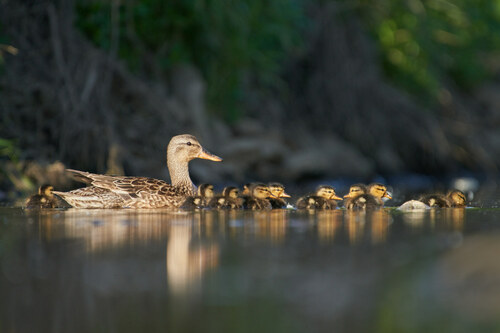 オカヨシガモ
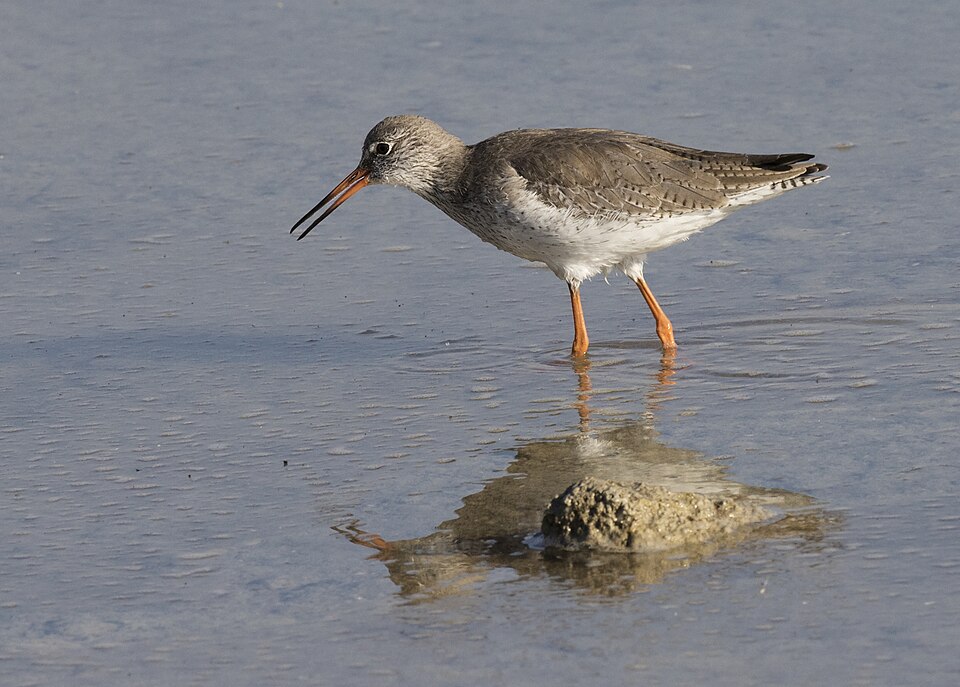 アカアシシギ
要点
The most reliable way to separate Gadwall from Common Redshank is by overall structure and wing pattern: Gadwall (of any age or sex) shows a broad white wing patch (speculum) in flight, while Redshank flashes white up the back and along the trailing edge of the wing, but never a white speculum. Gadwall is a robust, duck-shaped bird with a short neck and broad bill, whereas Redshank is a slim, long-legged wader with a straight, medium-length bill and bright red legs. Even at a distance, the feeding posture and habitat will usually differ: Gadwall dabbles in open water or marshes, while Redshank probes mudflats or wet meadows. If seen perched, Gadwall is much bulkier and lacks the red legs and bill base of Redshank.
識別のコツ
- White wing patch (speculum) in flight: Gadwall of all ages and sexes show a broad, brilliant white speculum bordered by chestnut and black on the wing, visible both in flight and often at rest. Redshank never shows a white speculum—this is a key separation in any season.
- White up the back and trailing edge (Redshank): In flight, Redshank shows a bold white wedge running from the rump up the back and a broad white trailing edge to the wings. Gadwall lacks this pattern, showing only the white speculum and a white belly.
- Leg color: Redshank always has bright red legs, visible at a distance when perched or walking. Gadwall's legs are duller and never red.
- Bill shape and color: Gadwall has a broad, flat, duck-like bill (female with orange edges), while Redshank has a straight, medium-length bill with a red base and black tip—never broad or spatulate.
- Body shape and posture: Gadwall is a compact, heavy-bodied duck with a short neck and sits low in the water. Redshank is slim, long-legged, and stands upright, often well clear of the water.
- Feeding behavior: Gadwall dabbles or upends in water, rarely wading. Redshank walks and probes mud or shallow water, never dabbling.
- Habitat: Gadwall is found on open water or marshes; Redshank is on mudflats, wet meadows, or estuaries. If the bird is far from open water, it's likely a Redshank.
- Size: Gadwall is much larger and heavier than Redshank. If seen together, Gadwall dwarfs Redshank.
- Plumage details (female/immature): Female Gadwall is mottled brown but always with the white speculum and lacks red legs. Redshank is plainer in winter, but always with red legs and bill base.
- Voice: Redshank is noisy, especially when flushed, with sharp, ringing calls. Gadwall is mostly silent except for quiet quacks or grunts in courtship.
- Flight style: Gadwall flies with steady, direct wingbeats; Redshank is more erratic and flickering, often calling in flight.
- Perched view: If the bird is standing on long red legs, it's a Redshank. If sitting low on water, with no red on legs or bill, it's a Gadwall.
- Seasonal confusion: Gadwall eclipse males look more like females but always retain the white speculum. Redshank's plumage changes from mottled brown (breeding) to plainer grey (winter), but structure and leg color remain constant.
- Juvenile confusion: Juvenile Gadwall already show the white speculum; juvenile Redshank shows the same white up the back and trailing edge as adults.
- Common pitfalls: Female Gadwall may be mistaken for a wader at a distance, but check for the white speculum, lack of red legs, and duck-like shape. Redshank is never seen dabbling or swimming like a duck.
大きさ
Gadwall is vastly heavier and bulkier than Common Redshank: adult Gadwall average 850–990 g (female/male), while Redshank is only about 129 g [wikidata]. Gadwall is a classic medium-sized duck (47–58 cm long), with a broad body and short legs. Redshank is a slender, medium-small wader, much lighter, with long, bright red legs and a more delicate build. In direct comparison, Gadwall dwarfs Redshank, both on water and in flight.
羽色
- Juvenile and adult Gadwall (both sexes and all ages) show a bold white wing patch (speculum) in flight, bordered by chestnut and black, and a white belly. This is visible both when flying and often when at rest. The rest of the plumage is subtly patterned grey (male) or brown (female), with no strong streaking or spots.
- Common Redshank (all ages) never shows a white speculum. Instead, in flight, it flashes a striking white wedge up the back (from rump to mid-back) and a broad white trailing edge to the wings. The upperparts are brown and lightly mottled in breeding plumage, plainer grey-brown in winter. Underparts are whitish, with some diffuse spotting in breeding birds. The legs and bill base are always red, a key mark at all ages and seasons.
- Gadwall eclipse males resemble females but retain the white speculum and are generally greyer above, with less orange on the bill. Female Gadwall can be confused with female Mallard but not with Redshank due to structure and wing pattern.
行動
Gadwall is a dabbling duck, usually seen swimming or upending in open water, sometimes grazing at the water's edge. It rarely wades far from water and is not seen probing mud. Redshank is a classic wader: it walks briskly on long red legs, often in shallow water or on mudflats, picking and probing for invertebrates. Its feeding style is active and upright, often bobbing its body. In flight, Gadwall is direct and strong, with steady wingbeats; Redshank is more agile, with rapid, flickering wingbeats and erratic flight when flushed.
生息環境
Gadwall favors open wetlands—lakes, marshes, and ponds with dense fringing vegetation. It is almost always associated with water deep enough for dabbling. Redshank prefers muddy or sandy shores, estuaries, wet meadows, and saltmarshes, often far from deep water. Redshank is rarely found on open water, and Gadwall is rarely seen on exposed mudflats.
声
Gadwall is generally quiet, but females give a high-pitched quack (gag-ag-ag-ag), and males a short grunt (mep) or a whistle during courtship. Redshank is much more vocal, especially when alarmed, giving a loud, ringing 'teu-teu-teu' or 'chew-it' call, often repeated in flight. If you hear persistent, sharp calls from a flushed bird, it's likely a Redshank.