

Motmot

ムナホシアカゲラ 対 スジムネアオゲラ

Dendrocopos analis 対 Picus viridanus

ムナホシアカゲラとスジムネアオゲラのクイズ
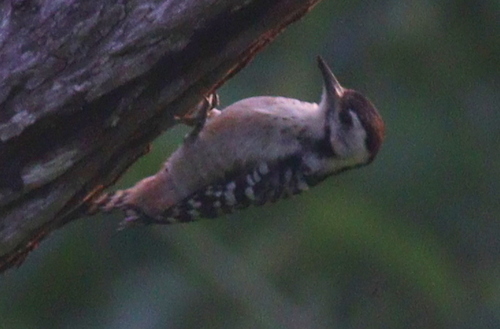
ムナホシアカゲラ (Dendrocopos analis) ムナホシアカゲラ
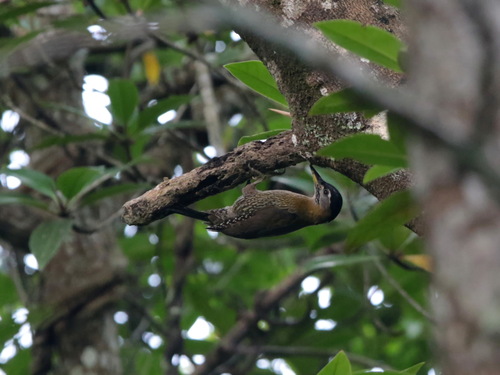
スジムネアオゲラ (Picus viridanus) スジムネアオゲラ

メディア

読み込み中…

要点

フレックルブレストアカゲラとスジムネアオゲラを区別する最も信頼できるフィールドマークは全体の羽毛です:フレックルブレストは目を引く黒と白の縞模様の背中と赤い尾羽を示し、淡い縞模様と縞模様のあるクリーム色の腹部を持っています。一方、スジムネアオゲラは、胸に縞模様があるが上部に強い縞模様がない、より大きく重い緑色のキツツキです。フレックルブレストにおける冠色の性差は重要ですが、スジムネアオゲラにはありません。フィールドでは、上部のパターンと下部の色、全体のサイズと構造に注目してください。両種は東南アジアで重複する可能性があるため、これらのマークに注意を払うことが重要です。

識別のコツ

  1. 上部のパターン: フレックルブレストアカゲラは黒い上部に重い白い縞模様があり、スジムネアオゲラは上部が緑がかっていて強い縞模様がありません。これは止まっている鳥を区別する最も早い方法です。
  2. 下部: フレックルブレストは、側面に淡い縞模様があり、腹部がクリーム色であることを示します。スジムネアオゲラは胸に縞模様がありますが、クリーム色のトーンと縞模様がありません。
  3. 尾羽の色: フレックルブレストは赤い尾羽を持ち、スジムネアオゲラにはありません。
  4. 頬のパターン: フレックルブレストは、黒い線で部分的に縁取られた白っぽい頬を示し、スジムネアオゲラよりも対照的な顔のパターンを持っています。
  5. 冠の色(性別特有): オスのフレックルブレストは赤い冠とオレンジ色の額を持ち、メスは黒い冠を持っています。スジムネアオゲラは冠の色においてこの性的二形性を示しません(利用可能なメモに基づく)。
  6. サイズと構造: スジムネアオゲラはフレックルブレストに比べてはるかに重く、がっしりしています(105g)。鳥が一緒に見られる場合や、スケールのために知られている種と比較する際にこれを使用してください。
  7. 一般的な色彩: フレックルブレストは白黒赤の斑点のあるキツツキであり、スジムネアオゲラは主に緑がかっていて対照が少ないです。
  8. 生息地の文脈: マングローブの森にいる場合、スジムネアオゲラの方が可能性が高いですが、両種は低地の森にも生息します。重複する地域では生息地だけに頼らないでください。
  9. 飛行の視点: どちらの種にも特有の年齢別の翼や飛行パターンのマークは記載されていないため、飛行中の全体の色とサイズに注目してください。
  10. フィールドでの性別判別: フレックルブレストのみが冠において明確な性的二形性を示します。頭が見える場合はこれを使用してください。
  11. 顔の対照: フレックルブレストの顔はより鮮明にマークされており、暗い光や部分的な視界で役立ちます。
  12. 落とし穴: 未熟な鳥はこれらのマークにおいて成鳥と異なると記載されていないため、すべての年齢に対して成鳥のフィールドマークを使用してください。
  13. 重複: 両種が生息する地域では、同定を行う前に上部と尾羽の色を再確認してください。
  14. マークが失敗した場合: 鳥が遠くにいる場合や逆光の場合、サイズと構造が唯一の手がかりになることがあります。スジムネアオゲラのよりがっしりとした形状と、よりコンパクトなフレックルブレストを探してください。
  15. 使用しないでください: 歌、詳細な翼のフォーミュラ、または一次投影は記載されておらず、区別のために頼るべきではありません。

大きさ

スジムネアオゲラはフレックルブレストアカゲラよりもかなり重く(約105g)、がっしりとしています。フレックルブレストは中型のDendrocoposで、よりコンパクトな体型を持っています。スジムネアオゲラは、特にフィールドで並んで見られる場合や知られている種と比較されると、より大きくて頑丈に見えるでしょう。フレックルブレストはより小さく、より機敏に見えるでしょう。

羽色

行動

ソースには特定の行動の違いは記載されていません。両種は採餌スタイルにおいて典型的なキツツキですが、スジムネアオゲラはより大きいため、動きがより意図的または力強く見えるかもしれません。一方、フレックルブレストはより機敏に見えるかもしれません。

生息環境

フレックルブレストアカゲラは東南アジアのさまざまな国(インドネシア、ラオス、ミャンマー、タイ、カンボジア、ベトナム)に生息していますが、スジムネアオゲラはバングラデシュの南東部からマレー半島の中央部にかけて見られます。両種は低地の森を利用しますが、スジムネアオゲラはマングローブの森とも関連しています。タイやマレー半島では重複が可能であるため、生息地だけでは診断できませんが、スジムネアオゲラはマングローブでより期待されるかもしれません。

より良い説明を送る

比較と同じ項目を使ってください。文章はすぐに公開されます。

The most reliable field mark to separate Freckle-breasted Woodpecker from Streak-breasted Woodpecker is overall plumage: Freckle-breasted shows a striking black-and-white barred back and red undertail, with buff underparts lightly streaked and barred, while Streak-breasted is a larger, heavier green woodpecker with a streaked breast but no strong barring above. Sex differences in crown color are key for Freckle-breasted, but not for Streak-breasted. In the field, focus on the upperpart pattern and underpart color, as well as overall size and structure. Both species can overlap in Southeast Asia, so careful attention to these marks is essential.

  1. Upperparts pattern: Freckle-breasted Woodpecker has black upperparts with heavy white barring; Streak-breasted is greenish above with no strong barring. This is the fastest way to separate perched birds.
  2. Underparts: Freckle-breasted shows buff underparts with light barring on the flanks and faint streaking on the sides; Streak-breasted has a streaked breast but lacks the buff tone and barring.
  3. Undertail color: Freckle-breasted has a red undertail, which is absent in Streak-breasted.
  4. Cheek pattern: Freckle-breasted displays whitish cheeks partly bordered by a black line, giving a more contrasting facial pattern than Streak-breasted.
  5. Crown color (sex-specific): Male Freckle-breasted has a red crown with orange forehead; female has a black crown. Streak-breasted does not show this sexual dimorphism in crown color (based on available notes).
  6. Size and structure: Streak-breasted is much heavier and bulkier (105 g) compared to the medium-sized, compact Freckle-breasted. Use this when birds are seen together or with familiar species for scale.
  7. General coloration: Freckle-breasted is a pied woodpecker (black, white, and red), while Streak-breasted is predominantly greenish with less contrast.
  8. Habitat context: If in mangrove forest, Streak-breasted is more likely, but both species can occur in lowland forest. Do not rely on habitat alone in overlapping regions.
  9. Flight views: No distinctive age-specific wing or flight pattern marks are described for either species, so focus on overall color and size in flight.
  10. Sexing in the field: Only Freckle-breasted shows clear sexual dimorphism in the crown; use this if head is visible.
  11. Facial contrast: Freckle-breasted's face is more crisply marked, helpful in poor light or partial views.
  12. Pitfalls: Immature birds are not described as differing from adults in these marks, so use adult field marks for all ages.
  13. Overlap: In areas where both species occur, double-check upperpart and undertail color before making an ID.
  14. When marks fail: If the bird is distant or backlit, size and structure may be the only clues—look for the bulkier shape of Streak-breasted versus the more compact Freckle-breasted.
  15. Do not use: Song, detailed wing formula, or primary projection are not described and should not be relied upon for separation.

Streak-breasted Woodpecker is substantially heavier (about 105 g) and bulkier than Freckle-breasted Woodpecker, which is a medium-sized Dendrocopos with a more compact build. Expect Streak-breasted to look larger and more robust, especially in the field when seen side-by-side or compared to known species. Freckle-breasted will appear smaller and more agile.

  • Adults (all seasons): Freckle-breasted Woodpecker is pied above, with black upperparts heavily barred with white, and a red undertail. Its underparts are buff with light barring on the flanks and slight streaking on the sides. The cheeks are whitish, partly bordered by a black line. Males have a red crown with an orange forehead, females have a black crown. Streak-breasted Woodpecker, by contrast, has greenish upperparts (not barred), and a breast that is streaked rather than barred; it lacks the red undertail and the strong black-and-white contrast of Freckle-breasted. The head pattern is less contrasting, and the cheeks are not as distinctly marked. Sex differences in crown color are not noted for Streak-breasted.
  • Juvenile/immature: No age-specific upperwing or flight pattern marks are described for either species in the sources, so rely on the adult-type plumage contrasts above for all ages.

No specific behavioral differences are described in the sources. Both species are typical woodpeckers in foraging style, but Streak-breasted, being larger, may appear more deliberate or powerful in its movements, while Freckle-breasted may seem more nimble.

Freckle-breasted Woodpecker is found in a range of Southeast Asian countries (Indonesia, Laos, Myanmar, Thailand, Cambodia, Vietnam), while Streak-breasted Woodpecker is found from far southeastern Bangladesh to the central Malay Peninsula. Both use lowland forests, but Streak-breasted is also associated with mangrove forests. Overlap is possible in Thailand and the Malay Peninsula, so habitat alone is not diagnostic, but Streak-breasted may be more expected in mangroves.

変更を破棄しますか?

保存していない編集があります。今離れると失われます。

ムナホシアカゲラ · スジムネアオゲラ · 苦手な鳥