

マミチャジナイ 対 ノドグロツグミ
Turdus obscurus 対 Turdus atrogularis
マミチャジナイとノドグロツグミのクイズ
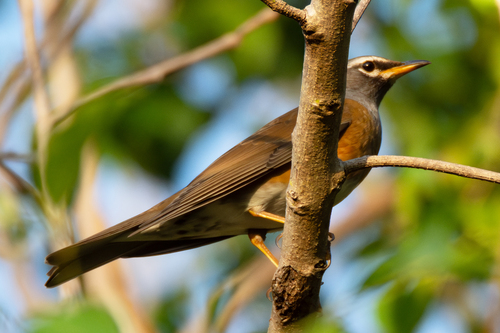 マミチャジナイ
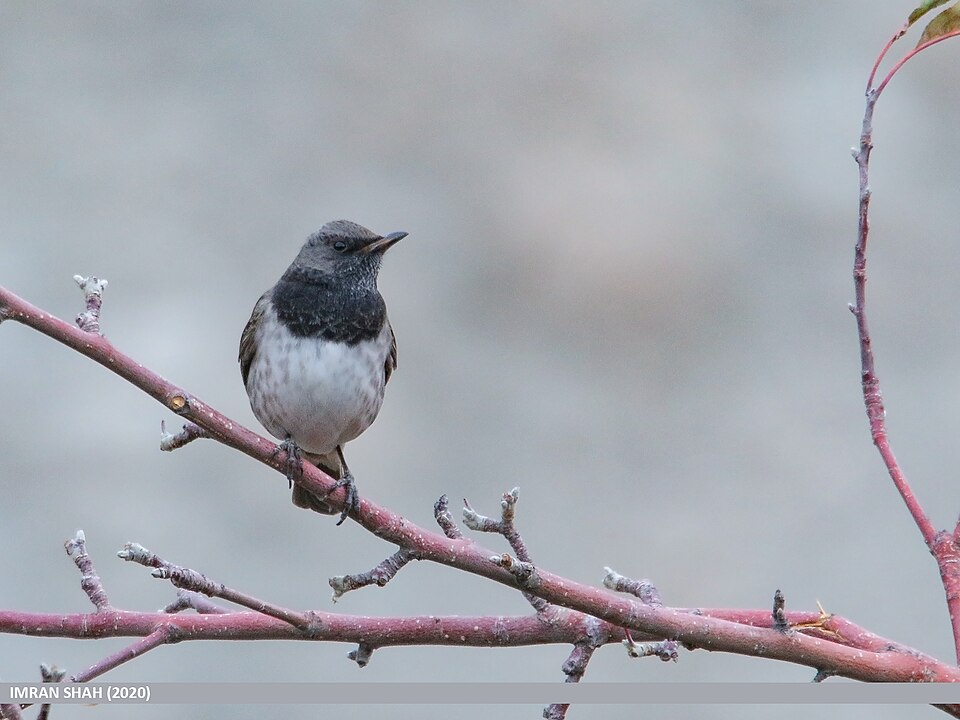 ノドグロツグミ
要点
The most reliable field mark between Eyebrowed Thrush and Black-throated Thrush is the pattern and color of the throat and breast: Eyebrowed Thrush shows a clear black eyeline with a white supercilium and orange breast, while Black-throated Thrush (adult male) has a distinctive black throat and breast, with females and immatures showing dusky streaking instead. Immature Eyebrowed Thrushes can appear browner above, but never show the black or streaked throat of Black-throated. Both species can occur together in mixed winter flocks, so close attention to head and underpart pattern is essential. Size is not a strong separator in the field, but structure and jizz may help with experience.
識別のコツ
- Throat and Breast Pattern (All Ages): The most decisive mark is the throat: Eyebrowed Thrush always shows a pale throat with a sharp black eyeline and white supercilium, never any black or streaked throat. Black-throated Thrush adult males have a solid black throat and breast; females and immatures have dusky streaking here. If you see any black or streaked throat, rule out Eyebrowed.
- Supercilium/Eyebrow (All Ages): Eyebrowed Thrush has a prominent white supercilium above a black eyeline, giving a strong 'eyebrowed' look. Black-throated Thrush lacks this sharp eyeline/supercilium contrast; its face is plainer and more uniform.
- Breast and Flank Color (Adults): Eyebrowed Thrush shows a rich orange breast and flanks, contrasting with a white belly. Black-throated Thrush has whitish underparts (apart from the black or streaked throat/breast), with orange-red only on the underwing coverts (not visible when perched).
- Back and Head Color (Adults): Eyebrowed Thrush has a grey back and head, while Black-throated Thrush is also grey above but lacks the strong facial markings.
- Immature/First-winter Birds: Immature Eyebrowed Thrushes are browner above but still show the white supercilium and lack any black or streaked throat. Immature Black-throated Thrushes have a plain face and dusky streaking on the throat/breast, never the clear-cut eyeline of Eyebrowed.
- Underwing Color (In Flight): Black-throated Thrush has orange-red underwing coverts, but this is only visible in flight and not a primary field mark unless seen well.
- Bill and Structure: No strong differences are described in the sources; both are typical thrushes in structure.
- Size: Eyebrowed Thrush averages 63g; Black-throated is likely similar, so do not rely on size.
- Habitat (Context): Both species can occur together in winter, especially in mixed-species flocks, so do not use habitat alone for separation unless breeding.
- Voice: Only Eyebrowed Thrush's song is described (simple whistling); not a reliable separator in the field.
- Seasonal Overlap: Both species can be found in the same region in winter, so always check plumage details rather than relying on season.
- Sex Differences: Both species show limited sexual dimorphism; focus on throat and facial pattern for all ages and sexes.
- Common Pitfall: Immature Black-throated Thrush can be mistaken for Eyebrowed if you overlook the dusky throat streaking and lack of a strong supercilium. Always check for the presence or absence of a black eyeline and the clarity of the 'eyebrow.'
- Mixed Flocks: When observing flocks, scan each bird for the key head and throat pattern rather than assuming all are the same species.
- Lighting and Distance: At a distance or in poor light, the orange breast of Eyebrowed Thrush may appear duller, and the black throat of Black-throated may be hard to discern—try to get a clear view of the head pattern and underparts.
大きさ
Eyebrowed Thrush averages 63g in body mass [wikidata], while no direct measurement is available for Black-throated Thrush in the provided sources. Both are medium-sized thrushes, and size alone is not a reliable field mark for separation in the field. Structural differences are subtle and not emphasized in the available sources.
羽色
For adults, Eyebrowed Thrush is characterized by a grey back and head, a sharp black eyeline bordered by white above and below (giving a strong 'eyebrow'), orange breast and flanks, and a white belly. In contrast, adult male Black-throated Thrush has a black throat extending to the breast, grey upperparts, and whitish underparts with orange-red underwing coverts; females and immatures have dusky streaking on the throat and breast rather than solid black. Immature Eyebrowed Thrushes are browner above but retain the white supercilium and lack any black or streaked throat. No distinctive age-specific upperwing pattern is described for either species in the sources, so focus should remain on head and underpart pattern for all ages.
行動
Both species feed on the ground and may join mixed flocks in winter, sometimes seen together. Black-throated Thrush is noted for roosting in dense evergreen vegetation and often forages in loose aggregations or flocks, especially outside the breeding season. Eyebrowed Thrush also forages on the ground but is not described as particularly gregarious or solitary in the notes.
生息環境
Eyebrowed Thrush breeds in dense coniferous forest and taiga from Siberia and Mongolia to Japan, while Black-throated Thrush breeds along clearings in coniferous or mixed deciduous forest, often near watercourses or in swampy areas from eastern Europe to western Siberia and northwest Mongolia. In winter, both species may be found in similar habitats, including mixed-species flocks in open woodland or evergreen vegetation. Habitat overlap in winter means habitat is not a reliable separator in non-breeding season.
声
Eyebrowed Thrush male has a simple whistling song, similar to Mistle Thrush. No specific vocal description is given for Black-throated Thrush in the provided notes, so voice is not a reliable separator based on these sources.