

Motmot

マダラヒタキ 対 シロエリヒタキ

Ficedula hypoleuca 対 Ficedula albicollis

マダラヒタキとシロエリヒタキのクイズ
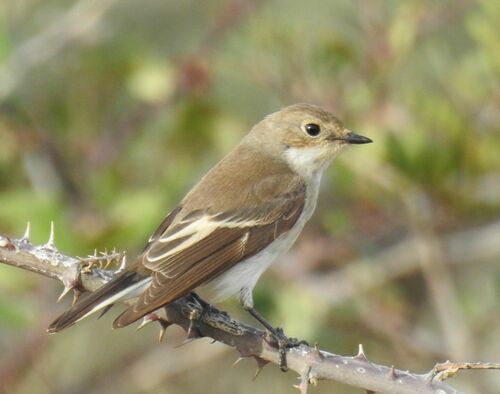
マダラヒタキ (Ficedula hypoleuca) マダラヒタキ
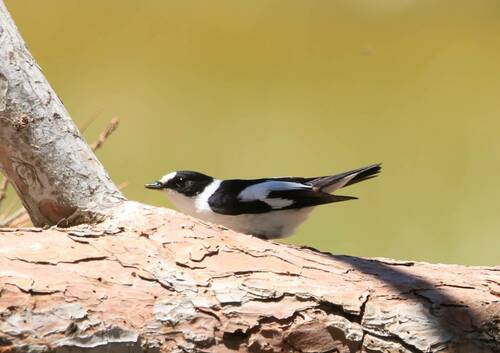
シロエリヒタキ (Ficedula albicollis) シロエリヒタキ

メディア

読み込み中…

要点

The most reliable way to separate European Pied Flycatcher from Collared Flycatcher in the field is by focusing on adult breeding males: Collared Flycatcher shows a bold white collar wrapping around the neck and a larger white forehead patch, while Pied Flycatcher lacks a complete collar and has a smaller forehead patch. Both species are extremely similar outside of adult male breeding plumage, especially among females and immatures, which are pale brown above and white below and often nearly indistinguishable. Subtle differences in the extent of white on the tail and wing, and the presence or absence of a pale rump, can help in some cases, but many non-male and non-breeding birds are best left unidentified. Collared Flycatcher is rare in western Europe, so context and range can also be clues.

識別のコツ

  1. Adult breeding males: Look for a complete white collar around the neck (Collared Flycatcher) versus no collar or only a small side patch (Pied Flycatcher). This is the most reliable field mark in spring and early summer.
  2. Forehead patch: Collared Flycatcher males have a noticeably larger white forehead patch than Pied Flycatcher males. Iberian Pied Flycatcher can approach Collared in size of patch, so use with caution in southwest Europe.
  3. Rump color: Collared Flycatcher shows a pale rump, especially in males, while Pied Flycatcher usually does not (except the Iberian subspecies). This is subtle and best used in good light.
  4. Tail pattern: Pied Flycatcher males show white on the sides of the tail; Collared Flycatcher males often have a blacker tail, but some can show white sides too. This mark is variable and not always reliable.
  5. Wing patch: Both species have a large white wing patch, but Collared Flycatcher’s is often more extensive and brighter, especially in males. In practice, overlap is considerable.
  6. Females and immatures: Both are pale brown above and white below, with very similar wing and tail patterns. Field separation is usually not possible; most should be left unidentified unless with known males or in range-restricted areas.
  7. Juvenile/first-winter birds: No distinctive upperwing or tail pattern separates the two; both are plain brownish above with pale underparts. Do not attempt identification on these birds in the field.
  8. Bill and structure: Both species have a black, broad-based, pointed bill typical of aerial insectivores. No useful difference.
  9. Flight and jizz: Both species are active, agile, and sally for insects; flight style and posture are not helpful for separation.
  10. Song: Collared Flycatcher’s slow, whistled song is distinct from Pied Flycatcher’s more varied, chattering song, but beware of mimicry in areas where both breed.
  11. Range and context: Collared Flycatcher is rare in western Europe; in most of western and northern Europe, a black-and-white flycatcher is likely to be Pied. In southeast Europe and the Baltic, both may occur together.
  12. Hybridization: Where both species breed together, hybrids can occur and may show intermediate features. If a bird looks intermediate, consider the possibility of hybrid origin.
  13. Nest site: Both use cavities or nest boxes in deciduous woodland; nest site alone is not diagnostic.
  14. Season: Adult male field marks are most reliable in spring and early summer during courtship; after breeding, males may molt into duller plumage and become harder to separate.
  15. Caution: When in doubt, especially with females and immatures, it is best to leave the bird unidentified to species.

大きさ

Both species are essentially the same size, with a length of 12–13.5 cm and a body mass of about 12 g for European Pied Flycatcher. There is no meaningful size or structural difference in the field.

羽色

Adult breeding males are the only age/sex class with strong plumage differences: Collared Flycatcher males have a prominent white collar encircling the neck, a large white forehead patch, and a pale rump, while Pied Flycatcher males lack a full collar (though some may show a small patch on the side of the neck), have a smaller forehead patch, and typically lack a pale rump except in the Iberian subspecies. Both have large white wing patches, but Collared Flycatcher’s is often more extensive. In non-breeding males, females, and juveniles, both species become pale brown above and white below, with similar wing and tail patterns—making separation extremely difficult. Collared Flycatcher may show a paler rump and more white on the tail, but these marks are subtle and variable. Juvenile and first-winter birds of both species lack strong diagnostic upperwing or tail patterns, so field identification is often not possible in these plumages.

行動

Both species are active, aerial insectivores, sallying from perches to catch insects in flight. Their foraging behavior, flight style, and general jizz are very similar and not useful for separation.

生息環境

European Pied Flycatcher breeds widely across most of Europe and the Western Palearctic, while Collared Flycatcher is more restricted to southeast Europe and parts of the Baltic, and is a rare vagrant in western Europe. Both prefer deciduous woodlands with old trees and nest in cavities or nest boxes. Collared Flycatcher is less likely to be found in western Europe except as a vagrant, so location and abundance can be a clue.

声

Collared Flycatcher’s song is a series of slow, strained whistles, quite different from the more varied and chattering song of Pied Flycatcher. However, Pied Flycatcher can mimic Collared Flycatcher’s song in areas where they overlap, so voice is not always reliable in sympatry.

より良い説明を送る

比較と同じ項目を使ってください。文章はすぐに公開されます。

The most reliable way to separate European Pied Flycatcher from Collared Flycatcher in the field is by focusing on adult breeding males: Collared Flycatcher shows a bold white collar wrapping around the neck and a larger white forehead patch, while Pied Flycatcher lacks a complete collar and has a smaller forehead patch. Both species are extremely similar outside of adult male breeding plumage, especially among females and immatures, which are pale brown above and white below and often nearly indistinguishable. Subtle differences in the extent of white on the tail and wing, and the presence or absence of a pale rump, can help in some cases, but many non-male and non-breeding birds are best left unidentified. Collared Flycatcher is rare in western Europe, so context and range can also be clues.

  1. Adult breeding males: Look for a complete white collar around the neck (Collared Flycatcher) versus no collar or only a small side patch (Pied Flycatcher). This is the most reliable field mark in spring and early summer.
  2. Forehead patch: Collared Flycatcher males have a noticeably larger white forehead patch than Pied Flycatcher males. Iberian Pied Flycatcher can approach Collared in size of patch, so use with caution in southwest Europe.
  3. Rump color: Collared Flycatcher shows a pale rump, especially in males, while Pied Flycatcher usually does not (except the Iberian subspecies). This is subtle and best used in good light.
  4. Tail pattern: Pied Flycatcher males show white on the sides of the tail; Collared Flycatcher males often have a blacker tail, but some can show white sides too. This mark is variable and not always reliable.
  5. Wing patch: Both species have a large white wing patch, but Collared Flycatcher’s is often more extensive and brighter, especially in males. In practice, overlap is considerable.
  6. Females and immatures: Both are pale brown above and white below, with very similar wing and tail patterns. Field separation is usually not possible; most should be left unidentified unless with known males or in range-restricted areas.
  7. Juvenile/first-winter birds: No distinctive upperwing or tail pattern separates the two; both are plain brownish above with pale underparts. Do not attempt identification on these birds in the field.
  8. Bill and structure: Both species have a black, broad-based, pointed bill typical of aerial insectivores. No useful difference.
  9. Flight and jizz: Both species are active, agile, and sally for insects; flight style and posture are not helpful for separation.
  10. Song: Collared Flycatcher’s slow, whistled song is distinct from Pied Flycatcher’s more varied, chattering song, but beware of mimicry in areas where both breed.
  11. Range and context: Collared Flycatcher is rare in western Europe; in most of western and northern Europe, a black-and-white flycatcher is likely to be Pied. In southeast Europe and the Baltic, both may occur together.
  12. Hybridization: Where both species breed together, hybrids can occur and may show intermediate features. If a bird looks intermediate, consider the possibility of hybrid origin.
  13. Nest site: Both use cavities or nest boxes in deciduous woodland; nest site alone is not diagnostic.
  14. Season: Adult male field marks are most reliable in spring and early summer during courtship; after breeding, males may molt into duller plumage and become harder to separate.
  15. Caution: When in doubt, especially with females and immatures, it is best to leave the bird unidentified to species.

Both species are essentially the same size, with a length of 12–13.5 cm and a body mass of about 12 g for European Pied Flycatcher. There is no meaningful size or structural difference in the field.

Adult breeding males are the only age/sex class with strong plumage differences: Collared Flycatcher males have a prominent white collar encircling the neck, a large white forehead patch, and a pale rump, while Pied Flycatcher males lack a full collar (though some may show a small patch on the side of the neck), have a smaller forehead patch, and typically lack a pale rump except in the Iberian subspecies. Both have large white wing patches, but Collared Flycatcher’s is often more extensive. In non-breeding males, females, and juveniles, both species become pale brown above and white below, with similar wing and tail patterns—making separation extremely difficult. Collared Flycatcher may show a paler rump and more white on the tail, but these marks are subtle and variable. Juvenile and first-winter birds of both species lack strong diagnostic upperwing or tail patterns, so field identification is often not possible in these plumages.

Both species are active, aerial insectivores, sallying from perches to catch insects in flight. Their foraging behavior, flight style, and general jizz are very similar and not useful for separation.

European Pied Flycatcher breeds widely across most of Europe and the Western Palearctic, while Collared Flycatcher is more restricted to southeast Europe and parts of the Baltic, and is a rare vagrant in western Europe. Both prefer deciduous woodlands with old trees and nest in cavities or nest boxes. Collared Flycatcher is less likely to be found in western Europe except as a vagrant, so location and abundance can be a clue.

Collared Flycatcher’s song is a series of slow, strained whistles, quite different from the more varied and chattering song of Pied Flycatcher. However, Pied Flycatcher can mimic Collared Flycatcher’s song in areas where they overlap, so voice is not always reliable in sympatry.

変更を破棄しますか?

保存していない編集があります。今離れると失われます。

マダラヒタキ · シロエリヒタキ · 苦手な鳥