

Motmot

ヨーロッパハチクマ 対 ハチクマ

Pernis apivorus 対 Pernis ptilorhynchus

ヨーロッパハチクマとハチクマのクイズ
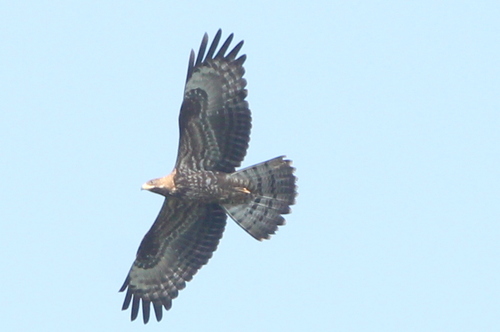
ヨーロッパハチクマ (Pernis apivorus) ヨーロッパハチクマ
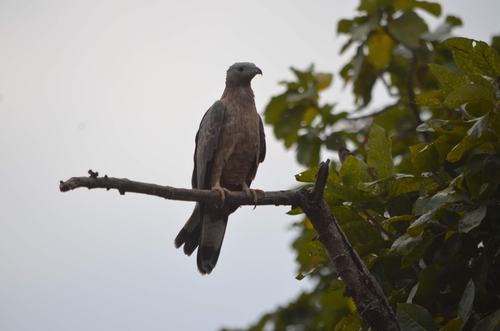
ハチクマ (Pernis ptilorhynchus) ハチクマ

メディア

読み込み中…

要点

ヨーロッパハチクマとハチクマの間で最も信頼できるフィールドマークは、年齢と性別によって異なる尾と下翼のバンドのパターンです。幼鳥と雌のハチクマは、ヨーロッパよりも多くの尾と下翼のバンドを示し、ハチクマの下翼パターンは特に飛行中により複雑です。構造的には、ハチクマはより大きく重いですが、両種は長い首と小さな頭を持ち、特に距離がある場合や光が悪い場合には驚くほど似て見えることがあります。両方の性別は分けられ、オスは青灰色の頭を、メスは茶色を示しますが、ハチクマの虹彩の色(オスは茶色、メスは黄色)と喉のストライプは追加の手がかりです。飛行中の尾と下翼のバンドの数、サイズ、微妙な羽毛の違いに注意を払うことが、これらのしばしば混同されるPernis種を分ける鍵です。

識別のコツ

  1. Tail band count in flight (all ages): ハチクマ(雌と幼鳥)は3本の黒い尾バンドを示します。ヨーロッパハチクマは通常、2本の狭い暗いバーと広い亜終端バンドのみを示します。これは飛行中の最も信頼できるマークです。
  2. Underwing banding (all ages): ハチクマは3本(オス)または4本(メス)の黒い下翼バンドを持っています。ヨーロッパはより少なく、広いバンドのシンプルなパターンを持っています。幼鳥のハチクマはまた、ヨーロッパよりも広範囲に黒い一次羽の先端を示します。
  3. Head color and iris (adults): 両方のオスは青灰色の頭を持っていますが、ハチクマのオスは茶色の虹彩と暗い喉のストライプを持ち、ヨーロッパのオスは喉のストライプがなく、対照的な頭を持っています。雌のハチクマは茶色の頭と黄色の虹彩を持ち、ヨーロッパの雌は茶色の頭ですが、黄色の虹彩はありません。
  4. Throat stripe (adults): ハチクマ(両性別、特にオス)は暗い喉のストライプを示し、ヨーロッパにはありません。
  5. Head shape: ハチクマの頭は強い眉稜がなく、ハトのように見えます。ヨーロッパの頭は小さいですが、ハトのようではありません。これは微妙で、近距離で見るのが最適です。
  6. Overall coloration: ハチクマは上面が茶色ですが、下面はより淡い色をしており、より複雑な下翼パターンを持っています。ヨーロッパは一般的に上面と下面がより暗く、シンプルな下翼を持っています。
  7. Size and structure: ハチクマはより大きく重いですが、両種は長い首と小さな頭を持っています。サイズは、両方が一緒に見られるか、直接比較される場合にのみ有用です。
  8. Flight silhouette: ヨーロッパは平らな翼で滑空し、時には先端がわずかに垂れ下がり、直接飛行中に角ばった胸を示すことがあります。ハチクマはより大きく見え、角ばりが少ないように見えます。
  9. Sexual dimorphism: 両種は頭の色と虹彩に性差を示しますが、ハチクマだけが雌に黄色の虹彩とオスに茶色の虹彩を示します。
  10. Juvenile confusion: 幼鳥のヨーロッパハチクマはヨーロッパノスリを模倣し、幼鳥のハチクマはニサエトゥスのタカイーグルを模倣します。両方とも、模倣は観察者を誤解させる可能性がありますが、尾と下翼のバンドの数は診断的です。
  11. Habitat and range: ヨーロッパはヨーロッパと西アジアに見られ、ハチクマはアジアと中東に見られます。範囲外では、どちらの種もありそうにありませんが、漂流は可能です。
  12. Voice: ヨーロッパの呼び声だけが記述されています(「ぴーる」);ハチクマの特徴的な呼び声がないため、声はフィールドでの信頼できる区別にはなりません。
  13. Pitfalls: 両種は変動があり、光の条件が下翼と尾のパターンを隠す可能性があります。常に尾と下翼のバンドを数え、可能であれば虹彩の色に注意してください。
  14. Display and behavior: 両方とも秘密主義ですが、ディスプレイや移動中に見ることができます。これらの機会を利用して、翼と尾のパターンを研究してください。
  15. When in doubt: 尾と下翼のバンドが見えない場合は、頭の色、虹彩、喉のストライプ、全体の構造に注意してくださいが、重複や変動に注意してください。

大きさ

ハチクマはヨーロッパハチクマよりも大きく重いです。ハチクマは約57〜60 cmの長さで、750〜1,490 gの重さがありますが、ヨーロッパは52〜60 cmの長さですが、440〜1,050 gと軽いです [wikipedia][avonet]。両方とも長い翼と尾を持っていますが、ハチクマは全体的により大きいです。フィールドでは、サイズだけでは診断的であることは稀で、両方が一緒に見られる場合にのみ有用ですが、ハチクマのより大きな質量とより大きな姿勢は良い視界で明らかになるかもしれません。

羽色

幼鳥と未成熟の鳥は最も頻繁に混同されます。幼鳥のハチクマは、ヨーロッパよりも広範囲に黒い一次羽の先端と狭く、より多くの下翼バンドを示します。尾では、幼鳥と雌のハチクマは3本の黒いバンドを持ち、ヨーロッパは通常、2本の狭い暗いバーと広い亜終端バンドのみを示します(年齢/性別に関係なく)。両種の成鳥のオスは青灰色の頭を持っていますが、ハチクマのオスは茶色の虹彩と暗い喉のストライプを持ち、ヨーロッパのオスは喉のストライプがなく、対照的な頭を持っています。両方の雌は茶色の頭を持っていますが、ハチクマの雌は全体的に暗く、黄色の虹彩を持っています。ハチクマは上面が茶色ですが、ヨーロッパよりも一般的に下面は淡い色をしており、下翼パターンはより複雑で、3本(オス)または4本(メス)の黒い下翼バンドを持ち、ヨーロッパのシンプルなパターンと比較されます。ハチクマの頭は強い眉稜がなく、ハトのように見えますが、ヨーロッパの頭は小さいですが、ハトのようではありません。両種は変動がありますが、尾と下翼バンドの数と幅が最も一貫した羽毛の手がかりです。

行動

両種は移動やディスプレイ以外では目立たず、秘密主義で、森林で多くの時間を過ごし、地面でスズメバチの巣を探しています。飛行中、両方とも長い首と小さな頭のシルエットで平らな翼で滑空しますが、ヨーロッパハチクマは翼をまっすぐに保ち、水平またはわずかに垂れ下がった先端を持ち、時には直接飛行中に顕著な角ばった胸を示します。ハチクマはより大きく見え、角ばりが少ないように見えることがあります。両方とも移動やディスプレイの飛行中により簡単に観察され、翼と尾のパターンが最も見えやすくなります。

生息環境

ヨーロッパハチクマはヨーロッパと西アジアの森林で繁殖し、アフリカで越冬し、特にイギリスの南東部では稀ですが増加しています。ハチクマはアジア全体、シベリアから東南アジアまで見られ、中東に向かって西に拡大しています。両方とも森林の生息地を好み、移動やディスプレイ以外では目立ちません。ハチクマは一部の地域で灌漑されたプランテーションなどの人為的な生息地に適応していますが、これは信頼できるフィールドの区別ではありません。

声

ヨーロッパハチクマの呼び声は明確な「ぴーる」です。提供されたメモにはハチクマの特徴的な声は記述されていないため、声はフィールドでの信頼できる区別にはなりません。

より良い説明を送る

比較と同じ項目を使ってください。文章はすぐに公開されます。

The most reliable field mark between European Honey-buzzard and Crested Honey-buzzard is the pattern of tail and underwing bands, which varies by age and sex. Juvenile and female Crested Honey-buzzards show more tail and underwing bands than European, and the Crested's underwing pattern is more complex, especially in flight. Structurally, Crested Honey-buzzard is bulkier and heavier, but both species share a long-necked, small-headed look and can appear surprisingly similar, especially at a distance or in poor light. Sexes are separable in both, with males showing blue-grey heads and females brown, but the Crested's iris color (brown in males, yellow in females) and throat stripe are additional clues. Careful attention to the number of tail and underwing bands in flight, alongside size and subtle plumage differences, is key to separating these two often-confused Pernis species.

  1. Tail band count in flight (all ages): Crested Honey-buzzard (female and juvenile) shows three black tail bands; European Honey-buzzard typically shows only two narrow dark bars and a broad subterminal bar. This is the most reliable mark in flight.
  2. Underwing banding (all ages): Crested has three (male) or four (female) black underwing bands; European has a simpler pattern with fewer, broader bands. Juvenile Crested also shows extensive black primary tips, which are less marked in European.
  3. Head color and iris (adults): Males of both have blue-grey heads, but Crested male has a brown iris and a dark throat stripe, while European male lacks the throat stripe and has a less contrasting head. Female Crested has a brown head and yellow iris; European female is brown-headed but lacks the yellow iris.
  4. Throat stripe (adults): Crested Honey-buzzard (both sexes, but especially male) shows a dark throat stripe, absent in European.
  5. Head shape: Crested's head lacks a strong superciliary ridge and appears pigeon-like; European's head is small but less pigeon-like. This is subtle and best seen at close range.
  6. Overall coloration: Crested is brown above but paler below, with a more complex underwing pattern; European is generally darker above and below, with a plainer underwing.
  7. Size and structure: Crested is bulkier and heavier, but both species are long-necked and small-headed. Size is only useful if both are seen together or in direct comparison.
  8. Flight silhouette: European soars with flat wings, sometimes slightly drooped at the tips, and may show an angular chest in direct flight. Crested appears bulkier and less angular.
  9. Sexual dimorphism: Both species show sex differences in head color and iris, but only Crested shows a yellow iris in females and a brown iris in males.
  10. Juvenile confusion: Juvenile European Honey-buzzard mimics Common Buzzard, while juvenile Crested mimics Nisaetus hawk-eagles. In both, mimicry can mislead observers, but the tail and underwing band count remains diagnostic.
  11. Habitat and range: European is found in Europe and western Asia, Crested in Asia and the Middle East. Out of range, either species is unlikely, but vagrancy is possible.
  12. Voice: Only European's call is described ('peee-lu'); lack of distinctive call in Crested means voice is rarely useful.
  13. Pitfalls: Both species are variable, and light conditions can obscure underwing and tail patterns. Always try to count tail and underwing bands and note iris color if possible.
  14. Display and behavior: Both are secretive but may be seen displaying or migrating. Use these opportunities to study wing and tail patterns.
  15. When in doubt: If tail and underwing bands are not visible, note head color, iris, throat stripe, and overall structure, but beware of overlap and variability.

Crested Honey-buzzard is larger and heavier than European Honey-buzzard. Crested measures about 57–60 cm in length and weighs 750–1,490 g, while European is 52–60 cm long but lighter at 440–1,050 g [wikipedia][avonet]. Both have long wings and tails, but Crested is bulkier overall. In the field, size alone is rarely diagnostic unless both are seen together, but Crested's greater mass and bulkier jizz may be apparent in good views.

Juvenile and immature birds are most frequently confused. Juvenile Crested Honey-buzzard shows more extensive black primary tips and narrower, more numerous underwing bands than European. In the tail, juvenile and female Crested have three black bands, while European typically shows only two narrow dark bars and a broad subterminal bar (regardless of age/sex). Adult males of both species have blue-grey heads, but Crested males have a brown iris and a dark throat stripe, while European males lack the throat stripe and have a less contrasting head. Females of both are brown-headed, but Crested females are darker overall and have a yellow iris. Crested is brown above but generally paler below than European, and the underwing pattern is more complex, with three (male) or four (female) black underwing bands, compared to European's simpler pattern. The head of Crested lacks a strong superciliary ridge, giving a pigeon-like look, while European's head is small but less pigeon-like. Both species are variable, but the number and width of tail and underwing bands are the most consistent plumage clues.

Both species are inconspicuous and secretive outside of migration or display, spending much time in woodland and foraging on the ground for wasp nests. In flight, both soar on flat wings with a long-necked, small-headed silhouette, but European Honey-buzzard is noted for holding its wings straight with horizontal or slightly drooped tips, and sometimes shows a pronounced angular chest in direct flight. Crested may appear bulkier and less angular. Both are more easily observed during migration or display flights, when wing and tail patterns are most visible.

European Honey-buzzard breeds in European and western Asian woodlands, wintering in Africa, and is scarce but increasing in the UK, especially in southeastern England. Crested Honey-buzzard is found across Asia, from Siberia to Southeast Asia, and is expanding westward into the Middle East. Both prefer woodland habitats and are inconspicuous except during migration or display. Crested is adapting to anthropogenic habitats in some areas, such as irrigated plantations, but this is not a reliable field separation.

European Honey-buzzard's call is a clear 'peee-lu.' No distinctive vocalization is described for Crested Honey-buzzard in the provided notes, so voice is not a reliable separator between these two in the field.

変更を破棄しますか?

保存していない編集があります。今離れると失われます。

ヨーロッパハチクマ · ハチクマ · 苦手な鳥