

コガモ 対 アオカワラヒワ
Anas crecca 対 Chloris chloris
コガモとアオカワラヒワのクイズ
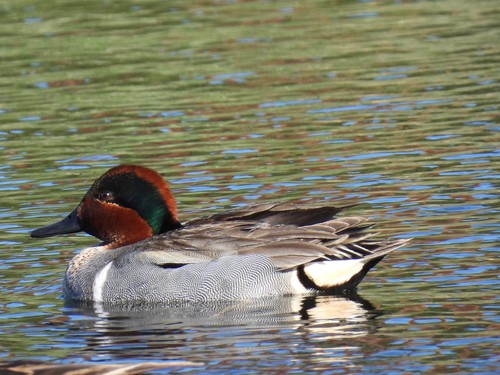 コガモ
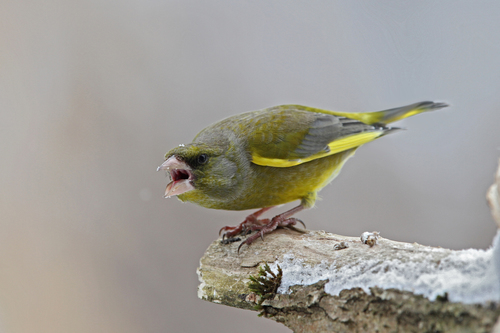 アオカワラヒワ
要点
The most reliable field mark to separate Eurasian/Green-winged Teal from European Greenfinch is overall structure and wing pattern: even in flight, the teal shows a compact duck shape with a distinctive iridescent green speculum bordered by white, while the greenfinch is a chunky, short-tailed songbird with bright yellow flashes in the wings and tail. Juvenile and female teals can look subdued, but always have a duck's bill and proportions, never the thick, conical finch bill of a greenfinch. If you see a small bird with a short, seed-cracking bill and greenish-yellow plumage, it's a greenfinch; a small, greyish or brownish bird with a flat bill and green wing patch is a teal. Habitat and behavior also help: teals are always found near water, while greenfinches are songbirds of gardens, hedges, and woodland edges.
識別のコツ
- Bill shape: Teal has a flat, broad duck bill (dark grey in males, pinkish or yellowish at base in females/immatures); greenfinch has a thick, conical, seed-cracking finch bill (pale horn-colored), obvious even at a distance.
- Wing pattern in flight: Teal of all ages show an iridescent green speculum bordered by white (especially obvious in adults and older juveniles); greenfinch shows yellow flashes on the primaries and tail sides, never a speculum.
- Body shape and posture: Teal is a compact, low-slung duck with a short neck and tail, usually seen swimming or sitting on water; greenfinch is a chunky, upright songbird, perching on branches or wires.
- Plumage color (adult males): Teal drake in breeding plumage is mostly grey with a chestnut head and bold green face patch; greenfinch male is olive-green with yellow wing and tail edges, no head pattern.
- Plumage color (females/immatures): Teal females/immatures are mottled brown with a pale belly and green speculum; greenfinch females/immatures are dull olive-brown with yellow flashes, no speculum, and a finch bill.
- Tail shape: Teal has a short, square tail with black and yellowish-buff patches on the coverts; greenfinch has a slightly forked tail with yellow sides.
- Leg color: Teal legs are dark grey (males) or greyish-olive/brown (females/immatures); greenfinch legs are pinkish or flesh-colored.
- Habitat: Teal is always near water; greenfinch is in trees, hedges, gardens, or farmland, rarely near open water.
- Behavior: Teal swims, dabbles, and takes off from water; greenfinch perches, hops, and flies with an undulating pattern.
- Voice: Teal gives whistled or quacking calls; greenfinch sings with trills, twitters, and wheezes.
- Size: Teal is much larger and heavier than greenfinch; if in doubt, compare to nearby sparrows or ducks.
- Group behavior: Teal often in tight flocks on water or in low flight; greenfinch in loose flocks or pairs in trees and bushes.
- Seasonal confusion: In eclipse (late summer), male teal resemble females but retain duck structure and wing pattern; greenfinch never shows a duck-like shape or speculum.
- Feeding: Teal dabbles for aquatic plants and invertebrates; greenfinch feeds on seeds, often at feeders.
- Pitfalls: Dull female/juvenile teal may seem sparrow-like at a glance, but bill and habitat always give them away; greenfinch never appears on water or with a duck's bill.
大きさ
Eurasian/Green-winged Teal is a small duck, but still much larger and heavier than a greenfinch: 34–43 cm (13–17 in) long with a wingspan of 53–59 cm (21–23 in) and average weight around 340–360 g. The European Greenfinch is a typical finch in size: 15 cm (5.9 in) long with a wingspan of 24.5–27.5 cm (9.6–10.8 in) and much lighter. Even at a distance, the teal looks like a miniature duck, while the greenfinch is sparrow-sized and perches on twigs.
羽色
- Juvenile/immature birds: Young teals resemble adult females—mottled brown with a pale belly, but always with a hint of green in the wing (speculum) visible in flight or when preening. Greenfinch juveniles are duller than adults, with brownish tones on the back and less obvious yellow in the wings and tail, but still show the characteristic finch shape and bill.
- Adult males (breeding): Teal drakes are mostly grey with a chestnut head and a bold dark green patch from eye to nape, bordered by yellowish-white. The flanks show a white stripe, and the wing speculum is iridescent green with white tips. Greenfinch males are olive-green overall, with bright yellow on the wing edges and tail sides, and lack any iridescent green speculum or white flank stripe.
- Females and eclipse males: Both sexes of teal are mottled brown, but always with a duck's profile and green speculum. Greenfinch females are duller olive-brown with yellow flashes, never showing a speculum or duck-like pattern.
- Flight views: Teal in flight show a compact duck shape with rapid wingbeats and a green speculum; greenfinches show a fluttery, undulating flight with yellow wing and tail edges.
行動
Teals are dabbling ducks: they swim, tip up to feed, and are most often seen on water or at the water's edge in flocks. They take off rapidly with whirring wings and fly in tight, low flocks. Greenfinches are perching songbirds: they hop or flit among branches, feed on seeds, and often come to garden feeders. Their flight is undulating and often accompanied by trilling or wheezing song, especially in spring. Teals never perch in trees or on wires; greenfinches rarely if ever swim.
生息環境
Teals are strictly associated with wetlands—lakes, ponds, marshes, and slow rivers, especially in migration and winter. They are seldom found far from water. Greenfinches prefer woodland edges, farmland hedges, gardens, and parks with thick vegetation, and are not tied to water. If you see a small bird in a tree or hedge away from water, it's almost certainly a greenfinch, not a teal.
声
Teal males give a clear, whistled 'cryc' or 'creelycc,' and females have a 'keh' or 'neeh' quack, typical of ducks. Greenfinches have a varied song of trills, twitters, and distinctive wheezing notes, and often sing in display flight. The calls are completely different: teal sound like ducks, greenfinch like finches.