

Motmot

ニシコウライウグイス 対 インドコウライウグイス

Oriolus oriolus 対 Oriolus kundoo

ニシコウライウグイスとインドコウライウグイスのクイズ
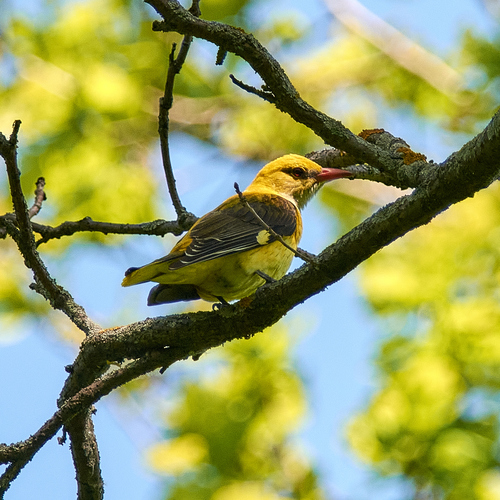
ニシコウライウグイス (Oriolus oriolus) ニシコウライウグイス
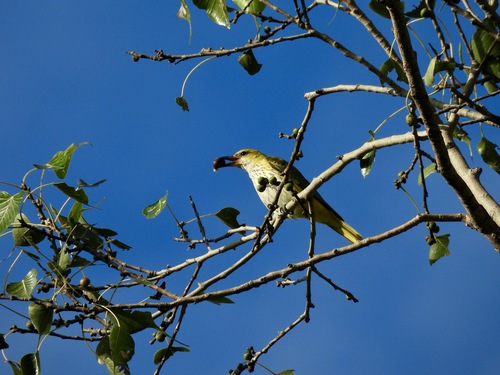
インドコウライウグイス (Oriolus kundoo) インドコウライウグイス

メディア

読み込み中…

要点

ニシコウライウグイスとインドコウライウグイスの最も信頼できるフィールドマークは、オスの黒いアイストライプです:インドコウライウグイスでは、目の後ろまでしっかりと伸びていますが、ニシコウライウグイスではそうではありません。インドコウライウグイスはまた、尾により多くの黄色があり、翼の羽毛の先端がより広い黄色を示し、くちばしと虹彩はより淡い赤です。雌と幼鳥は見分けるのが難しいですが、インドコウライウグイスの雌は下部により鋭いストリーキングがあります。ニシコウライウグイスは明らかに大きく、翼が長いですが、これは並べて見ない限りフィールドでは判断が難しいです。両種は全体的な形状と行動が非常に似ているため、頭の模様と翼/尾の色に注意を払うことが重要です。

識別のコツ

  1. Male head pattern: 最も診断的なマークは黒いアイストライプです。インドコウライウグイスでは、目の後ろまでしっかりと伸びています;ニシコウライウグイスでは、目のすぐ後ろで止まります。これはすべての季節の成鳥オスに対して信頼できます。
  2. Tail color: インドコウライウグイスは尾により多くの黄色があり、良い光や飛行中に見えます。ニシコウライウグイスの尾は外側の羽毛で特に黄色が少ないです。このマークは成鳥オスに最適ですが、雌にも役立つ場合があります。
  3. Wing pattern: インドコウライウグイスのオスは翼に大きなカーパルパッチと、第二次および第三次羽毛の広い黄色の先端を示し、翼をより明るく、より模様のあるものに見せます。ニシコウライウグイスの翼はより地味で、黄色が少ないです。これは止まっているか、ゆっくり飛んでいる鳥に最も役立ちます。
  4. Bill and iris color: インドコウライウグイスは、ニシコウライウグイスのより深い赤に比べて、淡い赤のくちばしと虹彩を持っています。これは微妙で、フィールドで判断するのが難しいことが多いですが、近くで見るか写真で見ると役立ちます。
  5. Female underpart streaking: 雌のインドコウライウグイスは下部により鋭く、より明確なストリーキングを持っているのに対し、ニシコウライウグイスの雌は鈍く、あまりマークがありません。これは雌やおそらく幼鳥を分けるための重要なマークです。
  6. Size: ニシコウライウグイスは大きく、翼が長いですが、これは直接比較や経験がないと明らかではありません。主なマークではなく、補助的な証拠として使用してください。
  7. Wing formula: 写真や手に持った鳥を持つ上級の観察者向け:ニシコウライウグイスでは、一次羽毛2が5よりも長い;インドコウライウグイスでは、一次羽毛5が2よりも長いです。これは詳細な翼のビューがないとフィールドでは見えません。
  8. Overall color impression: インドコウライウグイスは全体的により明るい黄色に見えることが多く、特に尾や翼で、ニシコウライウグイスはやや鈍く、緑がかっています(特に雌で)。
  9. Habitat and range: 温帯のヨーロッパやユーラシアにいる場合、ニシコウライウグイスが期待されます。インド亜大陸や中央アジアでは、インドコウライウグイスがデフォルトです。重複ゾーンでは、羽毛のマークを使用してください。
  10. Behavior: 両種は似たように行動し、ジズや採餌スタイルで信頼できるように分けることはできません。
  11. Voice: 歌と呼び声は似ており、ほとんどのバーダーにとって診断的ではありませんが、微妙な違いがあります。
  12. Seasonal context: ニシコウライウグイスはヨーロッパとユーラシアで夏の移動鳥で、アフリカで越冬します。インドコウライウグイスは南アジアと中央アジアに生息または部分的に移動します。範囲外の記録は、羽毛と構造を使用して注意深く調査する必要があります。
  13. Immature/juvenile birds: 情報源は幼鳥の詳細な違いを提供していませんが、インドコウライウグイスの雌の鋭い下部のストリーキングは若い鳥にも適用されるかもしれません。注意して使用してください。
  14. Pitfalls: 両種は内気で、しばしば葉の中に隠れています。明るいオスは分けやすいですが、雌や幼鳥はストリーキングや微妙な色の違いに注意を払う必要があります。光が悪いと重要なマークが隠れることがあるので、複数のビューを取得するようにしてください。
  15. Do not rely on feeding behavior or flight style: 両種は昆虫や果物を食べ、似たような強く、直接的な飛行を持ち、浅いダイブをします。これらは分けるためには役立ちません。

大きさ

ニシコウライウグイスは明らかに大きく、成鳥のオスは翼の長さが149–162 mmで、インドコウライウグイスは136–144 mmです。ニシコウライウグイスはまた、長さが約24 cm、翼幅が44–45 cmです。フィールドでは、このサイズの違いは微妙で、直接比較がないと明らかではありませんが、ニシコウライウグイスは一般的によりがっしりとしており、翼が長く見えます。インドコウライウグイスはよりコンパクトで、やや短い翼を持っています。

羽色

成鳥のオスにとって、インドコウライウグイスは目の後ろまでしっかりと伸びる黒いアイストライプ、大きなカーパルパッチ、第二次および第三次羽毛の広い黄色の先端によって際立っています。尾もニシコウライウグイスよりも黄色が多いです。インドコウライウグイスのくちばしと虹彩は淡い赤の色合いです。ニシコウライウグイスのオスは目の後ろに伸びない黒いアイストライプと、尾の黄色が少ないです。雌のインドコウライウグイスは、ニシコウライウグイスの鈍く、あまりマークがない雌に比べて、下部により鋭く、より明確なストリーキングを示します。幼鳥や若鳥の羽毛は情報源で詳細に説明されていませんが、インドコウライウグイスの雌の鋭いストリーキングは若い鳥にも役立つかもしれません。両種は典型的なオリオールの黒と黄色(オス)または緑がかった(雌)色彩を持っていますが、これらの微妙な違いは分けるための重要な要素です。

行動

両種は内気で、キャノピーを好む鳥であり、明るい色にもかかわらず見るのが難しいことがあります。彼らの飛行は強く、直接的で、長距離での浅いダイブがありますが、両者は空中でややツグミのように見えることがあります。インドコウライウグイスは約40 km/hで飛ぶことが記録されており、時にはプールに飛び込んで入浴しますが、そのような行動はフィールドでの分離には十分ではありません。採餌は似ており、両者は葉や隙間から昆虫や果物をついばみます。

生息環境

ニシコウライウグイスは温帯のヨーロッパとユーラシアで繁殖し、冬には中央アフリカや南アフリカに移動します。インドコウライウグイスはインド亜大陸と中央アジアに生息し、バルチスタンやアフガニスタンからヒマラヤを経てネパールまで繁殖し、一部の個体群はインド半島に定住しています。インドコウライウグイスは、開けた森林や半常緑の森林、林縁、マングローブ、公園、庭、プランテーションなど、より広範な生息地を利用します。ニシコウライウグイスは温帯の北部地域で繁殖する唯一の旧世界のオリオールであるため、範囲と生息地は特に重複ゾーンの外では強い手がかりとなります。

声

両種は似たような声を持ち、フルーティーでメロディックな歌と厳しい呼び声があります。ニシコウライウグイスの歌は、フルーティーな「ウィーラ・ウィー・ウー」または「オー・リィ・オール」と表現され、その呼び声は厳しい「クウィアーク」です。情報源はインドコウライウグイスの声の詳細な比較を提供していませんが、呼び声の違いが種の分裂に寄与したことを指摘しています。実際には、歌は分離のための信頼できるフィールドマークではなく、両者に非常に精通していない限り、役立ちません。

より良い説明を送る

比較と同じ項目を使ってください。文章はすぐに公開されます。

The most reliable field mark between Eurasian Golden Oriole and Indian Golden Oriole is the male's black eye-stripe: in Indian Golden Oriole, it extends well behind the eye, while in Eurasian Golden Oriole it does not. Indian Golden Oriole also shows more yellow in the tail and broader yellow tips to the wing feathers, and its bill and iris are paler red. Females and immatures are trickier, but Indian Golden Oriole females have sharper streaking below. Eurasian Golden Oriole is distinctly larger, with a longer wing, but this is hard to judge in the field unless seen side-by-side. Both species are very similar in overall shape and behavior, so careful attention to the head pattern and wing/tail color is key.

  1. Male head pattern: The most diagnostic mark is the black eye-stripe. In Indian Golden Oriole, it extends well behind the eye; in Eurasian Golden Oriole, it stops at or just behind the eye. This is reliable for adult males in all seasons.
  2. Tail color: Indian Golden Oriole has more yellow in the tail, visible in good light or in flight. Eurasian Golden Oriole's tail is less yellow, especially on the outer feathers. This mark is best for adult males, but can help with females if seen well.
  3. Wing pattern: Indian Golden Oriole males show a large carpal patch on the wing and broad yellow tips to the secondaries and tertiaries, making the wing look brighter and more patterned. Eurasian Golden Oriole's wing is plainer, with less extensive yellow. This is most useful on perched or slow-flying birds.
  4. Bill and iris color: Indian Golden Oriole has a paler red bill and iris compared to the deeper red of Eurasian Golden Oriole. This is subtle and often hard to judge in the field, but can help in close views or photographs.
  5. Female underpart streaking: Female Indian Golden Orioles have sharper, more defined streaks below, while Eurasian Golden Oriole females are duller and less marked. This is a key mark for separating females and possibly immatures.
  6. Size: Eurasian Golden Oriole is larger and longer-winged, but this is only obvious with direct comparison or experience. Use as supporting evidence, not a primary mark.
  7. Wing formula: For advanced observers with photos or in-hand birds: in Eurasian Golden Oriole, primary 2 is longer than 5; in Indian Golden Oriole, primary 5 is longer than 2. This is not visible in the field without detailed wing views.
  8. Overall color impression: Indian Golden Oriole often looks brighter yellow overall, especially in the tail and wings, while Eurasian Golden Oriole is a bit duller and greener (especially in females).
  9. Habitat and range: If you are in temperate Europe or the Palearctic, Eurasian Golden Oriole is expected. In the Indian subcontinent and Central Asia, Indian Golden Oriole is the default. In overlap zones, use plumage marks.
  10. Behavior: Both species behave similarly and are not reliably separated by jizz or foraging style.
  11. Voice: Song and calls are similar and not diagnostic for most birders, though subtle differences exist.
  12. Seasonal context: Eurasian Golden Oriole is a summer migrant in Europe and the Palearctic, wintering in Africa. Indian Golden Oriole is resident or a partial migrant in South Asia and Central Asia. Out-of-range records should be scrutinized carefully using plumage and structure.
  13. Immature/juvenile birds: The sources do not provide detailed differences for juveniles, but sharper underpart streaking in Indian Golden Oriole females may also apply to young birds. Use with caution.
  14. Pitfalls: Both species are shy and often hidden in foliage. Bright males are easier to separate; females and immatures require close attention to streaking and subtle color differences. Poor light can obscure key marks, so try to get multiple views.
  15. Do not rely on feeding behavior or flight style: Both species feed on insects and fruit and have similar strong, direct flight with shallow dips. These are not useful for separation.

Eurasian Golden Oriole is noticeably larger, with adult males having a wing length of 149–162 mm, compared to Indian Golden Oriole's 136–144 mm. Eurasian Golden Oriole also averages about 24 cm in length and a wingspan of 44–45 cm. In the field, this size difference can be subtle unless you have direct comparison, but Eurasian Golden Oriole generally appears bulkier and longer-winged. Indian Golden Oriole is more compact and slightly shorter-winged.

For adult males, Indian Golden Oriole stands out by its black eye-stripe that extends well behind the eye, a large carpal patch on the wing, and wide yellow tips to the secondaries and tertiaries. The tail is also more yellow than in Eurasian Golden Oriole. The bill and iris are a paler shade of red in Indian Golden Oriole. Eurasian Golden Oriole males have a black eye-stripe that does not extend behind the eye and less yellow in the tail. Female Indian Golden Orioles show sharper, more defined streaks on the underparts compared to the duller, less marked females of Eurasian Golden Oriole. Immature and juvenile plumages are not described in detail in the sources, but the sharper streaking in Indian Golden Oriole females may also help with younger birds. Both species have the typical oriole black and yellow (male) or greenish (female) coloration, but these subtle differences are key for separation.

Both species are shy, canopy-loving birds that can be difficult to see despite their bright colors. Their flight is strong and direct, with some shallow dips over longer distances, and both can look somewhat thrush-like in the air. Indian Golden Oriole has been recorded flying at about 40 km/h and sometimes bathes by flying into pools, but such behavior is not unique enough for field separation. Foraging is similar: both pick insects and fruit from foliage or crevices.

Eurasian Golden Oriole breeds in temperate Europe and the Palearctic, migrating to central and southern Africa for winter. Indian Golden Oriole is found in the Indian subcontinent and Central Asia, breeding from Baluchistan and Afghanistan through the Himalayas to Nepal, with some populations resident in peninsular India. Indian Golden Oriole uses a broader range of habitats, including open and semi-evergreen forests, woodland edges, mangroves, parks, gardens, and plantations. Eurasian Golden Oriole is the only Old World oriole breeding in temperate northern regions, so range and habitat can be a strong clue, especially outside the overlap zone.

Both species have similar vocalizations, with a fluting, melodious song and harsh calls. Eurasian Golden Oriole's song is described as a fluting 'weela-wee-ooo' or 'or-iii-ole', and its call is a harsh 'kweeaahk'. The sources do not provide a detailed comparison of Indian Golden Oriole's voice, but note that differences in calls contributed to the species split. In practice, song is not a reliable field mark for separation unless you are very familiar with both.

変更を破棄しますか?

保存していない編集があります。今離れると失われます。

ニシコウライウグイス · インドコウライウグイス · 苦手な鳥