

Motmot

エレオノラハヤブサ 対 チゴハヤブサ

Falco eleonorae 対 Falco subbuteo

エレオノラハヤブサとチゴハヤブサのクイズ
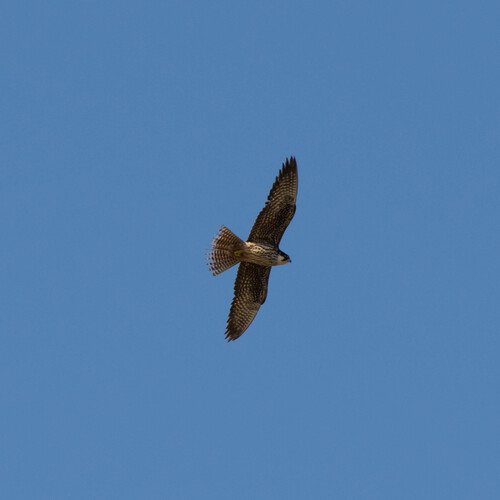
エレオノラハヤブサ (Falco eleonorae) エレオノラハヤブサ
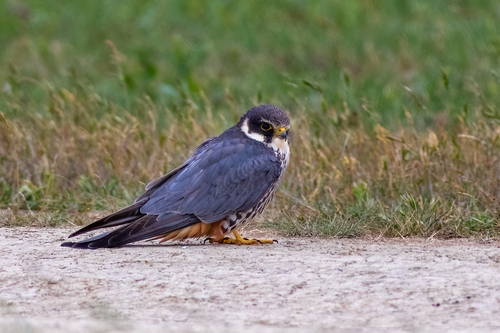
チゴハヤブサ (Falco subbuteo) チゴハヤブサ

メディア

読み込み中…

要点

The most reliable field mark for separating Eleonora's Falcon from Eurasian Hobby is overall size and structure, especially in flight: Eleonora's is distinctly larger, longer-winged, and longer-tailed, with a slimmer, more elegant silhouette. For plumage, adult Eleonora's Falcons come in two morphs: dark morph birds are entirely sooty brown with black underwing coverts, while light morphs and juveniles show buffy underparts with a strong contrast between dark underwing coverts and paler flight feathers—unlike the Eurasian Hobby, which has streaked underparts and rufous thighs. Juvenile Hobbies are browner above and have streaked buff thighs and undertail coverts, lacking Eleonora's buffy, unstreaked look. Both species can be seen hawking insects and small birds on the wing, but Eleonora's Falcon is much rarer and more localized in Europe, breeding mainly on Mediterranean islands.

識別のコツ

  1. Size and Structure: Eleonora's Falcon is noticeably larger, longer-winged, and longer-tailed than Eurasian Hobby. Use this especially when birds are seen together or with known species for scale.
  2. Flight Silhouette: Eleonora's shows a more slender, elongated profile with long pointed wings and a long tail, resembling a small Peregrine. Hobby is more compact, with a square tail and sickle-shaped wings, often resembling a swift in flight.
  3. Adult Plumage (Eleonora's): Dark morph Eleonora's is entirely sooty brown, including underwing coverts—never matched by Hobby. Light morph Eleonora's has buffy, unstreaked underparts and a strong contrast between blackish underwing coverts and paler flight feathers.
  4. Adult Plumage (Hobby): Adult Hobby is slate-grey above, with a dark crown, white throat, and bold rufous thighs and vent. Underparts are whitish with black streaks. The rufous 'trousers' and vent are diagnostic at close range.
  5. Juvenile/Immature Comparison: Juvenile Eleonora's (light morph) is buffy below with little or no streaking, and shows dark underwing coverts contrasting with paler flight feathers. Juvenile Hobby is browner above, with streaked buffy thighs and undertail coverts, and streaked underparts.
  6. Underwing Pattern: Eleonora's (all ages, especially light morph and juveniles) shows a sharp contrast between dark underwing coverts and paler flight feathers. Hobby's underwing is less contrasting, and adults show more uniform patterning.
  7. Rufous Thighs and Vent: Hobby (all ages) shows rufous thighs and vent, often visible in flight or when perched. Eleonora's never shows this feature.
  8. Head Pattern: Hobby has a dark crown and two short black moustache stripes, with a white throat. Eleonora's lacks the strong facial contrast and has a more uniform head, especially in dark morphs.
  9. Perched Posture: Eleonora's appears longer-legged and longer-tailed when perched, with a more upright stance. Hobby is more compact.
  10. Habitat and Range: Eleonora's is almost always coastal or on Mediterranean islands during breeding; Hobby is widespread in open lowland habitats, often far from the sea.
  11. Seasonality: Eleonora's breeds in late summer/early autumn, timed with peak migration of small birds. Hobby breeds earlier in the summer and migrates earlier.
  12. Behavior: Both species hunt insects and birds in flight, but Eleonora's may be seen cruising cliffs or storing live prey, a behavior not shown by Hobby.
  13. Voice: Both give 'kek-kek-kek' calls; not a reliable separator.
  14. Confusion Risk: Light morph Eleonora's and juvenile Hobby are most easily confused, especially in flight—focus on size, underwing contrast, and presence/absence of rufous thighs.
  15. Pitfalls: Do not rely on general 'falcon' shape or aerial agility alone—both are slim, pointed-winged falcons, but Eleonora's is always larger and more elongated, and only Hobby shows the classic rufous vent and streaked underparts.

大きさ

Eleonora's Falcon is significantly larger and heavier than Eurasian Hobby. Eleonora's averages 334 g in body mass and measures 36–42 cm in length with an 87–104 cm wingspan, while Eurasian Hobby averages 211 g, is 29–36 cm long, and has a 74–84 cm wingspan. In the field, Eleonora's appears longer-winged and longer-tailed, with a more graceful, almost 'slender Peregrine' jizz, whereas Hobby is more compact and swift-like, especially in gliding flight.

羽色

Juvenile and immature Eleonora's Falcons (light morph) resemble large juvenile Hobbies but show key differences: Eleonora's has buff underparts with a sharp contrast between dark underwing coverts and paler flight feathers, and the underparts are generally unstreaked. Juvenile Eurasian Hobbies are browner above, with streaked buffy thighs and undertail coverts, and the underparts are streaked rather than plain. Adult Eleonora's Falcons come in two morphs: dark morphs are all sooty brown with black underwing coverts (never shown by Hobby), while light morphs retain the buffy, unstreaked underparts and strong underwing contrast. Adult Hobbies are slate-grey above, with a dark crown, white throat, and bold rufous 'trousers' and vent, plus black streaks on the whitish underparts. In flight, Hobby shows a clean, sickle-winged look with a square tail and rufous thighs, while Eleonora's is more elongated and never shows the Hobby's bright rufous vent.

行動

Both species are agile aerial hunters, often seen catching large insects or small birds in flight and transferring prey from talons to beak. Eleonora's Falcon is unique in sometimes imprisoning live birds for later feeding. Eleonora's often cruises along coastal cliffs, especially during the late summer breeding season, while Hobby is more often seen hawking over open country, marshes, or farmland, sometimes in small groups during migration. Hobbies may appear more swift-like, especially when gliding with wings folded.

生息環境

Eleonora's Falcon breeds almost exclusively on Mediterranean islands and coastal cliffs, especially in Greece and nearby regions, and is rare away from these sites. It winters in Madagascar and migrates across Africa. Eurasian Hobby is much more widespread, breeding across Eurasia in open lowland habitats with scattered woods, marshes, and farmland. Hobbies are more likely to be seen inland, while Eleonora's is strongly tied to coastal and island cliffs.

声

Both species have typical falcon calls. Eleonora's Falcon gives a 'kek-kek-kek' call, which is not distinctive enough to separate from Hobby in most field situations. Vocalizations are not a reliable field mark for separation.

より良い説明を送る

比較と同じ項目を使ってください。文章はすぐに公開されます。

The most reliable field mark for separating Eleonora's Falcon from Eurasian Hobby is overall size and structure, especially in flight: Eleonora's is distinctly larger, longer-winged, and longer-tailed, with a slimmer, more elegant silhouette. For plumage, adult Eleonora's Falcons come in two morphs: dark morph birds are entirely sooty brown with black underwing coverts, while light morphs and juveniles show buffy underparts with a strong contrast between dark underwing coverts and paler flight feathers—unlike the Eurasian Hobby, which has streaked underparts and rufous thighs. Juvenile Hobbies are browner above and have streaked buff thighs and undertail coverts, lacking Eleonora's buffy, unstreaked look. Both species can be seen hawking insects and small birds on the wing, but Eleonora's Falcon is much rarer and more localized in Europe, breeding mainly on Mediterranean islands.

  1. Size and Structure: Eleonora's Falcon is noticeably larger, longer-winged, and longer-tailed than Eurasian Hobby. Use this especially when birds are seen together or with known species for scale.
  2. Flight Silhouette: Eleonora's shows a more slender, elongated profile with long pointed wings and a long tail, resembling a small Peregrine. Hobby is more compact, with a square tail and sickle-shaped wings, often resembling a swift in flight.
  3. Adult Plumage (Eleonora's): Dark morph Eleonora's is entirely sooty brown, including underwing coverts—never matched by Hobby. Light morph Eleonora's has buffy, unstreaked underparts and a strong contrast between blackish underwing coverts and paler flight feathers.
  4. Adult Plumage (Hobby): Adult Hobby is slate-grey above, with a dark crown, white throat, and bold rufous thighs and vent. Underparts are whitish with black streaks. The rufous 'trousers' and vent are diagnostic at close range.
  5. Juvenile/Immature Comparison: Juvenile Eleonora's (light morph) is buffy below with little or no streaking, and shows dark underwing coverts contrasting with paler flight feathers. Juvenile Hobby is browner above, with streaked buffy thighs and undertail coverts, and streaked underparts.
  6. Underwing Pattern: Eleonora's (all ages, especially light morph and juveniles) shows a sharp contrast between dark underwing coverts and paler flight feathers. Hobby's underwing is less contrasting, and adults show more uniform patterning.
  7. Rufous Thighs and Vent: Hobby (all ages) shows rufous thighs and vent, often visible in flight or when perched. Eleonora's never shows this feature.
  8. Head Pattern: Hobby has a dark crown and two short black moustache stripes, with a white throat. Eleonora's lacks the strong facial contrast and has a more uniform head, especially in dark morphs.
  9. Perched Posture: Eleonora's appears longer-legged and longer-tailed when perched, with a more upright stance. Hobby is more compact.
  10. Habitat and Range: Eleonora's is almost always coastal or on Mediterranean islands during breeding; Hobby is widespread in open lowland habitats, often far from the sea.
  11. Seasonality: Eleonora's breeds in late summer/early autumn, timed with peak migration of small birds. Hobby breeds earlier in the summer and migrates earlier.
  12. Behavior: Both species hunt insects and birds in flight, but Eleonora's may be seen cruising cliffs or storing live prey, a behavior not shown by Hobby.
  13. Voice: Both give 'kek-kek-kek' calls; not a reliable separator.
  14. Confusion Risk: Light morph Eleonora's and juvenile Hobby are most easily confused, especially in flight—focus on size, underwing contrast, and presence/absence of rufous thighs.
  15. Pitfalls: Do not rely on general 'falcon' shape or aerial agility alone—both are slim, pointed-winged falcons, but Eleonora's is always larger and more elongated, and only Hobby shows the classic rufous vent and streaked underparts.

Eleonora's Falcon is significantly larger and heavier than Eurasian Hobby. Eleonora's averages 334 g in body mass and measures 36–42 cm in length with an 87–104 cm wingspan, while Eurasian Hobby averages 211 g, is 29–36 cm long, and has a 74–84 cm wingspan. In the field, Eleonora's appears longer-winged and longer-tailed, with a more graceful, almost 'slender Peregrine' jizz, whereas Hobby is more compact and swift-like, especially in gliding flight.

Juvenile and immature Eleonora's Falcons (light morph) resemble large juvenile Hobbies but show key differences: Eleonora's has buff underparts with a sharp contrast between dark underwing coverts and paler flight feathers, and the underparts are generally unstreaked. Juvenile Eurasian Hobbies are browner above, with streaked buffy thighs and undertail coverts, and the underparts are streaked rather than plain. Adult Eleonora's Falcons come in two morphs: dark morphs are all sooty brown with black underwing coverts (never shown by Hobby), while light morphs retain the buffy, unstreaked underparts and strong underwing contrast. Adult Hobbies are slate-grey above, with a dark crown, white throat, and bold rufous 'trousers' and vent, plus black streaks on the whitish underparts. In flight, Hobby shows a clean, sickle-winged look with a square tail and rufous thighs, while Eleonora's is more elongated and never shows the Hobby's bright rufous vent.

Both species are agile aerial hunters, often seen catching large insects or small birds in flight and transferring prey from talons to beak. Eleonora's Falcon is unique in sometimes imprisoning live birds for later feeding. Eleonora's often cruises along coastal cliffs, especially during the late summer breeding season, while Hobby is more often seen hawking over open country, marshes, or farmland, sometimes in small groups during migration. Hobbies may appear more swift-like, especially when gliding with wings folded.

Eleonora's Falcon breeds almost exclusively on Mediterranean islands and coastal cliffs, especially in Greece and nearby regions, and is rare away from these sites. It winters in Madagascar and migrates across Africa. Eurasian Hobby is much more widespread, breeding across Eurasia in open lowland habitats with scattered woods, marshes, and farmland. Hobbies are more likely to be seen inland, while Eleonora's is strongly tied to coastal and island cliffs.

Both species have typical falcon calls. Eleonora's Falcon gives a 'kek-kek-kek' call, which is not distinctive enough to separate from Hobby in most field situations. Vocalizations are not a reliable field mark for separation.

変更を破棄しますか?

保存していない編集があります。今離れると失われます。

エレオノラハヤブサ · チゴハヤブサ · 苦手な鳥