

Motmot

サルハマシギ 対 ヨーロッパトウネン

Calidris ferruginea 対 Calidris minuta

サルハマシギとヨーロッパトウネンのクイズ
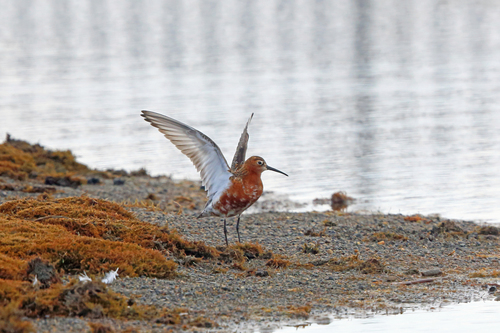
サルハマシギ (Calidris ferruginea) サルハマシギ
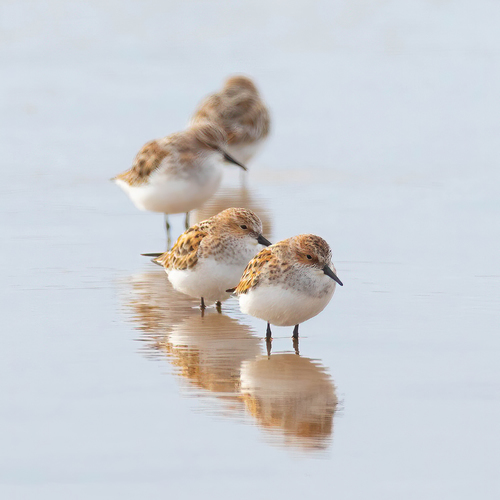
ヨーロッパトウネン (Calidris minuta) ヨーロッパトウネン

メディア

読み込み中…

要点

The most reliable field mark between Curlew Sandpiper and Little Stint is the prominent white rump and broad white wing stripe shown by Curlew Sandpiper in all plumages, especially obvious in flight—Little Stint lacks both. Juvenile and non-breeding birds are often confused, but Curlew Sandpiper is distinctly larger and longer-billed, with a more downcurved bill and longer legs. Little Stint is much smaller, with a fine, straight bill and a compact, quick-moving jizz. Breeding plumages differ: Curlew Sandpiper shows extensive reddish underparts, while Little Stint has a more limited orange wash and a white V on the back. In winter, both are dull and greyish, but structural differences and flight patterns remain reliable.

識別のコツ

  1. White rump and wing stripe (Curlew Sandpiper): In all ages and plumages, Curlew Sandpiper shows a large white rump and a broad white stripe across the wing in flight—Little Stint lacks both. This is the most reliable field mark, especially for birds in flight or among mixed flocks.
  2. Size and structure: Curlew Sandpiper is much larger, with a longer neck, legs, and bill. Little Stint is tiny, compact, and short-legged by comparison. Use direct comparison when both are present.
  3. Bill shape: Curlew Sandpiper has a long, noticeably downcurved black bill (32–44 mm), while Little Stint's bill is short, fine, straight, and pointed. Bill shape is especially useful at close range or in profile.
  4. Primary projection: Little Stint shows a long primary projection beyond the tertials, giving a spiky rear end, while Curlew Sandpiper's projection is less pronounced. This is best seen on perched birds.
  5. Leg color and length: Both have dark legs, but Curlew Sandpiper's are longer and often appear more robust. Little Stint's legs are thin and short, adding to its compact look.
  6. Juvenile upperparts: Juvenile Curlew Sandpiper is scaly and buff-tinged above, with slim tail feathers and pale creamy streaks on the crown and back. Juvenile Little Stint has pale crown stripes and a pinkish breast, but lacks the scaly, buffy look and the white rump.
  7. Breeding plumage: Curlew Sandpiper (especially males) shows extensive reddish underparts and a rufous wash over the head and breast. Little Stint has a more limited orange wash to the breast and a strong white V on the back. The white V is unique to Little Stint in breeding plumage.
  8. Non-breeding plumage: Both species become duller and greyer, but Curlew Sandpiper remains larger and longer-billed, with a white rump and wing stripe in flight. Little Stint is plain grey above and white below, with no strong flight marks.
  9. Feeding behavior: Little Stint feeds with quick, darting movements, often in tight groups. Curlew Sandpiper is slower and more methodical, often wading deeper.
  10. Voice: Listen for the sharp 'stit' call of Little Stint, especially in flight or when flushed; Curlew Sandpiper's call is not described here, so this is mainly useful for confirming Little Stint.
  11. Flock composition: Little Stint is often found in dense flocks with other small Calidris waders, while Curlew Sandpiper is more often with larger waders or in smaller groups.
  12. Tail pattern: Curlew Sandpiper has a white rump and broad, pale grey tail feathers; Little Stint's tail is plain and lacks contrast.
  13. Eyebrow: Curlew Sandpiper has a distinct white eyebrow, especially in non-breeding plumage, but this is subtle and not always reliable in the field.
  14. Context: Both species overlap extensively in migration and winter, so do not rely on habitat or season alone for identification.
  15. Hybrid confusion: Little Stint can hybridize with Temminck's Stint, but not with Curlew Sandpiper; hybrids are extremely rare and not a likely confusion in most regions.

大きさ

Curlew Sandpiper is noticeably larger and heavier than Little Stint. While Curlew Sandpiper measures 18–23 cm in length with a wingspan of 38–46 cm and a body mass ranging from 44–117 g, Little Stint is much smaller, with a typical body mass of about 25.5 g [wikidata]. In the field, Curlew Sandpiper appears longer-legged and longer-necked, with a more elongated silhouette, while Little Stint is compact and daintier.

羽色

Juvenile and non-breeding Curlew Sandpipers have greyish upperparts with a large white rump and a broad white wing stripe visible in flight; juveniles are more buff-tinged and scaly above, with slim tail feathers and pale creamy streaks on the crown and back. Little Stint juveniles have pale crown stripes and a pinkish breast, and lack the white rump or wing stripe. In breeding plumage, Curlew Sandpiper adults (especially males) show extensive reddish underparts and a rufous wash across the head and breast, while Little Stint has a more limited orange wash to the breast and a distinctive white V on the back. In winter, both species become duller and greyer, but Curlew Sandpiper retains the white rump and wing stripe, and Little Stint remains plain and compact, with no strong wing or rump pattern in flight.

行動

Curlew Sandpiper moves with a more measured, deliberate gait, often wading in deeper water due to its longer legs. In contrast, Little Stint is notably quick and active, feeding with rapid, darting movements and often associating in tight flocks with other small waders. In mixed flocks, Little Stint's smaller size and frenetic feeding style stand out.

生息環境

Both species are long-distance migrants breeding in the Arctic and wintering in Africa and southern Eurasia. Curlew Sandpiper breeds in Siberian bogs and coastal lowlands, while Little Stint breeds across arctic Europe and Asia. On migration and in winter, both use coastal mudflats and saltpans, but Little Stint is more likely to be found in large, dense flocks with other small Calidris species, sometimes at inland pools. Habitat overlap is extensive, so context alone is rarely diagnostic.

声

Little Stint gives a sharp, high-pitched 'stit' call, which is distinctive among small waders. No diagnostic vocalization is described for Curlew Sandpiper in the provided notes, so voice is only useful for picking out Little Stint.

より良い説明を送る

比較と同じ項目を使ってください。文章はすぐに公開されます。

The most reliable field mark between Curlew Sandpiper and Little Stint is the prominent white rump and broad white wing stripe shown by Curlew Sandpiper in all plumages, especially obvious in flight—Little Stint lacks both. Juvenile and non-breeding birds are often confused, but Curlew Sandpiper is distinctly larger and longer-billed, with a more downcurved bill and longer legs. Little Stint is much smaller, with a fine, straight bill and a compact, quick-moving jizz. Breeding plumages differ: Curlew Sandpiper shows extensive reddish underparts, while Little Stint has a more limited orange wash and a white V on the back. In winter, both are dull and greyish, but structural differences and flight patterns remain reliable.

  1. White rump and wing stripe (Curlew Sandpiper): In all ages and plumages, Curlew Sandpiper shows a large white rump and a broad white stripe across the wing in flight—Little Stint lacks both. This is the most reliable field mark, especially for birds in flight or among mixed flocks.
  2. Size and structure: Curlew Sandpiper is much larger, with a longer neck, legs, and bill. Little Stint is tiny, compact, and short-legged by comparison. Use direct comparison when both are present.
  3. Bill shape: Curlew Sandpiper has a long, noticeably downcurved black bill (32–44 mm), while Little Stint's bill is short, fine, straight, and pointed. Bill shape is especially useful at close range or in profile.
  4. Primary projection: Little Stint shows a long primary projection beyond the tertials, giving a spiky rear end, while Curlew Sandpiper's projection is less pronounced. This is best seen on perched birds.
  5. Leg color and length: Both have dark legs, but Curlew Sandpiper's are longer and often appear more robust. Little Stint's legs are thin and short, adding to its compact look.
  6. Juvenile upperparts: Juvenile Curlew Sandpiper is scaly and buff-tinged above, with slim tail feathers and pale creamy streaks on the crown and back. Juvenile Little Stint has pale crown stripes and a pinkish breast, but lacks the scaly, buffy look and the white rump.
  7. Breeding plumage: Curlew Sandpiper (especially males) shows extensive reddish underparts and a rufous wash over the head and breast. Little Stint has a more limited orange wash to the breast and a strong white V on the back. The white V is unique to Little Stint in breeding plumage.
  8. Non-breeding plumage: Both species become duller and greyer, but Curlew Sandpiper remains larger and longer-billed, with a white rump and wing stripe in flight. Little Stint is plain grey above and white below, with no strong flight marks.
  9. Feeding behavior: Little Stint feeds with quick, darting movements, often in tight groups. Curlew Sandpiper is slower and more methodical, often wading deeper.
  10. Voice: Listen for the sharp 'stit' call of Little Stint, especially in flight or when flushed; Curlew Sandpiper's call is not described here, so this is mainly useful for confirming Little Stint.
  11. Flock composition: Little Stint is often found in dense flocks with other small Calidris waders, while Curlew Sandpiper is more often with larger waders or in smaller groups.
  12. Tail pattern: Curlew Sandpiper has a white rump and broad, pale grey tail feathers; Little Stint's tail is plain and lacks contrast.
  13. Eyebrow: Curlew Sandpiper has a distinct white eyebrow, especially in non-breeding plumage, but this is subtle and not always reliable in the field.
  14. Context: Both species overlap extensively in migration and winter, so do not rely on habitat or season alone for identification.
  15. Hybrid confusion: Little Stint can hybridize with Temminck's Stint, but not with Curlew Sandpiper; hybrids are extremely rare and not a likely confusion in most regions.

Curlew Sandpiper is noticeably larger and heavier than Little Stint. While Curlew Sandpiper measures 18–23 cm in length with a wingspan of 38–46 cm and a body mass ranging from 44–117 g, Little Stint is much smaller, with a typical body mass of about 25.5 g [wikidata]. In the field, Curlew Sandpiper appears longer-legged and longer-necked, with a more elongated silhouette, while Little Stint is compact and daintier.

Juvenile and non-breeding Curlew Sandpipers have greyish upperparts with a large white rump and a broad white wing stripe visible in flight; juveniles are more buff-tinged and scaly above, with slim tail feathers and pale creamy streaks on the crown and back. Little Stint juveniles have pale crown stripes and a pinkish breast, and lack the white rump or wing stripe. In breeding plumage, Curlew Sandpiper adults (especially males) show extensive reddish underparts and a rufous wash across the head and breast, while Little Stint has a more limited orange wash to the breast and a distinctive white V on the back. In winter, both species become duller and greyer, but Curlew Sandpiper retains the white rump and wing stripe, and Little Stint remains plain and compact, with no strong wing or rump pattern in flight.

Curlew Sandpiper moves with a more measured, deliberate gait, often wading in deeper water due to its longer legs. In contrast, Little Stint is notably quick and active, feeding with rapid, darting movements and often associating in tight flocks with other small waders. In mixed flocks, Little Stint's smaller size and frenetic feeding style stand out.

Both species are long-distance migrants breeding in the Arctic and wintering in Africa and southern Eurasia. Curlew Sandpiper breeds in Siberian bogs and coastal lowlands, while Little Stint breeds across arctic Europe and Asia. On migration and in winter, both use coastal mudflats and saltpans, but Little Stint is more likely to be found in large, dense flocks with other small Calidris species, sometimes at inland pools. Habitat overlap is extensive, so context alone is rarely diagnostic.

Little Stint gives a sharp, high-pitched 'stit' call, which is distinctive among small waders. No diagnostic vocalization is described for Curlew Sandpiper in the provided notes, so voice is only useful for picking out Little Stint.

変更を破棄しますか?

保存していない編集があります。今離れると失われます。

サルハマシギ · ヨーロッパトウネン · 苦手な鳥