

モリバト 対 タゲリ
Columba palumbus 対 Vanellus vanellus
モリバトとタゲリのクイズ
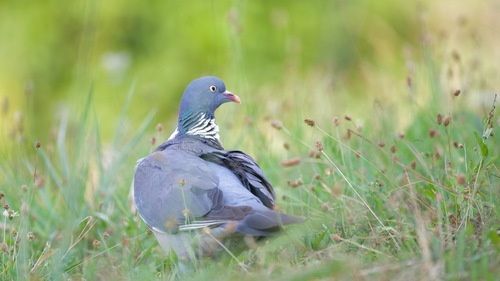 モリバト
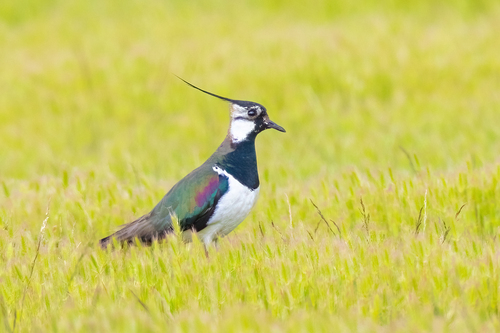 タゲリ
要点
The most reliable way to separate Common Woodpigeon from Northern Lapwing is by their overall structure and flight style: Woodpigeon is a large, heavy-bodied pigeon with broad, rounded wings and a steady, clattering flight, while Lapwing is a smaller, slender wader with long, rounded wings, a prominent crest, and a distinctive, floppy, buoyant flight. In all plumages, Woodpigeon shows bold white wing bars and (in adults) white neck patches, while Lapwing is strikingly black-and-white with a greenish back and a long, wispy crest. Juvenile Woodpigeons lack the neck patch but still show the white wing bars in flight. Lapwing never shows white on the wing coverts, instead flashing a black-and-white upperwing with a dark trailing edge. If you see a pigeon-like bird with a pinkish breast, it's a Woodpigeon; a black-and-white bird with a greenish back and a long crest is a Lapwing.
識別のコツ
- White wing bars in flight: Woodpigeon of all ages shows broad, bold white wing bars on the upperwing (visible both in flight and when perched with wings spread). Lapwing never shows white wing bars; instead, its upperwing is black-and-white with a dark trailing edge and green gloss. This is the single most reliable mark for birds in flight, including juveniles.
- Crest: Lapwing has a long, wispy crest (longest in males, shorter in females/juveniles), always absent in Woodpigeon. If you see a prominent crest, it's a Lapwing.
- Face and neck pattern: Adult Woodpigeon has white patches on the sides of the neck and a pinkish breast; juveniles lack the neck patch but are still plain-faced. Lapwing has a striking black-and-white face with a black crown and throat (especially in males); females/juveniles are less sharply marked but still show a white face and dark crown.
- Body shape and jizz: Woodpigeon is thick-necked, heavy-bodied, and broad-winged, with a pigeon-like stance and flight. Lapwing is more slender, with a smaller head, longer wings, and a more delicate, angular appearance.
- Flight style: Woodpigeon flies with steady, direct wingbeats and occasional sharp flicks; Lapwing has a floppy, buoyant, and twisting flight, especially in display, often with deep, rounded wingbeats and abrupt changes in direction.
- Perching behavior: Woodpigeon often perches in trees, on wires, or buildings; Lapwing almost never perches above ground, instead feeding and nesting on open ground.
- Leg length: While Lapwing is a wader, it is the shortest-legged lapwing; Woodpigeon still has shorter legs, but Lapwing's legs are more visible when walking on the ground.
- Eye color: Adult Woodpigeon has pale yellow eyes; Lapwing's eye color is not noted as distinctive for ID.
- Bill: Woodpigeon has a short, thick, pigeon-like bill; Lapwing's bill is finer and more pointed, suited to probing for invertebrates.
- Underparts: Woodpigeon is mostly plain grey with a pinkish breast; Lapwing is white below with a black breast band (especially in males), and a greenish back.
- Juvenile confusion: Juvenile Woodpigeons lack the white neck patch but still have white wing bars; juvenile Lapwings have a similar pattern to adults but with less distinct head markings and a shorter crest.
- Vocalization: Woodpigeon gives a deep, rhythmic cooing; Lapwing is highly vocal with loud, shrill "pee-wit" calls, especially in display.
- Habitat: Woodpigeon is found in trees, woodland edges, parks, and gardens; Lapwing is found on open ground, wet meadows, and arable fields.
- Group behavior: Both can form flocks, but Woodpigeon flocks are often seen in trees or flying between feeding sites; Lapwing flocks are on open ground.
- Seasonal variation: Woodpigeon can breed year-round if food is available; Lapwing is most vocal and conspicuous in the breeding season (spring/summer) with tumbling display flights.
大きさ
Woodpigeon is substantially larger and heavier: 38–44.5 cm in length and 300–615 g in weight, with a wingspan of 68–80 cm. Lapwing is smaller and lighter, at 28–33 cm long, 128–330 g, and a wingspan of 67–87 cm. While their wingspans can overlap, Woodpigeon is bulkier, with a thick neck and robust body, while Lapwing is more slender, with a smaller head, shorter legs (for a wader), and a more delicate build. In direct comparison, Woodpigeon appears much more massive and pigeon-shaped, while Lapwing is daintier and more angular.
羽色
-
Juvenile/immature birds in flight: Woodpigeon (all ages) shows broad white wing bars across the upperwing, visible both perched and in flight. Juvenile Woodpigeons lack the adult's white neck patch but retain the white wing bars. Lapwing juveniles and adults never show white wing bars; instead, their upperwing is black-and-white, with a dark trailing edge and a greenish gloss on the back. Lapwing's underwing is mostly white with a blackish edge, creating a strong contrast in flight.
-
Adults perched: Woodpigeon is plain grey with a pinkish breast, white neck patches (absent in juveniles), and pale yellow eyes. Lapwing is sharply patterned: white face, black crown, throat, and breast (especially in males), greenish back, and a long, wispy crest. Females and young Lapwings have shorter crests and less distinct head markings, but still show the black-and-white pattern.
-
Summary: White wing bars (Woodpigeon) vs. black-and-white upperwing with green gloss (Lapwing) is the key flight mark. Crest and face pattern are diagnostic when perched.
行動
Woodpigeon is a strong, direct flier, taking off with a loud wing clatter and flying with steady, powerful wingbeats and occasional sharp flicks. It perches upright in trees, on wires, or buildings, often in large flocks outside the breeding season. During display, males walk along branches with neck swelled and wings drooped. Lapwing has a unique, floppy, buoyant flight with deep, rounded wingbeats and frequent twists and tumbles, especially in display. It rarely perches above ground, instead feeding and nesting on open ground. Lapwing is highly vocal and conspicuous in display, while Woodpigeon is more subdued except for its display flights.
生息環境
Woodpigeon is a woodland-edge and parkland species, often found in trees, gardens, and agricultural fields, especially near roads and rivers. It is common in urban and rural areas, perching in trees or on buildings. Lapwing is a bird of open country: wet meadows, rough grassland, arable fields, and sometimes upland pastures. It nests and feeds on the ground, rarely perching in trees. If you see a bird with these features in a tree or on a wire, it's almost certainly a Woodpigeon; a bird on open ground, especially in flocks, could be a Lapwing.
声
Woodpigeon has a deep, rhythmic cooing call, often described as "coo-COO-coo, coo-coo." Its wingbeats can make a loud clattering or cracking sound, especially on takeoff or in display. Lapwing is much more vocal in the open, with a loud, shrill "pee-wit" or "tewit" call, especially during display flights. The Lapwing's calls are higher-pitched, more varied, and often given in rapid, wheezy or mewing phrases. If you hear a classic "pee-wit" or see a bird calling constantly in display, it's a Lapwing.