

Motmot

モリバト 対 コキジバト

Columba palumbus 対 Streptopelia turtur

モリバトとコキジバトのクイズ
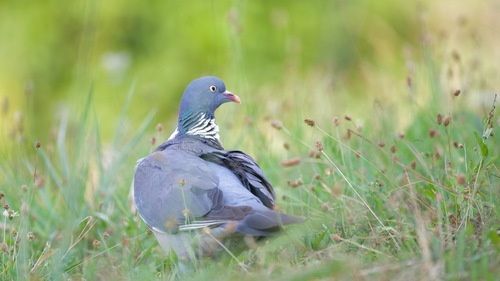
モリバト (Columba palumbus) モリバト
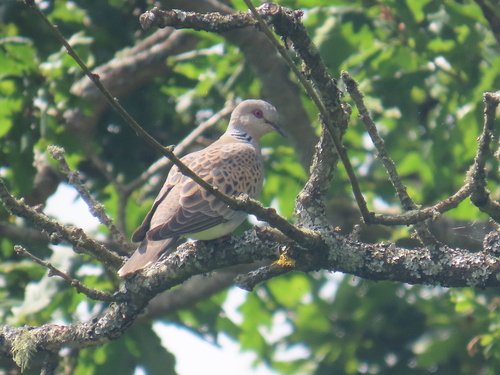
コキジバト (Streptopelia turtur) コキジバト

メディア

読み込み中…

要点

The most reliable field mark between Common Woodpigeon and European Turtle Dove is size: Woodpigeon is much larger and bulkier, with obvious white patches on the neck and a broad white wing bar visible in flight. Turtle Dove is much smaller, more slender, and shows a distinctive black-and-white striped neck patch (adults only), plus a wedge-shaped tail with white edges when flying away. Juvenile birds of both species lack the adult neck patches, but Woodpigeon juveniles are still much larger and never show the Turtle Dove's intricate wing pattern or tail shape. If you see a large, pale pigeon with a pinkish chest and white on the neck or wing, it's a Woodpigeon; a smaller, browner, more delicate bird with a chevron-patterned tail and no white wing bar is a Turtle Dove.

識別のコツ

  1. Size is the fastest check: Woodpigeon is nearly twice the length and several times the mass of Turtle Dove. If the bird looks pigeon-sized or larger, it's a Woodpigeon; if it's noticeably smaller and more delicate, consider Turtle Dove.
  2. White neck patch (adult Woodpigeon): Look for a bold white patch on each side of the neck, present only in adult Woodpigeon. Turtle Dove adults have a black-and-white striped patch, not a solid white one, and juveniles of both species lack these neck marks.
  3. White wing bar (Woodpigeon): In flight, Woodpigeon shows a broad, obvious white band across the upperwing, visible from above and below. Turtle Dove never shows this feature.
  4. Tail pattern (Turtle Dove): When flying away, Turtle Dove has a wedge-shaped tail with a dark center and broad white edges and tip, forming a chevron from below. Woodpigeon has a plain, broad grey tail with no sharp contrast.
  5. Wing pattern (Turtle Dove): Turtle Dove's wings are cinnamon-brown with black mottling, especially obvious in adults. Woodpigeon wings are plain grey with the white bar.
  6. Juvenile confusion: Juvenile Woodpigeon lacks neck patches and is paler, but remains much larger and plainer than juvenile Turtle Dove, which is browner, duller, and still shows the distinctive tail shape and mottled wings.
  7. Breast color: Woodpigeon has a pinkish breast, while Turtle Dove's is vinaceous (wine-colored), but this can be subtle at a distance.
  8. Head and rump: Turtle Dove adults have a blue-grey head and rump; Woodpigeon is grey throughout.
  9. Bill and legs: Turtle Dove has a black bill and red legs/eye-ring; Woodpigeon has a pale yellow eye and a greyer bill in juveniles.
  10. Flock size and behavior: Large, noisy flocks in open areas are likely Woodpigeon. Turtle Dove is more solitary or in small groups and is shy, often flying off quickly.
  11. Display and flight: Woodpigeon takes off with a loud wing clatter and may display with wing cracks; Turtle Dove's flight is quieter and more arrow-like.
  12. Habitat and season: Turtle Dove is a summer migrant (late April–September) and avoids urban areas; Woodpigeon is resident and common year-round, including in cities.
  13. Perched jizz: Woodpigeon perches upright and bulky; Turtle Dove is slender, with a more horizontal posture.
  14. Eye color: Woodpigeon has a pale yellow eye (adults); Turtle Dove's eye-ring is red.
  15. When in doubt: If you see a large, pale, white-marked pigeon, it's a Woodpigeon; a small, brown, white-edged-tailed dove is a Turtle Dove, especially in open country in summer.

大きさ

Common Woodpigeon is dramatically larger and heavier than European Turtle Dove. Woodpigeon measures 38–44.5 cm in length with a wingspan of 68–80 cm and a mass of 300–615 g [wikipedia]; Turtle Dove is much smaller at 26–28 cm length, 47–53 cm wingspan, and 100–156 g (mean 136 g) [wikidata]. Even at a distance or in flight, Woodpigeon appears broad-winged and bulky, while Turtle Dove looks slim and delicate. This size difference is usually obvious when both are seen together or with familiar birds for scale.

羽色

Juvenile Woodpigeons lack the adult's white neck patches but are still plain grey overall, with a pinkish chest and no strong patterning on the wings or tail. Juvenile Turtle Doves are browner and duller than adults, lacking the black-and-white neck stripes, but still show a warm, mottled wing pattern and a wedge-shaped tail with white edges. In adults, Woodpigeon stands out for its grey plumage, pinkish breast, and especially the bold white patches on the neck and a broad white wing bar visible both perched and in flight. Turtle Dove adults have a blue-grey head and rump, cinnamon-brown, black-mottled wings, and a black-and-white striped patch on the neck. The tail pattern is diagnostic: Turtle Dove has a dark, wedge-shaped tail with white sides and tip, forming a blackish chevron from below, while Woodpigeon has a broad, grey tail with no such contrast. Bill and leg color also differ: Woodpigeon has a pale yellow eye and greyer bill in juveniles, while Turtle Dove has red legs and eye-ring, and a black bill.

行動

Woodpigeon is gregarious outside the breeding season, often seen in large flocks, and is comfortable in open areas, parks, and urban settings. Its flight is strong and direct, with loud wing claps on takeoff and display. Turtle Dove is much more retiring and typically shy, preferring to feed on the ground in open woodland or hedgerows, and rarely forms large flocks. Its flight is described as arrow-like but not particularly fast, and it often flies high and circles in display. Woodpigeon perches conspicuously, while Turtle Dove is more likely to be seen slipping away quietly.

生息環境

Woodpigeon is highly adaptable, found in woodlands, parks, gardens, and even city centers, often near roads and rivers. Turtle Dove prefers open woodlands, hedgerows, and large gardens, but is much more sensitive to disturbance and is generally shy, avoiding dense forests and urban areas. Turtle Dove is also a long-distance migrant, only present in Europe from late April to September, while Woodpigeon is resident year-round in most of its range.

より良い説明を送る

比較と同じ項目を使ってください。文章はすぐに公開されます。

The most reliable field mark between Common Woodpigeon and European Turtle Dove is size: Woodpigeon is much larger and bulkier, with obvious white patches on the neck and a broad white wing bar visible in flight. Turtle Dove is much smaller, more slender, and shows a distinctive black-and-white striped neck patch (adults only), plus a wedge-shaped tail with white edges when flying away. Juvenile birds of both species lack the adult neck patches, but Woodpigeon juveniles are still much larger and never show the Turtle Dove's intricate wing pattern or tail shape. If you see a large, pale pigeon with a pinkish chest and white on the neck or wing, it's a Woodpigeon; a smaller, browner, more delicate bird with a chevron-patterned tail and no white wing bar is a Turtle Dove.

  1. Size is the fastest check: Woodpigeon is nearly twice the length and several times the mass of Turtle Dove. If the bird looks pigeon-sized or larger, it's a Woodpigeon; if it's noticeably smaller and more delicate, consider Turtle Dove.
  2. White neck patch (adult Woodpigeon): Look for a bold white patch on each side of the neck, present only in adult Woodpigeon. Turtle Dove adults have a black-and-white striped patch, not a solid white one, and juveniles of both species lack these neck marks.
  3. White wing bar (Woodpigeon): In flight, Woodpigeon shows a broad, obvious white band across the upperwing, visible from above and below. Turtle Dove never shows this feature.
  4. Tail pattern (Turtle Dove): When flying away, Turtle Dove has a wedge-shaped tail with a dark center and broad white edges and tip, forming a chevron from below. Woodpigeon has a plain, broad grey tail with no sharp contrast.
  5. Wing pattern (Turtle Dove): Turtle Dove's wings are cinnamon-brown with black mottling, especially obvious in adults. Woodpigeon wings are plain grey with the white bar.
  6. Juvenile confusion: Juvenile Woodpigeon lacks neck patches and is paler, but remains much larger and plainer than juvenile Turtle Dove, which is browner, duller, and still shows the distinctive tail shape and mottled wings.
  7. Breast color: Woodpigeon has a pinkish breast, while Turtle Dove's is vinaceous (wine-colored), but this can be subtle at a distance.
  8. Head and rump: Turtle Dove adults have a blue-grey head and rump; Woodpigeon is grey throughout.
  9. Bill and legs: Turtle Dove has a black bill and red legs/eye-ring; Woodpigeon has a pale yellow eye and a greyer bill in juveniles.
  10. Flock size and behavior: Large, noisy flocks in open areas are likely Woodpigeon. Turtle Dove is more solitary or in small groups and is shy, often flying off quickly.
  11. Display and flight: Woodpigeon takes off with a loud wing clatter and may display with wing cracks; Turtle Dove's flight is quieter and more arrow-like.
  12. Habitat and season: Turtle Dove is a summer migrant (late April–September) and avoids urban areas; Woodpigeon is resident and common year-round, including in cities.
  13. Perched jizz: Woodpigeon perches upright and bulky; Turtle Dove is slender, with a more horizontal posture.
  14. Eye color: Woodpigeon has a pale yellow eye (adults); Turtle Dove's eye-ring is red.
  15. When in doubt: If you see a large, pale, white-marked pigeon, it's a Woodpigeon; a small, brown, white-edged-tailed dove is a Turtle Dove, especially in open country in summer.

Common Woodpigeon is dramatically larger and heavier than European Turtle Dove. Woodpigeon measures 38–44.5 cm in length with a wingspan of 68–80 cm and a mass of 300–615 g [wikipedia]; Turtle Dove is much smaller at 26–28 cm length, 47–53 cm wingspan, and 100–156 g (mean 136 g) [wikidata]. Even at a distance or in flight, Woodpigeon appears broad-winged and bulky, while Turtle Dove looks slim and delicate. This size difference is usually obvious when both are seen together or with familiar birds for scale.

Juvenile Woodpigeons lack the adult's white neck patches but are still plain grey overall, with a pinkish chest and no strong patterning on the wings or tail. Juvenile Turtle Doves are browner and duller than adults, lacking the black-and-white neck stripes, but still show a warm, mottled wing pattern and a wedge-shaped tail with white edges. In adults, Woodpigeon stands out for its grey plumage, pinkish breast, and especially the bold white patches on the neck and a broad white wing bar visible both perched and in flight. Turtle Dove adults have a blue-grey head and rump, cinnamon-brown, black-mottled wings, and a black-and-white striped patch on the neck. The tail pattern is diagnostic: Turtle Dove has a dark, wedge-shaped tail with white sides and tip, forming a blackish chevron from below, while Woodpigeon has a broad, grey tail with no such contrast. Bill and leg color also differ: Woodpigeon has a pale yellow eye and greyer bill in juveniles, while Turtle Dove has red legs and eye-ring, and a black bill.

Woodpigeon is gregarious outside the breeding season, often seen in large flocks, and is comfortable in open areas, parks, and urban settings. Its flight is strong and direct, with loud wing claps on takeoff and display. Turtle Dove is much more retiring and typically shy, preferring to feed on the ground in open woodland or hedgerows, and rarely forms large flocks. Its flight is described as arrow-like but not particularly fast, and it often flies high and circles in display. Woodpigeon perches conspicuously, while Turtle Dove is more likely to be seen slipping away quietly.

Woodpigeon is highly adaptable, found in woodlands, parks, gardens, and even city centers, often near roads and rivers. Turtle Dove prefers open woodlands, hedgerows, and large gardens, but is much more sensitive to disturbance and is generally shy, avoiding dense forests and urban areas. Turtle Dove is also a long-distance migrant, only present in Europe from late April to September, while Woodpigeon is resident year-round in most of its range.

変更を破棄しますか?

保存していない編集があります。今離れると失われます。

モリバト · コキジバト · 苦手な鳥