

Motmot

ツクシガモ 対 カワアイサ

Tadorna tadorna 対 Mergus merganser

ツクシガモとカワアイサのクイズ
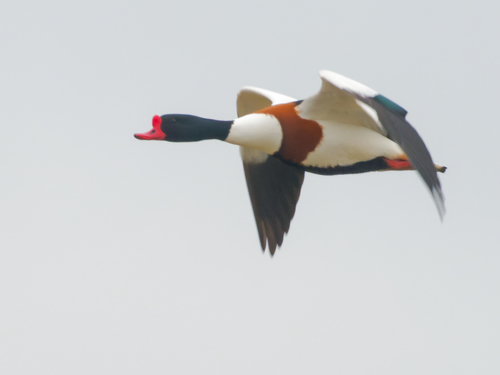
ツクシガモ (Tadorna tadorna) ツクシガモ
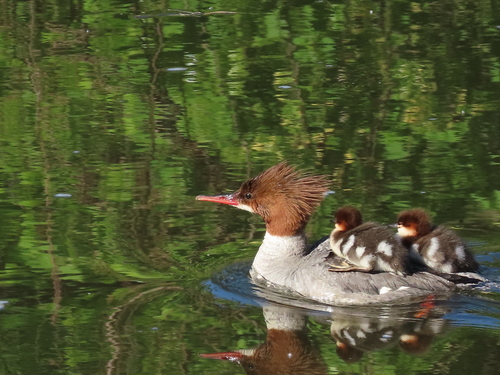
カワアイサ (Mergus merganser) カワアイサ

メディア

読み込み中…

要点

The most reliable field mark between Common Shelduck and Goosander is the shelduck’s bold, high-contrast plumage with a white body, chestnut patches, and a dark green head, versus the goosander’s more subdued, mostly white and grey body with a dark (male) or reddish-brown (female/juvenile) head. In flight, both species show white in the wings, but the shelduck’s wing is strikingly patterned with white coverts and black primaries, plus a green sheen on the secondaries, while goosander has a more uniform white inner wing and black outer wing. Bill shape is also key: the shelduck has a broad, short, pinkish bill (with a male knob), while the goosander’s bill is long, thin, and red, with a hooked tip. Juveniles of both can be confusing, but the shelduck’s clear-cut wing pattern and white face contrast with the goosander’s eye-stripe and brown head. Habitat and behavior can help, but plumage and structure are the most reliable in the field.

識別のコツ

  1. Wing pattern in flight (all ages): Shelduck shows bold white wing coverts, black primaries, and a greenish-black speculum (secondaries) with a strong green sheen in good light. Goosander’s wing is mostly white on the inner half and black on the outer half, lacking the shelduck’s sharp contrast and green gloss.
  2. Juvenile face and upperparts: Juvenile shelducks are mostly white below, with a dark cap and back patches, and a white face; juvenile goosanders have a reddish-brown head and a short, black-edged white stripe between eye and bill.
  3. Bill shape and color: Shelduck has a broad, short, pinkish bill (male with a prominent knob at the base in breeding season); goosander has a long, thin, red bill with a hooked tip ("sawbill"). This is visible even at moderate range.
  4. Head color and shape: Shelduck adults have a dark green head (male) or greenish with white flecks (female); goosander males have a blackish-green head, females and juveniles have a reddish-brown head. Goosander’s crest is usually flattened and not obvious.
  5. Body shape and posture: Shelduck is stocky, short-necked, and goose-like, often upright when walking; goosander is sleeker, longer-bodied, and sits low in the water, often with a more horizontal posture.
  6. Plumage contrast: Shelduck is boldly patterned with a white body, chestnut breast band, and black belly; goosander is more subtly colored, with a mostly white or grey body and a colored head.
  7. Underwing pattern: Shelduck has white underwings with black flight feathers; goosander’s underwing is less contrasting and not a key mark.
  8. Feet color: Shelduck’s feet are pink; goosander’s legs are red to brownish-red, brightest in adult males.
  9. Sex differences: Shelduck sexes are similar, with females smaller and often with white flecks on the face; goosander males and females differ strongly, especially in head color.
  10. Habitat context: Shelduck is typical of open estuaries, mudflats, and saline pools; goosander is expected on rivers and lakes, especially in wooded or upland areas.
  11. Behavior: Shelduck often in large flocks, walking on mud or grass; goosander more often in small groups, diving and swimming low in the water, sometimes resting on rocks or ice.
  12. Vocalization: Shelduck gives a loud honk; goosander gives a low croak or soft whistle (breeding season).
  13. Size impression: Goosander is heavier and longer-bodied, but shelduck can appear bulkier and more upright, especially on land.
  14. Bill knob (male shelduck): In breeding season, male shelduck’s bill knob is a unique feature; goosander never shows this.
  15. Potential pitfalls: Distant or backlit birds can make color and contrast hard to judge; focus on wing pattern in flight and bill shape at rest. Juveniles are most easily separated by face pattern and wing contrast.

大きさ

Goosander is noticeably heavier and slightly longer than Common Shelduck (average mass: goosander 1470.5g, shelduck 1152g [wikidata]). Goosander is also longer in body (58–72 cm vs. 55–65 cm) but has a shorter wingspan (78–97 cm vs. 100–120 cm), so shelduck can appear bulkier and more goose-like, especially at rest. In the field, shelduck often looks stockier and shorter-necked, while goosander is sleeker and more elongated, especially in the water.

羽色

Juvenile and immature birds: Both species’ juveniles can be confusing, but the Common Shelduck juvenile already shows the adult’s bold wing pattern (white coverts, black primaries, greenish-black secondaries) even in flight, and a mostly white face with a dark cap and back patches. Juvenile goosanders look like adult females but have a short black-edged white stripe between the eye and bill and a reddish-brown head. In flight, goosander juveniles and females show a largely white inner wing with black outer primaries, lacking the shelduck’s strong color contrast and green sheen.

Adults: Adult male shelducks are crisply marked, with a white body, chestnut breast band, black belly, dark green head, and a bright red bill with a prominent knob. Females are similar but smaller and may have some white flecks on the face. Goosander adult males in breeding plumage are mostly white with a salmon-pink tinge, a blackish-green head, grey rump and tail, and a long, thin red bill. Females and eclipse males are largely grey with a reddish-brown head and white chin. Both sexes of goosander have a smoothly rounded crest, but it is rarely obvious. In all ages, the goosander’s bill is long, thin, and hooked, contrasting with the shelduck’s broad, short bill. Underwings: shelduck shows white underwings with black flight feathers; goosander’s underwings are not described in detail but are less contrasting.

行動

Common Shelduck is often seen in large, noisy flocks, especially during moult, and tends to feed and rest on open mudflats or lakeshores, walking with a goose-like gait. Both parents lead ducklings to feeding areas, and adults may act as decoys. Goosander is more often seen singly or in small groups, especially on rivers and lakes, where it swims low in the water, dives frequently, and may rest on rocks or ice. Goosanders often fish cooperatively, forming semicircles to herd fish. On land, goosanders are awkward and upright, sometimes stumbling, whereas shelducks are more stable and deliberate.

生息環境

Common Shelduck prefers open, often coastal habitats: estuaries, saline pools, tidal mudflats, and increasingly inland freshwater lakes and rivers in open country. Goosander is associated with rivers and lakes in forested or upland areas, and is less likely on open tidal flats. If you see a bird on a tidal mudflat or saline estuary, shelduck is much more likely; on a fast-flowing river or forested lake, goosander is the default.

声

Shelduck gives a loud honk, especially in flight or when alarmed. Goosander’s normal call is a low, harsh croak; during the breeding season, males and juveniles may give a soft, plaintive whistle. Vocalizations are not usually the primary field mark, but a loud honk points to shelduck, while a croak or whistle suggests goosander.

より良い説明を送る

比較と同じ項目を使ってください。文章はすぐに公開されます。

The most reliable field mark between Common Shelduck and Goosander is the shelduck’s bold, high-contrast plumage with a white body, chestnut patches, and a dark green head, versus the goosander’s more subdued, mostly white and grey body with a dark (male) or reddish-brown (female/juvenile) head. In flight, both species show white in the wings, but the shelduck’s wing is strikingly patterned with white coverts and black primaries, plus a green sheen on the secondaries, while goosander has a more uniform white inner wing and black outer wing. Bill shape is also key: the shelduck has a broad, short, pinkish bill (with a male knob), while the goosander’s bill is long, thin, and red, with a hooked tip. Juveniles of both can be confusing, but the shelduck’s clear-cut wing pattern and white face contrast with the goosander’s eye-stripe and brown head. Habitat and behavior can help, but plumage and structure are the most reliable in the field.

  1. Wing pattern in flight (all ages): Shelduck shows bold white wing coverts, black primaries, and a greenish-black speculum (secondaries) with a strong green sheen in good light. Goosander’s wing is mostly white on the inner half and black on the outer half, lacking the shelduck’s sharp contrast and green gloss.
  2. Juvenile face and upperparts: Juvenile shelducks are mostly white below, with a dark cap and back patches, and a white face; juvenile goosanders have a reddish-brown head and a short, black-edged white stripe between eye and bill.
  3. Bill shape and color: Shelduck has a broad, short, pinkish bill (male with a prominent knob at the base in breeding season); goosander has a long, thin, red bill with a hooked tip ("sawbill"). This is visible even at moderate range.
  4. Head color and shape: Shelduck adults have a dark green head (male) or greenish with white flecks (female); goosander males have a blackish-green head, females and juveniles have a reddish-brown head. Goosander’s crest is usually flattened and not obvious.
  5. Body shape and posture: Shelduck is stocky, short-necked, and goose-like, often upright when walking; goosander is sleeker, longer-bodied, and sits low in the water, often with a more horizontal posture.
  6. Plumage contrast: Shelduck is boldly patterned with a white body, chestnut breast band, and black belly; goosander is more subtly colored, with a mostly white or grey body and a colored head.
  7. Underwing pattern: Shelduck has white underwings with black flight feathers; goosander’s underwing is less contrasting and not a key mark.
  8. Feet color: Shelduck’s feet are pink; goosander’s legs are red to brownish-red, brightest in adult males.
  9. Sex differences: Shelduck sexes are similar, with females smaller and often with white flecks on the face; goosander males and females differ strongly, especially in head color.
  10. Habitat context: Shelduck is typical of open estuaries, mudflats, and saline pools; goosander is expected on rivers and lakes, especially in wooded or upland areas.
  11. Behavior: Shelduck often in large flocks, walking on mud or grass; goosander more often in small groups, diving and swimming low in the water, sometimes resting on rocks or ice.
  12. Vocalization: Shelduck gives a loud honk; goosander gives a low croak or soft whistle (breeding season).
  13. Size impression: Goosander is heavier and longer-bodied, but shelduck can appear bulkier and more upright, especially on land.
  14. Bill knob (male shelduck): In breeding season, male shelduck’s bill knob is a unique feature; goosander never shows this.
  15. Potential pitfalls: Distant or backlit birds can make color and contrast hard to judge; focus on wing pattern in flight and bill shape at rest. Juveniles are most easily separated by face pattern and wing contrast.

Goosander is noticeably heavier and slightly longer than Common Shelduck (average mass: goosander 1470.5g, shelduck 1152g [wikidata]). Goosander is also longer in body (58–72 cm vs. 55–65 cm) but has a shorter wingspan (78–97 cm vs. 100–120 cm), so shelduck can appear bulkier and more goose-like, especially at rest. In the field, shelduck often looks stockier and shorter-necked, while goosander is sleeker and more elongated, especially in the water.

Juvenile and immature birds: Both species’ juveniles can be confusing, but the Common Shelduck juvenile already shows the adult’s bold wing pattern (white coverts, black primaries, greenish-black secondaries) even in flight, and a mostly white face with a dark cap and back patches. Juvenile goosanders look like adult females but have a short black-edged white stripe between the eye and bill and a reddish-brown head. In flight, goosander juveniles and females show a largely white inner wing with black outer primaries, lacking the shelduck’s strong color contrast and green sheen.

Adults: Adult male shelducks are crisply marked, with a white body, chestnut breast band, black belly, dark green head, and a bright red bill with a prominent knob. Females are similar but smaller and may have some white flecks on the face. Goosander adult males in breeding plumage are mostly white with a salmon-pink tinge, a blackish-green head, grey rump and tail, and a long, thin red bill. Females and eclipse males are largely grey with a reddish-brown head and white chin. Both sexes of goosander have a smoothly rounded crest, but it is rarely obvious. In all ages, the goosander’s bill is long, thin, and hooked, contrasting with the shelduck’s broad, short bill. Underwings: shelduck shows white underwings with black flight feathers; goosander’s underwings are not described in detail but are less contrasting.

Common Shelduck is often seen in large, noisy flocks, especially during moult, and tends to feed and rest on open mudflats or lakeshores, walking with a goose-like gait. Both parents lead ducklings to feeding areas, and adults may act as decoys. Goosander is more often seen singly or in small groups, especially on rivers and lakes, where it swims low in the water, dives frequently, and may rest on rocks or ice. Goosanders often fish cooperatively, forming semicircles to herd fish. On land, goosanders are awkward and upright, sometimes stumbling, whereas shelducks are more stable and deliberate.

Common Shelduck prefers open, often coastal habitats: estuaries, saline pools, tidal mudflats, and increasingly inland freshwater lakes and rivers in open country. Goosander is associated with rivers and lakes in forested or upland areas, and is less likely on open tidal flats. If you see a bird on a tidal mudflat or saline estuary, shelduck is much more likely; on a fast-flowing river or forested lake, goosander is the default.

Shelduck gives a loud honk, especially in flight or when alarmed. Goosander’s normal call is a low, harsh croak; during the breeding season, males and juveniles may give a soft, plaintive whistle. Vocalizations are not usually the primary field mark, but a loud honk points to shelduck, while a croak or whistle suggests goosander.

変更を破棄しますか?

保存していない編集があります。今離れると失われます。

ツクシガモ · カワアイサ · 苦手な鳥