

アカアシシギ 対 コキアシシギ
Tringa totanus 対 Tringa flavipes
アカアシシギとコキアシシギのクイズ
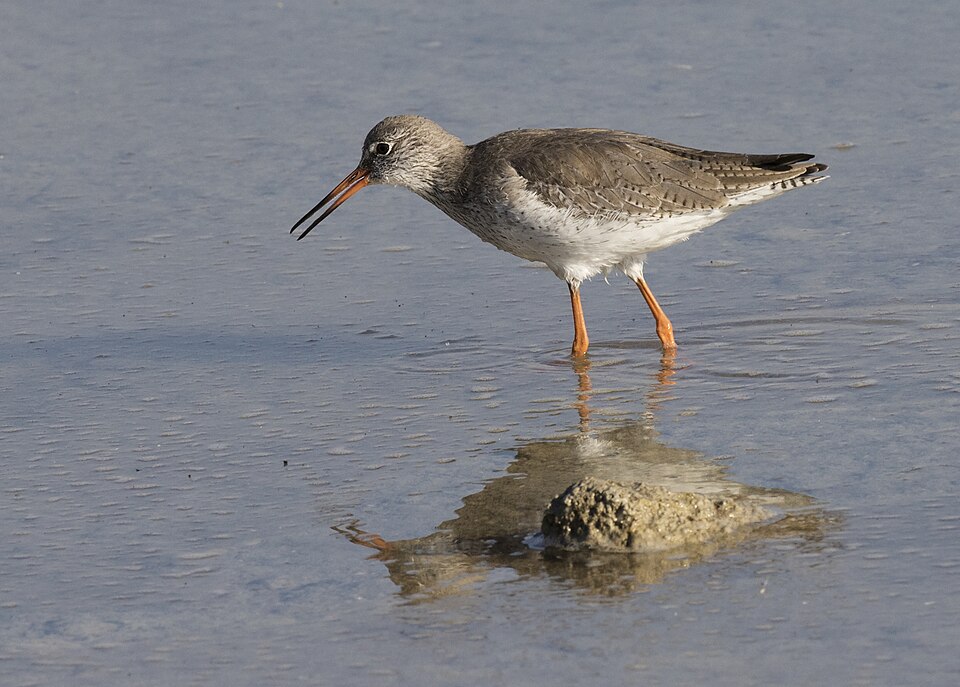 アカアシシギ
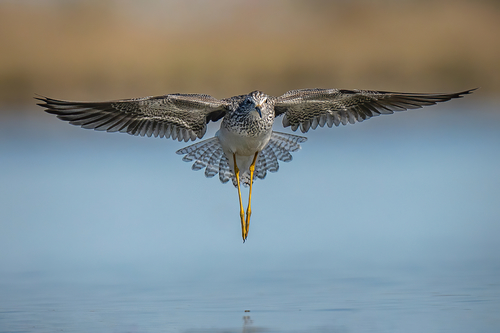 コキアシシギ
要点
The most reliable field mark separating Common Redshank from Lesser Yellowlegs is leg color: redshank has bright red legs and a red-based bill, while yellowlegs shows clear yellow legs and a uniformly dark bill. In flight, both show white up the back and on the wings, but redshank’s white is more extensive and contrasts with darker upperparts, while yellowlegs shows less pronounced white. Size also helps: Common Redshank is noticeably heavier and bulkier than Lesser Yellowlegs. Both can appear similar in non-breeding plumage, so careful attention to leg and bill color, as well as structure, is essential.
識別のコツ
- Leg color is the fastest check: Common Redshank always has bright red legs, while Lesser Yellowlegs has clear yellow legs. This is reliable at all ages and seasons.
- Bill color and shape: Redshank’s bill is red at the base with a black tip, while yellowlegs has a uniformly dark, slim, and straight bill about the length of its head. In poor light, bill color can be hard to judge, but shape and thickness still help.
- Flight pattern: In flight, Common Redshank shows a broad white wedge up the back and strong white trailing edges to the wings. Lesser Yellowlegs also shows white up the back, but it is less extensive and not as striking; the trailing edge is narrower.
- Size and structure: Redshank is heavier and bulkier, with a more robust body and thicker legs. Yellowlegs is smaller, slimmer, and more graceful, with a daintier appearance.
- Breast and neck pattern: In breeding plumage, yellowlegs has fine, dense streaking on the neck and breast, while redshank’s markings are more diffuse and mottled.
- Non-breeding confusion: Both species become plainer in winter, but redshank retains a marbled or mottled look above, while yellowlegs is more uniform grey-brown.
- Perched vs. foraging jizz: Yellowlegs often appears more upright and active, with a high-stepping gait and neck outstretched. Redshank is more horizontal and less delicate in posture.
- Habitat context: In Eurasia, redshank is common and yellowlegs is rare; in North America, the reverse is true. Always check location and season for context.
- Voice: Not described in detail in the notes, so do not rely on calls for separation here.
- White up the back: Both show white up the back in flight, but redshank’s is broader and more obvious, especially when flushed.
- Bill length: Yellowlegs’ bill is about the length of its head, while redshank’s is slightly shorter and thicker.
- Sex and age: Both sexes are similar in both species; age differences are subtle and mostly affect upperpart patterning, not structure or leg color.
- Pitfall: poor light: In dull conditions, leg color can appear muted, so use structure and bill color as backup.
- Pitfall: mud-stained legs: Sometimes redshank’s red legs can look dull or yellowish if muddy; check for the red base to the bill as confirmation.
- No subspecies confusion: Lesser Yellowlegs is monotypic, so no regional variation to worry about; redshank has subspecies, but Eurasian birds are fairly consistent in the field.
大きさ
Common Redshank is significantly heavier (average 129 g) than Lesser Yellowlegs (average 81 g) [wikidata]. Redshank is bulkier and appears more robust, while Lesser Yellowlegs is slimmer and more delicate overall. In direct comparison, yellowlegs is smaller and lighter, with a more graceful build.
羽色
Juvenile and non-breeding birds of both species can look similar, with subdued brownish or grey-brown upperparts and paler underparts. However, Common Redshank in all plumages shows a marbled or mottled brown above, with lighter, often plain, greyish-brown tones in winter. Lesser Yellowlegs in breeding plumage is more finely and densely patterned on the neck and breast, with white underparts and irregular brown streaking. In non-breeding plumage, yellowlegs becomes more uniformly grey-brown above and white below, similar to redshank, but with less marbling. In flight, Common Redshank displays a strong white wedge up the back and broad white trailing edges to the wings, while Lesser Yellowlegs shows white up the back but typically less extensive and less contrasting. Leg color is always diagnostic: red for redshank, yellow for yellowlegs.
行動
Lesser Yellowlegs is very active when foraging, moving quickly with a high-stepping gait and neck outstretched. Common Redshank is also active but appears heavier and less delicate in its movements. Both species forage in shallow water or mudflats, but yellowlegs often appears more energetic and graceful.
生息環境
Common Redshank is a Eurasian wader, typically found in temperate to subarctic wetlands, marshes, and estuaries. Lesser Yellowlegs breeds in North American boreal forests and winters throughout the Americas, favoring shallow wetlands and mudflats. In Europe, Lesser Yellowlegs is a rare vagrant, so context can help: a yellow-legged Tringa in Eurasia is much more likely to be a rare yellowlegs than a redshank.