

Motmot

ホオジロガモ 対 カオジロオタテガモ

Bucephala clangula 対 Oxyura leucocephala

ホオジロガモとカオジロオタテガモのクイズ

ホオジロガモ (Bucephala clangula) ホオジロガモ
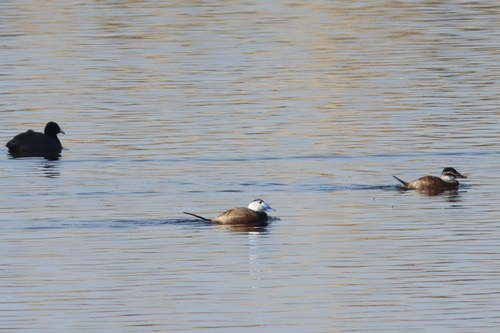
カオジロオタテガモ (Oxyura leucocephala) カオジロオタテガモ

メディア

読み込み中…

要点

ホオジロガモとカオジロオタテガモを区別する最も信頼できるフィールドマークは、成鳥の頭部とくちばしのパターンです:オスのホオジロガモは、目の下に丸い白い斑点がある暗い虹色の緑色の頭と通常のカモのくちばしを示し、オスのカオジロオタテガモは、黒い冠を持つ目立つ白い頭と腫れた明るい青いくちばしを持っています。両種の雌はより地味ですが、雌のホオジロガモは茶色の頭と黄味がかったくちばしを持ち、カオジロオタテガモの雌の白い顔と暗い頬のストライプと対照的です。飛行中または遠くから見ると、ホオジロガモはより大きく、よりコンパクトで、トゲの少ない尾とより典型的なカモのシルエットを持ち、カオジロオタテガモはしばしば小さく、丸い体形で、短い首と硬くてトゲのある尾を持っているように見えます。幼鳥や未成熟の羽毛はあまり特徴的ではありませんが、全体的な構造と頭部/くちばしの形は依然として有用です。両種はダイビングカモですが、カオジロオタテガモは飛ぶよりも泳いで逃げる可能性がはるかに高いです。

識別のコツ

  1. 成鳥オスの頭部パターン: オスのホオジロガモは、目の下に丸い白い斑点がある暗い虹色の緑色の頭を持ち、オスのカオジロオタテガモは、黒い冠と後頭部を持つ主に白い頭を持っています。これは成鳥のオスにおいて最も信頼できるマークです。
  2. くちばしの色と形(オス): オスのホオジロガモは通常の暗いカモのくちばしを持ち、オスのカオジロオタテガモは腫れた明るい青いくちばしを持ち、これは近距離でユニークで診断的です。
  3. 雌の頭部と顔: 雌のホオジロガモは均一な茶色の頭と黄味がかったくちばしを持ち、雌のカオジロオタテガモは暗い頬のストライプとキャップ、そして暗いくちばしを持つ白い顔を示します。地味な羽毛の鳥を区別するために顔のパターンを使用してください。
  4. 体形とサイズ: ホオジロガモはより大きく、長く、頑丈で、典型的なカモのシルエットを持ち、カオジロオタテガモはより小さく、丸く、コンパクトで、短い首と硬くてしばしば上向きの尾を持っています。これは遠くからまたは飛行中に有用です。
  5. 尾の形: カオジロオタテガモは、特に泳いでいるときや休んでいるときに尾を硬く直立させることがよくあります;ホオジロガモは通常の丸いカモの尾を持っています。
  6. 飛行行動: ホオジロガモは、妨害されると飛び立つ可能性が高く、カオジロオタテガモは潜水または泳いで逃げることを好み、押されない限り飛ぶことはめったにありません。
  7. 羽毛(体): オスのホオジロガモは暗い背中を持つ白い首と腹を持ち、オスのカオジロオタテガモは赤灰色の体を持っています。雌はどちらも地味ですが、上記のように頭部のパターンが異なります。
  8. くちばしの色(雌): 雌のホオジロガモは黄味がかったくちばしを持ち、雌のカオジロオタテガモは暗いくちばしを持っています。これは微妙ですが、近距離で有用です。
  9. 生息地の文脈: 北部または亜寒帯地域で見られる場合、ホオジロガモの方がはるかに可能性が高いです;カオジロオタテガモは南ヨーロッパ、北アフリカ、アジアの一部に制限されています。
  10. 目の色: ホオジロガモは両性の成鳥において目を引く金色の目を持ち、カオジロオタテガモの目の色はメモにおいて特徴的とは記載されていないため、注意して使用してください。
  11. 特徴的な翼のパターンなし: どちらの種もフィールドでの区別のためにユニークな上翼または飛行パターンを持っているとは記載されていないため、頭部、くちばし、構造に頼ってください。
  12. 幼鳥/未成熟の鳥: 頭部とくちばしの形は最良の手がかりであり、若い鳥の羽毛はあまり特徴的ではありません。
  13. 混合群れ: 他のOxyura種(例:アカオタテガモ)と一緒に見られた場合、カオジロオタテガモは交雑する可能性がありますが、ハイブリッドは中間的な特徴を示します;ホオジロガモはOxyuraと交雑しません。
  14. 足と足の色: ホオジロガモはオレンジ色の足と足を持っています;これはめったに見えませんが、よく見えた場合には役立つことがあります。
  15. 水上での行動: カオジロオタテガモはしばしば水中で低く座り、尾を持ち上げることがあります;ホオジロガモはより高く座り、より典型的なカモの姿勢を示します。

大きさ

ホオジロガモはカオジロオタテガモ(平均665g、最大48cm)よりもかなり重く(平均900g)わずかに長い(最大51cm)です。ホオジロガモは、よりコンパクトなカオジロオタテガモに比べて、翼幅も広い(77–83cm)です。フィールドでは、ホオジロガモはより頑丈で、より短い印象を与え、カオジロオタテガモは明らかに小さく、丸く、よりコンパクトで、相対的に短い首と尾を持っています。

羽色

成鳥オスのホオジロガモは、目の下に特徴的な丸い白い斑点がある暗い緑がかった黒い頭、白い首と腹、暗い背中を持っています。成鳥オスのカオジロオタテガモは、主に白い頭、黒い冠と後頭部、腫れた青いくちばし、赤灰色の体を持っており、間違いなく識別できます。雌はより難しい:雌のホオジロガモは茶色の頭、灰色がかった体、黄味がかったくちばしを持ち、雌のカオジロオタテガモは灰色がかった茶色で、白い顔、暗い頬のストライプ、暗いくちばしを持っています。幼鳥や未成熟の羽毛は、メモにおいて詳細には記載されていませんが、頭部のパターンとくちばしの形が最良の手がかりです。どちらの種についても特徴的な上翼や飛行マークは記載されていないため、飛行中の区別は構造と頭部/くちばしのコントラストに依存します。

行動

両種はダイビングカモですが、カオジロオタテガモは特に飛ぶことを嫌がり、妨害から逃げるために潜水または泳ぐことを好み、しばしば硬い尾を水面上に持ち上げています。ホオジロガモは近づくと飛び立つ可能性が高いです。飛行中、ホオジロガモは典型的なカモの飛行スタイルを示し、カオジロオタテガモの飛行はあまり観察されず、短い翼とコンパクトな体のためにより労力を要するように見えることがあります。

生息環境

ホオジロガモは中型の海カモで、特に冬に大きな湖、川、沿岸水域で見られることが多いです。カオジロオタテガモは開水域と密な周辺植生のある湖を好み、南ヨーロッパ、北アフリカ、中央/西アジアでより頻繁に見られます。生息地の重複は限られていますが、両種は渡りや冬の間に大きな植生のある湖で見られることがあります。

より良い説明を送る

比較と同じ項目を使ってください。文章はすぐに公開されます。

The most reliable field mark to separate Common Goldeneye from White-headed Duck is the head and bill pattern in adults: male Common Goldeneye shows a dark, iridescent green head with a round white spot below the eye and a normal duck bill, while male White-headed Duck has a striking white head with a black crown and a swollen, bright blue bill. Females of both species are duller, but female Common Goldeneye has a brown head and yellowish bill, contrasting with the White-headed Duck female's white face and dark cheek stripe. In flight or at a distance, Goldeneye is larger and more compact, with a less spiky tail and a more typical duck silhouette, while White-headed Duck often appears small, round-bodied, and short-necked, with a stiff, spiky tail. Juvenile and immature plumages are less distinctive, but the overall structure and head/bill shape remain useful. Both species are diving ducks, but White-headed Duck is much more likely to swim away than to take flight.

  1. Adult male head pattern: Male Common Goldeneye has a dark, iridescent greenish-black head with a round white spot below the eye; male White-headed Duck has a mostly white head with a black crown and nape. This is the single most reliable mark in adult males.
  2. Bill color and shape (males): Male Goldeneye has a normal, dark duck bill; male White-headed Duck has a swollen, bright blue bill, which is unique and diagnostic at close range.
  3. Female head and face: Female Goldeneye has a uniform brown head and yellowish bill, while female White-headed Duck shows a white face with a dark cheek stripe and cap, and a dark bill. Use the face pattern for separation in dull-plumaged birds.
  4. Body shape and size: Goldeneye is larger, longer, and more robust, with a typical duck silhouette; White-headed Duck is smaller, rounder, and more compact, with a short neck and a stiff, often upturned tail. This is useful at a distance or in flight.
  5. Tail shape: White-headed Duck often holds its tail stiffly upright, especially when swimming or resting; Goldeneye has a normal, rounded duck tail.
  6. Flight behavior: Goldeneye is more likely to flush and fly when disturbed; White-headed Duck prefers to dive or swim away, rarely taking flight unless pressed.
  7. Plumage (body): Male Goldeneye has a white neck and belly with a dark back; male White-headed Duck has a reddish-grey body. Females are both dull but differ in head pattern as above.
  8. Bill color (females): Female Goldeneye has a yellowish bill, while female White-headed Duck has a dark bill. This can be subtle but is useful at close range.
  9. Habitat context: If seen in northern or boreal regions, Goldeneye is much more likely; White-headed Duck is restricted to southern Europe, North Africa, and parts of Asia.
  10. Eye color: Goldeneye has striking golden-yellow eyes in adults of both sexes; White-headed Duck's eye color is not described as distinctive in the notes, so use with caution.
  11. No distinctive wing pattern: Neither species is described as having a unique upperwing or flight pattern for field separation, so rely on head, bill, and structure.
  12. Juvenile/immature birds: Head and bill shape remain the best clues, as plumage is less distinctive in young birds.
  13. Mixed flocks: If seen with other Oxyura species (e.g., Ruddy Duck), White-headed Duck may hybridize, but hybrids show intermediate features; Goldeneye does not hybridize with Oxyura.
  14. Leg and foot color: Goldeneye has orange-yellow legs and feet; this is rarely visible but can help if seen well.
  15. Behavior on water: White-headed Duck often sits low in the water and may cock its tail; Goldeneye sits higher and shows a more typical duck posture.

Common Goldeneye is significantly heavier (average 900g) and slightly longer (up to 51cm) than White-headed Duck (average 665g, up to 48cm). Goldeneye also has a broader wingspan (77–83cm) compared to the more compact White-headed Duck. In the field, Goldeneye appears more robust and less stubby, while White-headed Duck is noticeably smaller, rounder, and more compact, with a proportionally shorter neck and tail.

Adult male Common Goldeneye has a dark greenish-black head with a distinctive round white spot below the eye, a white neck and belly, and a dark back. Adult male White-headed Duck is unmistakable with a mostly white head, black crown and nape, and a swollen blue bill, with a reddish-grey body. Females are trickier: female Goldeneye has a brown head, grayish body, and yellowish bill, while female White-headed Duck is gray-brown with a white face, dark cheek stripe, and dark bill. Juvenile and immature plumages are not described in detail for either species in the notes, but the head pattern and bill shape remain the best clues. There are no distinctive upperwing or flight marks described for either species, so separation in flight relies on structure and head/bill contrast.

Both species are diving ducks, but White-headed Duck is especially reluctant to fly and prefers to dive or swim away from disturbance, often holding its stiff tail raised above the water. Common Goldeneye is more likely to flush and fly when approached. In flight, Goldeneye shows a typical duck flight style, while White-headed Duck's flight is less frequently observed and may seem more labored due to its short wings and compact body.

Common Goldeneye is a medium-sized sea duck, often found on larger lakes, rivers, and coastal waters, especially in winter. White-headed Duck prefers lakes with open water and dense marginal vegetation, and is more often found in southern Europe, North Africa, and Central/Western Asia. Habitat overlap is limited, but both can be found on large, vegetated lakes during migration or winter.

変更を破棄しますか?

保存していない編集があります。今離れると失われます。

ホオジロガモ · カオジロオタテガモ · 苦手な鳥