

Motmot

ホオジロガモ 対 キタホオジロガモ

Bucephala clangula 対 Bucephala islandica

ホオジロガモとキタホオジロガモのクイズ

ホオジロガモ (Bucephala clangula) ホオジロガモ
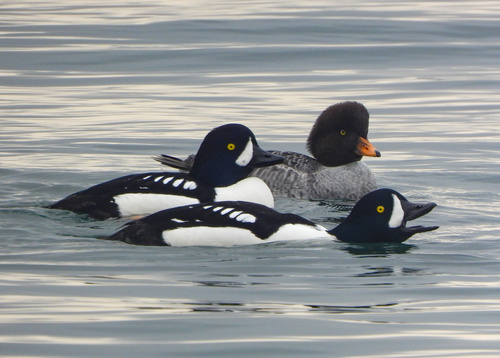
キタホオジロガモ (Bucephala islandica) キタホオジロガモ

メディア

読み込み中…

要点

ホオジロガモとキタホオジロガモの間で最も信頼できるフィールドマークは、成鳥のオスの白い顔のパッチの形と配置です:ホオジロガモは目の下に丸い白い斑点を示し、キタホオジロガモはくちばしの基部に三日月形のパッチを持っています。雌のキタホオジロガモは、ホオジロガモの雌のほとんどが暗いくちばしで、先端だけが黄色であるのに対し、主に黄色いくちばしで目立ちます。両種はサイズと構造が似ていますが、オスの頭の形、くちばしのサイズ、光沢の色の微妙な違いが役立つことがあります。未成熟な鳥や雌の鳥は特に難しいですが、くちばしの色と頭の形に注意を払うことで通常は混乱が解消されます。

識別のコツ

  1. 成鳥オスの顔のパッチ: 最も診断的なマーク:ホオジロガモは目の下に丸い白い斑点を持ち、キタホオジロガモはくちばしの基部に垂直の三日月を示します。これは成鳥のオスにとってすべての季節で信頼できます。
  2. 頭の光沢(オス): ホオジロガモのオスは頭に緑がかった光沢を持ち、キタホオジロガモのオスは紫がかった光沢を示します。これは微妙で、照明に依存するため、注意して使用してください。
  3. 背中のパターン(オス): キタホオジロガモのオスは、より白い背中を持つホオジロガモのオスと比較して、背中により多くの黒がありますが、これは微妙で、補助的な証拠として使用するのが最適です。
  4. くちばしのサイズ(オス): ホオジロガモ(特に北アメリカの亜種)は、キタホオジロガモよりも長くて太いくちばしを持っています。これは微妙で、直接比較するのが最適です。
  5. 成鳥雌のくちばしの色: キタホオジロガモの雌は主に黄色いくちばしを持ち、ホオジロガモの雌は先端だけが黄色の暗いくちばしを持っています。これは雌にとって最も良いマークです。
  6. 雌の頭の形: ホオジロガモの雌は、キタホオジロガモの雌のより尖ったまたは角ばった頭に比べて、頭のプロファイルがあまり丸くありません。これは微妙ですが、近距離で役立ちます。
  7. 目の色: 両種は金色の黄色い目を持っているため、これは区別にはなりません。
  8. 幼鳥/未成熟の分離: 若い鳥に対しては特に上翼や飛行パターンの違いは記載されていないため、くちばしの色と頭の形に依存しますが、これらの年齢ではより多くの重複と不確実性が予想されます。
  9. サイズと構造: 両種はサイズと全体の構造が似ているため、サイズに依存して区別しないでください。
  10. 生息地の文脈: あなたがホオジロガモがはるかに多い地域にいる場合、明確なキタホオジロガモのフィールドマークが見られない限り、その種にデフォルトしてください。キタホオジロガモは都市化された河口でより可能性が高く、ホオジロガモと重複する可能性は低いです。
  11. 行動: キタホオジロガモは、特にオスの間でより領土的である可能性がありますが、これは迅速な識別のための信頼できるフィールドマークではありません。
  12. 鳴き声: 両種は一般的に静かで、翼の口笛は診断的ではありません。
  13. 飛行中: 上翼のパターンや飛行シルエットにおいて特に顕著な違いは記載されていないため、飛行中の識別は止まっているときと同じ頭とくちばしの特徴に依存します。
  14. 季節的変動: すべての主要なフィールドマークは年間を通じて存在します。日食や非繁殖羽毛は、情報源で混乱を引き起こすものとして記載されていません。
  15. 落とし穴: 未成熟な鳥や雌の鳥は最も混乱しやすいです。常にくちばしの色と頭の形を確認し、可能な限り複数のフィールドマークを使用してください。

大きさ

両種は中型の海ガモで、質量はほぼ同じです(ホオジロガモ:約900 g、キタホオジロガモ:約910 g)[wikidata]。長さと翼幅はかなり重なります:ホオジロガモのオスは平均45〜51 cmの長さで、翼幅は77〜83 cmですが、キタホオジロガモのオスは約49 cmの長さで、翼幅は70〜73 cmです[wikipedia]。フィールドでは、サイズは信頼できる区別にはなりません。

羽色

成鳥のオスは顔のパッチによって最もよく区別されます:ホオジロガモは目の下に丸い白い斑点を持ち、キタホオジロガモはくちばしの基部に垂直の三日月を示します。頭の光沢は異なります—ホオジロガモは緑がかっており、キタホオジロガモは紫がかっていますが、これは微妙で光に依存します。オスのキタホオジロガモは背中により多くの黒を持っています。雌はより難しいです:キタホオジロガモの雌は主に黄色いくちばしを持ち、ホオジロガモの雌は先端だけが黄色の暗いくちばしを持っています。雌のホオジロガモは、頭のプロファイルがあまり丸くないことも示しています。幼鳥や未成熟の羽毛は情報源で詳細に記載されていないため、これらの年齢での区別は主に同じくちばしと頭の形の違いに依存しますが、これらはあまり顕著でない場合があります。これらの情報源では、未成熟または成鳥に対する特に顕著な上翼パターンの違いは記載されていません。

行動

両種は潜水ガモで、水中で水生無脊椎動物や植物材料を探します。キタホオジロガモは、特にオスの間でより領土的であるとされ、領土の境界でのディスプレイや時折の戦いが見られます。ホオジロガモは一般的により数が多く、あまり領土的ではありません。飛行中、両種は翼で口笛の音を出しますが、これは彼らの間の信頼できる区別にはなりません。

生息環境

両種は内陸の開けた水域または保護された沿岸水域で冬を越します。キタホオジロガモは、より都市化された沿岸の河口を利用する傾向があり、ホオジロガモと重複する可能性は低いです。キタホオジロガモは木の空洞に巣を作る可能性が高く、より樹上性と見なされています。重複する地域では、ホオジロガモがデフォルトの種である可能性が高いです。

声

キタホオジロガモは一般的に静かで、繁殖や求愛の際に低いきしみ、うめき声、かえるの鳴き声を出します。両種の翼は飛行中に口笛の音を出します。典型的なバードウォッチングの状況で、二つを区別するための特に顕著な鳴き声のフィールドマークは記載されていません。

より良い説明を送る

比較と同じ項目を使ってください。文章はすぐに公開されます。

The most reliable field mark between Common Goldeneye and Barrow's Goldeneye is the shape and placement of the white facial patch on adult males: Common Goldeneye shows a round white spot below the eye, while Barrow's Goldeneye has a crescent-shaped patch at the base of the bill. Female Barrow's Goldeneye also stands out with a mostly yellow bill, in contrast to the Common Goldeneye female's mostly dark bill with only a yellow tip. Both species are similar in size and structure, but subtle differences in head shape, bill size, and gloss color on the male's head can help. Immature and female birds are especially tricky, but careful attention to bill color and head shape usually resolves confusion.

  1. Adult male facial patch: The single most diagnostic mark: Common Goldeneye has a round white spot below the eye; Barrow's Goldeneye shows a vertical crescent at the base of the bill. This is reliable in all seasons for adult males.
  2. Head gloss (male): Common Goldeneye males have a greenish sheen to the head, while Barrow's Goldeneye males show a purplish gloss. This can be subtle and depends on lighting, so use with caution.
  3. Back pattern (male): Barrow's Goldeneye males have more black on the back compared to the more white-backed Common Goldeneye males, but this is subtle and best used as supporting evidence.
  4. Bill size (male): Common Goldeneye (especially the North American subspecies) has a longer and thicker bill than Barrow's Goldeneye. This is subtle and best used in direct comparison.
  5. Adult female bill color: Barrow's Goldeneye females have a mostly yellow bill, while Common Goldeneye females have a dark bill with only the tip yellow. This is the best mark for females.
  6. Female head shape: Common Goldeneye females have a less rounded head profile compared to the more peaked or angular head of Barrow's Goldeneye females. This is subtle but useful at close range.
  7. Eye color: Both species have golden-yellow eyes, so this is not a separator.
  8. Juvenile/immature separation: No distinctive upperwing or flight pattern differences are described for young birds; rely on bill color and head shape, but expect more overlap and uncertainty at these ages.
  9. Size and structure: Both species are similar in size and overall structure; do not rely on size for separation.
  10. Habitat context: If you are in an area where Common Goldeneye is much more numerous, default to that species unless a clear Barrow's field mark is seen. Barrow's is more likely in urbanized estuaries and less likely to overlap with Common Goldeneye.
  11. Behavior: Barrow's Goldeneye may be more territorial, especially among males, but this is not a reliable field mark for quick identification.
  12. Vocalizations: Both are generally quiet; wing whistling is not diagnostic.
  13. In flight: No distinctive differences in upperwing pattern or flight silhouette are noted in the sources; identification in flight relies on the same head and bill features as when perched.
  14. Seasonal variation: All main field marks are present year-round; eclipse or non-breeding plumages are not described as confusing in the sources.
  15. Pitfalls: Immature and female birds are most likely to be confused; always check bill color and head shape, and use multiple field marks when possible.

Both species are medium-sized sea ducks and are nearly identical in mass (Common Goldeneye: ~900 g, Barrow's Goldeneye: ~910 g) [wikidata]. Length and wingspan overlap considerably: Common Goldeneye males average 45–51 cm long with a 77–83 cm wingspan, while Barrow's Goldeneye males are about 49 cm long with a 70–73 cm wingspan [wikipedia]. In the field, size is not a reliable separator.

Adult males are best separated by the facial patch: Common Goldeneye has a round white spot below the eye, while Barrow's Goldeneye shows a vertical crescent at the base of the bill. The head gloss differs—greenish in Common, purplish in Barrow's—but this can be subtle and light-dependent. Male Barrow's Goldeneye also has more black on the back. Females are more challenging: Barrow's Goldeneye females have a mostly yellow bill, while Common Goldeneye females have a dark bill with only the tip yellow. Female Common Goldeneye also shows a less rounded head profile. Juvenile and immature plumages are not described in detail in the sources, so separation at these ages relies mainly on the same bill and head shape differences, though these may be less pronounced. No distinctive upperwing pattern differences are noted for immatures or adults in these sources.

Both species are diving ducks, foraging underwater for aquatic invertebrates and plant material. Barrow's Goldeneye is noted to be more territorial, especially among males, with displays and occasional fights along territory boundaries. Common Goldeneye is generally more numerous and less territorial. In flight, both species produce a whistling sound with their wings, but this is not a reliable separator between them.

Both species winter on open inland or protected coastal waters. Barrow's Goldeneye tends to use more urbanized, coastal estuaries and is less likely to overlap with Common Goldeneye, which is much more numerous. Barrow's is also more likely to nest in tree cavities and is considered more arboreal. In areas of overlap, Common Goldeneye is likely to be the default species.

Barrow's Goldeneye is generally quiet, vocalizing mainly during breeding and courtship with low squeaks, grunts, and croaks. Both species' wings produce a whistling sound in flight. No distinctive vocal field marks are noted to separate the two in typical birding situations.

変更を破棄しますか?

保存していない編集があります。今離れると失われます。

ホオジロガモ · キタホオジロガモ · 苦手な鳥