

Motmot

カッコウ 対 エジプトヨタカ

Cuculus canorus 対 Caprimulgus aegyptius

カッコウとエジプトヨタカのクイズ
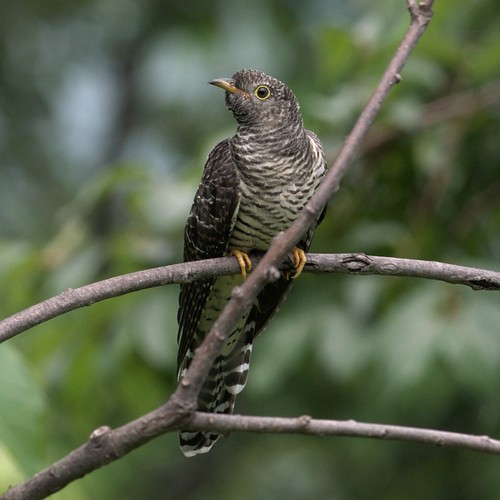
カッコウ (Cuculus canorus) カッコウ
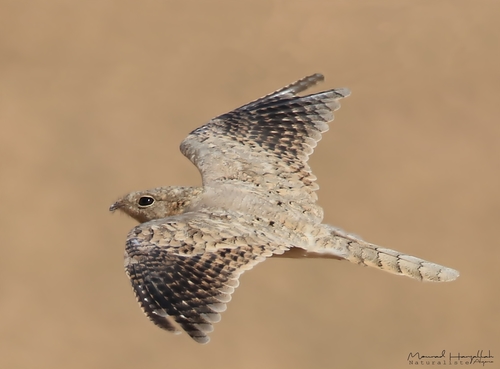
エジプトヨタカ (Caprimulgus aegyptius) エジプトヨタカ

メディア

読み込み中…

要点

The most reliable field mark to separate Common Cuckoo from Egyptian Nightjar is overall structure and posture: cuckoos are slim, long-tailed birds with a hawk-like jizz, while Egyptian Nightjars are compact, broad-headed, and sit flat on the ground, blending in with sandy surroundings. Juvenile cuckoos in flight show a white nape patch and white feather fringes, which are never present on nightjars. In flight, the cuckoo’s regular, direct wingbeats contrast with the nightjar’s buoyant, moth-like flight at dusk. Plumage is also a strong clue: cuckoos are grey or rufous with sharp barring, while nightjars are sandy, finely streaked and barred, and lack the sharp demarcation between breast and belly. Habitat and time of activity also help: cuckoos perch openly by day, nightjars are crepuscular and nearly invisible on the ground.

識別のコツ

  1. Juvenile Common Cuckoo in flight: Look for a bold white nape patch and white feather fringes on the upperwing; Egyptian Nightjar never shows these marks at any age.
  2. Upperwing pattern (immature cuckoo): Chestnut bars or spots on secondaries and greater coverts, with creamy-white edges, are unique to young cuckoos; nightjars have uniform sandy or buff upperwings with fine barring, never bold bars or white edges.
  3. Adult plumage: Cuckoos are slate-grey above with a sharply demarcated grey breast and strongly barred underparts; nightjars are overall sandy, finely streaked and barred, with no sharp transitions between breast and belly.
  4. Rufous morph confusion: Both species can appear rufous, but only cuckoos (especially females and juveniles) show rufous with narrow dark bars and sometimes a pinkish-buff wash; nightjars’ rufous tones are always muted and finely patterned, never sharply barred.
  5. Wing spots: Male Egyptian Nightjars have tiny white wing spots, but these are subtle and not like the bold white markings of juvenile cuckoos.
  6. Perched posture: Cuckoos perch upright on wires or branches, often with drooped wings and a raised tail; nightjars sit flat along the ground, appearing squat and blending in with the substrate.
  7. Flight style: Cuckoo flight is direct, with regular strong wingbeats, reminiscent of a small hawk; nightjar flight is buoyant, silent, and moth-like, with alternating flaps and glides, usually at dusk.
  8. Head and bill: Cuckoos have a slender, pointed bill and a small head relative to body; nightjars have a broad, flat head with a very wide gape, adapted for catching insects at night.
  9. Tail shape: Cuckoos have a long, graduated tail, often fanned or raised when perched; nightjars have a proportionally long tail but it is held straight and flat when resting.
  10. Legs and feet: Cuckoos have short legs and yellow feet, often visible when perched; nightjar legs are very short and usually hidden.
  11. Habitat: Cuckoos are found in open woodland, farmland, and edge habitats; nightjars are strictly birds of open desert, sandy steppe, or dry countryside with sparse vegetation.
  12. Activity period: Cuckoos are diurnal, active and vocal by day; nightjars are crepuscular/nocturnal, rarely seen or heard in daylight except when flushed.
  13. Vocalization: The cuckoo’s 'goo-ko' call is diagnostic and given from a perch; the nightjar’s 'kroo-kroo-kroo…' is mechanical, given at dusk, and never resembles the cuckoo’s call.
  14. Size impression: Cuckoo is larger and heavier, with a more robust, elongated appearance; nightjar is smaller, lighter, and more delicate, despite a similar wingspan.
  15. Camouflage: Nightjars are extremely well-camouflaged on the ground, blending perfectly with sand and rocks; cuckoos are more conspicuous, especially when perched in the open.

大きさ

Common Cuckoo is the larger and heavier species, with a length of 32–34 cm and a mass around 111.5 g. Its wingspan is 55–60 cm. Egyptian Nightjar is noticeably smaller in body length (25 cm) but has a similar wingspan (about 55 cm), making it relatively longer-winged for its size. The nightjar is lighter and more compact, with a shorter body and a proportionally longer tail and wings for its size. In the field, the cuckoo appears more robust and elongated, while the nightjar is more delicate and squat when perched.

羽色

Juvenile Common Cuckoos (first autumn) are distinctive in flight by their white nape patch and white feather fringes, plus variable chestnut-brown upperparts with strong barring and creamy-white feather edges. Some juveniles are plain grey, but all show some white on the upperwing. Adults are slate-grey above with a sharply demarcated grey breast and boldly barred underparts; females may be rufous with narrow dark bars or show a pinkish-buff wash. Egyptian Nightjar, by contrast, is always sand-coloured, with fine buff and brown barring and streaking, and sandy or whitish underparts without sharp transitions. The nightjar’s plumage is cryptic and variegated, designed for camouflage on sandy ground, and never shows the sharp barring or white nape patch of a juvenile cuckoo. Male nightjars have tiny white wing spots, but these are subtle and not like the bold white markings of young cuckoos.

行動

Common Cuckoo is active by day, often perching in the open on wires or exposed branches, sometimes with drooped wings and a raised tail. Its flight is direct and reminiscent of a sparrowhawk, with regular, strong wingbeats. Egyptian Nightjar is strictly crepuscular or nocturnal, spending the day motionless and well-camouflaged on the ground. At dusk, it flies with buoyant, silent, moth-like wingbeats, alternating flapping with glides. Nightjars rarely perch openly and are extremely difficult to flush or spot during daylight.

生息環境

Common Cuckoo is a widespread summer migrant to Europe and Asia, often found in open woodlands, farmland, and edge habitats where host species nest. It is usually seen in areas with trees or shrubs for perching. Egyptian Nightjar is native to deserts and semi-deserts of North Africa and southwest Asia, preferring open sandy or stony ground with sparse vegetation. It is rarely found in Europe except as a vagrant, and is most often encountered near water or in dry countryside with scattered bushes. The two species rarely overlap in habitat except possibly at migration stopovers.

声

Common Cuckoo males give the classic two-note 'goo-ko' call, usually from a perch, with a regular rhythm and sometimes in long series. Females have a loud bubbling call. The call is diagnostic and familiar in Eurasia. Egyptian Nightjar’s call is a repetitive, mechanical 'kroo-kroo-kroo…', rising and falling as the bird turns its head, and is given at dusk or night. The nightjar is usually silent by day. The two species’ calls are completely different and, if heard, are unmistakable.

より良い説明を送る

比較と同じ項目を使ってください。文章はすぐに公開されます。

The most reliable field mark to separate Common Cuckoo from Egyptian Nightjar is overall structure and posture: cuckoos are slim, long-tailed birds with a hawk-like jizz, while Egyptian Nightjars are compact, broad-headed, and sit flat on the ground, blending in with sandy surroundings. Juvenile cuckoos in flight show a white nape patch and white feather fringes, which are never present on nightjars. In flight, the cuckoo’s regular, direct wingbeats contrast with the nightjar’s buoyant, moth-like flight at dusk. Plumage is also a strong clue: cuckoos are grey or rufous with sharp barring, while nightjars are sandy, finely streaked and barred, and lack the sharp demarcation between breast and belly. Habitat and time of activity also help: cuckoos perch openly by day, nightjars are crepuscular and nearly invisible on the ground.

  1. Juvenile Common Cuckoo in flight: Look for a bold white nape patch and white feather fringes on the upperwing; Egyptian Nightjar never shows these marks at any age.
  2. Upperwing pattern (immature cuckoo): Chestnut bars or spots on secondaries and greater coverts, with creamy-white edges, are unique to young cuckoos; nightjars have uniform sandy or buff upperwings with fine barring, never bold bars or white edges.
  3. Adult plumage: Cuckoos are slate-grey above with a sharply demarcated grey breast and strongly barred underparts; nightjars are overall sandy, finely streaked and barred, with no sharp transitions between breast and belly.
  4. Rufous morph confusion: Both species can appear rufous, but only cuckoos (especially females and juveniles) show rufous with narrow dark bars and sometimes a pinkish-buff wash; nightjars’ rufous tones are always muted and finely patterned, never sharply barred.
  5. Wing spots: Male Egyptian Nightjars have tiny white wing spots, but these are subtle and not like the bold white markings of juvenile cuckoos.
  6. Perched posture: Cuckoos perch upright on wires or branches, often with drooped wings and a raised tail; nightjars sit flat along the ground, appearing squat and blending in with the substrate.
  7. Flight style: Cuckoo flight is direct, with regular strong wingbeats, reminiscent of a small hawk; nightjar flight is buoyant, silent, and moth-like, with alternating flaps and glides, usually at dusk.
  8. Head and bill: Cuckoos have a slender, pointed bill and a small head relative to body; nightjars have a broad, flat head with a very wide gape, adapted for catching insects at night.
  9. Tail shape: Cuckoos have a long, graduated tail, often fanned or raised when perched; nightjars have a proportionally long tail but it is held straight and flat when resting.
  10. Legs and feet: Cuckoos have short legs and yellow feet, often visible when perched; nightjar legs are very short and usually hidden.
  11. Habitat: Cuckoos are found in open woodland, farmland, and edge habitats; nightjars are strictly birds of open desert, sandy steppe, or dry countryside with sparse vegetation.
  12. Activity period: Cuckoos are diurnal, active and vocal by day; nightjars are crepuscular/nocturnal, rarely seen or heard in daylight except when flushed.
  13. Vocalization: The cuckoo’s 'goo-ko' call is diagnostic and given from a perch; the nightjar’s 'kroo-kroo-kroo…' is mechanical, given at dusk, and never resembles the cuckoo’s call.
  14. Size impression: Cuckoo is larger and heavier, with a more robust, elongated appearance; nightjar is smaller, lighter, and more delicate, despite a similar wingspan.
  15. Camouflage: Nightjars are extremely well-camouflaged on the ground, blending perfectly with sand and rocks; cuckoos are more conspicuous, especially when perched in the open.

Common Cuckoo is the larger and heavier species, with a length of 32–34 cm and a mass around 111.5 g. Its wingspan is 55–60 cm. Egyptian Nightjar is noticeably smaller in body length (25 cm) but has a similar wingspan (about 55 cm), making it relatively longer-winged for its size. The nightjar is lighter and more compact, with a shorter body and a proportionally longer tail and wings for its size. In the field, the cuckoo appears more robust and elongated, while the nightjar is more delicate and squat when perched.

Juvenile Common Cuckoos (first autumn) are distinctive in flight by their white nape patch and white feather fringes, plus variable chestnut-brown upperparts with strong barring and creamy-white feather edges. Some juveniles are plain grey, but all show some white on the upperwing. Adults are slate-grey above with a sharply demarcated grey breast and boldly barred underparts; females may be rufous with narrow dark bars or show a pinkish-buff wash. Egyptian Nightjar, by contrast, is always sand-coloured, with fine buff and brown barring and streaking, and sandy or whitish underparts without sharp transitions. The nightjar’s plumage is cryptic and variegated, designed for camouflage on sandy ground, and never shows the sharp barring or white nape patch of a juvenile cuckoo. Male nightjars have tiny white wing spots, but these are subtle and not like the bold white markings of young cuckoos.

Common Cuckoo is active by day, often perching in the open on wires or exposed branches, sometimes with drooped wings and a raised tail. Its flight is direct and reminiscent of a sparrowhawk, with regular, strong wingbeats. Egyptian Nightjar is strictly crepuscular or nocturnal, spending the day motionless and well-camouflaged on the ground. At dusk, it flies with buoyant, silent, moth-like wingbeats, alternating flapping with glides. Nightjars rarely perch openly and are extremely difficult to flush or spot during daylight.

Common Cuckoo is a widespread summer migrant to Europe and Asia, often found in open woodlands, farmland, and edge habitats where host species nest. It is usually seen in areas with trees or shrubs for perching. Egyptian Nightjar is native to deserts and semi-deserts of North Africa and southwest Asia, preferring open sandy or stony ground with sparse vegetation. It is rarely found in Europe except as a vagrant, and is most often encountered near water or in dry countryside with scattered bushes. The two species rarely overlap in habitat except possibly at migration stopovers.

Common Cuckoo males give the classic two-note 'goo-ko' call, usually from a perch, with a regular rhythm and sometimes in long series. Females have a loud bubbling call. The call is diagnostic and familiar in Eurasia. Egyptian Nightjar’s call is a repetitive, mechanical 'kroo-kroo-kroo…', rising and falling as the bird turns its head, and is given at dusk or night. The nightjar is usually silent by day. The two species’ calls are completely different and, if heard, are unmistakable.

変更を破棄しますか?

保存していない編集があります。今離れると失われます。

カッコウ · エジプトヨタカ · 苦手な鳥