

Motmot

カッコウ 対 アフリカヘビウ

Cuculus canorus 対 Anhinga rufa

カッコウとアフリカヘビウのクイズ
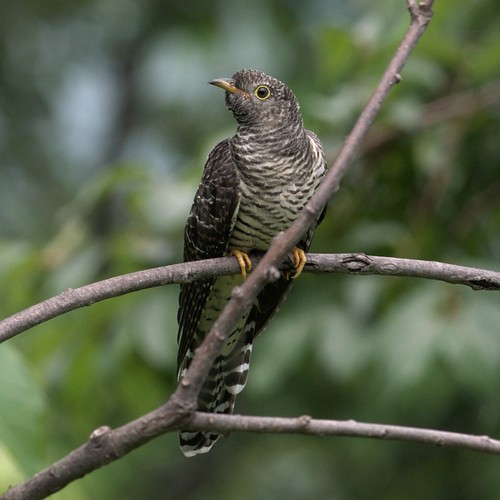
カッコウ (Cuculus canorus) カッコウ
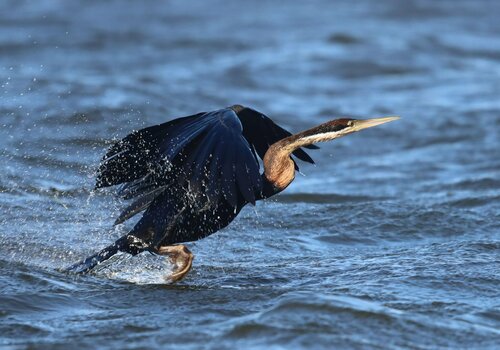
アフリカヘビウ (Anhinga rufa) アフリカヘビウ

メディア

読み込み中…

要点

The most reliable field mark to separate Common Cuckoo from African Darter is overall structure and jizz: cuckoos are slender, short-legged, long-tailed birds with a hawk-like flight, while darters are much larger, with extremely long necks and pointed bills, often seen swimming with just the neck above water or perched with wings spread to dry. Juvenile cuckoos show a white nape patch and white feather fringes, which are never present on darters. In flight, the cuckoo's shape and barred underparts contrast sharply with the darter's elongated, snake-like neck and glossy black or brown plumage. Habitat is also a strong clue: cuckoos are found in open country and woodland, rarely near water, while darters are strictly aquatic.

識別のコツ

  1. Size and structure: African Darter is much larger and bulkier than Common Cuckoo, with a body length more than double that of the cuckoo. The darter's extremely long, thin neck and pointed bill are never matched by cuckoo.
  2. Neck and bill: Darter's neck is snake-like and much longer than the head and body, with a thin, dagger-like bill. Cuckoo's neck is short and bill is slender but not pointed or dagger-like.
  3. Wing and tail: Cuckoo has a long, graduated tail and pointed wings, giving a hawk-like silhouette in flight. Darter has a proportionally shorter tail and broader wings, but the long neck dominates its outline.
  4. Juvenile marks: Juvenile cuckoos have a white nape patch and white feather fringes, sometimes with barred or rufous upperparts—never seen in darter of any age.
  5. Adult plumage: Adult male cuckoo is slate-grey with a sharp demarcation to barred underparts; adult male darter is glossy black with white streaking and a white lateral neck stripe on a rufous background.
  6. Female and immature plumage: Female cuckoo can be grey or rufous morph; rufous morphs have reddish-brown upperparts with narrow black bars. Darter females and immatures are browner but always have the white neck stripe and never show barring or white nape.
  7. Underparts: Cuckoo underparts are always barred; darter underparts are plain, never barred.
  8. Neck pattern: Darter always shows a thin white stripe along the neck, which is absent in cuckoo.
  9. Behavior: Darter often swims with only the neck above water and perches with wings spread to dry. Cuckoo never swims or spreads wings to dry.
  10. Perching posture: Cuckoo often perches with wings drooped and tail raised; darter perches upright, often with wings open.
  11. Flight: Cuckoo's flight is hawk-like, with regular wingbeats and long tail; darter's flight is direct, with the long neck extended and bill pointed forward.
  12. Habitat: Darter is always near water; cuckoo is found in dry habitats, open country, and woodland.
  13. Voice: Cuckoo's 'goo-ko' call is distinctive and diagnostic; darter is silent.
  14. Association: Darter may be seen with cormorants, herons, and other waterbirds; cuckoo is solitary and not associated with waterbird colonies.
  15. Pitfalls: At great distance or in poor light, a perched darter with neck retracted might look vaguely cuckoo-like, but the habitat, size, and lack of barring or white nape patch will separate them.

大きさ

Common Cuckoo is a medium-sized bird (body mass ~111.5 g), 32–34 cm long with a 55–60 cm wingspan. African Darter is much larger, about 80 cm long—more than twice the length of a cuckoo—and is much heavier (exact mass not provided, but visually and structurally much bulkier). The darter's long neck and large size are immediately obvious in the field, making confusion with cuckoo unlikely except at great distance or in poor viewing conditions.

羽色

Juvenile Common Cuckoos are distinctive with a white nape patch and white feather fringes, and may show barred or rufous upperparts with creamy edging; some are plain grey. In all ages, cuckoos have barred underparts and, in adults, a sharp demarcation between the grey throat/breast and the barring below. Adult males are slate-grey with yellow eye-ring and base of bill; females can be grey or rufous morph, with rufous morphs showing reddish-brown upperparts and narrower black bars than in juveniles. African Darters, by contrast, never show barring or white nape patches. Adult males are glossy black with white streaking, while females and immatures are browner. The darter's most distinctive mark is a thin white stripe along the side of the neck against a rufous background, present in all plumages. Their plumage is never barred, and the neck is always long and unmarked except for the stripe.

行動

Common Cuckoo is usually seen perched openly with drooped wings and raised tail, or flying with rapid, hawk-like wingbeats. It does not swim or spread its wings to dry. African Darter is often seen swimming low in the water with only the neck visible (hence 'snakebird'), or perched with wings spread wide to dry—behavior never shown by cuckoo. Darter's flight is direct and strong, but the long neck and pointed bill are diagnostic. Cuckoos do not associate with waterbirds or nest in colonies, while darters often nest with herons, egrets, and cormorants.

生息環境

Common Cuckoo is a bird of open country, woodland, and farmland, rarely found near water. African Darter is strictly aquatic, found along lakes, rivers, and wetlands, never far from water. If the bird is seen swimming or perched by water, it is almost certainly a darter; if in dry woodland or farmland, cuckoo is much more likely.

声

Common Cuckoo has a distinctive two-note 'goo-ko' song, usually given from an open perch, and a loud bubbling call by the female. African Darter is generally silent and does not have a song; any vocalizations are not prominent or diagnostic in the field. Hearing the classic cuckoo call immediately rules out darter.

より良い説明を送る

比較と同じ項目を使ってください。文章はすぐに公開されます。

The most reliable field mark to separate Common Cuckoo from African Darter is overall structure and jizz: cuckoos are slender, short-legged, long-tailed birds with a hawk-like flight, while darters are much larger, with extremely long necks and pointed bills, often seen swimming with just the neck above water or perched with wings spread to dry. Juvenile cuckoos show a white nape patch and white feather fringes, which are never present on darters. In flight, the cuckoo's shape and barred underparts contrast sharply with the darter's elongated, snake-like neck and glossy black or brown plumage. Habitat is also a strong clue: cuckoos are found in open country and woodland, rarely near water, while darters are strictly aquatic.

  1. Size and structure: African Darter is much larger and bulkier than Common Cuckoo, with a body length more than double that of the cuckoo. The darter's extremely long, thin neck and pointed bill are never matched by cuckoo.
  2. Neck and bill: Darter's neck is snake-like and much longer than the head and body, with a thin, dagger-like bill. Cuckoo's neck is short and bill is slender but not pointed or dagger-like.
  3. Wing and tail: Cuckoo has a long, graduated tail and pointed wings, giving a hawk-like silhouette in flight. Darter has a proportionally shorter tail and broader wings, but the long neck dominates its outline.
  4. Juvenile marks: Juvenile cuckoos have a white nape patch and white feather fringes, sometimes with barred or rufous upperparts—never seen in darter of any age.
  5. Adult plumage: Adult male cuckoo is slate-grey with a sharp demarcation to barred underparts; adult male darter is glossy black with white streaking and a white lateral neck stripe on a rufous background.
  6. Female and immature plumage: Female cuckoo can be grey or rufous morph; rufous morphs have reddish-brown upperparts with narrow black bars. Darter females and immatures are browner but always have the white neck stripe and never show barring or white nape.
  7. Underparts: Cuckoo underparts are always barred; darter underparts are plain, never barred.
  8. Neck pattern: Darter always shows a thin white stripe along the neck, which is absent in cuckoo.
  9. Behavior: Darter often swims with only the neck above water and perches with wings spread to dry. Cuckoo never swims or spreads wings to dry.
  10. Perching posture: Cuckoo often perches with wings drooped and tail raised; darter perches upright, often with wings open.
  11. Flight: Cuckoo's flight is hawk-like, with regular wingbeats and long tail; darter's flight is direct, with the long neck extended and bill pointed forward.
  12. Habitat: Darter is always near water; cuckoo is found in dry habitats, open country, and woodland.
  13. Voice: Cuckoo's 'goo-ko' call is distinctive and diagnostic; darter is silent.
  14. Association: Darter may be seen with cormorants, herons, and other waterbirds; cuckoo is solitary and not associated with waterbird colonies.
  15. Pitfalls: At great distance or in poor light, a perched darter with neck retracted might look vaguely cuckoo-like, but the habitat, size, and lack of barring or white nape patch will separate them.

Common Cuckoo is a medium-sized bird (body mass ~111.5 g), 32–34 cm long with a 55–60 cm wingspan. African Darter is much larger, about 80 cm long—more than twice the length of a cuckoo—and is much heavier (exact mass not provided, but visually and structurally much bulkier). The darter's long neck and large size are immediately obvious in the field, making confusion with cuckoo unlikely except at great distance or in poor viewing conditions.

Juvenile Common Cuckoos are distinctive with a white nape patch and white feather fringes, and may show barred or rufous upperparts with creamy edging; some are plain grey. In all ages, cuckoos have barred underparts and, in adults, a sharp demarcation between the grey throat/breast and the barring below. Adult males are slate-grey with yellow eye-ring and base of bill; females can be grey or rufous morph, with rufous morphs showing reddish-brown upperparts and narrower black bars than in juveniles. African Darters, by contrast, never show barring or white nape patches. Adult males are glossy black with white streaking, while females and immatures are browner. The darter's most distinctive mark is a thin white stripe along the side of the neck against a rufous background, present in all plumages. Their plumage is never barred, and the neck is always long and unmarked except for the stripe.

Common Cuckoo is usually seen perched openly with drooped wings and raised tail, or flying with rapid, hawk-like wingbeats. It does not swim or spread its wings to dry. African Darter is often seen swimming low in the water with only the neck visible (hence 'snakebird'), or perched with wings spread wide to dry—behavior never shown by cuckoo. Darter's flight is direct and strong, but the long neck and pointed bill are diagnostic. Cuckoos do not associate with waterbirds or nest in colonies, while darters often nest with herons, egrets, and cormorants.

Common Cuckoo is a bird of open country, woodland, and farmland, rarely found near water. African Darter is strictly aquatic, found along lakes, rivers, and wetlands, never far from water. If the bird is seen swimming or perched by water, it is almost certainly a darter; if in dry woodland or farmland, cuckoo is much more likely.

Common Cuckoo has a distinctive two-note 'goo-ko' song, usually given from an open perch, and a loud bubbling call by the female. African Darter is generally silent and does not have a song; any vocalizations are not prominent or diagnostic in the field. Hearing the classic cuckoo call immediately rules out darter.

変更を破棄しますか?

保存していない編集があります。今離れると失われます。

カッコウ · アフリカヘビウ · 苦手な鳥