

Motmot

カラシラサギ 対 コサギ

Egretta eulophotes 対 Egretta garzetta

カラシラサギとコサギのクイズ
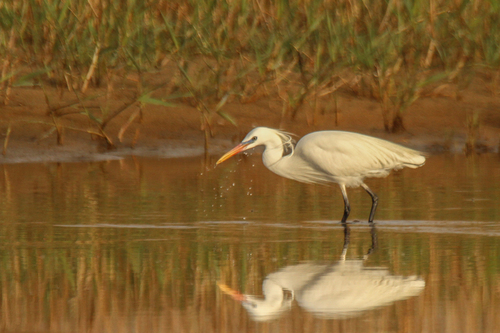
カラシラサギ (Egretta eulophotes) カラシラサギ
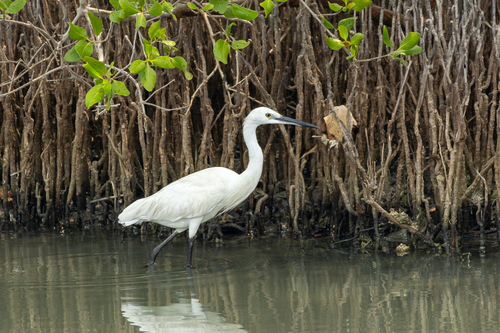
コサギ (Egretta garzetta) コサギ

メディア

読み込み中…

要点

中国のカラシラサギとコサギを区別する最も信頼できるフィールドマークは、繁殖期の裸の部分の色と繁殖外のくちばしと脚の色の微妙な違いです。両種はすべての年齢で完全に白く、全体的な形は似ていますが、中国のカラシラサギはわずかに背が高く、繁殖状態ではより長く、より豪華な冠を発達させます。両者のくちばしと脚の色は季節によって変化しますが、中国のカラシラサギの繁殖色は特に特徴的です。未熟な鳥や非繁殖の鳥は非常に難しく、構造と羽毛が重なり合っているため、裸の部分の色合いや微妙なサイズの違いに注意を払うことが不可欠です。

識別のコツ

  1. 繁殖期の裸の部分の色が最良のフィールドマークです: 繁殖羽毛の中で、中国のカラシラサギは明るい黄色(ほぼオレンジ)のくちばし、明るい青の顔、黒い脚に黄色の足を示します。繁殖羽毛のコサギは黒いくちばし、黒い顔(時には求愛のピークで赤)、黒い脚に黄色の足(いくつかの亜種では求愛中に赤)を持っています。
  2. 繁殖鳥の冠の形と長さ: 中国のカラシラサギの冠は、時には11 cmを超える単一の豪華な羽根であり、コサギの冠は2本の非常に長く、狭い後頭部の羽根(約15 cm)で形成され、より糸のような外観を与えます。冠の長さと形は、穏やかな天候で止まっている鳥で最もよく判断されます。
  3. 非繁殖期のくちばしと脚の色: 中国のカラシラサギは、淡い色のくちばしにタン色の桃色の基部、黄色がかった緑の顔と脚、黄色の虹彩を持っています。コサギは黒いくちばしと顔、黒い脚、黄色の足を持っています(幼鳥:鈍い黄色の足、緑がかった黒の脚)。これらの違いは微妙で、遠くからや薄暗い光の中では判断が難しいことがあります。
  4. 構造とサイズ: 中国のカラシラサギはわずかに背が高く、長い首に見えることがありますが、これは微妙で、両種が一緒でない限り信頼できません。両者はスリムで優雅です。
  5. 羽毛は役に立たない: 両者はすべての年齢と季節で純白であり、飛行中に区別するための特徴的な幼鳥や未熟な上翼のパターンはありません。羽毛の分離のために飛行の視点に頼らないでください。
  6. 幼鳥/未熟な鳥の混乱: コサギの幼鳥は、灰色または茶色の羽毛を持っていることがあり、裸の部分が鈍いことがありますが、これは常に見えるわけではありません。中国のカラシラサギの幼鳥はすべて白く、非繁殖の成鳥と同様の裸の部分の色を持っています。
  7. 足の色: 両種は成鳥として黄色の足を持っていますが、コサギの方が明るく、一貫性があります。一方、中国のカラシラサギの足は繁殖外ではより変動し、黄色がかった緑色になることがあります。求愛中には、コサギの足が赤くなることがあります(いくつかの亜種で)。
  8. 虹彩の色: 両者は黄色の虹彩を持っていますが、中国のカラシラサギの虹彩は一貫して黄色であり、コサギの虹彩は時には薄く見えることがあります。
  9. 分布と豊富さ: 東アジアにいて、春または初夏に小さな沖合の島で白いサギを見た場合、特に小さな群れであれば、中国のカラシラサギを考慮してください。他のほとんどの生息地や大きな群れでは、コサギの方が圧倒的に可能性が高いです。
  10. 混合群れ: 両種が生息する地域では、繁殖外で黄色の基部のくちばしを持つわずかに大きく、長い冠の個体(繁殖中は明るい黄色のくちばしと青い顔)を探してください。
  11. 繁殖羽毛: 両種は長い胸と背中の羽毛を発達させますが、中国のカラシラサギの羽毛は特に豪華で、尾を超えて伸びます。これは穏やかな条件で止まっている鳥で最もよく見られます。
  12. 行動の文脈: コサギは混合採餌群れでより攻撃的で支配的である可能性が高く、幅広い採餌技術を使用する可能性があります。
  13. 季節的なタイミング: 中国のカラシラサギは、4月中旬に東アジアの繁殖地に戻り(しばしばすでに完全な繁殖羽毛)、5月中旬までに移動が終了します。コサギはその範囲のほとんどで年間を通じて存在します。
  14. 音声の違いは提供されていません: 呼び声は情報源に記載されていないため、分離のために声に頼らないでください。
  15. 疑問がある場合: 裸の部分の色があいまいで、中国のカラシラサギの繁殖地や移動のホットスポットにいない場合は、コサギにデフォルトしてください。コサギははるかに一般的で広範囲に分布しています。

大きさ

中国のカラシラサギはわずかに大きく、平均して約68 cmの高さで、コサギは55〜65 cmの長さと88〜106 cmの翼幅です。コサギの平均体重は約532 g [wikidata]ですが、中国のカラシラサギの体重は記載されていません。現場では、このサイズの違いは微妙で、両種が並んでいない限り信頼できません。両者はスリムで優雅なサギですが、中国のカラシラサギはわずかに背が高く、長い首に見えることがあります。

羽色

両種はすべての年齢と季節で純白であり、飛行中に区別するための特徴的な幼鳥や未熟な上翼のパターンはありません。中国のカラシラサギの羽毛はコサギの羽毛に非常に似ていますが、繁殖期には中国のカラシラサギは特に長く豪華な冠(時には11 cmを超える)を発達させますが、コサギの冠は2本の長く非常に狭い後頭部の羽根(約15 cm)で形成され、より糸のような外観を与えます。両種は繁殖状態で長い胸と背中の羽毛を発達させますが、中国のカラシラサギの羽毛は特に豪華で、尾を超えて伸びます。繁殖外では、両者はこれらの羽毛を欠き、すべて白ですが、中国のカラシラサギのくちばしは淡い色でタン色の桃色の基部を持ち、脚と顔は黄色がかった緑色ですが、コサギのくちばしと顔は黒く、脚は黒、足は黄色です(ただし、幼鳥は鈍い黄色の足と緑がかった黒の脚を持っています)。コサギの幼鳥は灰色または茶色の羽毛を示すことがありますが、これは常に明らかではありません。

行動

両種は浅い水や陸で採餌し、獲物を待ち伏せするためにストーキング、走る、または静止するなどの類似の技術を使用します。コサギは、魚を驚かせるために翼を上げて走ったり、足を引きずったりするなど、より多様な採餌戦略があることで知られ、時にはカワウと一緒に餌を取ったり、掃除をしたりすることがあります。中国のカラシラサギの採餌行動はそれほど詳細には記載されていませんが、おそらく似ています。混合群れでは、コサギが採餌場所でより支配的である可能性があります。

生息環境

中国のカラシラサギは東アジアの小さな沖合の島で繁殖し、主に東南アジア、特にフィリピンとマレーシアで冬を越します。これは希少で局所的であり、世界の個体数は3500羽未満で、脆弱と分類されています。コサギはヨーロッパ、アフリカ、アジア、そして現在はアメリカの一部に広く分布しており、はるかに一般的で適応力があり、幅広い湿地生息地を利用しています。分布が重なる場所(例:移動中の沿岸東アジア)では、中国のカラシラサギははるかに希少で局所的です。

より良い説明を送る

比較と同じ項目を使ってください。文章はすぐに公開されます。

The most reliable field marks to separate Chinese Egret from Little Egret are the color of the bare parts in breeding season and subtle differences in bill and leg coloration outside breeding. Both species are entirely white at all ages, and their overall shape is similar, but Chinese Egret is slightly taller and develops a longer, more luxuriant crest in breeding condition. Bill and leg colors shift between seasons in both, but the Chinese Egret’s breeding colors are especially distinctive. Immature and non-breeding birds are much trickier, with overlapping structure and plumage, so careful attention to bare part hues and subtle size differences is essential.

  1. Breeding bare part colors are the best field mark: In breeding plumage, Chinese Egret shows a bright yellow (almost orange) bill, bright blue lores, and black legs with yellow feet. Little Egret in breeding plumage has a black bill, black lores (sometimes red at courtship peak), and black legs with yellow feet (red in courtship for some races).
  2. Crest shape and length in breeding birds: Chinese Egret’s crest is a single, luxuriant plume sometimes over 11 cm long, while Little Egret’s crest is formed by two very long, narrow nape plumes (about 15 cm), giving a more threadlike appearance. Crest length and shape are best judged on perched birds in calm weather.
  3. Non-breeding bill and leg color: Chinese Egret has a dusky bill with a tannish-peach base, yellow-green lores and legs, and yellow iris. Little Egret has a black bill and lores, black legs, and yellow feet (juveniles: duller yellow feet, greenish-black legs). These differences are subtle and can be hard to judge at distance or in poor light.
  4. Structure and size: Chinese Egret is slightly taller and may appear longer-necked, but this is subtle and unreliable unless both species are together. Both are slim and elegant.
  5. Plumage is not helpful: Both are pure white at all ages and seasons, with no distinctive juvenile or immature upperwing pattern. Do not rely on flight views for plumage separation.
  6. Juvenile/immature confusion: Little Egret juveniles may have some greyish or brownish feathers and duller bare parts, but this is not always visible. Chinese Egret juveniles are all white with similar bare part colors to non-breeding adults.
  7. Feet color: Both species have yellow feet as adults, but Little Egret’s are brighter and more consistent, while Chinese Egret’s may be more variable and yellow-greenish outside breeding. In courtship, Little Egret’s feet can turn red (in some races).
  8. Iris color: Both have yellow irises, but Chinese Egret’s is consistently yellow, while Little Egret’s may appear paler in some lights.
  9. Range and abundance: If you are in East Asia and see a white egret on a small offshore island in spring or early summer, especially in a small group, consider Chinese Egret. In most other habitats or larger flocks, Little Egret is vastly more likely.
  10. Mixed flocks: In areas where both occur, look for the slightly larger, longer-crested individual with a yellow-based bill (outside breeding) or bright yellow bill and blue lores (in breeding) for Chinese Egret.
  11. Breeding plumes: Both species develop long breast and dorsal plumes, but Chinese Egret’s are especially luxuriant and extend well beyond the tail. This is best seen on perched birds in calm conditions.
  12. Behavioral context: Little Egret may be more aggressive and dominant in mixed feeding flocks, and is more likely to use a wide range of foraging techniques.
  13. Seasonal timing: Chinese Egret returns to breeding grounds in East Asia in mid-April (often already in full breeding plumage), with migration over by mid-May. Little Egret is present year-round in much of its range.
  14. No vocal differences provided: Calls are not described in the sources, so do not rely on voice for separation.
  15. When in doubt: If bare part colors are ambiguous and you are not in a known Chinese Egret breeding or migration hotspot, default to Little Egret, as it is far more common and widespread.

Chinese Egret is slightly larger, averaging about 68 cm in height, compared to Little Egret's 55–65 cm length and 88–106 cm wingspan. Little Egret's average mass is about 532 g [wikidata], but no mass is given for Chinese Egret. In the field, this size difference is subtle and not always reliable unless both species are side by side. Both are slim, elegant egrets, but Chinese Egret may appear a touch taller and longer-necked.

Both species are pure white throughout all ages and seasons, with no distinctive juvenile or immature upperwing pattern to separate them in flight. Chinese Egret’s plumage closely resembles Little Egret’s, but in breeding season, Chinese Egret develops a particularly long, luxuriant crest (sometimes over 11 cm), while Little Egret’s crest is formed by two long, very narrow nape plumes (about 15 cm). Both species develop long breast and dorsal plumes in breeding condition, but Chinese Egret’s are described as especially luxuriant and extending well beyond the tail. Outside breeding, both lack these plumes and are all-white, but Chinese Egret’s bill is dusky with a tannish-peach base, and legs/lores are yellow-green, while Little Egret’s bill and lores are black, legs black, and feet yellow (though juveniles have duller yellow feet and greenish-black legs). Little Egret juveniles may show some greyish or brownish feathers, but this is not always obvious.

Both species forage in shallow water and on land, using similar techniques such as stalking, running, or standing still to ambush prey. Little Egret is noted for a wider variety of foraging strategies, including running with raised wings and shuffling feet to disturb fish, and is sometimes seen feeding with cormorants or scavenging. Chinese Egret’s foraging behavior is not described in as much detail, but is likely similar. In mixed flocks, Little Egret may be more dominant at feeding sites.

Chinese Egret breeds on small offshore islands in East Asia and winters mainly in Southeast Asia, especially the Philippines and Malaysia. It is rare and local, with a global population under 3,500 individuals, and is classified as vulnerable. Little Egret is widespread across Europe, Africa, Asia, and now parts of the Americas, and is much more common and adaptable, using a wide range of wetland habitats. Where ranges overlap (e.g., coastal East Asia in migration), Chinese Egret is much scarcer and more localized.

変更を破棄しますか?

保存していない編集があります。今離れると失われます。

カラシラサギ · コサギ · 苦手な鳥