

Motmot

ヤブガラ 対 ミソサザイモドキ

Psaltriparus minimus 対 Chamaea fasciata

ヤブガラとミソサザイモドキのクイズ
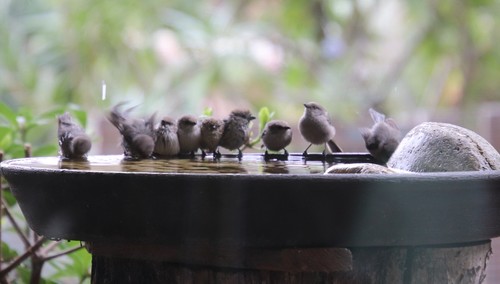
ヤブガラ (Psaltriparus minimus) ヤブガラ
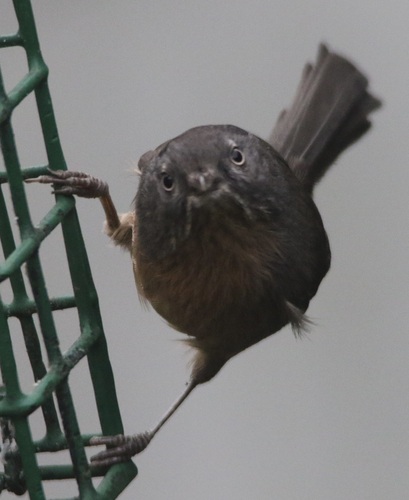
ミソサザイモドキ (Chamaea fasciata) ミソサザイモドキ

メディア

読み込み中…

要点

The most reliable field mark to separate Bushtit from Wrentit is overall size and structure: Bushtit is noticeably smaller, with a tiny, round-headed appearance and a proportionally long, thin tail, while Wrentit is bulkier with a heavier body, a longer, fuller tail, and a short, thick bill. In the field, Bushtits move in tight, active flocks and are often seen high in trees or shrubs, while Wrentits are more solitary or in pairs, skulking low in dense chaparral. Both species are drab and long-tailed, but Wrentit’s pale eye and heavier, wren-like jizz are distinctive. If you see a very small, constantly moving bird in a flock, it’s almost certainly a Bushtit; a larger, skulking, single bird with a ping-pong ball call is a Wrentit.

識別のコツ

  1. Size and structure: Bushtit is tiny, with a small, round head and a long, thin tail; Wrentit is much larger, bulkier, with a fuller, rounded tail and a short, thick bill. Size alone is often enough for separation in the field.
  2. Eye color: Adult Wrentits have a pale iris, which is conspicuous at close range; Bushtits always have a dark eye. This is a key mark for perched birds in good light.
  3. Bill shape: Bushtit’s bill is very small and fine, almost needle-like; Wrentit’s bill is short but thick and blunt, more like a wren’s.
  4. Tail shape and carriage: Both have long tails, but Bushtit’s is thin and straight, while Wrentit’s is broader, often held cocked or at an angle, and appears heavier.
  5. Flocking behavior: Bushtits are almost always in active, noisy flocks, often high in trees or shrubs; Wrentits are solitary or in pairs, rarely in groups, and usually low in dense cover.
  6. Movement: Bushtits are hyperactive, acrobatic, and constantly on the move, often hanging upside down; Wrentits move slowly and deliberately, often skulking and hard to see.
  7. Habitat: Bushtits are found in a wide range of open woodlands, gardens, and parks; Wrentits are restricted to dense chaparral, coastal scrub, and oak woodland thickets.
  8. Vocalizations: Listen for Bushtit’s soft, high lisping calls from flocks; Wrentit’s accelerating, ping-pong ball song is unique and diagnostic.
  9. Facial pattern: Both are plain-faced, but Wrentit’s pale eye stands out; Bushtit’s face is uniformly plain and dark-eyed.
  10. Upperparts color: Both are drab, but Wrentit is more olive-brown or grayish, with regional variation; Bushtit is more uniformly gray or brownish, with less contrast.
  11. Wing pattern: Neither species shows strong wingbars or panels; focus on size and structure instead.
  12. Perched vs. in flight: Bushtit’s tiny size and long, thin tail are obvious in flight and when perched; Wrentit’s heavier body and broader tail are evident when it flushes or perches with tail cocked.
  13. Seasonal confusion: Both species are resident and non-migratory; no major seasonal plumage changes to cause confusion.
  14. Juvenile/immature birds: No distinctive juvenile wing patterns are described for either species; use structure and behavior for young birds.
  15. Common pitfalls: Do not rely on overall drabness or long tail alone; always check for size, flocking, and eye color for a confident ID.

大きさ

Bushtit is one of the smallest North American passerines, with a tiny, almost kinglet-sized body and a long, thin tail. Wrentit is larger overall (14–16 cm), with a noticeably heavier build and a longer, fuller tail. The size difference is obvious in direct comparison or when switching between species in the field. Bushtit’s small size is accentuated by its large head and small bill, while Wrentit’s size is closer to a House Wren or small sparrow, with a short, thick bill and a pale iris that stands out at close range. [wikipedia][avonet]

羽色

There are no distinctive juvenile or first-winter wing patterns described for either species, so focus on overall coloration and structure. Bushtit is uniformly plain grayish or brownish above and below, with no strong facial markings, and a dark eye in all ages. Its plumage is soft, with a small, fine bill and a long, narrow tail. Wrentit is also plain but is dull olive, brown, or grayish overall, with subtle regional variation (darker in humid NW, paler in dry interior/south). The key plumage mark is the Wrentit’s pale iris (adult), which contrasts with Bushtit’s dark eye. Wrentit’s tail is long and often cocked, and its bill is short and thick. Both species lack strong wingbars or contrasting wing panels. In all ages and seasons, Bushtit is plainer and smaller, while Wrentit is bulkier, with a pale eye (adult) and a heavier, wren-like look. [wikipedia]

行動

Bushtits are highly social, moving in noisy, tight flocks of 10–40 birds, constantly active and acrobatic as they forage for insects and spiders in trees and shrubs. They often hang upside down and move rapidly through foliage, rarely sitting still. Wrentits are much more secretive and solitary, usually found alone or in pairs, and tend to skulk low in dense chaparral or bushy undergrowth. Wrentits are sedentary and rarely join mixed-species flocks, while Bushtits are almost always in groups and are more likely to be seen in open or edge habitats. [wikipedia]

生息環境

Both species occur in the western US, but Bushtit is more widespread, found in mixed open woodlands, gardens, parks, and chaparral with oaks and scrubby understory. Wrentit is much more habitat-restricted, favoring dense chaparral, coastal bushland, and oak woodlands along the immediate West Coast from Oregon to Baja California. If you are in dense, impenetrable chaparral, especially near the coast, Wrentit is more likely. Bushtit is common in a wider range of open and urban habitats. [wikipedia][ebird]

声

Bushtit gives high, thin, lisping calls and soft twittering, often heard as a constant background noise from a moving flock. Wrentit’s song is a distinctive, accelerating series of notes, famously compared to a ping-pong ball bouncing on a table. Its call is loud and carries well, often betraying its presence in otherwise dense cover. Bushtit’s calls are much softer and less distinctive, while Wrentit’s song is diagnostic if heard. [wikipedia]

より良い説明を送る

比較と同じ項目を使ってください。文章はすぐに公開されます。

The most reliable field mark to separate Bushtit from Wrentit is overall size and structure: Bushtit is noticeably smaller, with a tiny, round-headed appearance and a proportionally long, thin tail, while Wrentit is bulkier with a heavier body, a longer, fuller tail, and a short, thick bill. In the field, Bushtits move in tight, active flocks and are often seen high in trees or shrubs, while Wrentits are more solitary or in pairs, skulking low in dense chaparral. Both species are drab and long-tailed, but Wrentit’s pale eye and heavier, wren-like jizz are distinctive. If you see a very small, constantly moving bird in a flock, it’s almost certainly a Bushtit; a larger, skulking, single bird with a ping-pong ball call is a Wrentit.

  1. Size and structure: Bushtit is tiny, with a small, round head and a long, thin tail; Wrentit is much larger, bulkier, with a fuller, rounded tail and a short, thick bill. Size alone is often enough for separation in the field.
  2. Eye color: Adult Wrentits have a pale iris, which is conspicuous at close range; Bushtits always have a dark eye. This is a key mark for perched birds in good light.
  3. Bill shape: Bushtit’s bill is very small and fine, almost needle-like; Wrentit’s bill is short but thick and blunt, more like a wren’s.
  4. Tail shape and carriage: Both have long tails, but Bushtit’s is thin and straight, while Wrentit’s is broader, often held cocked or at an angle, and appears heavier.
  5. Flocking behavior: Bushtits are almost always in active, noisy flocks, often high in trees or shrubs; Wrentits are solitary or in pairs, rarely in groups, and usually low in dense cover.
  6. Movement: Bushtits are hyperactive, acrobatic, and constantly on the move, often hanging upside down; Wrentits move slowly and deliberately, often skulking and hard to see.
  7. Habitat: Bushtits are found in a wide range of open woodlands, gardens, and parks; Wrentits are restricted to dense chaparral, coastal scrub, and oak woodland thickets.
  8. Vocalizations: Listen for Bushtit’s soft, high lisping calls from flocks; Wrentit’s accelerating, ping-pong ball song is unique and diagnostic.
  9. Facial pattern: Both are plain-faced, but Wrentit’s pale eye stands out; Bushtit’s face is uniformly plain and dark-eyed.
  10. Upperparts color: Both are drab, but Wrentit is more olive-brown or grayish, with regional variation; Bushtit is more uniformly gray or brownish, with less contrast.
  11. Wing pattern: Neither species shows strong wingbars or panels; focus on size and structure instead.
  12. Perched vs. in flight: Bushtit’s tiny size and long, thin tail are obvious in flight and when perched; Wrentit’s heavier body and broader tail are evident when it flushes or perches with tail cocked.
  13. Seasonal confusion: Both species are resident and non-migratory; no major seasonal plumage changes to cause confusion.
  14. Juvenile/immature birds: No distinctive juvenile wing patterns are described for either species; use structure and behavior for young birds.
  15. Common pitfalls: Do not rely on overall drabness or long tail alone; always check for size, flocking, and eye color for a confident ID.

Bushtit is one of the smallest North American passerines, with a tiny, almost kinglet-sized body and a long, thin tail. Wrentit is larger overall (14–16 cm), with a noticeably heavier build and a longer, fuller tail. The size difference is obvious in direct comparison or when switching between species in the field. Bushtit’s small size is accentuated by its large head and small bill, while Wrentit’s size is closer to a House Wren or small sparrow, with a short, thick bill and a pale iris that stands out at close range. [wikipedia][avonet]

There are no distinctive juvenile or first-winter wing patterns described for either species, so focus on overall coloration and structure. Bushtit is uniformly plain grayish or brownish above and below, with no strong facial markings, and a dark eye in all ages. Its plumage is soft, with a small, fine bill and a long, narrow tail. Wrentit is also plain but is dull olive, brown, or grayish overall, with subtle regional variation (darker in humid NW, paler in dry interior/south). The key plumage mark is the Wrentit’s pale iris (adult), which contrasts with Bushtit’s dark eye. Wrentit’s tail is long and often cocked, and its bill is short and thick. Both species lack strong wingbars or contrasting wing panels. In all ages and seasons, Bushtit is plainer and smaller, while Wrentit is bulkier, with a pale eye (adult) and a heavier, wren-like look. [wikipedia]

Bushtits are highly social, moving in noisy, tight flocks of 10–40 birds, constantly active and acrobatic as they forage for insects and spiders in trees and shrubs. They often hang upside down and move rapidly through foliage, rarely sitting still. Wrentits are much more secretive and solitary, usually found alone or in pairs, and tend to skulk low in dense chaparral or bushy undergrowth. Wrentits are sedentary and rarely join mixed-species flocks, while Bushtits are almost always in groups and are more likely to be seen in open or edge habitats. [wikipedia]

Both species occur in the western US, but Bushtit is more widespread, found in mixed open woodlands, gardens, parks, and chaparral with oaks and scrubby understory. Wrentit is much more habitat-restricted, favoring dense chaparral, coastal bushland, and oak woodlands along the immediate West Coast from Oregon to Baja California. If you are in dense, impenetrable chaparral, especially near the coast, Wrentit is more likely. Bushtit is common in a wider range of open and urban habitats. [wikipedia][ebird]

Bushtit gives high, thin, lisping calls and soft twittering, often heard as a constant background noise from a moving flock. Wrentit’s song is a distinctive, accelerating series of notes, famously compared to a ping-pong ball bouncing on a table. Its call is loud and carries well, often betraying its presence in otherwise dense cover. Bushtit’s calls are much softer and less distinctive, while Wrentit’s song is diagnostic if heard. [wikipedia]

変更を破棄しますか?

保存していない編集があります。今離れると失われます。

ヤブガラ · ミソサザイモドキ · 苦手な鳥