

Motmot

アカハラ 対 ツグミ

Turdus chrysolaus 対 Turdus eunomus

アカハラとツグミのクイズ
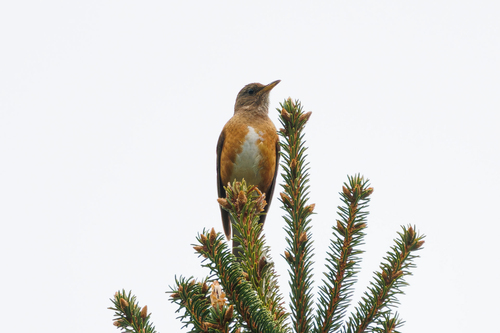
アカハラ (Turdus chrysolaus) アカハラ
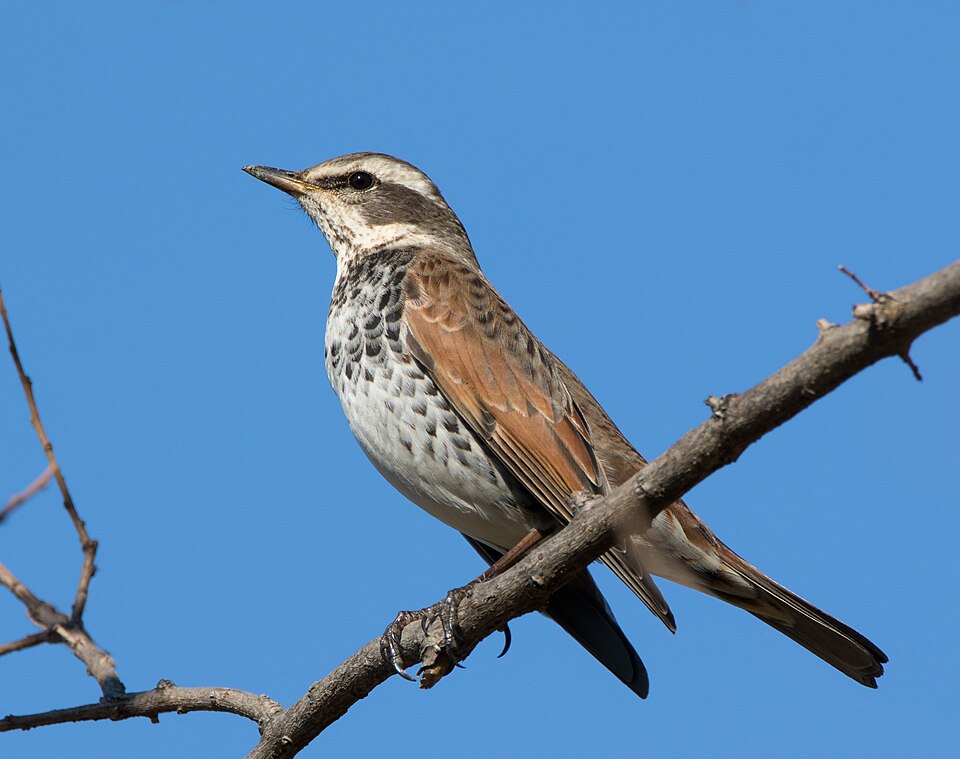
ツグミ (Turdus eunomus) ツグミ

メディア

読み込み中…

要点

The most reliable way to separate Brown-headed Thrush from Dusky Thrush is by overall plumage pattern: Dusky Thrush shows a striking contrast of dark brown upperparts, blackish face and breast spots, and a white belly and undertail, while Brown-headed Thrush is more uniformly brown-headed and lacks the bold blackish markings. Immature Dusky Thrushes have weaker patterning but still tend to show some facial contrast and pale supercilium, which Brown-headed Thrush lacks. Both species overlap in wintering range in Japan and East Asia, so careful attention to plumage and structure is needed, especially in mixed flocks. Size is similar, but Dusky Thrush is often a bit stockier and more fieldfare-like in jizz.

識別のコツ

  1. Face pattern: Dusky Thrush (all ages) shows a pale supercilium and blackish face markings, especially around the eye and ear coverts; Brown-headed Thrush has a plain brown head without strong facial contrast.
  2. Breast and flank spotting: Dusky Thrush has bold blackish spots on the breast and flanks (adults), or at least some spotting in immatures; Brown-headed Thrush lacks these strong markings and is more uniform below.
  3. Belly and undertail: Dusky Thrush always has a clean white belly and undertail, sharply set off from the darker breast and flanks; Brown-headed Thrush is more evenly colored below, without such stark contrast.
  4. Back and rump color: Dusky Thrush has a dark brown back and rump, while Brown-headed Thrush is more uniformly brown-headed and lacks the dark rump.
  5. Underwing color in flight: Dusky Thrush shows a reddish-brown underwing, which can be seen in flight or when stretching wings; Brown-headed Thrush does not show this feature (not mentioned in sources).
  6. Overall jizz/structure: Dusky Thrush is stockier and more fieldfare-like, often standing more upright; Brown-headed Thrush is slimmer and more evenly proportioned.
  7. Immature birds: Young Dusky Thrushes have weaker patterning but still show some facial contrast and pale supercilium; Brown-headed Thrush immatures are not well described but should lack these features.
  8. Habitat overlap: In winter, both species may occur together in Japan and East Asia, so do not rely on location alone for identification.
  9. Song and calls: Not reliably separated by voice based on available notes; focus on visual marks.
  10. Pitfalls with Naumann's Thrush: Dusky Thrush is closely related to Naumann's Thrush, which has more reddish tones; Brown-headed Thrush does not show the reddish face or rump of Naumann's.
  11. Perched vs. in flight: The reddish-brown underwing of Dusky Thrush is most obvious in flight or when the bird is stretching; perched birds require careful study of face and underparts.
  12. Sex differences: Both species have similar male and female plumage; do not rely on sex for separation.
  13. Seasonal variation: Both species are present in Japan and East Asia in winter; breeding range is more northerly for Dusky Thrush.
  14. Mixed flocks: Always check each individual carefully in mixed-species thrush flocks, as both can occur together.
  15. Lighting and wear: Strong sunlight or worn plumage can reduce contrast, especially in Dusky Thrush immatures; look for structural and underwing clues if plumage is ambiguous.

大きさ

Brown-headed Thrush averages around 65g in body mass [wikidata], while Dusky Thrush is similar in size but described as stockier and reminiscent of a small fieldfare [wikipedia]. In the field, this means Dusky Thrush may appear a bit bulkier and more upright, but size alone is not a safe separator unless seen side-by-side.

羽色

For immatures, Dusky Thrush shows a paler, less sharply defined version of the adult's bold pattern: look for a pale supercilium, some dark spotting on the breast and flanks, and a white belly and undertail. Brown-headed Thrush immatures are not described in detail, but lack the strong facial and breast patterning of Dusky Thrush. In adults, Dusky Thrush has a dark brown back and rump, blackish face, breast and flank spots, and a white belly and undertail. Brown-headed Thrush is more uniform, with a brown head and less contrast overall. Dusky Thrush also shows a reddish-brown underwing in flight, which is not mentioned for Brown-headed Thrush.

行動

Both species are typical thrushes in behavior, foraging on the ground or in low vegetation. Dusky Thrush may appear more upright and stocky, reminiscent of a small fieldfare, while Brown-headed Thrush is more evenly proportioned. Both can be seen singly or in mixed flocks during migration and winter.

生息環境

Brown-headed Thrush breeds in temperate forests of Sakhalin, the Kuril Islands, and Japan, wintering further south to the Ryukyus, Taiwan, Hainan, and the northern Philippines [wikipedia]. Dusky Thrush breeds from central Siberia to Kamchatka and winters in Korea, Japan, South China, and Myanmar [wikipedia]. In Japan and East Asia, both species can occur together in winter, often in similar wooded or open habitats.

声

Dusky Thrush has a simple fluted or whistling song, similar to Redwing, but vocal differences between these two species are not detailed in the notes. Brown-headed Thrush's voice is not described here, so vocalization is not a reliable separator in this context.

より良い説明を送る

比較と同じ項目を使ってください。文章はすぐに公開されます。

The most reliable way to separate Brown-headed Thrush from Dusky Thrush is by overall plumage pattern: Dusky Thrush shows a striking contrast of dark brown upperparts, blackish face and breast spots, and a white belly and undertail, while Brown-headed Thrush is more uniformly brown-headed and lacks the bold blackish markings. Immature Dusky Thrushes have weaker patterning but still tend to show some facial contrast and pale supercilium, which Brown-headed Thrush lacks. Both species overlap in wintering range in Japan and East Asia, so careful attention to plumage and structure is needed, especially in mixed flocks. Size is similar, but Dusky Thrush is often a bit stockier and more fieldfare-like in jizz.

  1. Face pattern: Dusky Thrush (all ages) shows a pale supercilium and blackish face markings, especially around the eye and ear coverts; Brown-headed Thrush has a plain brown head without strong facial contrast.
  2. Breast and flank spotting: Dusky Thrush has bold blackish spots on the breast and flanks (adults), or at least some spotting in immatures; Brown-headed Thrush lacks these strong markings and is more uniform below.
  3. Belly and undertail: Dusky Thrush always has a clean white belly and undertail, sharply set off from the darker breast and flanks; Brown-headed Thrush is more evenly colored below, without such stark contrast.
  4. Back and rump color: Dusky Thrush has a dark brown back and rump, while Brown-headed Thrush is more uniformly brown-headed and lacks the dark rump.
  5. Underwing color in flight: Dusky Thrush shows a reddish-brown underwing, which can be seen in flight or when stretching wings; Brown-headed Thrush does not show this feature (not mentioned in sources).
  6. Overall jizz/structure: Dusky Thrush is stockier and more fieldfare-like, often standing more upright; Brown-headed Thrush is slimmer and more evenly proportioned.
  7. Immature birds: Young Dusky Thrushes have weaker patterning but still show some facial contrast and pale supercilium; Brown-headed Thrush immatures are not well described but should lack these features.
  8. Habitat overlap: In winter, both species may occur together in Japan and East Asia, so do not rely on location alone for identification.
  9. Song and calls: Not reliably separated by voice based on available notes; focus on visual marks.
  10. Pitfalls with Naumann's Thrush: Dusky Thrush is closely related to Naumann's Thrush, which has more reddish tones; Brown-headed Thrush does not show the reddish face or rump of Naumann's.
  11. Perched vs. in flight: The reddish-brown underwing of Dusky Thrush is most obvious in flight or when the bird is stretching; perched birds require careful study of face and underparts.
  12. Sex differences: Both species have similar male and female plumage; do not rely on sex for separation.
  13. Seasonal variation: Both species are present in Japan and East Asia in winter; breeding range is more northerly for Dusky Thrush.
  14. Mixed flocks: Always check each individual carefully in mixed-species thrush flocks, as both can occur together.
  15. Lighting and wear: Strong sunlight or worn plumage can reduce contrast, especially in Dusky Thrush immatures; look for structural and underwing clues if plumage is ambiguous.

Brown-headed Thrush averages around 65g in body mass [wikidata], while Dusky Thrush is similar in size but described as stockier and reminiscent of a small fieldfare [wikipedia]. In the field, this means Dusky Thrush may appear a bit bulkier and more upright, but size alone is not a safe separator unless seen side-by-side.

For immatures, Dusky Thrush shows a paler, less sharply defined version of the adult's bold pattern: look for a pale supercilium, some dark spotting on the breast and flanks, and a white belly and undertail. Brown-headed Thrush immatures are not described in detail, but lack the strong facial and breast patterning of Dusky Thrush. In adults, Dusky Thrush has a dark brown back and rump, blackish face, breast and flank spots, and a white belly and undertail. Brown-headed Thrush is more uniform, with a brown head and less contrast overall. Dusky Thrush also shows a reddish-brown underwing in flight, which is not mentioned for Brown-headed Thrush.

Both species are typical thrushes in behavior, foraging on the ground or in low vegetation. Dusky Thrush may appear more upright and stocky, reminiscent of a small fieldfare, while Brown-headed Thrush is more evenly proportioned. Both can be seen singly or in mixed flocks during migration and winter.

Brown-headed Thrush breeds in temperate forests of Sakhalin, the Kuril Islands, and Japan, wintering further south to the Ryukyus, Taiwan, Hainan, and the northern Philippines [wikipedia]. Dusky Thrush breeds from central Siberia to Kamchatka and winters in Korea, Japan, South China, and Myanmar [wikipedia]. In Japan and East Asia, both species can occur together in winter, often in similar wooded or open habitats.

Dusky Thrush has a simple fluted or whistling song, similar to Redwing, but vocal differences between these two species are not detailed in the notes. Brown-headed Thrush's voice is not described here, so vocalization is not a reliable separator in this context.

変更を破棄しますか?

保存していない編集があります。今離れると失われます。

アカハラ · ツグミ · 苦手な鳥