

Motmot

ハゴロモシチホウ 対 クロシチホウ

Spermestes cucullata 対 Spermestes bicolor

ハゴロモシチホウとクロシチホウのクイズ
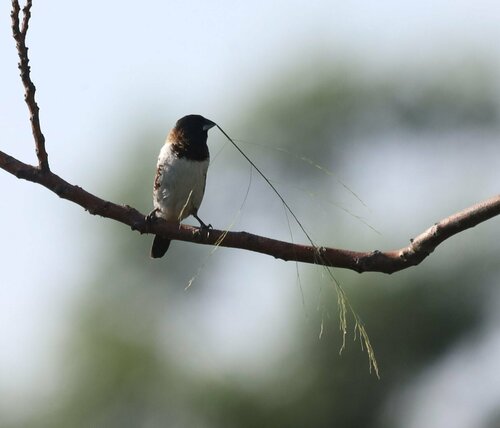
ハゴロモシチホウ (Spermestes cucullata) ハゴロモシチホウ
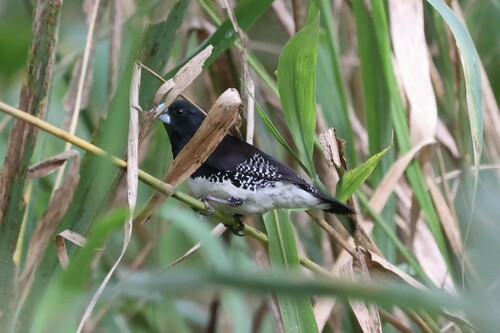
クロシチホウ (Spermestes bicolor) クロシチホウ

メディア

読み込み中…

要点

クロシチホウとハゴロモシチホウを区別するための最も信頼できるフィールドマークは、ハゴロモシチホウの黒から茶色がかった黒の頭、あご、喉、中央の胸部に紫緑色の虹色があることで、クロシチホウのより明確に定義された黒と白のパターンと対照的です。幼鳥のハゴロモシチホウは、上面が均一に鈍い茶色で、下部がバフ色であり、成鳥のクロシチホウの鮮やかな黒と白のコントラストが欠けています。ハゴロモシチホウはまた、肩羽に小さな緑の虹色の斑点と側面に不規則な縞模様を示しますが、クロシチホウは通常、黒い上面と白い下面の間により明確な区分があります。どちらもサハラ以南のアフリカの小型で群れを成すエストリルディドフィンチですが、羽毛や構造の微妙な違いが、特に混合群れや未熟な鳥の識別において重要です。

識別のコツ

  1. Juvenile plumage: 幼鳥のハゴロモシチホウは上面が鈍い茶色で、下部がバフ色であり、黒と白のコントラストが欠けています。もし、群れの中で均一に茶色の小さなフィンチを見かけたら、特に成鳥がいる場合はハゴロモシチホウを考慮してください。未熟なクロシチホウはここでは説明されていませんが、一般的に均一に茶色には見えません。
  2. Head and chest color (adults): 成鳥のハゴロモシチホウは、黒から茶色がかった黒の頭、あご、喉、中央の胸部を持ち、しばしば紫緑色の虹色があります。クロシチホウは、より明確に定義された黒い頭、喉、胸を持ち、白い腹との境界が鮮明です。
  3. Iridescent patches: ハゴロモシチホウの外肩羽に小さな緑の虹色の斑点があるか、時には下胸の側面に見られます。これはクロシチホウにはありません。
  4. Flank and rump barring: ハゴロモシチホウは側面と尾に不規則な縞模様を示しますが、クロシチホウは通常、縞模様のない清潔な白い下面を持っています。
  5. Bill color: ハゴロモシチホウは、短い黒と淡い灰色(青みがかっていない)のくちばしを持っています。クロシチホウのくちばしの色はここでは説明されていませんが、一般的に似ています;強い区別にはなりません。
  6. Upperparts: ハゴロモシチホウは灰色がかった茶色の上面を持ち、クロシチホウは上面がより暗く見えることがありますが、全体的により対照的な黒と白のパターンを持っています。
  7. Tail: ハゴロモシチホウは短い黒い尾を持っています;尾の形状と長さはクロシチホウでは説明されていませんが、どちらも短い尾です。
  8. Sexes: 両種は性別が似ているため、識別には性別に頼らないでください。
  9. Structural jizz: 両種はコンパクトで、短い尾と太いくちばしを持つずんぐりしたフィンチです。構造は強い区別にはなりません。
  10. Flight views: どちらの種にも特有の上翼や飛行パターンの違いは説明されていないため、飛行中でも体と頭のパターンに注目してください。
  11. Flock behavior: ハゴロモシチホウは共同での休息や巣作りが知られており、そのような行動を観察した場合、ハゴロモシチホウの識別を支持するかもしれませんが、独占的ではありません。
  12. Habitat context: 両種は似たような生息地に生息しています;ハゴロモシチホウは森林の端やサバンナをわずかに好む傾向がありますが、診断的ではありません。
  13. Voice: ハゴロモシチホウは飛行中にrreep-rreeepと鳴き、止まっているときにはツイッター音や喘ぎ声を出します。クロシチホウの声はここでは説明されていません;レパートリーをよく知っていない限り、鳴き声に頼らないでください。
  14. Pitfalls: ハゴロモシチホウの亜種変異(例:より多くの縞模様や少ない緑の虹色)は区別をぼやけさせる可能性があるため、マークの組み合わせを使用してください。未熟な鳥は特に難しいです;ハゴロモシチホウの幼鳥の全体的な茶色さを探してください。
  15. Mixed flocks: 両種は一緒にまたは他のシチホウと共に出現することがあります;特に大きく移動する群れでは、各個体の複数のフィールドマークを常に確認してください。

大きさ

両種は最小のエストリルディドフィンチの中にあり、ハゴロモシチホウは長さ9〜10 cm、体重は7〜12グラムです [wikipedia]。提供されたメモにはクロシチホウの直接的な測定はありませんが、同様に小型でコンパクトです。フィールドでは、サイズだけでは信頼できる区別にはならず、両者は非常に近い寸法であり、体積や長さの認識が重なることがあります。

羽色

幼鳥のハゴロモシチホウは、上面が均一に鈍い茶色で、バフ色の頭と下部を持ち、成鳥のクロシチホウの強い黒と白のコントラストが欠けています。彼らは約6ヶ月で成鳥の羽毛を獲得します。成鳥のハゴロモシチホウは、黒から茶色がかった黒の頭、あご、喉、中央の胸部を持ち、顔や胸の側面に紫緑色の虹色があります。彼らの上面は灰色がかった茶色で、下面は白で、側面と尾に不規則な縞模様があり、外肩羽に小さな緑の虹色の斑点があります。翼の覆羽と飛翔羽は、より淡いまたは暖かい色調で縁取られています。それに対して、成鳥のクロシチホウは通常、より明確に定義された黒と白のパターンを示し、黒い頭/喉/胸と白い腹の間に明確な区分があり、ハゴロモシチホウに見られる緑の虹色や不規則な縞模様はありません。ハゴロモシチホウの亜種変異(例:S. c. scutata)は、胸と側面の接合部でより多くの縞模様を示すことがありますが、これは変動があり、常に信頼できるわけではありません。未熟なクロシチホウはここでは詳細に説明されていませんが、一般的にハゴロモシチホウの未熟な個体と同じ均一な茶色のトーンを示しません。

行動

両種は非常に社交的で群れを成し、他の小型フィンチと関連することがよくあります。ハゴロモシチホウは、ほぼ毎日作り直されるボール状の巣での共同休息が知られており、群れ内での支配的な階層もあります。彼らはしばしば相互に羽繕いをし、他のシチホウやワックスビルと混合種の群れに参加することがあります。クロシチホウも社交的ですが、提供されたメモには特定の共同行動は詳細に記載されていません。両者は主に種子を食べ、群れで採餌しているのが見られますが、ハゴロモシチホウは特に共同の巣作りや休息習慣が知られています。

生息環境

両種はサハラ以南のアフリカに広く分布し、湿ったサバンナ、森林の縁、亜熱帯または熱帯の湿った低地森林に見られます。ハゴロモシチホウは湿ったサバンナや森林の縁の生息地に定住、遊動、または突発的に出現すると説明されていますが、クロシチホウは湿ったサバンナや低地森林に見られます。彼らの分布と生息地は広範囲に重なっているため、生息地だけでは強い区別にはならず、ハゴロモシチホウは人間の居住地の端や乾燥したサバンナの部分で見られる可能性が高いです。

声

ハゴロモシチホウは飛行中にrreep-rreeepと鳴き、止まっているときにはツイッター音や喘ぎ声の一連の音を出します。彼の歌は繰り返しの音の一連です。提供されたメモにはクロシチホウの詳細な声の説明はありませんので、現在の情報に基づいて声は信頼できる区別にはなりません。

より良い説明を送る

比較と同じ項目を使ってください。文章はすぐに公開されます。

The most reliable field mark for separating Bronze Mannikin from Black-and-white Mannikin is the presence of a black to brownish-black head, chin, throat, and central chest with a purple-green iridescence in Bronze Mannikin, contrasting with the more sharply defined black-and-white pattern of Black-and-white Mannikin. Juvenile Bronze Mannikins are uniformly dull brown above with buff underparts, lacking the crisp black-and-white contrasts of adult Black-and-white Mannikins. Bronze Mannikin also shows a small green iridescent patch on the scapulars and irregular barring on the flanks, while Black-and-white Mannikin typically has a more clear-cut division between black upperparts and white underparts. Both are small, gregarious estrildid finches of sub-Saharan Africa, but subtle differences in plumage and structure are key for confident identification, especially in mixed flocks or immature birds.

  1. Juvenile plumage: Juvenile Bronze Mannikins are dull brown above with buff underparts, lacking any black-and-white contrast. If you see a uniformly brownish small finch in a flock of mannikins, consider Bronze Mannikin, especially if adults are present. Immature Black-and-white Mannikins are not described here, but generally do not look as uniformly brown.
  2. Head and chest color (adults): Adult Bronze Mannikin has a black to brownish-black head, chin, throat, and central chest, often with a purple-green iridescence. Black-and-white Mannikin has a more sharply defined black head, throat, and breast, with a crisp boundary to the white belly.
  3. Iridescent patches: Look for a small green iridescent patch on the outer scapulars and sometimes on the lower breast sides of Bronze Mannikin. This is absent in Black-and-white Mannikin.
  4. Flank and rump barring: Bronze Mannikin shows irregular barring on the flanks and rump, while Black-and-white Mannikin typically has clean white underparts without barring.
  5. Bill color: Bronze Mannikin has a stubby black and pale grey (not bluish) bill. Bill color in Black-and-white Mannikin is not described here, but is generally similar; not a strong separator.
  6. Upperparts: Bronze Mannikin has greyish brown upperparts, while Black-and-white Mannikin may appear darker above, with a more contrasting black-and-white pattern overall.
  7. Tail: Bronze Mannikin has a short black tail; tail shape and length are not described for Black-and-white Mannikin, but both are short-tailed.
  8. Sexes: Both species are sexually similar, so do not rely on sex for identification.
  9. Structural jizz: Both are compact, stubby finches with short tails and thick bills. Structure is not a strong separator.
  10. Flight views: No distinctive upperwing or flight pattern differences are described for either species, so focus on body and head pattern even in flight.
  11. Flock behavior: Bronze Mannikin is noted for communal roosting and nest-building; if you observe such behavior, it may support Bronze Mannikin identification, but is not exclusive.
  12. Habitat context: Both species occur in similar habitats; slight preference for forest edge and savanna in Bronze Mannikin, but not diagnostic.
  13. Voice: Bronze Mannikin gives a rreep-rreeep in flight and twittering, wheezy calls when perched. Black-and-white Mannikin's voice is not described here; do not rely on calls unless you know the repertoire well.
  14. Pitfalls: Subspecific variation in Bronze Mannikin (e.g., more barring or less green iridescence) can blur distinctions, so use a combination of marks. Immature birds are especially challenging; look for overall brownness in Bronze Mannikin juveniles.
  15. Mixed flocks: Both species may occur together or with other mannikins; always check multiple field marks on each individual, especially in large, mobile flocks.

Both species are among the smallest estrildid finches, with Bronze Mannikin measuring 9–10 cm in length and weighing 7–12 grams [wikipedia]. There is no direct measurement for Black-and-white Mannikin in the provided notes, but it is similarly small and compact. In the field, size alone is not a reliable separator, as both are very close in dimensions and may overlap in perceived bulk and length.

Juvenile Bronze Mannikins are uniformly dun brown above with buff head and underparts, lacking the strong black-and-white contrasts of adult Black-and-white Mannikins. They acquire adult plumage by about six months. Adult Bronze Mannikins have a black to brownish-black head, chin, throat, and central chest, with some purple-green iridescence on the face and breast sides. Their upperparts are greyish brown, underparts white with irregular barring on the flanks and rump, and a small green iridescent patch on the outer scapulars. The wing coverts and remiges are edged in paler or warmer tones. In contrast, Black-and-white Mannikin adults typically show a more sharply defined black-and-white pattern, with a clear division between the black head/throat/chest and white belly, and lack the green iridescence and irregular barring seen in Bronze Mannikin. Subspecific variation in Bronze Mannikin (e.g., S. c. scutata) may show more barring at the breast/flank junction, but this is variable and not always reliable. Immature Black-and-white Mannikins are not described in detail here, but generally do not show the same uniform brownish tones as Bronze Mannikin immatures.

Both species are highly social and gregarious, often forming flocks and associating with other small finches. Bronze Mannikin is noted for its communal roosting in ball-shaped nests, which are built and rebuilt almost daily, and for its dominance hierarchy within flocks. They often allopreen and may join mixed-species flocks with other mannikins or waxbills. Black-and-white Mannikin is also social, but specific communal behaviors are not detailed in the provided notes. Both feed mainly on seeds and can be seen foraging in groups, but Bronze Mannikin is especially noted for its communal nest-building and roosting habits.

Both species are widespread in sub-Saharan Africa and can be found in moist savanna, forest margins, and subtropical or tropical moist lowland forest. Bronze Mannikin is described as resident, nomadic, or irruptive in mesic savanna or forest margin habitats, while Black-and-white Mannikin is found in moist savanna and lowland forest. Their ranges and habitats overlap extensively, so habitat alone is not a strong separator, though Bronze Mannikin may be more likely at the edge of human habitation and in drier savanna patches.

Bronze Mannikin gives a rreep-rreeep call in flight and a twittering, wheezy or buzzing series of notes when perched. Its song is a repetitive series of notes. There is no detailed vocal description for Black-and-white Mannikin in the provided notes, so voice is not a reliable separator based on current information.

変更を破棄しますか?

保存していない編集があります。今離れると失われます。

ハゴロモシチホウ · クロシチホウ · 苦手な鳥