

Motmot

キリアイ 対 ハマシギ

Calidris falcinellus 対 Calidris alpina

キリアイとハマシギのクイズ
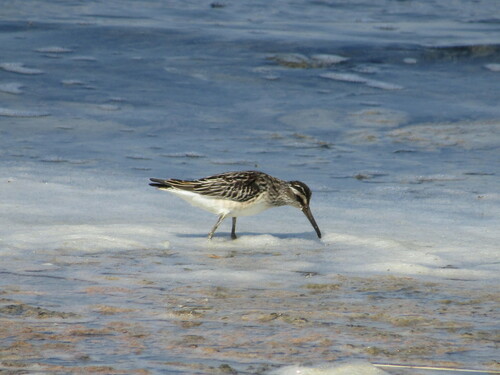
キリアイ (Calidris falcinellus) キリアイ
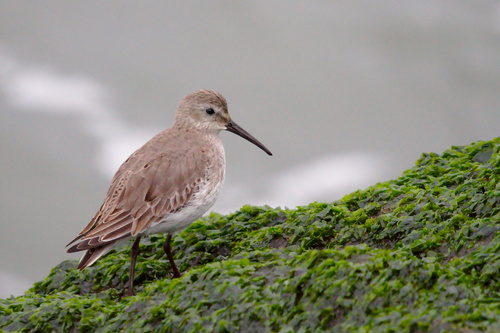
ハマシギ (Calidris alpina) ハマシギ

メディア

読み込み中…

要点

The most reliable field mark to separate Broad-billed Sandpiper from Dunlin is the Broad-billed’s distinctive head pattern: a pale crown stripe and a split (double) supercilium, visible in all plumages and especially striking on juveniles and non-breeding birds. Juvenile Broad-billed also shows a white belly and brown-streaked breast, contrasting with Dunlin juveniles’ darker belly and less distinct mantle 'tramlines.' Structurally, Broad-billed Sandpiper has a straighter, longer bill with a kinked tip and noticeably shorter legs than Dunlin. In breeding plumage, Dunlin is unique among similar-sized waders for its solid black belly patch, which Broad-billed never shows. Both can occur together in mixed flocks, but careful attention to head pattern and bill shape will resolve most confusion.

識別のコツ

  1. Head pattern (all ages): Broad-billed Sandpiper always shows a pale crown stripe and a split (double) supercilium, giving the face a strongly marked look. Dunlin’s head is plain, lacking both features.
  2. Bill shape (all ages): Broad-billed has a long, straight bill with the tip distinctly kinked down; Dunlin’s bill is slightly decurved throughout and appears blunter in life.
  3. Leg length (all ages): Broad-billed has noticeably shorter legs than Dunlin, making it look lower to the ground when feeding or standing.
  4. Juvenile underparts: Juvenile Broad-billed has a clean white belly and brown-streaked breast; juvenile Dunlin usually shows black marks on the flanks or belly, making the underparts look dirtier.
  5. Juvenile mantle pattern: Both show pale marks on the back, but Broad-billed’s 'tramlines' are more pronounced and straight, while Dunlin’s 'V' marks are weaker and less obvious.
  6. Breeding plumage belly: Adult Dunlin in breeding plumage has a solid black belly patch, unique among similar-sized waders. Broad-billed never shows a solid black belly, only streaking on the breast.
  7. Winter plumage: Both become greyer above and white below, but Broad-billed retains its distinctive head pattern, while Dunlin’s head is plain and uniform.
  8. Flight views: Both show a narrow white wingbar in flight; no unique upperwing pattern is described for either, so rely on structure and head pattern.
  9. Size: Broad-billed is slightly smaller and lighter than Dunlin, but this is subtle and unreliable in the field, especially in mixed flocks.
  10. Feeding action: Dunlin often feeds with a rapid, 'sewing machine' motion; Broad-billed’s feeding behavior is less distinctive.
  11. Bill length variation: Dunlin females have longer bills than males, which can overlap with Broad-billed, so use bill shape and head pattern for confirmation.
  12. Habitat and abundance: Dunlin is much more common and widespread, especially in western Europe; Broad-billed is rare and usually found in smaller numbers.
  13. Vocalizations: Broad-billed gives a dry, whistling call and clicking notes; Dunlin’s call is a softer 'chreep.' Calls are not always diagnostic unless heard well.
  14. Context: If you see a bird with a strikingly marked face in a flock of Dunlin, check carefully for Broad-billed; if the face is plain and the belly is black (in breeding), it’s a Dunlin.
  15. Pitfalls: In poor light or at distance, head pattern can be hard to see; use a combination of bill shape, leg length, and underpart pattern for confirmation.

大きさ

Broad-billed Sandpiper is slightly smaller than Dunlin, with a typical length of 16–18 cm and a body mass around 37 g [wikidata]. Dunlin is a bit larger and heavier, with a length of 16–20 cm and a weight range of 34–77 g [wikipedia]. In the field, size difference is subtle and not always reliable, especially in mixed flocks. Both species are similar in overall proportions, but Dunlin often appears bulkier and stouter, while Broad-billed looks more delicate and short-legged.

羽色

Juvenile and first-winter birds are often confused, especially in flight. Juvenile Broad-billed Sandpiper shows pale 'tramlines' down the mantle, but unlike Dunlin, it has a clean white belly and brown-streaked breast, not a dark belly. Juvenile Dunlin has two faint whitish 'V' marks on the back, but these are less obvious than in some other Calidris, and the belly often shows dark marks. In all plumages, Broad-billed Sandpiper has a distinctive head pattern: a pale central crown stripe and a double supercilium, which Dunlin lacks. In breeding plumage, Dunlin is unmistakable with its solid black belly patch, while Broad-billed has white underparts with dark breast streaking but never a solid black belly. In winter, both species become greyer above and white below, but Broad-billed retains the split supercilium and crown stripe, while Dunlin’s head is plain. In flight, both show a narrow white wingbar, but no unique upperwing pattern is described for either species that is diagnostic between them.

行動

Both species are gregarious and often occur in mixed flocks, especially on migration and in winter. Dunlin is famous for forming large, synchronized flocks that swirl over mudflats and beaches. Broad-billed Sandpiper also forms flocks, often with Dunlin, but is generally less numerous and less likely to be seen in large numbers in western Europe. Feeding behavior is similar, with both probing mud for invertebrates, but Dunlin is noted for its 'sewing machine' feeding action, methodically picking at the surface.

生息環境

Both species use coastal mudflats and sandy beaches in winter and on migration. Broad-billed Sandpiper breeds in wet taiga bogs in Arctic Scandinavia and Siberia, while Dunlin breeds more widely in Arctic and subarctic tundra. On migration and in winter, both forage in soft mud, but Broad-billed is much rarer in western Europe due to its more south-easterly migration route. Dunlin is the commoner and more widespread of the two in most areas.

声

Broad-billed Sandpiper gives a dry, whistling 'dree-it, dree-it' and a clicking 'dik dik,' somewhat similar to Little Stint. Dunlin’s call is a typical sandpiper 'chreep,' and its display song is a harsh trill. While both can sound superficially similar, Broad-billed’s calls are drier and more clipped, but vocalizations are rarely diagnostic unless heard well and with experience.

より良い説明を送る

比較と同じ項目を使ってください。文章はすぐに公開されます。

The most reliable field mark to separate Broad-billed Sandpiper from Dunlin is the Broad-billed’s distinctive head pattern: a pale crown stripe and a split (double) supercilium, visible in all plumages and especially striking on juveniles and non-breeding birds. Juvenile Broad-billed also shows a white belly and brown-streaked breast, contrasting with Dunlin juveniles’ darker belly and less distinct mantle 'tramlines.' Structurally, Broad-billed Sandpiper has a straighter, longer bill with a kinked tip and noticeably shorter legs than Dunlin. In breeding plumage, Dunlin is unique among similar-sized waders for its solid black belly patch, which Broad-billed never shows. Both can occur together in mixed flocks, but careful attention to head pattern and bill shape will resolve most confusion.

  1. Head pattern (all ages): Broad-billed Sandpiper always shows a pale crown stripe and a split (double) supercilium, giving the face a strongly marked look. Dunlin’s head is plain, lacking both features.
  2. Bill shape (all ages): Broad-billed has a long, straight bill with the tip distinctly kinked down; Dunlin’s bill is slightly decurved throughout and appears blunter in life.
  3. Leg length (all ages): Broad-billed has noticeably shorter legs than Dunlin, making it look lower to the ground when feeding or standing.
  4. Juvenile underparts: Juvenile Broad-billed has a clean white belly and brown-streaked breast; juvenile Dunlin usually shows black marks on the flanks or belly, making the underparts look dirtier.
  5. Juvenile mantle pattern: Both show pale marks on the back, but Broad-billed’s 'tramlines' are more pronounced and straight, while Dunlin’s 'V' marks are weaker and less obvious.
  6. Breeding plumage belly: Adult Dunlin in breeding plumage has a solid black belly patch, unique among similar-sized waders. Broad-billed never shows a solid black belly, only streaking on the breast.
  7. Winter plumage: Both become greyer above and white below, but Broad-billed retains its distinctive head pattern, while Dunlin’s head is plain and uniform.
  8. Flight views: Both show a narrow white wingbar in flight; no unique upperwing pattern is described for either, so rely on structure and head pattern.
  9. Size: Broad-billed is slightly smaller and lighter than Dunlin, but this is subtle and unreliable in the field, especially in mixed flocks.
  10. Feeding action: Dunlin often feeds with a rapid, 'sewing machine' motion; Broad-billed’s feeding behavior is less distinctive.
  11. Bill length variation: Dunlin females have longer bills than males, which can overlap with Broad-billed, so use bill shape and head pattern for confirmation.
  12. Habitat and abundance: Dunlin is much more common and widespread, especially in western Europe; Broad-billed is rare and usually found in smaller numbers.
  13. Vocalizations: Broad-billed gives a dry, whistling call and clicking notes; Dunlin’s call is a softer 'chreep.' Calls are not always diagnostic unless heard well.
  14. Context: If you see a bird with a strikingly marked face in a flock of Dunlin, check carefully for Broad-billed; if the face is plain and the belly is black (in breeding), it’s a Dunlin.
  15. Pitfalls: In poor light or at distance, head pattern can be hard to see; use a combination of bill shape, leg length, and underpart pattern for confirmation.

Broad-billed Sandpiper is slightly smaller than Dunlin, with a typical length of 16–18 cm and a body mass around 37 g [wikidata]. Dunlin is a bit larger and heavier, with a length of 16–20 cm and a weight range of 34–77 g [wikipedia]. In the field, size difference is subtle and not always reliable, especially in mixed flocks. Both species are similar in overall proportions, but Dunlin often appears bulkier and stouter, while Broad-billed looks more delicate and short-legged.

Juvenile and first-winter birds are often confused, especially in flight. Juvenile Broad-billed Sandpiper shows pale 'tramlines' down the mantle, but unlike Dunlin, it has a clean white belly and brown-streaked breast, not a dark belly. Juvenile Dunlin has two faint whitish 'V' marks on the back, but these are less obvious than in some other Calidris, and the belly often shows dark marks. In all plumages, Broad-billed Sandpiper has a distinctive head pattern: a pale central crown stripe and a double supercilium, which Dunlin lacks. In breeding plumage, Dunlin is unmistakable with its solid black belly patch, while Broad-billed has white underparts with dark breast streaking but never a solid black belly. In winter, both species become greyer above and white below, but Broad-billed retains the split supercilium and crown stripe, while Dunlin’s head is plain. In flight, both show a narrow white wingbar, but no unique upperwing pattern is described for either species that is diagnostic between them.

Both species are gregarious and often occur in mixed flocks, especially on migration and in winter. Dunlin is famous for forming large, synchronized flocks that swirl over mudflats and beaches. Broad-billed Sandpiper also forms flocks, often with Dunlin, but is generally less numerous and less likely to be seen in large numbers in western Europe. Feeding behavior is similar, with both probing mud for invertebrates, but Dunlin is noted for its 'sewing machine' feeding action, methodically picking at the surface.

Both species use coastal mudflats and sandy beaches in winter and on migration. Broad-billed Sandpiper breeds in wet taiga bogs in Arctic Scandinavia and Siberia, while Dunlin breeds more widely in Arctic and subarctic tundra. On migration and in winter, both forage in soft mud, but Broad-billed is much rarer in western Europe due to its more south-easterly migration route. Dunlin is the commoner and more widespread of the two in most areas.

Broad-billed Sandpiper gives a dry, whistling 'dree-it, dree-it' and a clicking 'dik dik,' somewhat similar to Little Stint. Dunlin’s call is a typical sandpiper 'chreep,' and its display song is a harsh trill. While both can sound superficially similar, Broad-billed’s calls are drier and more clipped, but vocalizations are rarely diagnostic unless heard well and with experience.

変更を破棄しますか?

保存していない編集があります。今離れると失われます。

キリアイ · ハマシギ · 苦手な鳥