

Motmot

コクガン 対 コブハクチョウ

Branta bernicla 対 Cygnus olor

コクガンとコブハクチョウのクイズ
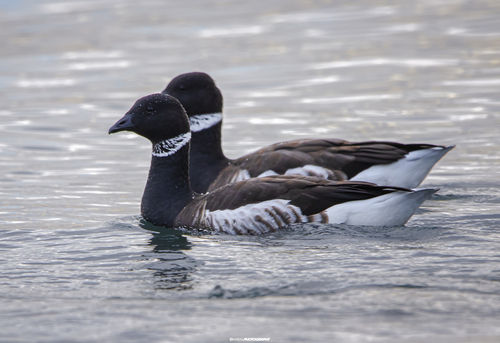
コクガン (Branta bernicla) コクガン
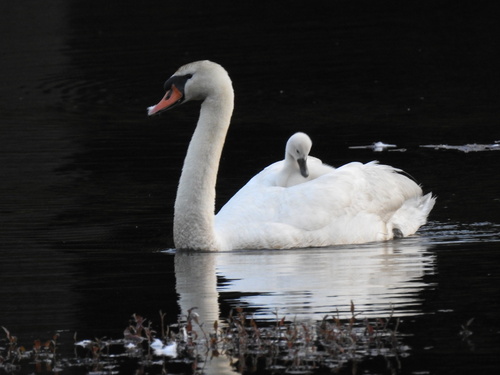
コブハクチョウ (Cygnus olor) コブハクチョウ

メディア

読み込み中…

要点

コクガンとコブハクチョウを区別する最も即効性があり信頼できる方法は、サイズと構造によるものです:コブハクチョウは、オレンジ色のくちばしを持つ巨大で長い首の純白の鳥であり、一方コクガンは、短い黒いくちばしと黒い首を持つ小さくてコンパクトな暗色のガンです。未熟なコブハクチョウでさえ、どのコクガンよりもはるかに大きく、色も薄いです。飛行中または水上では、コクガンは白いアンダーテイルと非常に短い尾を持つ暗い羽毛を示しますが、コブハクチョウは成鳥として常に全体が白く、ひなは薄い灰色またはバフ色です。くちばしの色(ハクチョウはオレンジ色で黒い基部、ガンは黒)は、どの年齢でも決定的です。遠くの鳥や逆光の鳥、またはひなを観察する際に間違いが起こることがありますが、構造的および色の違いは極端です。

識別のコツ

  1. サイズが最初のチェックです: コブハクチョウはコクガンの2倍以上の長さと何倍もの質量を持っています。遠くからでも、ハクチョウは巨大で重い体に見えます。
  2. 首の長さと姿勢: コブハクチョウは非常に長い首を持ち、優雅なS字型に保たれることが多いです。コクガンは短い首を持ち、まっすぐまたはわずかにアーチ状に保たれます。
  3. くちばしの色: コブハクチョウ(成鳥)は、基部に黒い突起のある明るいオレンジ色のくちばしを持っています;コクガンは短くて太い黒いくちばしを持っています。幼鳥のハクチョウは鈍い灰色-黒のくちばしを持っていますが、依然として薄くて巨大です。
  4. 羽毛の色: コブハクチョウの成鳥は全体が純白です。コクガンは暗い茶色から黒っぽく、黒い首と頭、小さな白い首の斑点を持っています。
  5. 幼鳥の混乱: 若いコブハクチョウは薄い灰色またはバフ色で、決して暗くありません。コクガンの幼鳥は成鳥のように暗いです。ひなでさえ、どのコクガンよりもはるかに薄く、はるかに大きいです。
  6. 尾の形と色: コクガンはどのガンよりも短い尾を持ち、純粋な黒で、目を引く白いアンダーテイルがあります。コブハクチョウは長くて丸い白い尾を持っています。
  7. 飛行のシルエット: コブハクチョウは飛行中に長い首と巨大な翼を示し、全体が白です。コクガンはコンパクトで、短い首と暗い翼と体を持ち、尾の下に白があります。
  8. 群れの構造: コクガンは通常、密集した活発な群れにいます;コブハクチョウはより頻繁に単独、ペア、または緩い家族グループで見られます。
  9. 生息地の文脈: 内陸の湖や川ではコブハクチョウを期待してください;塩湿地や潮汐の河口ではコクガンがより可能性があります。
  10. 攻撃的な行動: コブハクチョウはシューという音を立てたり、翼を上げたりして攻撃性を示すことがあります;コクガンはこれで知られていません。
  11. くちばしの形: コブハクチョウのくちばしは長くて三角形です;コクガンのくちばしは短くて太いです。
  12. 足の色: コブハクチョウは暗い灰色の足を持っています;コクガンの足も暗いですが、これはめったに見えず、役に立ちません。
  13. 鳴き声: コクガンは群れの中で静かに呼ぶことが多いですが、コブハクチョウは主にシューという音を除いて静かです。
  14. 亜種の変異: すべてのコクガンの亜種は暗色の体を持ち、白いものはありません。コブハクチョウは成鳥として常に白いです。
  15. 季節: 両種は冬にヨーロッパに存在しますが、コクガンは厳密に沿岸に生息し、コブハクチョウは広範囲に分布しています。

大きさ

コブハクチョウはコクガンよりもはるかに大きいです。成鳥のコブハクチョウは平均約1475 mmの長さと10.7 kgの質量を持ち、最も重い飛ぶ鳥の一つです。コクガンははるかに小さく(55–66 cmの長さと0.88–2.2 kgの質量とされています)、未熟なコブハクチョウでさえ成鳥のコクガンを圧倒します。ハクチョウの長い首と巨大な体は、コンパクトで短い首、短い尾を持つガンと比較して明白です。

羽色

行動

コブハクチョウはしばしば優雅にS字型に首をアーチさせて滑空している姿が見られ、時にはシューという音を立てたり翼を上げたりして領土を攻撃的に守ります。コクガンはよりコンパクトで、水中を低く泳ぎ、群れで餌を食べることが多く、しばしば草を食べたり水面をかき回したりします。ハクチョウは単独またはペア/家族グループでいることがありますが、コクガンは通常、特に冬に群れでいます。

生息環境

両種は冬に沿岸の水域で見られますが、コブハクチョウは湖、緩やかな川、都市公園で見られる可能性が高く、コクガンは潮汐の河口、塩湿地、沿岸の干潟に強く関連しています。コクガンは冬に塩水から遠くに見られることはまれで、コブハクチョウは内陸の淡水で一般的です。

声

コブハクチョウは主に静かで、時折シューという音や鼻を鳴らす音を立てます;頻繁にホーンを鳴らしたり呼んだりすることはありません。コクガンはより声が多く、特に群れの中で柔らかく、喉の奥からの呼び声を発します。しかし、声は極端なサイズと色の違いのために分離に必要とされることはほとんどありません。

より良い説明を送る

比較と同じ項目を使ってください。文章はすぐに公開されます。

The most immediate and reliable way to separate Brent Goose from Mute Swan is by size and structure: Mute Swan is a massive, long-necked, pure white bird with an orange bill, while Brent Goose is a small, compact, dark-bodied goose with a short black bill and black neck. Even immature Mute Swans are much larger and paler than any Brent Goose. In flight or on water, Brent Goose shows dark plumage with a white undertail and very short tail, whereas Mute Swan is always all-white as an adult, with cygnets being pale grey or buff. Bill color (orange with black base in swan, black in goose) is a clincher at any age. Mistakes may occur with distant or backlit birds, or when viewing cygnets, but structural and color differences are extreme.

  1. Size is the first check: Mute Swan is over twice the length and many times the mass of Brent Goose. Even at a distance, swans appear huge and heavy-bodied.
  2. Neck length and posture: Mute Swan has a very long neck, often held in a graceful S-curve. Brent Goose has a short neck, held straight or slightly arched.
  3. Bill color: Mute Swan (adult) has a bright orange bill with a black knob at the base; Brent Goose has a short, stubby black bill. Juvenile swans have a dull grey-black bill but are still pale and huge.
  4. Plumage color: Mute Swan adults are pure white all over. Brent Goose is dark brown to blackish with a black neck and head, and a small white neck patch.
  5. Juvenile confusion: Young Mute Swans are pale grey or buff, never dark. Brent Goose juveniles are dark like adults. Even cygnets are much paler than any Brent Goose and are much larger.
  6. Tail shape and color: Brent Goose has the shortest tail of any goose, pure black, with a striking white undertail. Mute Swan has a long, rounded white tail.
  7. Flight silhouette: Mute Swan shows long neck and massive wings in flight, all white. Brent Goose is compact, with short neck and dark wings and body, with white under the tail.
  8. Flock structure: Brent Geese are usually in tight, active flocks; Mute Swans are more often seen alone, in pairs, or in loose family groups.
  9. Habitat context: On inland lakes or rivers, expect Mute Swan; on saltmarsh or tidal estuary, Brent Goose is more likely.
  10. Aggressive behavior: Mute Swans may display aggression by hissing and raising wings; Brent Geese are not known for this.
  11. Bill shape: Mute Swan’s bill is long and triangular; Brent Goose’s is short and stubby.
  12. Leg color: Mute Swan has dark grey legs; Brent Goose’s legs are also dark, but this is rarely visible or useful.
  13. Vocalization: Brent Goose is more likely to be heard calling softly in flocks; Mute Swan is mostly silent except for hissing.
  14. Subspecies variation: All Brent Goose subspecies are dark-bodied; none are white. Mute Swan is always white as an adult.
  15. Season: Both species are present in winter in Europe, but Brent Goose is strictly coastal, while Mute Swan is widespread.

Mute Swan is vastly larger than Brent Goose. Adult Mute Swans average about 1475 mm in length and 10.7 kg in mass, making them one of the heaviest flying birds. Brent Goose is much smaller (noted as 55–66 cm in length and 0.88–2.2 kg mass). Even a juvenile Mute Swan dwarfs an adult Brent Goose. The swan’s long neck and huge body are unmistakable compared to the compact, short-necked, short-tailed goose.

  • Juveniles/Immatures: Young Mute Swans (cygnets) are pale grey or buff, never dark brown or blackish like Brent Goose. Their bills are dull grey-black, not orange, but their overall pale color and size still separate them from any Brent Goose. Brent Goose juveniles resemble adults in structure and are always much darker, with a black neck and head, and white undertail.
  • Adults: Brent Goose is dark overall with a black head and neck, small white neck patch, and a pure white undertail. The tail is extremely short and black. Subspecies vary in belly and flank color, but all are much darker than Mute Swan. Mute Swan adults are pure white with an orange bill and black facial skin. There is no white bird among Brent Goose forms, and no dark bird among adult Mute Swans.

Mute Swans are often seen gliding majestically with their necks arched in an S-shape, sometimes aggressively defending territory with hissing and wing-raising. Brent Geese are more compact, swim low in the water, and feed in flocks, often grazing or dabbling. Swans may be solitary or in pairs/family groups, while Brent Geese are typically in flocks, especially in winter.

Both species can be found on coastal waters in winter, but Mute Swan is more likely on lakes, slow rivers, and urban parks, while Brent Goose is strongly associated with tidal estuaries, saltmarshes, and coastal mudflats. Brent Goose is rarely found far from saltwater in winter, while Mute Swan is common on freshwater inland.

Mute Swan is mostly silent, with occasional hissing and snorting; it does not honk or call frequently. Brent Goose is more vocal, with soft, guttural calls, especially in flocks. However, voice is rarely needed for separation due to the extreme size and color differences.

変更を破棄しますか?

保存していない編集があります。今離れると失われます。

コクガン · コブハクチョウ · 苦手な鳥