

Motmot

コクガン 対 カワアイサ

Branta bernicla 対 Mergus merganser

コクガンとカワアイサのクイズ
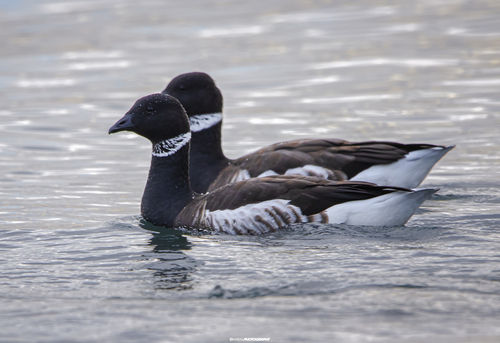
コクガン (Branta bernicla) コクガン
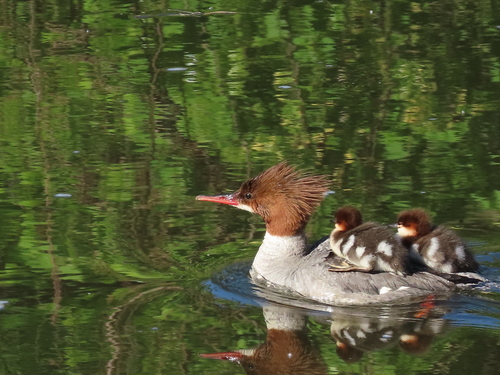
カワアイサ (Mergus merganser) カワアイサ

メディア

読み込み中…

要点

The most reliable field mark to separate Brent Goose from Goosander is overall structure and bill shape: Brent Goose is a compact, short-necked goose with a stubby black bill, while Goosander is a long-bodied, long-necked duck with a slender, red, saw-edged bill. In flight or on water, Brent Goose shows a short, black tail and white under-tail, while Goosander has a sleeker, more elongated profile and a distinctively crested head. Plumage differences are striking in adult males, but females and immatures can be more confusing, especially at a distance. Always check for the Brent Goose's small size, short bill, and white neck patch versus the Goosander's pointed bill and head shape.

識別のコツ

  1. Bill shape is diagnostic: Brent Goose has a short, stubby black bill; Goosander has a long, thin, red bill with serrated edges (sawbill). This is visible at close range or with good optics.
  2. Head and neck: Brent Goose has a black head and neck with a small white patch on the neck sides (all ages/subspecies). Goosander adult males have a black head with green sheen; females and juveniles have a reddish-brown head and white chin. Goosander also has a smoothly rounded crest at the back of the head, usually not raised.
  3. Body shape and jizz: Brent Goose is compact, with a short neck and very short, black tail. Goosander is long-bodied, long-necked, and sits lower in the water, often with a sleeker, more elongated look.
  4. Tail and under-tail: Brent Goose always shows a pure white under-tail and the shortest tail of any goose, which appears stubby and black. Goosander has a longer, grey tail and no white under-tail.
  5. Wing pattern in flight: Goosander (all ages) shows a striking white inner wing (secondaries) and black outer wing (primaries), especially obvious in flight. Brent Goose's wings are uniformly dark, lacking any white panel.
  6. Plumage contrast: Adult male Goosander in breeding plumage is white-bodied with a black/green head and pink tinge—never matched by any Brent Goose. Females/juveniles Goosander are grey with a reddish head and white chin. Brent Goose is always some combination of dark grey-brown, black, and white, never with reddish or salmon tones.
  7. Subspecies confusion: Brent Goose subspecies vary in belly color (dark, pale, or black-and-white with white flank patch), but none have the Goosander's head or bill color. The 'black brant' form is most contrasting but still goose-shaped and lacks Goosander's bill/head features.
  8. Juvenile marks: Juvenile Goosander shows a short, black-edged white stripe between the eye and bill, not present in Brent Goose. Juvenile Brent Goose resembles adults but may be duller; always check for the white neck patch.
  9. Behavior on water: Goosander dives frequently and may be seen fishing or resting on rocks; Brent Goose grazes or dabbles and is rarely seen diving.
  10. Habitat: Brent Goose is almost always coastal in winter; Goosander is more likely on inland rivers/lakes, but can occur on coastal waters in winter. If seen far from the sea, Goosander is much more likely.
  11. Flight style: Goosander takes off by running along the water and flies fast and strong; Brent Goose flies in flocks with steady wingbeats and looks more compact in flight.
  12. Leg color: Goosander has red to brownish-red legs (brightest in adult males), Brent Goose's leg color is not described but is not red.
  13. Vocalization: Goosander gives a low, harsh croak or soft whistle (breeding season); Brent Goose's voice is not described here, so do not rely on calls for separation.
  14. Context: If the bird is in a group of geese, especially on a saltmarsh or estuary, Brent Goose is likely. If seen alone or in small groups on a river or lake, especially diving, suspect Goosander.
  15. Pitfalls: Distant or backlit views of female/juvenile Goosander can look dark and goose-like; always check for bill shape, head color, and behavior. Brent Goose never shows a reddish head or white wing panel.

大きさ

Goosander is generally larger and heavier than Brent Goose, with an average body mass of about 1470.5 g [wikidata]. Brent Goose is described as a small goose, but no direct mass figure is given here; its length (55–66 cm) overlaps with Goosander (58–72 cm), but Goosander has a shorter wingspan (78–97 cm) compared to Brent Goose (106–121 cm). In the field, Goosander often appears longer and more elongated, especially in the neck and body, while Brent Goose is more compact and stubby.

羽色

Juvenile and female Goosanders are mostly grey with a reddish-brown head and white chin, and show a short black-edged white stripe between the eye and bill (juveniles only). Their wings in all plumages show a strong contrast between white inner and black outer half in flight. Adult male Goosanders in breeding plumage are unmistakable: white body with a salmon-pink tinge, black head with green sheen, and grey rump and tail. Brent Goose, regardless of age or subspecies, is never this contrasting: it is dark grey-brown to blackish overall, with a black head and neck and a small white patch on the neck sides. The under-tail is always pure white, and the tail is very short and black. Subspecies differ in belly color: 'dark-bellied' is uniformly dark, 'pale-bellied' shows a paler belly and flanks, and 'black brant' is very contrasting black-and-white with a prominent white flank patch and larger neck patch. No Brent Goose shows the Goosander's white wing panels or reddish head. In flight, Brent Goose lacks the striking white wing pattern of Goosander and instead appears uniformly dark with a short, stubby tail.

行動

Goosander is an active diver, often seen fishing in groups, swimming low in the water, or sitting on rocks with wings half-open. It moves clumsily on land, running upright like a penguin. Brent Goose, in contrast, grazes or dabbles in coastal areas, moves more like a typical goose, and is rarely seen diving. In flight, Goosander takes off by flapping along the water and flies strongly and fast, while Brent Goose flies in loose flocks with steady wingbeats and a more compact, stubby appearance.

生息環境

Brent Goose is strictly coastal in winter, found on sea-coasts, estuaries, and saltmarshes, rarely venturing far inland. Goosander prefers large rivers and lakes in forested areas, but can be found on both fresh and salt water, especially in winter. Goosander is more likely to be seen inland or on fast-flowing rivers, while Brent Goose is almost always associated with tidal habitats and rarely seen away from the coast.

声

Goosander's normal call is a low, harsh croak, with males and juveniles producing a soft whistle in the breeding season. Brent Goose's calls are not described in the provided notes, so voice is not a reliable separator here.

より良い説明を送る

比較と同じ項目を使ってください。文章はすぐに公開されます。

The most reliable field mark to separate Brent Goose from Goosander is overall structure and bill shape: Brent Goose is a compact, short-necked goose with a stubby black bill, while Goosander is a long-bodied, long-necked duck with a slender, red, saw-edged bill. In flight or on water, Brent Goose shows a short, black tail and white under-tail, while Goosander has a sleeker, more elongated profile and a distinctively crested head. Plumage differences are striking in adult males, but females and immatures can be more confusing, especially at a distance. Always check for the Brent Goose's small size, short bill, and white neck patch versus the Goosander's pointed bill and head shape.

  1. Bill shape is diagnostic: Brent Goose has a short, stubby black bill; Goosander has a long, thin, red bill with serrated edges (sawbill). This is visible at close range or with good optics.
  2. Head and neck: Brent Goose has a black head and neck with a small white patch on the neck sides (all ages/subspecies). Goosander adult males have a black head with green sheen; females and juveniles have a reddish-brown head and white chin. Goosander also has a smoothly rounded crest at the back of the head, usually not raised.
  3. Body shape and jizz: Brent Goose is compact, with a short neck and very short, black tail. Goosander is long-bodied, long-necked, and sits lower in the water, often with a sleeker, more elongated look.
  4. Tail and under-tail: Brent Goose always shows a pure white under-tail and the shortest tail of any goose, which appears stubby and black. Goosander has a longer, grey tail and no white under-tail.
  5. Wing pattern in flight: Goosander (all ages) shows a striking white inner wing (secondaries) and black outer wing (primaries), especially obvious in flight. Brent Goose's wings are uniformly dark, lacking any white panel.
  6. Plumage contrast: Adult male Goosander in breeding plumage is white-bodied with a black/green head and pink tinge—never matched by any Brent Goose. Females/juveniles Goosander are grey with a reddish head and white chin. Brent Goose is always some combination of dark grey-brown, black, and white, never with reddish or salmon tones.
  7. Subspecies confusion: Brent Goose subspecies vary in belly color (dark, pale, or black-and-white with white flank patch), but none have the Goosander's head or bill color. The 'black brant' form is most contrasting but still goose-shaped and lacks Goosander's bill/head features.
  8. Juvenile marks: Juvenile Goosander shows a short, black-edged white stripe between the eye and bill, not present in Brent Goose. Juvenile Brent Goose resembles adults but may be duller; always check for the white neck patch.
  9. Behavior on water: Goosander dives frequently and may be seen fishing or resting on rocks; Brent Goose grazes or dabbles and is rarely seen diving.
  10. Habitat: Brent Goose is almost always coastal in winter; Goosander is more likely on inland rivers/lakes, but can occur on coastal waters in winter. If seen far from the sea, Goosander is much more likely.
  11. Flight style: Goosander takes off by running along the water and flies fast and strong; Brent Goose flies in flocks with steady wingbeats and looks more compact in flight.
  12. Leg color: Goosander has red to brownish-red legs (brightest in adult males), Brent Goose's leg color is not described but is not red.
  13. Vocalization: Goosander gives a low, harsh croak or soft whistle (breeding season); Brent Goose's voice is not described here, so do not rely on calls for separation.
  14. Context: If the bird is in a group of geese, especially on a saltmarsh or estuary, Brent Goose is likely. If seen alone or in small groups on a river or lake, especially diving, suspect Goosander.
  15. Pitfalls: Distant or backlit views of female/juvenile Goosander can look dark and goose-like; always check for bill shape, head color, and behavior. Brent Goose never shows a reddish head or white wing panel.

Goosander is generally larger and heavier than Brent Goose, with an average body mass of about 1470.5 g [wikidata]. Brent Goose is described as a small goose, but no direct mass figure is given here; its length (55–66 cm) overlaps with Goosander (58–72 cm), but Goosander has a shorter wingspan (78–97 cm) compared to Brent Goose (106–121 cm). In the field, Goosander often appears longer and more elongated, especially in the neck and body, while Brent Goose is more compact and stubby.

Juvenile and female Goosanders are mostly grey with a reddish-brown head and white chin, and show a short black-edged white stripe between the eye and bill (juveniles only). Their wings in all plumages show a strong contrast between white inner and black outer half in flight. Adult male Goosanders in breeding plumage are unmistakable: white body with a salmon-pink tinge, black head with green sheen, and grey rump and tail. Brent Goose, regardless of age or subspecies, is never this contrasting: it is dark grey-brown to blackish overall, with a black head and neck and a small white patch on the neck sides. The under-tail is always pure white, and the tail is very short and black. Subspecies differ in belly color: 'dark-bellied' is uniformly dark, 'pale-bellied' shows a paler belly and flanks, and 'black brant' is very contrasting black-and-white with a prominent white flank patch and larger neck patch. No Brent Goose shows the Goosander's white wing panels or reddish head. In flight, Brent Goose lacks the striking white wing pattern of Goosander and instead appears uniformly dark with a short, stubby tail.

Goosander is an active diver, often seen fishing in groups, swimming low in the water, or sitting on rocks with wings half-open. It moves clumsily on land, running upright like a penguin. Brent Goose, in contrast, grazes or dabbles in coastal areas, moves more like a typical goose, and is rarely seen diving. In flight, Goosander takes off by flapping along the water and flies strongly and fast, while Brent Goose flies in loose flocks with steady wingbeats and a more compact, stubby appearance.

Brent Goose is strictly coastal in winter, found on sea-coasts, estuaries, and saltmarshes, rarely venturing far inland. Goosander prefers large rivers and lakes in forested areas, but can be found on both fresh and salt water, especially in winter. Goosander is more likely to be seen inland or on fast-flowing rivers, while Brent Goose is almost always associated with tidal habitats and rarely seen away from the coast.

Goosander's normal call is a low, harsh croak, with males and juveniles producing a soft whistle in the breeding season. Brent Goose's calls are not described in the provided notes, so voice is not a reliable separator here.

変更を破棄しますか?

保存していない編集があります。今離れると失われます。

コクガン · カワアイサ · 苦手な鳥