

Motmot

アオノドヒメウ 対 ナンベイヒメウ

Urile penicillatus 対 Nannopterum brasilianum

アオノドヒメウとナンベイヒメウのクイズ
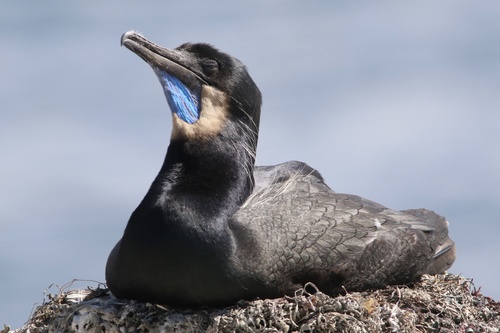
アオノドヒメウ (Urile penicillatus) アオノドヒメウ
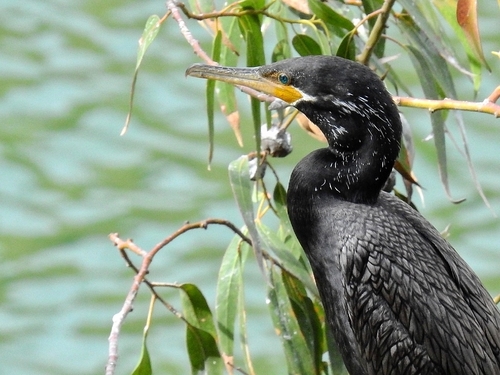
ナンベイヒメウ (Nannopterum brasilianum) ナンベイヒメウ

メディア

読み込み中…

要点

The most reliable field mark between Brandt's Cormorant and Neotropic Cormorant is overall size and structure: Brandt's is much larger and heavier-bodied, with a stouter neck and bill, while Neotropic is notably smaller and slimmer, with a longer tail and more delicate build. In breeding season, Brandt's shows a vivid blue throat patch, while Neotropic's throat patch is yellow-brown edged with white and the bird develops white tufts on the head. Juvenile Neotropic Cormorants are brownish and always look more slender, especially in flight. Both species can be seen along the Pacific coast, but Neotropic is more likely inland or in southern, tropical areas. Use structure and throat color first, but be cautious with distant or immature birds.

識別のコツ

  1. Size and bulk: Brandt's is much larger and heavier-bodied than Neotropic. If you see both together, Brandt's will dwarf Neotropic, but beware of lone birds or distant views where size is hard to judge.
  2. Tail length: Neotropic has a noticeably longer tail, which often projects well beyond the folded wings when perched and is obvious in flight. Brandt's tail is shorter and less prominent.
  3. Neck and bill structure: Brandt's has a thicker neck and heavier bill, giving it a more robust look. Neotropic's neck is thinner and often held in a pronounced S-shape, with a slimmer bill.
  4. Throat patch (breeding season): Brandt's shows a vivid blue throat patch in breeding adults, while Neotropic's is yellow-brown edged with white and accompanied by white tufts on the sides of the head. Outside breeding, Neotropic still shows a pale throat patch, while Brandt's loses the blue.
  5. White plumes: In early breeding season, Brandt's develops white plumes on the neck and back, while Neotropic gets white tufts only on the sides of the head and neck.
  6. Juvenile color: Juvenile Neotropic Cormorants are distinctly brownish, especially below, and look paler and more washed-out than Brandt's of any age. Brandt's juveniles are darker overall.
  7. Upperwing color: Neotropic's upperwings are somewhat grayer than the rest of the body, especially in juveniles, but this is subtle and not always reliable at a distance.
  8. Habitat: Brandt's is strictly marine and coastal; Neotropic is found both on coasts and inland waters. Inland cormorants are almost always Neotropic.
  9. Flight jizz: Neotropic looks lighter, with a longer tail and more flexible neck in flight. Brandt's appears bulkier and steadier.
  10. Group foraging: Neotropic often feeds in groups, sometimes beating the water to herd fish. Brandt's is less likely to show this behavior.
  11. Geographic range: North of California, Brandt's is the default coastal cormorant; Neotropic is rare. In the tropics and subtropics, especially inland, Neotropic is much more likely.
  12. Bill color and shape: Both have dark bills, but Brandt's is stouter. Bill shape is subtle and best used with other marks.
  13. Perched posture: Neotropic often appears more upright and slender, with a long tail drooping below the perch. Brandt's sits heavier and more horizontal.
  14. Plumage gloss: Both are mostly blackish, but Neotropic can show a slight brownish or olive sheen, especially in juveniles and non-breeding birds.
  15. Pitfalls: Beware of distant or lone birds where size and structure are hard to judge. Immature Brandt's can look slimmer, and Neotropic can fluff up to look bulkier, so use multiple marks when possible.

大きさ

Brandt's Cormorant is substantially larger: about 86 cm (34 in) long, with a 1.2 m (4 ft) wingspan, and weighs around 2.1 kg (4.6 lb) [wikipedia]. Neotropic Cormorant is much smaller: 64 cm (25 in) long, 100 cm (39 in) wingspan, and weighs 1.1–1.5 kg (2.4–3.3 lb) for males, slightly less for females [wikipedia]. Brandt's looks bulkier and heavier, while Neotropic appears slender and light, especially in direct comparison or when seen together.

羽色

Juvenile and immature Neotropic Cormorants are brownish overall, especially on the underparts, and their upperwings are somewhat grayer than the rest of the body [wikipedia]. Brandt's Cormorant juveniles are not described in detail here, but they lack the distinctly brownish tones of Neotropic. In breeding adults, Brandt's shows a bright blue throat patch and white plumes on neck and back, while Neotropic has a yellow-brown throat patch edged with white and develops white tufts on the head and neck. Non-breeding adults of both species are mostly blackish, but Neotropic always retains a paler throat patch. In flight, Neotropic's long tail is often obvious, while Brandt's tail is shorter and less noticeable.

行動

Neotropic Cormorant often holds its neck in an S-shape and appears more agile and light in flight or when perched. It frequently forages in groups, sometimes beating the water to drive fish, and is comfortable in both coastal and inland waters. Brandt's Cormorant is strictly marine, usually seen along rocky Pacific coasts and offshore islands, and tends to look heavier and more deliberate in movement. Both species dive for fish, but Neotropic's dives are shorter (5–15 seconds) and it often feeds in shallower, more sheltered waters.

生息環境

Brandt's Cormorant is strictly marine, found only along the Pacific coast from Alaska to the Gulf of California, rarely venturing inland [wikipedia]. Neotropic Cormorant is far more versatile: it occurs on coasts, in mangroves, and widely on inland lakes, rivers, and ponds throughout the American tropics and subtropics, including the Gulf and Californian coasts, Mexico, Central and South America, and the Caribbean. If you see a cormorant away from the open Pacific coast, especially inland, it is almost certainly Neotropic.

より良い説明を送る

比較と同じ項目を使ってください。文章はすぐに公開されます。

The most reliable field mark between Brandt's Cormorant and Neotropic Cormorant is overall size and structure: Brandt's is much larger and heavier-bodied, with a stouter neck and bill, while Neotropic is notably smaller and slimmer, with a longer tail and more delicate build. In breeding season, Brandt's shows a vivid blue throat patch, while Neotropic's throat patch is yellow-brown edged with white and the bird develops white tufts on the head. Juvenile Neotropic Cormorants are brownish and always look more slender, especially in flight. Both species can be seen along the Pacific coast, but Neotropic is more likely inland or in southern, tropical areas. Use structure and throat color first, but be cautious with distant or immature birds.

  1. Size and bulk: Brandt's is much larger and heavier-bodied than Neotropic. If you see both together, Brandt's will dwarf Neotropic, but beware of lone birds or distant views where size is hard to judge.
  2. Tail length: Neotropic has a noticeably longer tail, which often projects well beyond the folded wings when perched and is obvious in flight. Brandt's tail is shorter and less prominent.
  3. Neck and bill structure: Brandt's has a thicker neck and heavier bill, giving it a more robust look. Neotropic's neck is thinner and often held in a pronounced S-shape, with a slimmer bill.
  4. Throat patch (breeding season): Brandt's shows a vivid blue throat patch in breeding adults, while Neotropic's is yellow-brown edged with white and accompanied by white tufts on the sides of the head. Outside breeding, Neotropic still shows a pale throat patch, while Brandt's loses the blue.
  5. White plumes: In early breeding season, Brandt's develops white plumes on the neck and back, while Neotropic gets white tufts only on the sides of the head and neck.
  6. Juvenile color: Juvenile Neotropic Cormorants are distinctly brownish, especially below, and look paler and more washed-out than Brandt's of any age. Brandt's juveniles are darker overall.
  7. Upperwing color: Neotropic's upperwings are somewhat grayer than the rest of the body, especially in juveniles, but this is subtle and not always reliable at a distance.
  8. Habitat: Brandt's is strictly marine and coastal; Neotropic is found both on coasts and inland waters. Inland cormorants are almost always Neotropic.
  9. Flight jizz: Neotropic looks lighter, with a longer tail and more flexible neck in flight. Brandt's appears bulkier and steadier.
  10. Group foraging: Neotropic often feeds in groups, sometimes beating the water to herd fish. Brandt's is less likely to show this behavior.
  11. Geographic range: North of California, Brandt's is the default coastal cormorant; Neotropic is rare. In the tropics and subtropics, especially inland, Neotropic is much more likely.
  12. Bill color and shape: Both have dark bills, but Brandt's is stouter. Bill shape is subtle and best used with other marks.
  13. Perched posture: Neotropic often appears more upright and slender, with a long tail drooping below the perch. Brandt's sits heavier and more horizontal.
  14. Plumage gloss: Both are mostly blackish, but Neotropic can show a slight brownish or olive sheen, especially in juveniles and non-breeding birds.
  15. Pitfalls: Beware of distant or lone birds where size and structure are hard to judge. Immature Brandt's can look slimmer, and Neotropic can fluff up to look bulkier, so use multiple marks when possible.

Brandt's Cormorant is substantially larger: about 86 cm (34 in) long, with a 1.2 m (4 ft) wingspan, and weighs around 2.1 kg (4.6 lb) [wikipedia]. Neotropic Cormorant is much smaller: 64 cm (25 in) long, 100 cm (39 in) wingspan, and weighs 1.1–1.5 kg (2.4–3.3 lb) for males, slightly less for females [wikipedia]. Brandt's looks bulkier and heavier, while Neotropic appears slender and light, especially in direct comparison or when seen together.

Juvenile and immature Neotropic Cormorants are brownish overall, especially on the underparts, and their upperwings are somewhat grayer than the rest of the body [wikipedia]. Brandt's Cormorant juveniles are not described in detail here, but they lack the distinctly brownish tones of Neotropic. In breeding adults, Brandt's shows a bright blue throat patch and white plumes on neck and back, while Neotropic has a yellow-brown throat patch edged with white and develops white tufts on the head and neck. Non-breeding adults of both species are mostly blackish, but Neotropic always retains a paler throat patch. In flight, Neotropic's long tail is often obvious, while Brandt's tail is shorter and less noticeable.

Neotropic Cormorant often holds its neck in an S-shape and appears more agile and light in flight or when perched. It frequently forages in groups, sometimes beating the water to drive fish, and is comfortable in both coastal and inland waters. Brandt's Cormorant is strictly marine, usually seen along rocky Pacific coasts and offshore islands, and tends to look heavier and more deliberate in movement. Both species dive for fish, but Neotropic's dives are shorter (5–15 seconds) and it often feeds in shallower, more sheltered waters.

Brandt's Cormorant is strictly marine, found only along the Pacific coast from Alaska to the Gulf of California, rarely venturing inland [wikipedia]. Neotropic Cormorant is far more versatile: it occurs on coasts, in mangroves, and widely on inland lakes, rivers, and ponds throughout the American tropics and subtropics, including the Gulf and Californian coasts, Mexico, Central and South America, and the Caribbean. If you see a cormorant away from the open Pacific coast, especially inland, it is almost certainly Neotropic.

変更を破棄しますか?

保存していない編集があります。今離れると失われます。

アオノドヒメウ · ナンベイヒメウ · 苦手な鳥