

Motmot

ボボリンク 対 ハゴロモガラス

Dolichonyx oryzivorus 対 Agelaius phoeniceus

ボボリンクとハゴロモガラスのクイズ
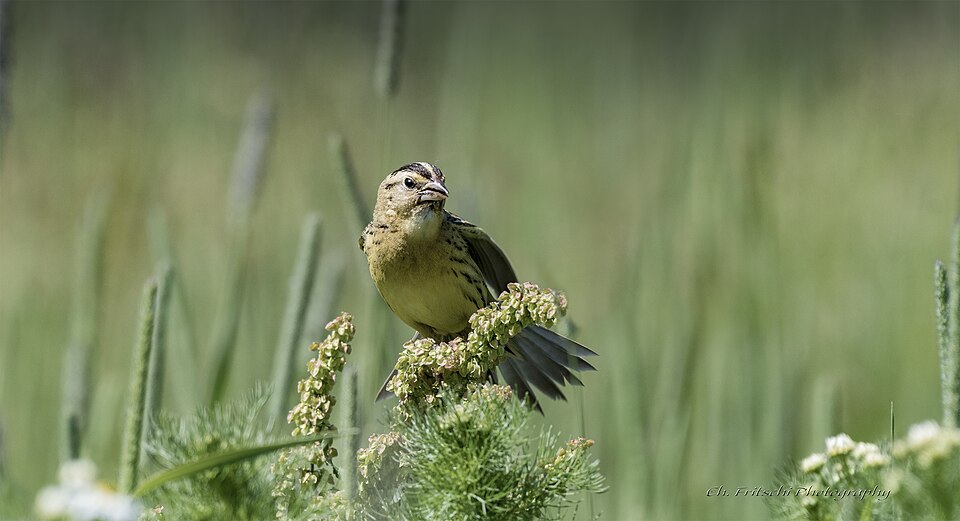
ボボリンク (Dolichonyx oryzivorus) ボボリンク
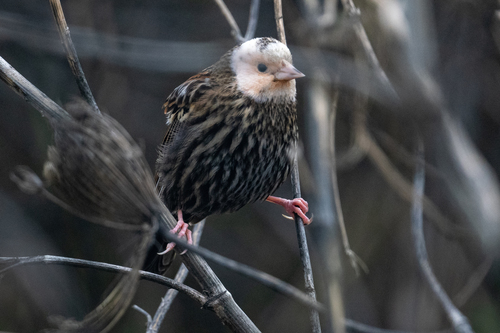
ハゴロモガラス (Agelaius phoeniceus) ハゴロモガラス

メディア

読み込み中…

要点

The most reliable field mark between Bobolink and Red-winged Blackbird is the adult male's breeding plumage: Bobolink males are mostly black with a pale nape and white back, while Red-winged Blackbird males have all-black bodies with a bold red-and-yellow shoulder patch. However, confusion often arises with females and immatures, which are both streaky brown and can look very similar, especially in flight or at a distance. Key differences include the Bobolink's shorter, finch-like bill, more compact shape, and the lack of any red or orange on the wing. Juvenile and female Red-winged Blackbirds have more prominent pale streaking below and often show pale feather edges on the wings. Habitat and behavior also help: Bobolinks favor open grasslands, while Red-winged Blackbirds are most often seen in marshes and wetlands.

識別のコツ

  1. Adult male in breeding plumage: Bobolink is black below with a pale nape and white back/rump; Red-winged Blackbird is all black with a red-and-yellow shoulder patch. This is the most straightforward separation.
  2. No red or orange on Bobolink: At any age or sex, Bobolink never shows any red, orange, or yellow on the wing. If you see a streak of color on the shoulder, it's a Red-winged Blackbird (male or immature male).
  3. Bill shape: Bobolink has a short, conical, finch-like bill; Red-winged Blackbird's bill is longer, more pointed, and less deep at the base. This is subtle but visible at close range.
  4. Body shape and posture: Bobolink appears more compact and short-necked, with a shorter tail. Red-winged Blackbird is lankier, with a longer tail and a more upright posture when perched.
  5. Female/immature underparts: Female and juvenile Bobolinks have a warm buffy wash on the face and underparts, with less sharply defined streaking. Red-winged Blackbird females/immatures are colder brown, with more sharply defined pale streaks below and often a pale supercilium (eyebrow).
  6. Wing coverts in immatures: Young Red-winged Blackbirds may show pale or rusty feather edges on the wing coverts and secondaries, sometimes forming a subtle wing panel. Bobolinks lack this feature.
  7. Shoulder patch in young Red-winged Blackbird males: Immature males may show a mottled orange or rust patch on the shoulder, sometimes with black spots. Bobolinks never show any such patch.
  8. Habitat context: In open grasslands or hayfields, especially in the northern US and southern Canada in summer, Bobolink is more likely. In marshes or wetland edges, Red-winged Blackbird dominates.
  9. Perching behavior: Bobolinks often perch on grass stems or wires in open fields; Red-winged Blackbirds are more likely to perch on reeds, cattails, or shrubs near water.
  10. Flight style: Bobolinks have a bouncy, undulating flight; Red-winged Blackbirds fly more directly with slower, steadier wingbeats.
  11. Seasonal context: Bobolinks are present in North America mainly in summer (breeding) and during migration; Red-winged Blackbirds are resident or present year-round in much of their range.
  12. Flock composition: Bobolinks often migrate in tight, uniform flocks; Red-winged Blackbirds may form large, mixed flocks with other blackbirds and starlings in fall/winter.
  13. Size: Bobolink is slightly smaller and lighter, but this is hard to judge unless side-by-side.
  14. Vocalizations: Not covered in these notes, but typically Bobolink gives a bubbly, metallic song; Red-winged Blackbird gives a harsh, conk-la-ree call. Use with caution if not familiar.
  15. Geographic context: Bobolink is rare in marshes and wetlands; Red-winged Blackbird is rare in pure, open grassland away from water.

大きさ

Both species are similar in length, but Bobolink is slightly smaller and lighter. Bobolink: 16–18 cm (6.3–7.1 in) long, about 28 g (1 oz) in weight, with a 27 cm (10.6 in) wingspan. Red-winged Blackbird is a bit larger and heavier, with males typically 22–24 cm (8.7–9.4 in) long and about 41–65 g (1.4–2.3 oz) [avonet], though size overlap is possible in the field. Bobolink appears more compact and short-billed, while Red-winged Blackbird is lankier with a longer, more conical bill.

羽色

Juvenile and female Bobolinks are pale brown above with dark streaks and a warm buffy wash, especially on the face and underparts; their wings and tails are darker but never show any red or orange. Juvenile and female Red-winged Blackbirds are also streaky brown, but tend to have more sharply defined pale streaks below, a colder overall tone, and often show pale feather edges on the wing coverts and secondaries. In flight, neither species shows a strong wing panel or contrasting upperwing pattern as a diagnostic mark in these ages, but Red-winged Blackbird immatures may show mottled or orange-tinged shoulder patches. Adult male Bobolinks in breeding plumage are unmistakable: black below, white on the back and rump, and a pale yellow nape. Adult male Red-winged Blackbirds are all black with a vivid red-and-yellow epaulet on the wing. In nonbreeding and immature males, the Red-winged Blackbird's shoulder patch may be mottled orange or rust with black spots, while Bobolink males lose their striking pattern and become more female-like but still lack any red or orange on the wing.

行動

Bobolinks are often seen in open grassy fields, moving low over the grass in undulating, bouncy flight, and frequently perch on grass stems or fence wires. Red-winged Blackbirds are more likely to be found in marshes, wetlands, or at the edges of ponds, often perching on cattails or reeds. In flight, Red-winged Blackbirds have a steadier, more direct flight with slower wingbeats, and males may flash their red epaulets. Bobolinks tend to gather in flocks during migration and can be seen feeding on grains in agricultural fields.

生息環境

Bobolinks breed in open grasslands, hayfields, and prairies, rarely venturing into marshes or wetlands. Red-winged Blackbirds are strongly associated with marshes, wet meadows, and the edges of ponds or lakes, though they can also be found in drier fields, especially outside the breeding season. If you see a streaky brown bird in a cattail marsh, Red-winged Blackbird is far more likely; in a wide, open hayfield, Bobolink is the better bet.

より良い説明を送る

比較と同じ項目を使ってください。文章はすぐに公開されます。

The most reliable field mark between Bobolink and Red-winged Blackbird is the adult male's breeding plumage: Bobolink males are mostly black with a pale nape and white back, while Red-winged Blackbird males have all-black bodies with a bold red-and-yellow shoulder patch. However, confusion often arises with females and immatures, which are both streaky brown and can look very similar, especially in flight or at a distance. Key differences include the Bobolink's shorter, finch-like bill, more compact shape, and the lack of any red or orange on the wing. Juvenile and female Red-winged Blackbirds have more prominent pale streaking below and often show pale feather edges on the wings. Habitat and behavior also help: Bobolinks favor open grasslands, while Red-winged Blackbirds are most often seen in marshes and wetlands.

  1. Adult male in breeding plumage: Bobolink is black below with a pale nape and white back/rump; Red-winged Blackbird is all black with a red-and-yellow shoulder patch. This is the most straightforward separation.
  2. No red or orange on Bobolink: At any age or sex, Bobolink never shows any red, orange, or yellow on the wing. If you see a streak of color on the shoulder, it's a Red-winged Blackbird (male or immature male).
  3. Bill shape: Bobolink has a short, conical, finch-like bill; Red-winged Blackbird's bill is longer, more pointed, and less deep at the base. This is subtle but visible at close range.
  4. Body shape and posture: Bobolink appears more compact and short-necked, with a shorter tail. Red-winged Blackbird is lankier, with a longer tail and a more upright posture when perched.
  5. Female/immature underparts: Female and juvenile Bobolinks have a warm buffy wash on the face and underparts, with less sharply defined streaking. Red-winged Blackbird females/immatures are colder brown, with more sharply defined pale streaks below and often a pale supercilium (eyebrow).
  6. Wing coverts in immatures: Young Red-winged Blackbirds may show pale or rusty feather edges on the wing coverts and secondaries, sometimes forming a subtle wing panel. Bobolinks lack this feature.
  7. Shoulder patch in young Red-winged Blackbird males: Immature males may show a mottled orange or rust patch on the shoulder, sometimes with black spots. Bobolinks never show any such patch.
  8. Habitat context: In open grasslands or hayfields, especially in the northern US and southern Canada in summer, Bobolink is more likely. In marshes or wetland edges, Red-winged Blackbird dominates.
  9. Perching behavior: Bobolinks often perch on grass stems or wires in open fields; Red-winged Blackbirds are more likely to perch on reeds, cattails, or shrubs near water.
  10. Flight style: Bobolinks have a bouncy, undulating flight; Red-winged Blackbirds fly more directly with slower, steadier wingbeats.
  11. Seasonal context: Bobolinks are present in North America mainly in summer (breeding) and during migration; Red-winged Blackbirds are resident or present year-round in much of their range.
  12. Flock composition: Bobolinks often migrate in tight, uniform flocks; Red-winged Blackbirds may form large, mixed flocks with other blackbirds and starlings in fall/winter.
  13. Size: Bobolink is slightly smaller and lighter, but this is hard to judge unless side-by-side.
  14. Vocalizations: Not covered in these notes, but typically Bobolink gives a bubbly, metallic song; Red-winged Blackbird gives a harsh, conk-la-ree call. Use with caution if not familiar.
  15. Geographic context: Bobolink is rare in marshes and wetlands; Red-winged Blackbird is rare in pure, open grassland away from water.

Both species are similar in length, but Bobolink is slightly smaller and lighter. Bobolink: 16–18 cm (6.3–7.1 in) long, about 28 g (1 oz) in weight, with a 27 cm (10.6 in) wingspan. Red-winged Blackbird is a bit larger and heavier, with males typically 22–24 cm (8.7–9.4 in) long and about 41–65 g (1.4–2.3 oz) [avonet], though size overlap is possible in the field. Bobolink appears more compact and short-billed, while Red-winged Blackbird is lankier with a longer, more conical bill.

Juvenile and female Bobolinks are pale brown above with dark streaks and a warm buffy wash, especially on the face and underparts; their wings and tails are darker but never show any red or orange. Juvenile and female Red-winged Blackbirds are also streaky brown, but tend to have more sharply defined pale streaks below, a colder overall tone, and often show pale feather edges on the wing coverts and secondaries. In flight, neither species shows a strong wing panel or contrasting upperwing pattern as a diagnostic mark in these ages, but Red-winged Blackbird immatures may show mottled or orange-tinged shoulder patches. Adult male Bobolinks in breeding plumage are unmistakable: black below, white on the back and rump, and a pale yellow nape. Adult male Red-winged Blackbirds are all black with a vivid red-and-yellow epaulet on the wing. In nonbreeding and immature males, the Red-winged Blackbird's shoulder patch may be mottled orange or rust with black spots, while Bobolink males lose their striking pattern and become more female-like but still lack any red or orange on the wing.

Bobolinks are often seen in open grassy fields, moving low over the grass in undulating, bouncy flight, and frequently perch on grass stems or fence wires. Red-winged Blackbirds are more likely to be found in marshes, wetlands, or at the edges of ponds, often perching on cattails or reeds. In flight, Red-winged Blackbirds have a steadier, more direct flight with slower wingbeats, and males may flash their red epaulets. Bobolinks tend to gather in flocks during migration and can be seen feeding on grains in agricultural fields.

Bobolinks breed in open grasslands, hayfields, and prairies, rarely venturing into marshes or wetlands. Red-winged Blackbirds are strongly associated with marshes, wet meadows, and the edges of ponds or lakes, though they can also be found in drier fields, especially outside the breeding season. If you see a streaky brown bird in a cattail marsh, Red-winged Blackbird is far more likely; in a wide, open hayfield, Bobolink is the better bet.

変更を破棄しますか?

保存していない編集があります。今離れると失われます。

ボボリンク · ハゴロモガラス · 苦手な鳥