

Motmot

ヤブヨシキリ 対 ヨーロッパヨシキリ

Acrocephalus dumetorum 対 Acrocephalus scirpaceus

ヤブヨシキリとヨーロッパヨシキリのクイズ
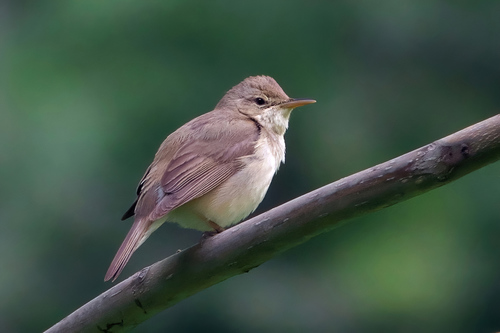
ヤブヨシキリ (Acrocephalus dumetorum) ヤブヨシキリ
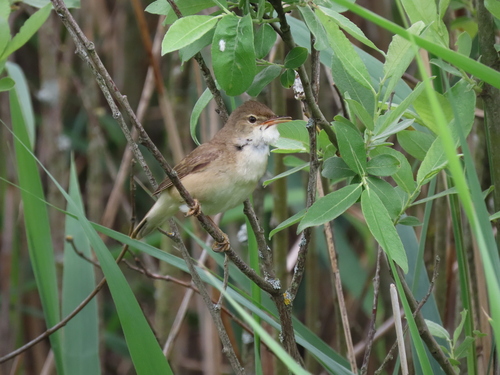
ヨーロッパヨシキリ (Acrocephalus scirpaceus) ヨーロッパヨシキリ

メディア

読み込み中…

要点

ヤブヨシキリとヨーロッパヨシキリの最も信頼できるフィールドマークは、ヤブヨシキリの全体的に冷たい、地味で、オリーブブラウンの上面であり、温かみや赤褐色のトーンが欠けていること、短くて丸い翼と長くて太いくちばしを持つことです。幼鳥のヨーロッパヨシキリは、下側が明らかにリッチなバフ色ですが、ヤブヨシキリは常に地味で、よりオフホワイトです。直接比較すると、ヤブヨシキリはスリムに見え、平らな額が少なく、明らかなスーパーシリウムがありません。構造的および微妙な羽毛の違いが重要であり、両種は似た習性と生息地を持つストリークのない茶色のウグイスであるため、特に鳴かない止まっている鳥では混同が一般的です。

識別のコツ

  1. Underpart color in juveniles: 幼鳥のヨーロッパヨシキリは、特に胸部と側面で明らかにリッチなバフ色ですが、ヤブヨシキリは常に地味で、よりオフホワイトです。これは晩夏と秋の重要なマークです。
  2. Upperpart tone: ヤブヨシキリは、温かみや赤褐色のトーンが欠けた、地味で冷たいオリーブブラウンの上面を持っています。ヨーロッパヨシキリは、特に背中や翼で温かみのある茶色や赤褐色の色合いを示すことがありますが、これは微妙で変動します。
  3. Supercilium: ヤブヨシキリには、くちばしの基部から目までしか伸びない短くて淡い白っぽいスーパーシリウムがありますが、ヨーロッパヨシキリのスーパーシリウムは、まだ弱いですが、いくつかの個体では少し長くて明らかになることがあります。どちらの種も強いスーパーシリウムはありません。
  4. Bill structure: ヤブヨシキリは、下あごの基部が淡いピンクがかった茶色の、明らかに長くて太いくちばしを持っています。ヨーロッパヨシキリのくちばしは強く尖っていますが、直接比較すると短くて頑丈さが劣ります。
  5. Wing shape: ヤブヨシキリは短くて丸い翼を持ち、止まっているときや飛んでいるときによりコンパクトな外観を与えますが、ヨーロッパヨシキリの翼は長くて尖っています。これは微妙で、経験や並べて見ることで最もよく判断されます。
  6. Leg and foot color: 両種とも淡いピンクがかった茶色の脚と足を持っているため、これは区別にはなりません。
  7. Forehead shape: ヨーロッパヨシキリは平らな額を持っていますが、ヤブヨシキリはそれほどではありませんが、これは小さく主観的な特徴です。
  8. Song: ヤブヨシキリの歌はより多様で、厳しいティック音、チャク音、チュル音がメロディックな口笛や模倣と混ざっています。ヨーロッパヨシキリの歌は遅く、よりリズミカルで、厳しさが少なく、チャタリングの「ジットジットジット」音があります。歌はよく聞こえた場合のみ使用してください。
  9. Habitat context: 特に葦原から離れた場所、特に森林の端、庭、または低木で見られた場合は、ヤブヨシキリを考慮してください。ただし、ヨーロッパヨシキリは移動中に低木に出現することがあります。純粋な葦原では、ヨーロッパヨシキリの方がはるかに可能性が高いです。
  10. Range and season: 西ヨーロッパでは、ヤブヨシキリはまだ珍しいですが増加しています。特に葦原の外で。ヨーロッパヨシキリは適切な葦原の生息地に広く分布しています。
  11. Plumage uniformity: ヤブヨシキリは全体的に地味で対比が少なく、上面と下面の間にほとんど違いがありません。特に幼鳥のヨーロッパヨシキリは、茶色の上面とバフ色の下面の間により多くの対比を示すことがあります。
  12. Behavior: ヤブヨシキリは木や低木の高い場所で見られることがありますが、ヨーロッパヨシキリは通常葦の低い場所に留まりますが、両者は密な植生で重なることがあります。
  13. Flight jizz: ヤブヨシキリの短くて丸い翼は、よりフラッター的で直接的でない飛行を与えるかもしれませんが、これは微妙で常に信頼できるわけではありません。
  14. Sex and age: 両種は羽毛において性的に単型であるため、性別は区別にはなりません。年齢の違いは、ヨーロッパヨシキリの下側の色において最も有用です。
  15. No distinctive wing panels: どちらの種も、年齢に関係なく強い翼のパネル、対照的なエッジ、または他の特徴的な上翼のマークを示さないため、全体的なトーンと構造に焦点を当ててください。

大きさ

両種はサイズが非常に似ており、ヤブヨシキリは長さが12〜14 cm、ヨーロッパヨシキリは約13 cmです。ヤブヨシキリは平均してわずかに軽いですが(8〜16 g対12 g)、これは実用的なフィールドマークではありません。翼の長さとスパンはフィールドで明確に異なるわけではありませんが、ヤブヨシキリはやや短くて丸い翼を持ち、やや長い翼を持つヨーロッパヨシキリと比較されます。全体的に、サイズは信頼できる区別にはなりません。

羽色

幼鳥と初年度のヨーロッパヨシキリは、特に胸部と側面で明らかにリッチなバフ色の下側を示しますが、どの年齢のヤブヨシキリも下側は地味でよりオフホワイトです。両種はストリークのない茶色の上面を持っていますが、ヤブヨシキリは冷たいオリーブブラウンで、ヨーロッパヨシキリに時折見られる温かみのある赤褐色のトーンが欠けています。ヤブヨシキリのスーパーシリウムは短く微妙で、くちばしの基部から目までしか伸びていませんが、ヨーロッパヨシキリはやや広範囲であってもまだ弱いスーパーシリウムを示すことがあります。両者には暗い目のストライプがあります。ヤブヨシキリのくちばしは長くて太く、淡いピンクがかった茶色の下あごを持ち、脚も同様の色です。どちらの種も年齢に関係なく特徴的な翼のパネルや対照的なエッジは記載されていないため、上翼のパターンはここでは区別にはなりません。

行動

両種は繁殖中は孤独で領土的であり、しばしば密な植生の中で隠れています。ヤブヨシキリはやや樹上性で、森林の端、開けた場所、さらには庭を利用することがありますが、ヨーロッパヨシキリは葦原に強く関連しています。両者は活発に餌を探し、よく見えないことがありますが、ヤブヨシキリは低木や木の高い場所で見られることがあります。飛行中、ヤブヨシキリの短くて丸い翼は微妙に異なるジズを与えるかもしれませんが、これは微妙で経験によって最もよく評価されます。

生息環境

ヤブヨシキリは湿った広葉樹の森林の端、開けた場所、森林の谷、公園、庭、時には針葉樹林で繁殖し、ヨーロッパヨシキリよりも広い生息地の耐性を示します。冬には、ヤブヨシキリは南アジアの湿ったおよび乾燥した生息地の木々に見られますが、ヨーロッパヨシキリは主に葦の中でサハラ以南のアフリカで冬を越します。移動中に重なる可能性がありますが、ヤブヨシキリは純粋な葦原から離れている可能性が高いです。

声

両種は模倣を伴う変動する歌を持っていますが、ヤブヨシキリの歌はより多様で、厳しいティック音、チャク音、チュル音がメロディックな口笛と混ざっています。ヨーロッパヨシキリの歌は遅く、チャタリングの「ジットジットジット」とアクロセファリンの口笛と模倣を伴いますが、一般的に厳しさが少なく、よりリズミカルです。呼び声は区別のために十分に記述されていませんが、歌の違いはよく聞こえた場合に有用です。

より良い説明を送る

比較と同じ項目を使ってください。文章はすぐに公開されます。

The most reliable field mark between Blyth's Reed Warbler and Common Reed Warbler is the overall colder, plainer, and more olive-brown upperparts of Blyth's, lacking any warm or rufous tones, combined with its shorter, rounder wings and longer, thicker bill. Juvenile Common Reed Warblers are distinctly richer buff below, while Blyth's is always plainer and more off-white underneath. In direct comparison, Blyth's Reed Warbler appears slimmer, with a less flattened forehead and a less obvious supercilium. Structural and subtle plumage differences are key, as both species are unstreaked brown warblers with similar habits and habitats, making confusion common, especially in non-singing, perched birds.

  1. Underpart color in juveniles: Juvenile Common Reed Warblers are distinctly richer buff below, especially on the breast and flanks, while Blyth's Reed Warbler is always plainer and more off-white underneath. This is a key mark in late summer and autumn.
  2. Upperpart tone: Blyth's Reed Warbler has plain, cold olive-brown upperparts, lacking any warm or rufous tones. Common Reed Warbler can show warmer brown or even rufous hues, especially on the back and wings, but this is subtle and variable.
  3. Supercilium: Blyth's has a short, faint whitish supercilium that only extends from the bill base to the eye, while Common Reed Warbler's supercilium, though still weak, may be slightly longer and more obvious in some individuals. Neither species has a strong supercilium.
  4. Bill structure: Blyth's Reed Warbler has a noticeably longer and thicker bill, with a pale pinkish-brown base to the lower mandible. Common Reed Warbler's bill is strong and pointed but shorter and less robust in direct comparison.
  5. Wing shape: Blyth's has shorter, rounder wings, giving a more compact appearance when perched and in flight, while Common Reed Warbler's wings are longer and more pointed. This is subtle and best judged with experience or side-by-side views.
  6. Leg and foot color: Both species have pale pinkish-brown legs and feet, so this is not a separator.
  7. Forehead shape: Common Reed Warbler has a flatter forehead, while Blyth's is less so, but this is a minor and subjective feature.
  8. Song: Blyth's Reed Warbler's song is more varied, with harsh ticks, chaks, and churrs mixed with melodious whistles and mimicry. Common Reed Warbler's song is slower, more rhythmic, and less harsh, with chattering 'jit-jit-jit' notes. Use song only if heard well.
  9. Habitat context: If seen away from reedbeds, especially in woodland edge, gardens, or scrub, consider Blyth's Reed Warbler, though Common Reed Warbler can occur in bushes on migration. In pure reedbeds, Common Reed Warbler is much more likely.
  10. Range and season: In western Europe, Blyth's Reed Warbler is still rare but increasing, especially outside reedbeds. Common Reed Warbler is widespread in suitable reedbed habitat.
  11. Plumage uniformity: Blyth's Reed Warbler is overall plainer and less contrasting, with little difference between upperparts and underparts. Common Reed Warbler, especially juveniles, can show more contrast between brown upperparts and buff underparts.
  12. Behavior: Blyth's may be seen higher in trees or shrubs, while Common Reed Warbler usually stays low in reeds, but both can overlap in dense vegetation.
  13. Flight jizz: Blyth's shorter, rounder wings may give a more fluttery, less direct flight compared to the more purposeful flight of Common Reed Warbler, but this is subtle and not always reliable.
  14. Sex and age: Both species are sexually monomorphic in plumage, so sex is not a separator. Age differences are most useful in underpart color for Common Reed Warbler.
  15. No distinctive wing panels: Neither species shows strong wing panels, contrasting edges, or other distinctive upperwing marks at any age, so focus on overall tone and structure.

Both species are very similar in size, with Blyth's Reed Warbler measuring 12–14 cm in length and Common Reed Warbler about 13 cm. Blyth's is slightly lighter on average (8–16 g vs. 12 g), but this is not a practical field mark. Wing length and span are not distinctly different in the field, though Blyth's has relatively shorter, rounder wings compared to the slightly longer-winged Common Reed Warbler. Overall, size is not a reliable separator.

Juvenile and first-year Common Reed Warblers show noticeably richer buff underparts, especially on the breast and flanks, while Blyth's Reed Warbler of any age remains plainer and more off-white below. Both species have unstreaked brown upperparts, but Blyth's is colder olive-brown, lacking the warmer or rufous tones sometimes seen in Common Reed Warbler. The supercilium in Blyth's is short and subtle, only running from the bill base to the eye, while Common Reed Warbler can show a slightly more extensive but still weak supercilium. Both have a dusky eye-stripe. The bill of Blyth's is longer and thicker, with a pale pinkish-brown lower mandible, and the legs are similarly colored. No distinctive wing panels or contrasting edges are described for either species at any age, so upperwing pattern is not a separator here.

Both species are solitary and territorial during breeding, often skulking in dense vegetation. Blyth's Reed Warbler may be slightly more arboreal, using woodland edges, clearings, and even gardens, while Common Reed Warbler is more strictly associated with reedbeds. Both forage actively and can be hard to see well, but Blyth's may be seen higher in shrubs or trees. In flight, Blyth's shorter, rounder wings may give a subtly different jizz, but this is subtle and best appreciated with experience.

Blyth's Reed Warbler breeds in damp broadleaved woodland edges, clearings, wooded gullies, parks, gardens, and sometimes coniferous forest, showing a broader habitat tolerance than Common Reed Warbler, which is strongly tied to reedbeds and waterside vegetation. In winter, Blyth's is found in trees in both wet and dry habitats in South Asia, while Common Reed Warbler winters in sub-Saharan Africa, mostly in reeds. Overlap is possible in migration, but Blyth's is more likely away from pure reedbeds.

Both species have variable songs with mimicry, but Blyth's Reed Warbler's song is more varied, mixing harsh ticks, chaks, and churrs with melodious whistles. Common Reed Warbler's song is a slower, chattering 'jit-jit-jit' with acrocephaline whistles and mimicry, but is generally less harsh and more rhythmic. Calls are not well described for separation, but song differences can be useful if heard well.

変更を破棄しますか?

保存していない編集があります。今離れると失われます。

ヤブヨシキリ · ヨーロッパヨシキリ · 苦手な鳥