

Motmot

キタハイイロクイナ 対 オオモリクイナ

Pardirallus nigricans 対 Aramides ypecaha

キタハイイロクイナとオオモリクイナのクイズ
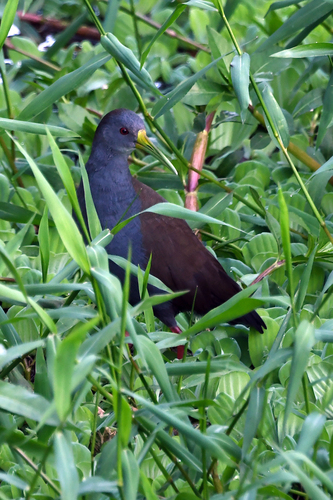
キタハイイロクイナ (Pardirallus nigricans) キタハイイロクイナ
オオモリクイナ (Aramides ypecaha) オオモリクイナ

メディア

読み込み中…

要点

キタハイイロクイナとオオモリクイナを区別する最も信頼できるフィールドマークは、全体のサイズと構造です:オオモリクイナは劇的に大きく、巨大で長い脚を持ち、非常にカラフルな羽毛をしています。一方、キタハイイロクイナはずっと小さく、暗く、控えめです。両者は白い喉と灰色の顔を持っていますが、オオモリクイナは広範囲にわたる青灰色と赤褐色のトーン、鮮やかな赤い目、赤い脚を示しますが、キタハイイロクイナは主に暗褐色から灰色で、ピンクがかった脚と黄緑色のくちばしを持っています。もし巨大でずんぐりした体型、明るいくちばしと脚、カラフルな体を持つクイナを見たら、それはオオモリクイナです;コンパクトで暗く、地味なクイナで淡い喉を持つのはキタハイイロクイナです。幼鳥の羽毛はどちらもよく説明されていないので、サイズ、くちばし、全体の色パターンに注目してください。

識別のコツ

  1. Size is the first and most obvious clue: オオモリクイナはキタハイイロクイナのほぼ2倍の長さで、数倍重いです。もしその鳥が小さな鶏やガチョウと同じくらいの大きさに見えたら、それはオオモリクイナです;もしサイズがカオグロクイナやマダラクイナに近いなら、それはキタハイイロクイナです。
  2. Bill color and shape: キタハイイロクイナは長くて細い黄緑色のくちばしを持っています;オオモリクイナはより厚く、頑丈なマスタードイエローのくちばしを持っています。近くで見るとその違いは明らかです。
  3. Leg color: キタハイイロクイナはピンクがかった脚を持っています;オオモリクイナの脚と足は鮮やかな赤で、目立つフィールドマークです。
  4. Face and throat: 両者は白い顎と喉を持っていますが、オオモリクイナの方が大きく、特に青灰色の顔と上胸に対して目立ちます。キタハイイロクイナの白は小さく、暗い灰色に対して配置されています。
  5. Upperparts color: キタハイイロクイナは上面が無地の暗褐色です;オオモリクイナはオリーブ色の背中、赤褐色の後頭部、黒い尾を持ち、色のパッチワークを作り出します。
  6. Underparts: キタハイイロクイナは下面が暗灰色です;オオモリクイナは褐色がかったピンクの側面、胸、お腹を持ち、灰色の胸と白い喉と対比しています。
  7. Eye color: オオモリクイナは赤い目を持ち、良い光の中で目立ちます。キタハイイロクイナの目の色は特に特徴的とは記述されていません。
  8. Behavior: オオモリクイナはしばしばオープンな場所で大胆に歩いているのが見られ、時には大胆に;キタハイイロクイナは秘密主義で、カバーから遠くに出ることは稀です。
  9. Habitat context: オープンな湿地や湿った草地では、特にクイナが歩き回っている場合、オオモリクイナの方が可能性が高いです。密集した葦や草のカバーでは、特に鳥が隠れている場合、キタハイイロクイナの方が可能性が高いです。
  10. Jizz: オオモリクイナは長い脚の上に高く立ち、重く、直立した姿勢を持っています。キタハイイロクイナはコンパクトで、より低く、水平な姿勢を持っています。
  11. Tail and uppertail coverts: オオモリクイナは黒い上尾羽と尾を持ち、鳥が後ろに歩いているときに見えることがあります。キタハイイロクイナの尾は対比があるとは記述されていません。
  12. Sexes: 両種は性的に単形であり、性差に頼らないでください。
  13. Juvenile/immature birds: どちらの種にも特徴的な幼鳥や未熟な上翼や飛行マークは記述されていません。すべての年齢に対してサイズ、構造、色パターンを使用してください。
  14. Subspecies variation: キタハイイロクイナのcaucae亜種は大きく、喉が淡いですが、それでもオオモリクイナよりもずっと小さく、カラフルではありません。
  15. Overlap: 両種は同じ地域に出現することがあるので、範囲だけに頼らず、常にサイズ、くちばし、色パターンを確認してください。

大きさ

オオモリクイナはずっと大きいです:成鳥は41–45 cm(最大53 cmまで可能性あり)に達し、640–860 gの重さがあります。対してキタハイイロクイナは27–29 cmで約217 gです。フィールドでは、これは大きな違いです:オオモリクイナはほぼ2倍の長さで、数倍重く、クイナの中でほぼガチョウのサイズに見えますが、キタハイイロクイナはカオグロクイナやマダラクイナよりもわずかに大きいだけです。オオモリクイナの脚も比例的に長く、太く、背の高い直立した姿勢に寄与しています。

羽色

行動

オオモリクイナはしばしばオープンな場所で大胆に歩いているのが見られ、時にはペアや小グループで見られます。そのサイズと長い脚のために、ほとんど不器用に見えることもあります。湿地や水辺を歩き回る姿は驚くほど目立つことがあります。一方、キタハイイロクイナははるかに秘密主義で、カバーから遠くに出ることは稀で、通常は単独で見られます。その動きはより隠密でネズミのようであり、長時間オープンな場所で見られる可能性ははるかに低いです。

生息環境

両種は南アメリカ(アルゼンチン、ブラジル、パラグアイ)の重なり合う地域の湿地や湿地の端に見られますが、オオモリクイナはオープンで広範囲な湿地にいる可能性が高く、よりオープンな状況で見られます。キタハイイロクイナは密集したカバーや葦や草の湿地により結びついており、しばしば隠れています。もしオープンな場所で大きなクイナが歩いているのを見たら、オオモリクイナの可能性がはるかに高いです;厚い植生に飛び込む小さく暗いクイナは、よりキタハイイロクイナの可能性が高いです。

より良い説明を送る

比較と同じ項目を使ってください。文章はすぐに公開されます。

The most reliable field mark to separate Blackish Rail from Giant Wood-Rail is overall size and structure: Giant Wood-Rail is dramatically larger, with a massive, long-legged look and a strikingly colorful plumage, while Blackish Rail is much smaller, darker, and more subdued. Both have a white throat and grayish face, but the Giant Wood-Rail shows extensive bluish-gray and rufous tones, a bold red eye, and red legs, while Blackish Rail is mostly dark brown to gray with pinkish legs and a yellow-green bill. If you see a rail with a huge, chunky build, bright bill and legs, and colorful body, it's the Giant Wood-Rail; a compact, dark, and plain rail with a pale throat is Blackish Rail. Juvenile plumages are not well described for either, so focus on size, bill, and overall color pattern.

  1. Size is the first and most obvious clue: Giant Wood-Rail is nearly twice as long and several times heavier than Blackish Rail. If the bird looks as big as a small chicken or a goose, it's Giant Wood-Rail; if it's more like a Sora or Spotted Rail in size, it's Blackish Rail.
  2. Bill color and shape: Blackish Rail has a long, slender yellow-green bill; Giant Wood-Rail has a thicker, more robust mustard-yellow bill. The difference is obvious at close range.
  3. Leg color: Blackish Rail has pinkish legs; Giant Wood-Rail's legs and feet are bright red, a striking field mark.
  4. Face and throat: Both have a white chin and throat, but Giant Wood-Rail's is larger and more conspicuous, especially against the bluish-gray face and upper chest. Blackish Rail's white is smaller and set against dark gray.
  5. Upperparts color: Blackish Rail is unmarked dark brown above; Giant Wood-Rail has an olive back, rust-red nape, and black tail, creating a patchwork of colors.
  6. Underparts: Blackish Rail is dark gray below; Giant Wood-Rail has brownish-pink flanks, breast, and belly, contrasting with the gray chest and white throat.
  7. Eye color: Giant Wood-Rail has a red eye, which stands out in good light. Blackish Rail's eye color is not described as distinctive.
  8. Behavior: Giant Wood-Rail is often seen walking in the open, sometimes boldly; Blackish Rail is secretive, rarely leaving cover.
  9. Habitat context: In open marshes or wet meadows, especially if the rail is striding about, Giant Wood-Rail is more likely. In dense, reedy or grassy cover, especially if the bird is skulking, Blackish Rail is more likely.
  10. Jizz: Giant Wood-Rail stands tall on long legs, with a heavy, upright posture. Blackish Rail is compact, with a lower, more horizontal stance.
  11. Tail and uppertail coverts: Giant Wood-Rail has black uppertail coverts and tail, which can be visible when the bird is walking away. Blackish Rail's tail is not described as contrasting.
  12. Sexes: Both species are sexually monomorphic; do not rely on sex differences.
  13. Juvenile/immature birds: No distinctive juvenile or immature upperwing or flight marks are described for either species. Use size, structure, and color pattern for all ages.
  14. Subspecies variation: The caucae subspecies of Blackish Rail is larger and paler-throated, but still much smaller and less colorful than Giant Wood-Rail.
  15. Overlap: Both species can occur in the same region, so do not rely on range alone—always check size, bill, and color pattern.

Giant Wood-Rail is much larger: adults reach 41–45 cm (possibly up to 53 cm) and weigh 640–860 g, compared to Blackish Rail's 27–29 cm and about 217 g. In the field, this is a huge difference: Giant Wood-Rail is nearly twice as long and several times heavier, appearing almost goose-sized among rails, while Blackish Rail is only slightly larger than a Sora or Spotted Rail. The legs of Giant Wood-Rail are also proportionally longer and thicker, contributing to its tall, upright stance.

  • Adults: Blackish Rail is mostly dark brown above and dark gray below, with a white chin/throat and unmarked upperparts. Giant Wood-Rail is much more colorful: bluish-gray from face to upper chest, white chin, rust-red nape, olive back, black tail, and brownish-pink underparts. The bill is yellow-green in Blackish Rail, but mustard yellow in Giant Wood-Rail. The legs are pinkish in Blackish Rail, but bright red in Giant Wood-Rail. Both have a white chin, but the white is larger and more conspicuous in Giant Wood-Rail (especially in the caucae subspecies of Blackish Rail, which has a larger throat patch and paler vent, but still not as extensive as in Giant Wood-Rail).
  • Juvenile/immature: Juvenile plumage is not described for Giant Wood-Rail, and no distinctive age-specific upperwing or flight marks are noted for either species. Focus on size and structure for immatures.

Giant Wood-Rail is often seen walking boldly in the open, sometimes in pairs or small groups, and may appear almost ungainly due to its size and long legs. It can be surprisingly conspicuous for a rail, striding through marshes or along water edges. Blackish Rail, by contrast, is much more secretive and skulking, rarely venturing far from cover and usually seen singly. Its movements are more furtive and mouse-like, and it is far less likely to be seen in the open for long.

Both species can be found in marshes and wetland edges in overlapping regions of South America (Argentina, Brazil, Paraguay), but Giant Wood-Rail is more likely in open, extensive marshes and can be seen in more open situations. Blackish Rail is more tied to dense cover and reedy or grassy marshes, often remaining hidden. If you see a large rail striding in the open, Giant Wood-Rail is far more likely; a small, dark rail darting into thick vegetation is more likely Blackish Rail.

変更を破棄しますか?

保存していない編集があります。今離れると失われます。

キタハイイロクイナ · オオモリクイナ · 苦手な鳥