

Motmot

ハシグロクロハラアジサシ 対 キョクアジサシ

Chlidonias niger 対 Sterna paradisaea

ハシグロクロハラアジサシとキョクアジサシのクイズ
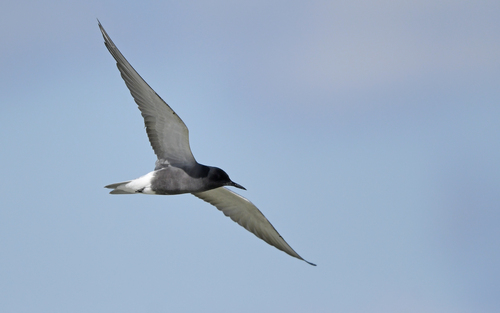
ハシグロクロハラアジサシ (Chlidonias niger) ハシグロクロハラアジサシ
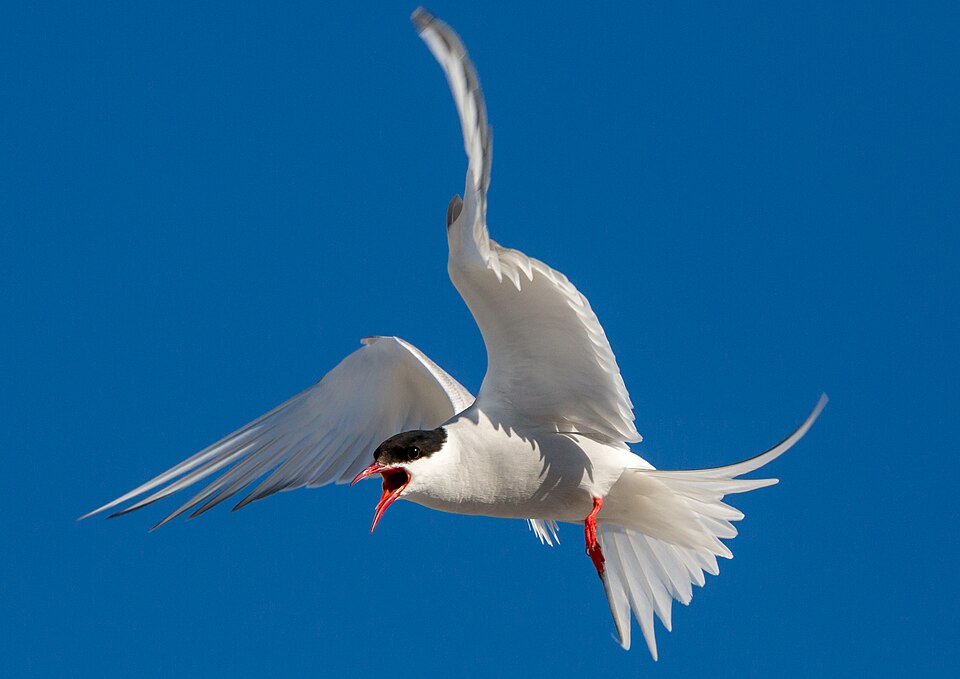
キョクアジサシ (Sterna paradisaea) キョクアジサシ

メディア

読み込み中…

要点

The most reliable way to separate Black Tern from Arctic Tern is by overall structure and bill color: Black Tern is smaller, with a short, slender, black bill, while Arctic Tern is larger and has a noticeably longer, straight, deep red bill (blackish in juveniles and non-breeding adults). In flight, Black Tern shows a slim, almost swallow-like build with a square tail, while Arctic Tern has a more classic tern shape with long, deeply forked tail streamers. Juvenile and non-breeding plumages are also quite different: Black Tern juveniles show a broad white collar and dusky breast sides, while Arctic Tern juveniles have a dark carpal bar and a 'scaly' wing pattern. Both species can be seen near water, but Black Tern is much more likely inland, especially during breeding, while Arctic Tern is coastal or far north. Size, structure, and bill color are your best quick checks.

識別のコツ

  1. Bill color and shape: Black Tern has a short, slender, black bill (all ages), while Arctic Tern has a longer, straight, deep red bill in adults (blackish in juveniles and non-breeding). Bill color is often the quickest check at close range.
  2. Size and structure: Black Tern is much smaller and lighter, with a compact, slim build and a square tail. Arctic Tern is larger, longer-winged, and has a deeply forked tail with long streamers (especially adults in breeding plumage).
  3. Juvenile upperwing pattern: Juvenile Arctic Tern shows a dark carpal bar and 'scaly' upperwing/mantle, with a short tail and black bill/legs. Juvenile Black Tern lacks the carpal bar but has a broad white collar and dusky breast sides.
  4. Adult breeding plumage: Adult Black Tern is dark below (black head, neck, and belly, grey back), with a white forewing and square tail. Adult Arctic Tern is pale grey above, white below, with a black crown and deep red bill, and a long, deeply forked tail.
  5. Non-breeding plumage: Black Tern loses most of its black (except the cap), becoming drab grey with pale feather edges and a white face. Arctic Tern in winter has a whiter forehead and darkens its bill and legs.
  6. Facial pattern: Black Tern (especially juveniles) shows a dark triangular patch in front of the eye and a broad white collar. Arctic Tern has white cheeks and a black crown, with no dark face patch.
  7. Tail shape in flight: Black Tern's tail is square and short, not deeply forked. Arctic Tern's tail is long and deeply forked, with streamers extending well beyond the wingtips in adults.
  8. Flight style: Black Tern has a more erratic, swallow-like flight with quick, dynamic wingbeats. Arctic Tern is more buoyant and graceful, often hovering.
  9. Habitat: Black Tern is most often inland over marshes and lakes, especially in breeding season. Arctic Tern is coastal or far north, rarely inland except on migration.
  10. Leg color: Both species have dark legs in juvenile/non-breeding plumage, but adult Arctic Tern's legs are deep red in breeding season.
  11. Voice: Black Tern's call is a high-pitched 'kik'; Arctic Tern's is more nasal and rasping. Not usually diagnostic unless familiar with both.
  12. Context: Time of year and location help—Black Tern breeds inland, Arctic Tern breeds far north/coastal and migrates long distances.
  13. Plumage pitfalls: Beware of hybrids (rare), which may show mixed features; always check multiple marks.
  14. Perched posture: Black Tern often appears hunched and compact; Arctic Tern stands more upright and elongated, especially when displaying its long tail.
  15. Group behavior: Black Tern often forages in flocks, especially during migration, and can be very noisy. Arctic Tern is more territorial in breeding season.

大きさ

Black Tern is significantly smaller and lighter, averaging about 60 g and 25 cm in length, with a 61 cm wingspan. Arctic Tern is almost twice as heavy (about 114 g), longer (33–36 cm), and has a much broader wingspan (76–85 cm). In the field, Arctic Tern looks longer-winged and longer-tailed, while Black Tern appears compact and slim.

羽色

Juvenile and non-breeding plumages are especially useful for separation. Juvenile Black Tern has a broad white collar, dark triangular patch in front of the eye, and dusky smudges on the breast sides—features not shown by Arctic Tern. Juvenile Arctic Tern instead shows a dark carpal bar across the upperwing and a 'scaly' appearance to the mantle and wings, with a shorter tail and black bill and legs. Adult breeding Black Tern is strikingly dark below (black belly and head, grey back), while Arctic Tern is pale grey above, white below, with a black crown and a deep red bill. In non-breeding plumage, Black Tern loses most of its black, becoming drab grey with pale feather edges, but retains a dark cap and a white face. Arctic Tern in winter has a whiter forehead and darkens its bill and legs. In flight, Black Tern's wings are dynamic and erratic, while Arctic Tern's wings are long, pointed, and elegant.

行動

Black Tern forages by picking insects and small prey from the water's surface or in flight, rarely diving. Its flight is often described as erratic and swallow-like, with full, dynamic wingbeats. Arctic Tern has a more buoyant, graceful flight, often hovering before plunging for fish. Arctic Tern's deeply forked tail is conspicuous in flight, while Black Tern's tail is squarer and less prominent.

生息環境

Black Tern is most often found inland, breeding in freshwater marshes across Europe, western Asia, and North America. During migration and winter, it moves to coastal areas but remains associated with wetlands. Arctic Tern breeds in Arctic and subarctic regions, usually near the coast or on islands, and migrates to Antarctic waters for the southern summer. Seeing a tern far inland in summer strongly favors Black Tern; Arctic Tern is almost always coastal or far north.

声

Black Tern gives a high-pitched 'kik' and, in flocks, can be very noisy and clamorous. Arctic Tern's calls are more nasal and rasping, especially compared to other 'Sterna' terns, but are not as distinctive when compared directly to Black Tern. Voice is rarely the best field mark between these two, but Black Tern's calls are higher and more insect-like.

より良い説明を送る

比較と同じ項目を使ってください。文章はすぐに公開されます。

The most reliable way to separate Black Tern from Arctic Tern is by overall structure and bill color: Black Tern is smaller, with a short, slender, black bill, while Arctic Tern is larger and has a noticeably longer, straight, deep red bill (blackish in juveniles and non-breeding adults). In flight, Black Tern shows a slim, almost swallow-like build with a square tail, while Arctic Tern has a more classic tern shape with long, deeply forked tail streamers. Juvenile and non-breeding plumages are also quite different: Black Tern juveniles show a broad white collar and dusky breast sides, while Arctic Tern juveniles have a dark carpal bar and a 'scaly' wing pattern. Both species can be seen near water, but Black Tern is much more likely inland, especially during breeding, while Arctic Tern is coastal or far north. Size, structure, and bill color are your best quick checks.

  1. Bill color and shape: Black Tern has a short, slender, black bill (all ages), while Arctic Tern has a longer, straight, deep red bill in adults (blackish in juveniles and non-breeding). Bill color is often the quickest check at close range.
  2. Size and structure: Black Tern is much smaller and lighter, with a compact, slim build and a square tail. Arctic Tern is larger, longer-winged, and has a deeply forked tail with long streamers (especially adults in breeding plumage).
  3. Juvenile upperwing pattern: Juvenile Arctic Tern shows a dark carpal bar and 'scaly' upperwing/mantle, with a short tail and black bill/legs. Juvenile Black Tern lacks the carpal bar but has a broad white collar and dusky breast sides.
  4. Adult breeding plumage: Adult Black Tern is dark below (black head, neck, and belly, grey back), with a white forewing and square tail. Adult Arctic Tern is pale grey above, white below, with a black crown and deep red bill, and a long, deeply forked tail.
  5. Non-breeding plumage: Black Tern loses most of its black (except the cap), becoming drab grey with pale feather edges and a white face. Arctic Tern in winter has a whiter forehead and darkens its bill and legs.
  6. Facial pattern: Black Tern (especially juveniles) shows a dark triangular patch in front of the eye and a broad white collar. Arctic Tern has white cheeks and a black crown, with no dark face patch.
  7. Tail shape in flight: Black Tern's tail is square and short, not deeply forked. Arctic Tern's tail is long and deeply forked, with streamers extending well beyond the wingtips in adults.
  8. Flight style: Black Tern has a more erratic, swallow-like flight with quick, dynamic wingbeats. Arctic Tern is more buoyant and graceful, often hovering.
  9. Habitat: Black Tern is most often inland over marshes and lakes, especially in breeding season. Arctic Tern is coastal or far north, rarely inland except on migration.
  10. Leg color: Both species have dark legs in juvenile/non-breeding plumage, but adult Arctic Tern's legs are deep red in breeding season.
  11. Voice: Black Tern's call is a high-pitched 'kik'; Arctic Tern's is more nasal and rasping. Not usually diagnostic unless familiar with both.
  12. Context: Time of year and location help—Black Tern breeds inland, Arctic Tern breeds far north/coastal and migrates long distances.
  13. Plumage pitfalls: Beware of hybrids (rare), which may show mixed features; always check multiple marks.
  14. Perched posture: Black Tern often appears hunched and compact; Arctic Tern stands more upright and elongated, especially when displaying its long tail.
  15. Group behavior: Black Tern often forages in flocks, especially during migration, and can be very noisy. Arctic Tern is more territorial in breeding season.

Black Tern is significantly smaller and lighter, averaging about 60 g and 25 cm in length, with a 61 cm wingspan. Arctic Tern is almost twice as heavy (about 114 g), longer (33–36 cm), and has a much broader wingspan (76–85 cm). In the field, Arctic Tern looks longer-winged and longer-tailed, while Black Tern appears compact and slim.

Juvenile and non-breeding plumages are especially useful for separation. Juvenile Black Tern has a broad white collar, dark triangular patch in front of the eye, and dusky smudges on the breast sides—features not shown by Arctic Tern. Juvenile Arctic Tern instead shows a dark carpal bar across the upperwing and a 'scaly' appearance to the mantle and wings, with a shorter tail and black bill and legs. Adult breeding Black Tern is strikingly dark below (black belly and head, grey back), while Arctic Tern is pale grey above, white below, with a black crown and a deep red bill. In non-breeding plumage, Black Tern loses most of its black, becoming drab grey with pale feather edges, but retains a dark cap and a white face. Arctic Tern in winter has a whiter forehead and darkens its bill and legs. In flight, Black Tern's wings are dynamic and erratic, while Arctic Tern's wings are long, pointed, and elegant.

Black Tern forages by picking insects and small prey from the water's surface or in flight, rarely diving. Its flight is often described as erratic and swallow-like, with full, dynamic wingbeats. Arctic Tern has a more buoyant, graceful flight, often hovering before plunging for fish. Arctic Tern's deeply forked tail is conspicuous in flight, while Black Tern's tail is squarer and less prominent.

Black Tern is most often found inland, breeding in freshwater marshes across Europe, western Asia, and North America. During migration and winter, it moves to coastal areas but remains associated with wetlands. Arctic Tern breeds in Arctic and subarctic regions, usually near the coast or on islands, and migrates to Antarctic waters for the southern summer. Seeing a tern far inland in summer strongly favors Black Tern; Arctic Tern is almost always coastal or far north.

Black Tern gives a high-pitched 'kik' and, in flocks, can be very noisy and clamorous. Arctic Tern's calls are more nasal and rasping, especially compared to other 'Sterna' terns, but are not as distinctive when compared directly to Black Tern. Voice is rarely the best field mark between these two, but Black Tern's calls are higher and more insect-like.

変更を破棄しますか?

保存していない編集があります。今離れると失われます。

ハシグロクロハラアジサシ · キョクアジサシ · 苦手な鳥