

Motmot

カエデチョウ 対 アカバネカエデチョウ

Estrilda troglodytes 対 Estrilda rhodopyga

カエデチョウとアカバネカエデチョウのクイズ
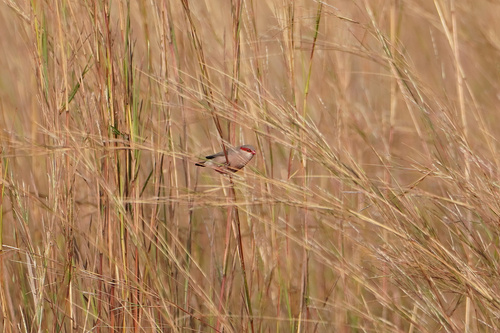
カエデチョウ (Estrilda troglodytes) カエデチョウ
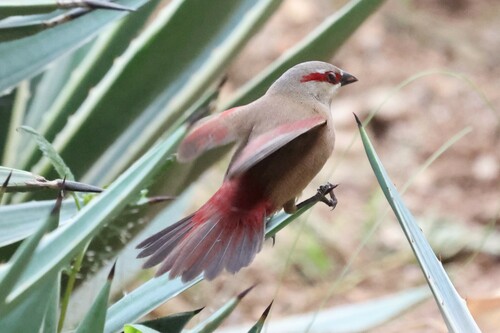
アカバネカエデチョウ (Estrilda rhodopyga) アカバネカエデチョウ

メディア

読み込み中…

要点

The most reliable field mark to separate Black-rumped Waxbill from Crimson-rumped Waxbill is the color of the rump: Black-rumped Waxbill shows a distinctly black rump, while Crimson-rumped Waxbill has a crimson or rosy rump. This contrast is visible on perched birds and especially in flight, and applies to all ages. Both species are small estrildid finches, but their ranges overlap only in parts of East Africa, so location can also help. Other plumage features are subtle and less reliable, so focus on the rump color for confident identification.

識別のコツ

  1. Rump color is the most reliable mark: Black-rumped Waxbill always shows a black rump, while Crimson-rumped Waxbill has a crimson or rosy rump. This is visible on perched birds and especially in flight, and applies to all ages and sexes.
  2. Check the rump in flight: When flushed or flying, the contrasting rump color is often the first and best clue. The black of Black-rumped Waxbill and the crimson of Crimson-rumped Waxbill are both striking against the otherwise pale back and wings.
  3. Perched birds can show the rump: If the tail is slightly spread or the bird is angled, the rump color can be seen even when perched. Be patient and look for this mark.
  4. Do not rely on overall body color: Both species are generally pale brownish or grayish with some reddish on the face and flanks, but these tones overlap and are not reliable for separation.
  5. Facial and underpart patterns are similar: Both have a pale face with a dark eye-line and some reddish on the flanks, but these features are not consistently different between the two.
  6. Bill color is not diagnostic: Both have a red bill typical of waxbills; do not use bill color to separate them.
  7. Juvenile and immature birds: No distinctive age-specific upperwing or flight marks are described for either species, so rump color remains the best mark for all ages.
  8. Size and structure: Both are tiny, short-tailed finches with similar proportions; do not use size or shape for identification.
  9. Habitat overlap: In areas where both species occur, they use similar open and grassy habitats. Do not use habitat alone for separation.
  10. Range as a supporting clue: If you are outside eastern Africa, Black-rumped Waxbill is much more likely; within eastern Africa, check the rump color carefully.
  11. Flock composition: Both species may mix with other waxbills, but rarely with each other; if you see both rump colors in a flock, you may have a mixed group.
  12. Voice is not described as distinctive: Do not rely on calls or song for separation.
  13. Beware of poor views: In dull light or at a distance, rump color may be hard to see; try to get a clear view of the rear of the bird.
  14. Season and sex do not affect the rump mark: Both sexes and all ages show the diagnostic rump color year-round.
  15. Photograph if uncertain: A photo of the rump area can confirm identification if field views are inconclusive.

大きさ

Black-rumped Waxbill has a documented average body mass of 7.7 g [wikidata], while no direct measurement is available for Crimson-rumped Waxbill. Both are very small estrildid finches and are similar in size and proportions, so size alone is not a useful field mark for separation.

羽色

The key plumage difference is the rump color, visible in all ages and seasons: Black-rumped Waxbill always shows a black rump, contrasting with the paler back and wings, while Crimson-rumped Waxbill has a bright crimson or rosy rump that stands out against the rest of the plumage. This difference is most obvious when the birds are in flight or when the tail is fanned. No sources describe distinctive age-specific upperwing or flight marks for either species, so the rump remains the main diagnostic feature. Other plumage features, such as general body color and facial pattern, are similar and not reliably separable in the field.

行動

Both species behave like typical waxbills: they are often seen in small flocks, feeding on grass seeds in open areas, and are active and restless. There is no evidence for behavioral differences that would help with field identification between these two species.

生息環境

Black-rumped Waxbill is widespread in Southern and parts of West and Central Africa, while Crimson-rumped Waxbill is found mainly in eastern Africa. Where their ranges overlap (notably in parts of East Africa), both can be found in similar habitats: open grasslands, edges of cultivation, and bushy areas. Habitat preferences are not distinct enough to reliably separate them where both occur.

より良い説明を送る

比較と同じ項目を使ってください。文章はすぐに公開されます。

The most reliable field mark to separate Black-rumped Waxbill from Crimson-rumped Waxbill is the color of the rump: Black-rumped Waxbill shows a distinctly black rump, while Crimson-rumped Waxbill has a crimson or rosy rump. This contrast is visible on perched birds and especially in flight, and applies to all ages. Both species are small estrildid finches, but their ranges overlap only in parts of East Africa, so location can also help. Other plumage features are subtle and less reliable, so focus on the rump color for confident identification.

  1. Rump color is the most reliable mark: Black-rumped Waxbill always shows a black rump, while Crimson-rumped Waxbill has a crimson or rosy rump. This is visible on perched birds and especially in flight, and applies to all ages and sexes.
  2. Check the rump in flight: When flushed or flying, the contrasting rump color is often the first and best clue. The black of Black-rumped Waxbill and the crimson of Crimson-rumped Waxbill are both striking against the otherwise pale back and wings.
  3. Perched birds can show the rump: If the tail is slightly spread or the bird is angled, the rump color can be seen even when perched. Be patient and look for this mark.
  4. Do not rely on overall body color: Both species are generally pale brownish or grayish with some reddish on the face and flanks, but these tones overlap and are not reliable for separation.
  5. Facial and underpart patterns are similar: Both have a pale face with a dark eye-line and some reddish on the flanks, but these features are not consistently different between the two.
  6. Bill color is not diagnostic: Both have a red bill typical of waxbills; do not use bill color to separate them.
  7. Juvenile and immature birds: No distinctive age-specific upperwing or flight marks are described for either species, so rump color remains the best mark for all ages.
  8. Size and structure: Both are tiny, short-tailed finches with similar proportions; do not use size or shape for identification.
  9. Habitat overlap: In areas where both species occur, they use similar open and grassy habitats. Do not use habitat alone for separation.
  10. Range as a supporting clue: If you are outside eastern Africa, Black-rumped Waxbill is much more likely; within eastern Africa, check the rump color carefully.
  11. Flock composition: Both species may mix with other waxbills, but rarely with each other; if you see both rump colors in a flock, you may have a mixed group.
  12. Voice is not described as distinctive: Do not rely on calls or song for separation.
  13. Beware of poor views: In dull light or at a distance, rump color may be hard to see; try to get a clear view of the rear of the bird.
  14. Season and sex do not affect the rump mark: Both sexes and all ages show the diagnostic rump color year-round.
  15. Photograph if uncertain: A photo of the rump area can confirm identification if field views are inconclusive.

Black-rumped Waxbill has a documented average body mass of 7.7 g [wikidata], while no direct measurement is available for Crimson-rumped Waxbill. Both are very small estrildid finches and are similar in size and proportions, so size alone is not a useful field mark for separation.

The key plumage difference is the rump color, visible in all ages and seasons: Black-rumped Waxbill always shows a black rump, contrasting with the paler back and wings, while Crimson-rumped Waxbill has a bright crimson or rosy rump that stands out against the rest of the plumage. This difference is most obvious when the birds are in flight or when the tail is fanned. No sources describe distinctive age-specific upperwing or flight marks for either species, so the rump remains the main diagnostic feature. Other plumage features, such as general body color and facial pattern, are similar and not reliably separable in the field.

Both species behave like typical waxbills: they are often seen in small flocks, feeding on grass seeds in open areas, and are active and restless. There is no evidence for behavioral differences that would help with field identification between these two species.

Black-rumped Waxbill is widespread in Southern and parts of West and Central Africa, while Crimson-rumped Waxbill is found mainly in eastern Africa. Where their ranges overlap (notably in parts of East Africa), both can be found in similar habitats: open grasslands, edges of cultivation, and bushy areas. Habitat preferences are not distinct enough to reliably separate them where both occur.

変更を破棄しますか?

保存していない編集があります。今離れると失われます。

カエデチョウ · アカバネカエデチョウ · 苦手な鳥