

Motmot

クロジョウビタキ 対 アトリ

Phoenicurus ochruros 対 Fringilla montifringilla

クロジョウビタキとアトリのクイズ
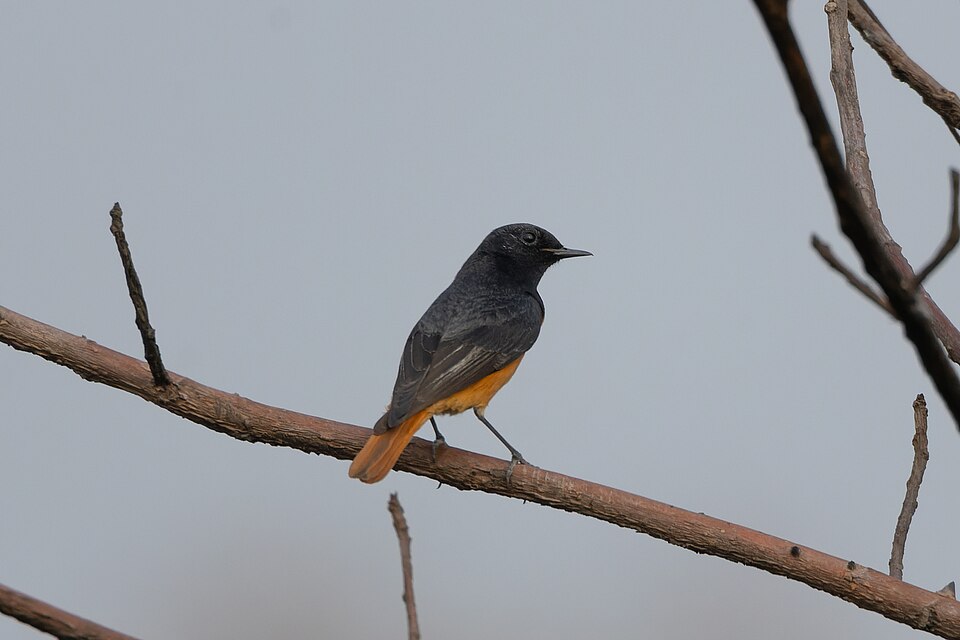
クロジョウビタキ (Phoenicurus ochruros) クロジョウビタキ
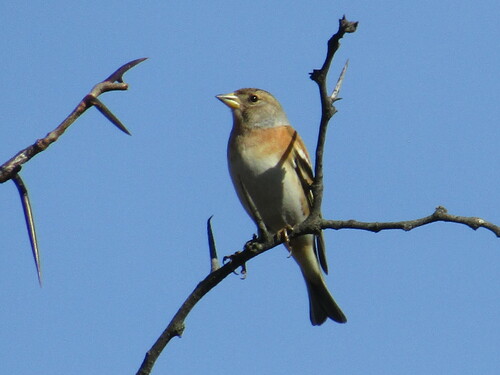
アトリ (Fringilla montifringilla) アトリ

メディア

読み込み中…

要点

The most reliable field mark to separate Black Redstart from Brambling is overall color and pattern: Black Redstart (especially females and juveniles) is a plain, mostly grey-brown bird with a distinctive orange-red tail, while Brambling is a boldly patterned finch with orange breast, white belly, and a white rump (visible in flight). Juvenile and female Black Redstarts are much plainer and sandier than any Brambling, lacking the latter's strong orange, white, and dark contrasts. Structurally, Black Redstart is slimmer and more upright, with a thin bill and frequent tail-flicking, while Brambling is chunkier, with a finch's thick bill and more horizontal stance. If you see a bird with a white rump or bold orange breast and white belly, it's a Brambling; if it's plain grey-brown with a rusty tail, it's a Black Redstart.

識別のコツ

  1. White rump in flight: Brambling of all ages and sexes shows a bright white rump, especially visible when flying away. Black Redstart never shows a white rump—its tail is rusty-red.
  2. Tail color and movement: Black Redstart always has a rusty-orange tail, often flicked up and down. Brambling's tail is dark and lacks any orange or red tones; it does not flick its tail in the same way.
  3. Bill shape and color: Brambling has a thick, conical finch bill (yellow in non-breeding, black in breeding males). Black Redstart has a thin, pointed bill, always dark. Bill shape is a quick check at close range.
  4. Breast and belly pattern: Brambling has a strong orange breast and white belly, with dark-spotted flanks. Black Redstart (female/juvenile) is plain grey-brown below, sometimes with a faint buff wash, but never with a sharply contrasting orange breast or white belly.
  5. Scapular color: Brambling has orange scapulars (shoulder feathers) in all plumages. Black Redstart's upperparts are plain grey-brown (female/juvenile) or dark grey/black (male), never orange.
  6. Head pattern: Male Brambling in breeding plumage has a black head and upperparts, very different from any Black Redstart. Female/juvenile Brambling has a plain head but still shows the strong orange and white pattern elsewhere. Black Redstart females/juveniles are plain-headed, sometimes with a faint buff eye-ring.
  7. Body shape and posture: Black Redstart is slimmer, more upright, and often perches on exposed rocks or buildings. Brambling is chunkier, more horizontal, and often in flocks on the ground or in trees.
  8. Flocking behavior: Brambling is often in large flocks, especially in winter. Black Redstart is usually solitary or in pairs.
  9. Habitat: Black Redstart prefers rocky, urban, or mountainous areas. Brambling is a woodland and open-field bird, rarely in rocky or urban settings.
  10. Juvenile confusion: Juvenile Black Redstart is plain and sandy-grey with a rusty tail; juvenile Brambling is still patterned with orange and white, and shows a white rump in flight.
  11. Flight pattern: Brambling's white rump flashes in flight; Black Redstart's flight shows a rusty tail but no white.
  12. Underpart contrast: Brambling always has a sharp contrast between orange breast and white belly; Black Redstart is uniform below.
  13. Leg color: Not diagnostic between these two, but Black Redstart's legs are always dark.
  14. Voice: Not described in the notes, so not reliable for this separation.
  15. Seasonal context: Brambling is a winter visitor in much of Europe, often appearing in large flocks. Black Redstart can be resident or migrant, but is rarely found in large flocks.

大きさ

Brambling is slightly heavier (22g) than Black Redstart, but both are small passerines and can appear similar in size through binoculars. Brambling is chunkier and more robust, with a thicker neck and a conical finch bill, while Black Redstart is slimmer, more upright, and has a finer, insect-eater's bill. In the field, the difference in body shape and bill structure is more helpful than mass.

羽色

Juvenile and female Black Redstarts are plain light grey-brown above and below, sometimes with a buff eye-ring, and always with a rusty-orange tail. They lack any bold patterning or strong color contrasts. In contrast, all Brambling ages and sexes show a bright white rump (especially obvious in flight), orange breast, and white belly, with dark-spotted flanks and orange scapulars. Male Brambling in breeding plumage is especially distinctive with a black head and upperparts, but even females and immatures are much more patterned than any Black Redstart. Black Redstart never shows a white rump or orange breast with a white belly. Bill color is also useful: Brambling has a yellow bill outside breeding season (black in breeding males), while Black Redstart's bill is always dark and fine. Black Redstart's tail is always rusty-red, a key feature lacking in Brambling.

行動

Black Redstart is often seen alone or in pairs, perching upright on rocks, walls, or buildings, and frequently flicking its tail. It feeds by sallying from perches to catch insects. Brambling is much more likely to be seen in flocks, sometimes very large, feeding on the ground or in trees, and moves with a more horizontal posture. Brambling's feeding is more seed-oriented, and its movements are less restless than the tail-flicking Black Redstart.

生息環境

Black Redstart prefers rocky habitats, cliffs, quarries, and urban areas with stone or concrete structures. It is rarely found in dense woodland or open fields. Brambling is a bird of woodlands, especially birch and beech, and is often seen in large flocks in forests or feeding on the ground in open areas near woods, especially in winter. If you find a small bird in a rocky, urban, or mountainous setting, Black Redstart is more likely; in a woodland or among large flocks in fields, Brambling is the better bet.

より良い説明を送る

比較と同じ項目を使ってください。文章はすぐに公開されます。

The most reliable field mark to separate Black Redstart from Brambling is overall color and pattern: Black Redstart (especially females and juveniles) is a plain, mostly grey-brown bird with a distinctive orange-red tail, while Brambling is a boldly patterned finch with orange breast, white belly, and a white rump (visible in flight). Juvenile and female Black Redstarts are much plainer and sandier than any Brambling, lacking the latter's strong orange, white, and dark contrasts. Structurally, Black Redstart is slimmer and more upright, with a thin bill and frequent tail-flicking, while Brambling is chunkier, with a finch's thick bill and more horizontal stance. If you see a bird with a white rump or bold orange breast and white belly, it's a Brambling; if it's plain grey-brown with a rusty tail, it's a Black Redstart.

  1. White rump in flight: Brambling of all ages and sexes shows a bright white rump, especially visible when flying away. Black Redstart never shows a white rump—its tail is rusty-red.
  2. Tail color and movement: Black Redstart always has a rusty-orange tail, often flicked up and down. Brambling's tail is dark and lacks any orange or red tones; it does not flick its tail in the same way.
  3. Bill shape and color: Brambling has a thick, conical finch bill (yellow in non-breeding, black in breeding males). Black Redstart has a thin, pointed bill, always dark. Bill shape is a quick check at close range.
  4. Breast and belly pattern: Brambling has a strong orange breast and white belly, with dark-spotted flanks. Black Redstart (female/juvenile) is plain grey-brown below, sometimes with a faint buff wash, but never with a sharply contrasting orange breast or white belly.
  5. Scapular color: Brambling has orange scapulars (shoulder feathers) in all plumages. Black Redstart's upperparts are plain grey-brown (female/juvenile) or dark grey/black (male), never orange.
  6. Head pattern: Male Brambling in breeding plumage has a black head and upperparts, very different from any Black Redstart. Female/juvenile Brambling has a plain head but still shows the strong orange and white pattern elsewhere. Black Redstart females/juveniles are plain-headed, sometimes with a faint buff eye-ring.
  7. Body shape and posture: Black Redstart is slimmer, more upright, and often perches on exposed rocks or buildings. Brambling is chunkier, more horizontal, and often in flocks on the ground or in trees.
  8. Flocking behavior: Brambling is often in large flocks, especially in winter. Black Redstart is usually solitary or in pairs.
  9. Habitat: Black Redstart prefers rocky, urban, or mountainous areas. Brambling is a woodland and open-field bird, rarely in rocky or urban settings.
  10. Juvenile confusion: Juvenile Black Redstart is plain and sandy-grey with a rusty tail; juvenile Brambling is still patterned with orange and white, and shows a white rump in flight.
  11. Flight pattern: Brambling's white rump flashes in flight; Black Redstart's flight shows a rusty tail but no white.
  12. Underpart contrast: Brambling always has a sharp contrast between orange breast and white belly; Black Redstart is uniform below.
  13. Leg color: Not diagnostic between these two, but Black Redstart's legs are always dark.
  14. Voice: Not described in the notes, so not reliable for this separation.
  15. Seasonal context: Brambling is a winter visitor in much of Europe, often appearing in large flocks. Black Redstart can be resident or migrant, but is rarely found in large flocks.

Brambling is slightly heavier (22g) than Black Redstart, but both are small passerines and can appear similar in size through binoculars. Brambling is chunkier and more robust, with a thicker neck and a conical finch bill, while Black Redstart is slimmer, more upright, and has a finer, insect-eater's bill. In the field, the difference in body shape and bill structure is more helpful than mass.

Juvenile and female Black Redstarts are plain light grey-brown above and below, sometimes with a buff eye-ring, and always with a rusty-orange tail. They lack any bold patterning or strong color contrasts. In contrast, all Brambling ages and sexes show a bright white rump (especially obvious in flight), orange breast, and white belly, with dark-spotted flanks and orange scapulars. Male Brambling in breeding plumage is especially distinctive with a black head and upperparts, but even females and immatures are much more patterned than any Black Redstart. Black Redstart never shows a white rump or orange breast with a white belly. Bill color is also useful: Brambling has a yellow bill outside breeding season (black in breeding males), while Black Redstart's bill is always dark and fine. Black Redstart's tail is always rusty-red, a key feature lacking in Brambling.

Black Redstart is often seen alone or in pairs, perching upright on rocks, walls, or buildings, and frequently flicking its tail. It feeds by sallying from perches to catch insects. Brambling is much more likely to be seen in flocks, sometimes very large, feeding on the ground or in trees, and moves with a more horizontal posture. Brambling's feeding is more seed-oriented, and its movements are less restless than the tail-flicking Black Redstart.

Black Redstart prefers rocky habitats, cliffs, quarries, and urban areas with stone or concrete structures. It is rarely found in dense woodland or open fields. Brambling is a bird of woodlands, especially birch and beech, and is often seen in large flocks in forests or feeding on the ground in open areas near woods, especially in winter. If you find a small bird in a rocky, urban, or mountainous setting, Black Redstart is more likely; in a woodland or among large flocks in fields, Brambling is the better bet.

変更を破棄しますか?

保存していない編集があります。今離れると失われます。

クロジョウビタキ · アトリ · 苦手な鳥