

Motmot

クロライチョウ 対 ヨーロッパヤマウズラ

Lyrurus tetrix 対 Perdix perdix

クロライチョウとヨーロッパヤマウズラのクイズ
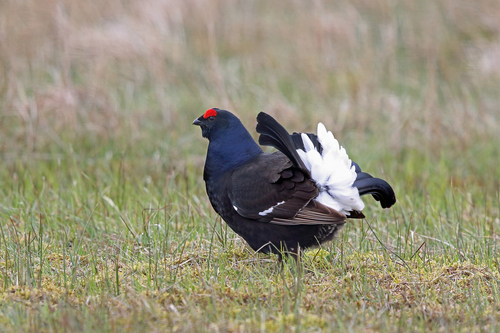
クロライチョウ (Lyrurus tetrix) クロライチョウ
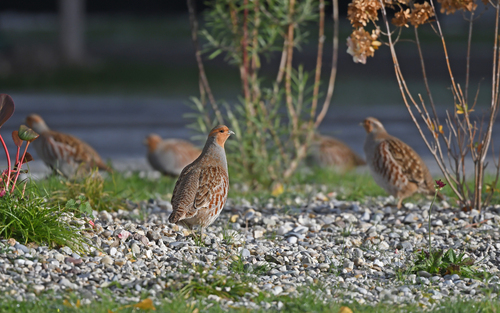
ヨーロッパヤマウズラ (Perdix perdix) ヨーロッパヤマウズラ

メディア

読み込み中…

要点

The most reliable field mark to separate Black Grouse from Grey Partridge is size and structure: Black Grouse is much larger, with a long, lyre-shaped tail (especially in males), and a striking contrast of black and white in plumage, while Grey Partridge is compact, round-bodied, and subtly patterned in browns and greys. In flight, Black Grouse males show a bold white wing bar and lyre-shaped tail, while Grey Partridge has rounded wings and lacks strong wing patterning. Females of both are more cryptic, but Black Grouse hens are still much larger and longer-tailed than any partridge. If you see a large, blackish bird with a long, fanned tail, it is not a partridge; conversely, a small, round, brownish bird flushing from grassland is not a grouse.

識別のコツ

  1. Size is the first check: Black Grouse is at least twice the length and several times the mass of Grey Partridge. Even at a distance, a bird the size of a small goose is never a partridge.
  2. Tail shape in males: Black Grouse males have a long, lyre-shaped tail that is fanned during display and visible in flight; Grey Partridge has a very short, squared tail, never fanned or elongated.
  3. Plumage contrast: Adult male Black Grouse is glossy black with a blue sheen, bold white wing bar, and white undertail; Grey Partridge is sandy-brown and grey, with a rufous face and dark belly patch. Females are more cryptic, but Black Grouse hens are still larger and longer-tailed.
  4. Flight profile: Black Grouse in flight shows a strong white wing stripe (especially males) and a long, fanned tail; Grey Partridge has rounded wings, short tail, and lacks any bold wing markings.
  5. Juvenile confusion: Juvenile Grey Partridge is yellow-brown, lacking face and belly markings, but remains small and round-bodied. No age-specific upperwing marks are noted for either that would cause confusion.
  6. Behavior when flushed: Grey Partridge flushes in tight coveys, flying low and fast for a short distance, often calling; Black Grouse may flush singly or in loose groups, with a more powerful, direct flight.
  7. Perching: Black Grouse may perch in trees, especially in winter; Grey Partridge is strictly ground-dwelling and never perches.
  8. Habitat context: Black Grouse is found in moorland, steppe, and forest edge, rarely in open farmland; Grey Partridge is a farmland and grassland bird, rarely found in moor or dense forest.
  9. Voice: Listen for bubbling coos (Black Grouse) versus harsh "kieerr-ik" or "rick rick rick" (Grey Partridge).
  10. Sex differences: Male Black Grouse is unmistakable; female Black Grouse could be confused with partridge only at a distance, but is much larger and longer-tailed.
  11. In hand (not field): Female Grey Partridge has two transverse bars on the tertiary coverts (not visible in the field).
  12. Lekking display: If you see birds displaying with fanned tails on open ground at dawn, these are Black Grouse, not partridge.
  13. Bill and head: Black Grouse has a heavier, more curved bill and a larger head proportionally; Grey Partridge has a small, neat bill and rounded head.
  14. Group size: Grey Partridge often seen in coveys (family groups), especially outside breeding season; Black Grouse males may gather at leks, but otherwise less tightly grouped.
  15. Seasonal context: Both species are resident, but Black Grouse may be more visible in winter when perched in trees; Grey Partridge remains in open fields year-round.

大きさ

Black Grouse is dramatically larger: males reach 60 cm in length and average over 1 kg in mass, with females still about 45 cm and 750–1100 g. Grey Partridge is much smaller, only 29–31 cm long and weighing 320–600 g. Even at a distance, Black Grouse appears goose-sized compared to the pigeon-sized Grey Partridge. This size gap is consistent across all ages and sexes. In mixed company or when flushed, the difference is immediately obvious.

羽色

Adult male Black Grouse is glossy black with deep blue sheen, a bold white wing bar, and a distinctive lyre-shaped tail with long outer feathers. The undertail coverts are white and conspicuous. Females are brown and heavily barred, but still show a longer, more graduated tail than partridge. Grey Partridge of both sexes is sandy-brown and grey, with a rufous face and a dark belly patch (smaller or duller in females). Juvenile Grey Partridge is yellow-brown overall, lacking the adult's face and belly markings. In hand, adult female partridges can be told by two transverse bars on the tertiary coverts, but this is not visible in the field. In flight, Black Grouse (especially males) shows a strong white wing stripe and long, fanned tail; Grey Partridge has rounded wings, short tail, and no bold wing markings. No age-specific upperwing pattern is noted for either species that would cause confusion in flight.

行動

Black Grouse is often seen displaying on open ground (leks), with males fanning tails and posturing; outside display, they may perch in trees or move through moorland and forest edge. Grey Partridge is strictly terrestrial, rarely perching, and typically flushes in a tight covey, flying low and fast for a short distance before dropping back into cover. Black Grouse flight is more powerful and direct, while Grey Partridge flight is rapid but short, with rounded wings and a whirring takeoff.

生息環境

Black Grouse prefers moorland, steppe, and forest edges, often near dense woodland, and winters in coniferous forests. Grey Partridge is a farmland and grassland specialist, favoring open fields, meadows, and agricultural margins, rarely venturing into dense woodland or moorland. If you find the bird in open farmland or cereal fields, Grey Partridge is far more likely; in upland moor or forest edge, Black Grouse is expected.

声

Black Grouse males produce a long, bubbling coo or murmur during display, quite unlike the partridge's calls. Grey Partridge gives a harsh, high-pitched "kieerr-ik" and, when flushed, a repeated "rick rick rick". The partridge's calls are sharper and more abrupt, while Black Grouse sounds are lower-pitched and more resonant. These vocalizations are distinctive if heard well.

より良い説明を送る

比較と同じ項目を使ってください。文章はすぐに公開されます。

The most reliable field mark to separate Black Grouse from Grey Partridge is size and structure: Black Grouse is much larger, with a long, lyre-shaped tail (especially in males), and a striking contrast of black and white in plumage, while Grey Partridge is compact, round-bodied, and subtly patterned in browns and greys. In flight, Black Grouse males show a bold white wing bar and lyre-shaped tail, while Grey Partridge has rounded wings and lacks strong wing patterning. Females of both are more cryptic, but Black Grouse hens are still much larger and longer-tailed than any partridge. If you see a large, blackish bird with a long, fanned tail, it is not a partridge; conversely, a small, round, brownish bird flushing from grassland is not a grouse.

  1. Size is the first check: Black Grouse is at least twice the length and several times the mass of Grey Partridge. Even at a distance, a bird the size of a small goose is never a partridge.
  2. Tail shape in males: Black Grouse males have a long, lyre-shaped tail that is fanned during display and visible in flight; Grey Partridge has a very short, squared tail, never fanned or elongated.
  3. Plumage contrast: Adult male Black Grouse is glossy black with a blue sheen, bold white wing bar, and white undertail; Grey Partridge is sandy-brown and grey, with a rufous face and dark belly patch. Females are more cryptic, but Black Grouse hens are still larger and longer-tailed.
  4. Flight profile: Black Grouse in flight shows a strong white wing stripe (especially males) and a long, fanned tail; Grey Partridge has rounded wings, short tail, and lacks any bold wing markings.
  5. Juvenile confusion: Juvenile Grey Partridge is yellow-brown, lacking face and belly markings, but remains small and round-bodied. No age-specific upperwing marks are noted for either that would cause confusion.
  6. Behavior when flushed: Grey Partridge flushes in tight coveys, flying low and fast for a short distance, often calling; Black Grouse may flush singly or in loose groups, with a more powerful, direct flight.
  7. Perching: Black Grouse may perch in trees, especially in winter; Grey Partridge is strictly ground-dwelling and never perches.
  8. Habitat context: Black Grouse is found in moorland, steppe, and forest edge, rarely in open farmland; Grey Partridge is a farmland and grassland bird, rarely found in moor or dense forest.
  9. Voice: Listen for bubbling coos (Black Grouse) versus harsh "kieerr-ik" or "rick rick rick" (Grey Partridge).
  10. Sex differences: Male Black Grouse is unmistakable; female Black Grouse could be confused with partridge only at a distance, but is much larger and longer-tailed.
  11. In hand (not field): Female Grey Partridge has two transverse bars on the tertiary coverts (not visible in the field).
  12. Lekking display: If you see birds displaying with fanned tails on open ground at dawn, these are Black Grouse, not partridge.
  13. Bill and head: Black Grouse has a heavier, more curved bill and a larger head proportionally; Grey Partridge has a small, neat bill and rounded head.
  14. Group size: Grey Partridge often seen in coveys (family groups), especially outside breeding season; Black Grouse males may gather at leks, but otherwise less tightly grouped.
  15. Seasonal context: Both species are resident, but Black Grouse may be more visible in winter when perched in trees; Grey Partridge remains in open fields year-round.

Black Grouse is dramatically larger: males reach 60 cm in length and average over 1 kg in mass, with females still about 45 cm and 750–1100 g. Grey Partridge is much smaller, only 29–31 cm long and weighing 320–600 g. Even at a distance, Black Grouse appears goose-sized compared to the pigeon-sized Grey Partridge. This size gap is consistent across all ages and sexes. In mixed company or when flushed, the difference is immediately obvious.

Adult male Black Grouse is glossy black with deep blue sheen, a bold white wing bar, and a distinctive lyre-shaped tail with long outer feathers. The undertail coverts are white and conspicuous. Females are brown and heavily barred, but still show a longer, more graduated tail than partridge. Grey Partridge of both sexes is sandy-brown and grey, with a rufous face and a dark belly patch (smaller or duller in females). Juvenile Grey Partridge is yellow-brown overall, lacking the adult's face and belly markings. In hand, adult female partridges can be told by two transverse bars on the tertiary coverts, but this is not visible in the field. In flight, Black Grouse (especially males) shows a strong white wing stripe and long, fanned tail; Grey Partridge has rounded wings, short tail, and no bold wing markings. No age-specific upperwing pattern is noted for either species that would cause confusion in flight.

Black Grouse is often seen displaying on open ground (leks), with males fanning tails and posturing; outside display, they may perch in trees or move through moorland and forest edge. Grey Partridge is strictly terrestrial, rarely perching, and typically flushes in a tight covey, flying low and fast for a short distance before dropping back into cover. Black Grouse flight is more powerful and direct, while Grey Partridge flight is rapid but short, with rounded wings and a whirring takeoff.

Black Grouse prefers moorland, steppe, and forest edges, often near dense woodland, and winters in coniferous forests. Grey Partridge is a farmland and grassland specialist, favoring open fields, meadows, and agricultural margins, rarely venturing into dense woodland or moorland. If you find the bird in open farmland or cereal fields, Grey Partridge is far more likely; in upland moor or forest edge, Black Grouse is expected.

Black Grouse males produce a long, bubbling coo or murmur during display, quite unlike the partridge's calls. Grey Partridge gives a harsh, high-pitched "kieerr-ik" and, when flushed, a repeated "rick rick rick". The partridge's calls are sharper and more abrupt, while Black Grouse sounds are lower-pitched and more resonant. These vocalizations are distinctive if heard well.

変更を破棄しますか?

保存していない編集があります。今離れると失われます。

クロライチョウ · ヨーロッパヤマウズラ · 苦手な鳥