

Motmot

Black-eared Barbet 対 キホオゴシキドリ

Psilopogon duvaucelii 対 Psilopogon chrysopogon

Black-eared Barbetとキホオゴシキドリのクイズ
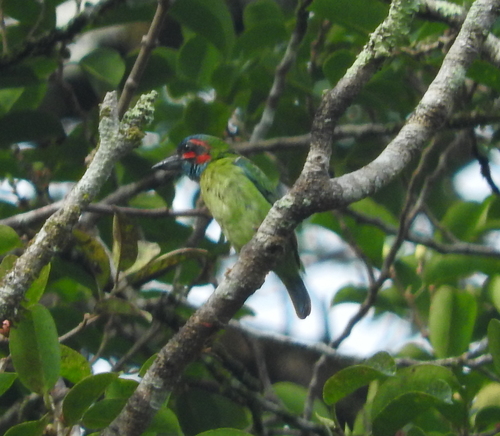
Black-eared Barbet (Psilopogon duvaucelii) Black-eared Barbet
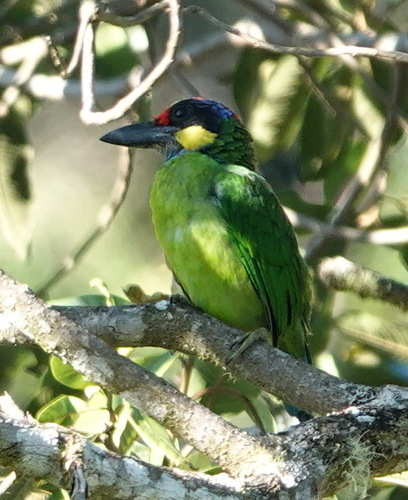
キホオゴシキドリ (Psilopogon chrysopogon) キホオゴシキドリ

メディア

読み込み中…

要点

Black-eared Barbetとキホオゴシキドリを区別する最も信頼できるフィールドマークはサイズです:キホオゴシキドリは劇的に大きく、ずっしりとした体形で、明らかに重いくちばしを持っています。近くで見ると、Black-eared Barbetは目の間に特徴的な黒い筋と目の下に赤い斑点を示し、キホオゴシキドリは太い黄色の口ひげのストライプと淡い黄色の前頭部を持っています。両種は全体的に緑色で青い喉を持っていますが、顔の模様と比率は著しく異なります。両種の幼鳥は鈍い色合いですが、サイズの差と顔のマーキングは依然として有用です。

識別のコツ

  1. Size is the fastest check: キホオゴシキドリはほぼ2倍の長さで、Black-eared Barbetよりも数倍重いです。鳥が大きくてずっしりしているように見える場合は、キホオゴシキドリを疑ってください。
  2. Bill size and color: キホオゴシキドリは大きくて厚いくちばしを持っています(雌は淡い青みがかった色です)、一方、Black-earedのくちばしは小さくて黒いです。これは遠くからでも見えます。
  3. Facial pattern (all ages): Black-eared Barbetは目の間に明確な黒い筋と目の下に黒に囲まれた赤い斑点を示します。キホオゴシキドリは黒い筋がありませんが、太い黄色の口ひげ("ひげ")と淡い黄色の前頭部を持っています。
  4. Blue on face: 両方とも青い喉を持っていますが、キホオゴシキドリは目の周りや頭にも青があり、くちばしの近くに赤い斑点があります。Black-earedの青は喉とうなじに限られています。
  5. Red on face: Black-earedの赤は目の下の斑点に制限されています;キホオゴシキドリはくちばしの両側に赤い斑点と頭に小さな赤い斑点を持っています。
  6. Moustachial stripe: キホオゴシキドリだけが、くちばしから耳にかけて強い黄色のひげを持っており、これはどの年齢でも重要なフィールドマークです。
  7. Forecrown color: キホオゴシキドリは淡い黄色の前頭部を持ち、Black-earedの緑の冠と対照的です。
  8. Plumage brightness in immatures: 両種は幼鳥の時に鈍い色合いですが、キホオゴシキドリの幼鳥は黄色と青の顔のトーンをいくつか保持しています;Black-earedの顔の筋は良いマークとして残ります。
  9. Sex differences: 両方ともほとんど似ていますが、雌のキホオゴシキドリは淡い、くすんだ青みがかったくちばしを持っています。Black-earedはフィールドで強い性差を示しません。
  10. Habitat context: 1,200 m以下の低木地帯や森林の端では、Black-earedがより可能性が高いです。特に1,200 m以上の密林では、キホオゴシキドリがより可能性が高いですが、重複は広範です。
  11. Perched vs. in flight: 特徴的な飛行や翼のパターンの違いは記述されていません;サイズと顔に頼ってください。
  12. Group context: グループを見ていて、一羽の鳥がはるかに小さい場合、それはキホオゴシキドリが混ざっているBlack-earedである可能性が高いです、またはその逆です。
  13. Bill color in females: 淡い青みがかったくちばしを見た場合、それは雌のキホオゴシキドリです;Black-earedのくちばしは常に黒です。
  14. Red below eye: 赤が目の下だけで黒に囲まれている場合、それはBlack-earedです;赤がくちばしの側にある場合、それはキホオゴシキドリです。
  15. When in doubt, size and face together: 顔の模様がよく見えない場合、サイズを主な手がかりとして使用し、その後、黄色のひげや黒い目の筋を確認として探してください。

大きさ

キホオゴシキドリはBlack-eared Barbet(16–17 cm、26.3–37 g [wikipedia])と比較して、はるかに大きい(約30 cm、110–215 g、平均質量151 g [wikidata])です。このサイズの違いはフィールドで明らかで、特に両方が同時に見られたり、馴染みのある物体の近くにいる場合に顕著です。キホオゴシキドリはずっしりとした印象を与え、相対的に大きな頭とくちばしを持っています。Black-eared Barbetはコンパクトで明らかに軽く、長さのほぼ半分、質量の一部です。

羽色

どちらの種についても年齢特有の上翼や飛行パターンの違いは記述されていません;両方とも全体的に緑色で、強い翼のマーキングはありません。すべての年齢において、顔に焦点を当ててください:Black-eared Barbetは目の間に黒い筋、黒いくちばし、目の下に黒に囲まれた赤い斑点を持っています。その喉とうなじは青です。キホオゴシキドリは耳にまで伸びる黄色の口ひげ、淡い黄色の前頭部、青い喉、目の周りの青、くちばしの両側に赤い斑点を持っています。幼いキホオゴシキドリは鈍い色合いですが、黄色のひげと青の顔のトーンを保持しています;幼いBlack-eared Barbetは詳細には記述されていませんが、黒い顔の筋を保持していると予想されます。両性は似ていますが、雌のキホオゴシキドリは淡い、くすんだ青みがかったくちばしを持っています。

行動

特定の行動の違いはソースに記述されていません。両種は典型的なバービットで、しばしば樹冠や亜樹冠に止まっているのが見られ、時には見られる前に聞こえます。飛行スタイルや採餌行動の違いは記載されていません。

生息環境

両種は分布が重なり(マレー半島、スマトラ、ボルネオ)森林に生息していますが、Black-eared Barbetは低木地帯も利用し、1,200 mの標高まで見られます。一方、キホオゴシキドリはより厳密に森林の鳥で、1,500 mまで分布します。1,200 m以下の混合またはエッジの生息地では、Black-eared Barbetがより可能性が高いですが、両方が生息する場所では生息地だけでは診断できません。

より良い説明を送る

比較と同じ項目を使ってください。文章はすぐに公開されます。

The most reliable field mark to separate Black-eared Barbet from Gold-whiskered Barbet is size: Gold-whiskered is dramatically larger and bulkier, with a noticeably heavier bill. In close views, Black-eared Barbet shows a distinctive black streak between the eyes and red spots below the eyes, while Gold-whiskered Barbet features a bold yellow moustachial stripe and a pale yellow forecrown. Both species are green overall with blue throats, but the facial pattern and proportions are strikingly different. Immature birds of both species are duller, but the size gap and facial markings remain useful.

  1. Size is the fastest check: Gold-whiskered Barbet is nearly twice as long and several times heavier than Black-eared Barbet. If the bird looks big and chunky, suspect Gold-whiskered.
  2. Bill size and color: Gold-whiskered has a large, thick bill (female's is paler bluish), while Black-eared's bill is smaller and black. This is visible even at a distance.
  3. Facial pattern (all ages): Black-eared Barbet shows a clear black streak between the eyes and red spots below the eyes, surrounded by black. Gold-whiskered lacks the black streak but has a bold yellow moustache ("whisker") and a pale yellow forecrown.
  4. Blue on face: Both have blue throats, but Gold-whiskered also has blue around the eyes and on the head, plus red patches near the bill. Black-eared's blue is limited to throat and nape.
  5. Red on face: Black-eared's red is restricted to spots below the eyes; Gold-whiskered has red patches on both sides of the beak and small red spots on the head.
  6. Moustachial stripe: Only Gold-whiskered Barbet has a strong yellow whisker running from the bill to the ear, a key field mark at any age.
  7. Forecrown color: Gold-whiskered has a pale yellow forecrown, contrasting with the green crown of Black-eared.
  8. Plumage brightness in immatures: Both species are duller when immature, but Gold-whiskered juveniles retain some yellow and blue facial tones; Black-eared's facial streak remains a good mark.
  9. Sex differences: Both are mostly similar, but female Gold-whiskered Barbets have a paler, dusky bluish bill. Black-eared shows no strong sexual dimorphism in the field.
  10. Habitat context: In shrubland or forest edge below 1,200 m, Black-eared is more likely. In dense forest, especially above 1,200 m, Gold-whiskered is more likely, but overlap is broad.
  11. Perched vs. in flight: No distinctive flight or wing pattern differences are described; rely on size and face.
  12. Group context: If you see a group and one bird is much smaller, it's likely Black-eared among Gold-whiskered, or vice versa.
  13. Bill color in females: If you see a pale, bluish bill, it's a female Gold-whiskered; Black-eared's bill is always black.
  14. Red below eye: If the red is only below the eye and surrounded by black, it's Black-eared; if red is on the sides of the beak, it's Gold-whiskered.
  15. When in doubt, size and face together: If you can't see the facial pattern well, use size as your primary clue, then look for the yellow whisker or black eye-streak as confirmation.

Gold-whiskered Barbet is much larger (about 30 cm long, 110–215 g, average mass 151 g [wikidata]) compared to Black-eared Barbet (16–17 cm, 26.3–37 g [wikipedia]). This size difference is obvious in the field, especially if both are seen at the same time or near familiar objects. Gold-whiskered appears much bulkier, with a proportionally larger head and bill. Black-eared Barbet is compact and noticeably lighter, almost half the length and a fraction of the mass.

No age-specific upperwing or flight pattern differences are described for either species; both are green overall and lack strong wing markings. For all ages, focus on the face: Black-eared Barbet has a black streak between the eyes, a black beak, and red spots below the eyes encircled by black. Its throat and nape are blue. Gold-whiskered Barbet has a yellow moustache extending to the ear, a pale yellow forecrown, blue throat, and blue around the eyes, with red patches on both sides of the beak. Immature Gold-whiskered Barbets are duller but retain the yellow whisker and blue facial tones; immature Black-eared Barbets are not described in detail but are expected to keep the black facial streak. Both sexes are similar, but female Gold-whiskered Barbets have a paler, dusky bluish bill.

No specific behavioral differences are described in the sources. Both species are typical barbets, often seen perched in the canopy or subcanopy and sometimes heard before seen. No differences in flight style or feeding behavior are noted.

Both species overlap in range (Peninsular Malaysia, Sumatra, Borneo) and are found in forests, but Black-eared Barbet also uses shrubland and is found up to 1,200 m elevation, while Gold-whiskered Barbet is more strictly a forest bird and ranges up to 1,500 m. In mixed or edge habitats below 1,200 m, Black-eared Barbet is more likely, but habitat alone is not diagnostic where both occur.

変更を破棄しますか?

保存していない編集があります。今離れると失われます。

Black-eared Barbet · キホオゴシキドリ · 苦手な鳥