

コヨシキリ 対 マンシュウイナダヨシキリ
Acrocephalus bistrigiceps 対 Acrocephalus tangorum
コヨシキリとマンシュウイナダヨシキリのクイズ
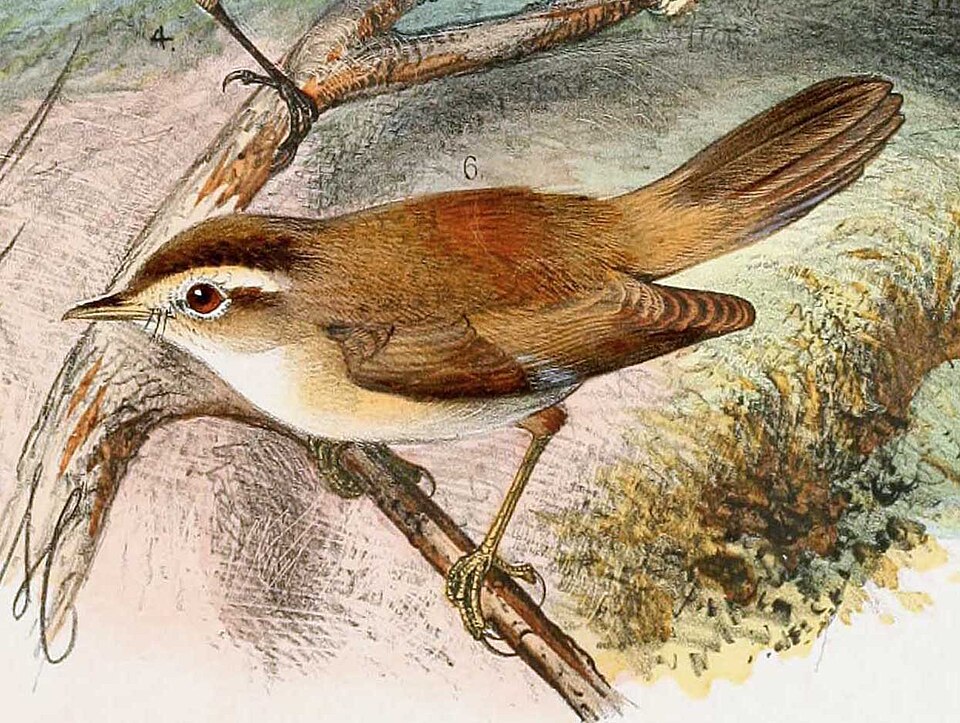 コヨシキリ
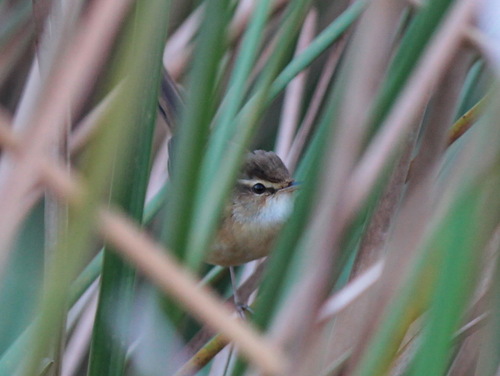 マンシュウイナダヨシキリ
要点
Separating Black-browed Reed Warbler from Manchurian Reed Warbler in the field is challenging, as both are Acrocephalus marsh warblers with similar structure and habitat preferences. The most reliable field mark—if visible—is the distinctive blackish brow (supercilium) of the Black-browed Reed Warbler, which is lacking in Manchurian. Both species forage low in dense reeds, making views brief and often obscured. Juvenile and immature plumages, as well as upperwing patterns in flight, are not described in detail in the available notes, so focus on head pattern and overall impression. Structural and behavioral differences are subtle and not well documented for field separation.
識別のコツ
- Look for the blackish brow (supercilium): Black-browed Reed Warbler shows a distinct dark line above the eye, which is the single best field mark. Manchurian Reed Warbler lacks this feature and has a plainer face.
- Head pattern in profile: When the bird is side-on, check for the contrast between the dark brow and pale supercilium in Black-browed; Manchurian appears more uniformly plain-faced.
- Avoid relying on wing or tail pattern: No distinctive upperwing or tail marks are described for either species at any age, so do not use these features for separation.
- Plumage tone and contrast: Both species are similarly brown above and pale below, with no strong contrast or rufous tones to separate them.
- Foraging behavior: Both species skulk low in reeds, so behavior is not a useful separator.
- Habitat overlap: Both occur in dense reed beds; habitat alone is not diagnostic.
- Juvenile and immature birds: No unique juvenile or first-winter marks are described, so rely on head pattern rather than age-specific features.
- Flight views: In brief flight glimpses, separation is extremely difficult; only a clear view of the head pattern is likely to be useful.
- Beware of worn or wet birds: The black brow of Black-browed Reed Warbler may appear less distinct in worn or wet plumage, increasing confusion.
- Do not use size: Both are similar in size and structure; size impression is not reliable.
- No song or call differences provided: Vocalizations are not described in the notes, so do not use voice for separation.
- Sexes similar: No sexual dimorphism is noted; both sexes look alike in each species.
- Contextual clues: If seen in an area where only one species is expected, use local abundance as a supporting clue, but not as a primary field mark.
- Photograph for confirmation: Given the subtlety of differences, a photo of the head pattern is the best way to confirm identification if possible.
- Consult local experts: In regions of overlap or for rare vagrants, seek expert review of any suspected Manchurian or Black-browed Reed Warbler sighting.
大きさ
No direct measurements are provided for either species in the available sources. Both are typical Acrocephalus warblers and are likely very close in size and proportions, with no reliable size-based separation in the field.
羽色
The key plumage difference is the presence of a bold, dark brow (supercilium) in the Black-browed Reed Warbler, which is absent in the Manchurian Reed Warbler. This mark is most obvious in adults but may be visible in fresh juveniles as well. Otherwise, both species have similar overall coloration typical of reed warblers—brownish upperparts and paler underparts—with no distinctive wing or tail pattern described for any age. There are no notes on age-specific upperwing or flight marks for either species, so focus on the head pattern when visible.
行動
Both species behave similarly, foraging low and often hidden within dense reed beds. They are skulking and rarely perch in the open for long. No behavioral differences are noted that would reliably separate the two in the field.
生息環境
Both species are marsh warblers found in reed beds and similar wetland habitats. The Black-browed Reed Warbler is noted to prefer undisturbed reed beds and is of conservation concern due to habitat loss. Manchurian Reed Warbler shares similar habitat preferences, and there is no practical habitat-based separation in areas where both occur.
コヨシキリ · マンシュウイナダヨシキリ · 苦手な鳥