

Motmot

アカハシリュウキュウガモ 対 タンビハリオアマツバメ

Dendrocygna autumnalis 対 Chaetura brachyura

アカハシリュウキュウガモとタンビハリオアマツバメのクイズ
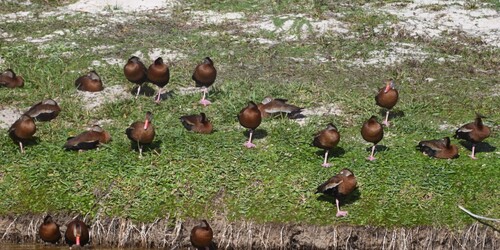
アカハシリュウキュウガモ (Dendrocygna autumnalis) アカハシリュウキュウガモ
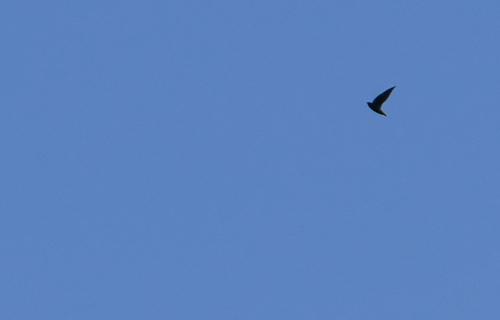
タンビハリオアマツバメ (Chaetura brachyura) タンビハリオアマツバメ

メディア

読み込み中…

要点

The most reliable field mark to separate Black-bellied Whistling-Duck from Short-tailed Swift is overall structure and jizz: the duck is a large, long-legged, long-necked waterfowl with broad wings and a pink bill, while the swift is a tiny, compact, fast-flying aerialist with long, narrow, sickle-shaped wings and a very short tail. In flight, the duck shows a bold white wing stripe (from the secondaries) and a black belly, whereas the swift is mostly dark with a pale rump and no strong wing contrast. Juvenile ducks have a duller bill and less belly contrast, but still look nothing like a swift. If you see a bird perched, only the duck will ever be sitting out in the open; swifts virtually never perch in view. Size, structure, and flight style are unmistakable when seen well.

識別のコツ

  1. Size and shape: The duck is huge and heavy-bodied, with a long neck and legs, and a broad, flat bill; the swift is tiny, compact, with a very short tail and long, narrow wings. This difference is obvious at almost any range.
  2. Flight style: Ducks fly with slow, steady wingbeats, often in loose flocks or lines; swifts are extremely fast, agile, and rarely pause, darting and swooping unpredictably.
  3. Perched vs. flying: Black-bellied Whistling-Ducks are often seen standing or perching in the open; Short-tailed Swifts are almost never seen perched except at nest sites (rarely visible to observers).
  4. Bill: The duck has a long, thick, pink bill (gray in juveniles); the swift has a tiny, barely visible bill, often not seen at all in the field.
  5. Wing pattern: In flight, the duck shows a bold white stripe across the wings (from the secondaries), visible in all ages; the swift has uniformly dark wings with no white or pale panels.
  6. Belly and tail: The duck has a black belly and tail, contrasting with chestnut sides and a gray head; the swift is dark overall with a pale rump, and no strong belly contrast.
  7. Head pattern: The duck has a pale gray head and a thin white eye-ring; the swift's head is dark, blending with the body, and lacks any eye-ring.
  8. Juvenile confusion: Juvenile ducks have a duller bill and less belly contrast but still show the white wing stripe and overall duck structure; juvenile swifts look like adults, with no white wing mark or chestnut tones.
  9. Legs and feet: The duck's long legs often dangle in flight or are visible when perched; the swift's legs are extremely short and never visible in flight.
  10. Habitat context: Ducks are seen on or near water, often in open wetlands; swifts are always in the air, often high above ground, rarely near water except incidentally.
  11. Group behavior: Ducks may be in loose flocks or pairs, often vocalizing and visible on the ground; swifts are usually in fast-moving aerial flocks or scattered individuals.
  12. Vocalizations: Not diagnostic from the provided notes, but in practice, ducks have whistling calls, while swifts give high-pitched, rapid twittering.
  13. Pitfalls: At extreme distance, a flying duck may look dark and long-winged, but the white wing stripe and slower, steadier flight are clues; swifts never show white in the wings or land in the open.
  14. Sex and season: Both species are sexually monomorphic; no seasonal plumage differences relevant to separation.
  15. If uncertain: Focus on size, structure, and flight style first—these are always reliable for separating these two species, regardless of age or season.

大きさ

Black-bellied Whistling-Duck is vastly larger, with a body mass around 831 g and length of 47–56 cm, compared to the Short-tailed Swift's tiny 10.5 cm length and 20 g weight. The duck is about four to five times longer and over 40 times heavier than the swift. Even at a distance, the duck appears goose-sized, while the swift is smaller than most sparrows. The duck's wings are broad and rounded, suited for slower, direct flight; the swift's wings are long, narrow, and sickle-shaped, built for rapid, agile flight.

羽色

No age of Short-tailed Swift ever shows the bold white wing stripe or black belly of Black-bellied Whistling-Duck. Adult and juvenile ducks both have a pale gray head, chestnut back and neck, black belly and tail, and a prominent white patch in the wings (from the secondaries), visible in flight and sometimes at rest. Juvenile ducks have a gray bill and less belly contrast but retain the overall pattern. The swift is uniformly dark with a pale rump and tail, with little contrast between rump and tail, and no white in the wings. Swifts never show a white wing bar or chestnut tones. The duck's white eye-ring is also absent in the swift. In summary, the duck is boldly patterned with strong color contrasts, while the swift is more uniformly dark with only a pale rump.

行動

Black-bellied Whistling-Ducks are often seen walking, standing, or perching upright on open ground, logs, or even rooftops, sometimes in groups. They feed by dabbling or grazing, and often fly in loose flocks with slow, steady wingbeats. Short-tailed Swifts are almost always seen in rapid, continuous flight, high overhead or swooping low, never perching in the open. Their flight is fast, direct, and highly maneuverable, with quick, flickering wingbeats. Swifts do not walk or perch visibly except when nesting, which is rarely observed.

生息環境

Black-bellied Whistling-Duck is found in wetlands, lakes, ponds, flooded fields, and sometimes urban parks with water, often near trees or nest boxes. They are usually associated with water and may be seen resting on the ground or low perches. Short-tailed Swift is an aerial insectivore, found over a wide range of open habitats including forests, savannas, and urban areas, but always seen flying and never on the ground or water. If the bird is seen on water or walking, it is the duck; if only seen in rapid flight high above, it may be the swift.

より良い説明を送る

比較と同じ項目を使ってください。文章はすぐに公開されます。

The most reliable field mark to separate Black-bellied Whistling-Duck from Short-tailed Swift is overall structure and jizz: the duck is a large, long-legged, long-necked waterfowl with broad wings and a pink bill, while the swift is a tiny, compact, fast-flying aerialist with long, narrow, sickle-shaped wings and a very short tail. In flight, the duck shows a bold white wing stripe (from the secondaries) and a black belly, whereas the swift is mostly dark with a pale rump and no strong wing contrast. Juvenile ducks have a duller bill and less belly contrast, but still look nothing like a swift. If you see a bird perched, only the duck will ever be sitting out in the open; swifts virtually never perch in view. Size, structure, and flight style are unmistakable when seen well.

  1. Size and shape: The duck is huge and heavy-bodied, with a long neck and legs, and a broad, flat bill; the swift is tiny, compact, with a very short tail and long, narrow wings. This difference is obvious at almost any range.
  2. Flight style: Ducks fly with slow, steady wingbeats, often in loose flocks or lines; swifts are extremely fast, agile, and rarely pause, darting and swooping unpredictably.
  3. Perched vs. flying: Black-bellied Whistling-Ducks are often seen standing or perching in the open; Short-tailed Swifts are almost never seen perched except at nest sites (rarely visible to observers).
  4. Bill: The duck has a long, thick, pink bill (gray in juveniles); the swift has a tiny, barely visible bill, often not seen at all in the field.
  5. Wing pattern: In flight, the duck shows a bold white stripe across the wings (from the secondaries), visible in all ages; the swift has uniformly dark wings with no white or pale panels.
  6. Belly and tail: The duck has a black belly and tail, contrasting with chestnut sides and a gray head; the swift is dark overall with a pale rump, and no strong belly contrast.
  7. Head pattern: The duck has a pale gray head and a thin white eye-ring; the swift's head is dark, blending with the body, and lacks any eye-ring.
  8. Juvenile confusion: Juvenile ducks have a duller bill and less belly contrast but still show the white wing stripe and overall duck structure; juvenile swifts look like adults, with no white wing mark or chestnut tones.
  9. Legs and feet: The duck's long legs often dangle in flight or are visible when perched; the swift's legs are extremely short and never visible in flight.
  10. Habitat context: Ducks are seen on or near water, often in open wetlands; swifts are always in the air, often high above ground, rarely near water except incidentally.
  11. Group behavior: Ducks may be in loose flocks or pairs, often vocalizing and visible on the ground; swifts are usually in fast-moving aerial flocks or scattered individuals.
  12. Vocalizations: Not diagnostic from the provided notes, but in practice, ducks have whistling calls, while swifts give high-pitched, rapid twittering.
  13. Pitfalls: At extreme distance, a flying duck may look dark and long-winged, but the white wing stripe and slower, steadier flight are clues; swifts never show white in the wings or land in the open.
  14. Sex and season: Both species are sexually monomorphic; no seasonal plumage differences relevant to separation.
  15. If uncertain: Focus on size, structure, and flight style first—these are always reliable for separating these two species, regardless of age or season.

Black-bellied Whistling-Duck is vastly larger, with a body mass around 831 g and length of 47–56 cm, compared to the Short-tailed Swift's tiny 10.5 cm length and 20 g weight. The duck is about four to five times longer and over 40 times heavier than the swift. Even at a distance, the duck appears goose-sized, while the swift is smaller than most sparrows. The duck's wings are broad and rounded, suited for slower, direct flight; the swift's wings are long, narrow, and sickle-shaped, built for rapid, agile flight.

No age of Short-tailed Swift ever shows the bold white wing stripe or black belly of Black-bellied Whistling-Duck. Adult and juvenile ducks both have a pale gray head, chestnut back and neck, black belly and tail, and a prominent white patch in the wings (from the secondaries), visible in flight and sometimes at rest. Juvenile ducks have a gray bill and less belly contrast but retain the overall pattern. The swift is uniformly dark with a pale rump and tail, with little contrast between rump and tail, and no white in the wings. Swifts never show a white wing bar or chestnut tones. The duck's white eye-ring is also absent in the swift. In summary, the duck is boldly patterned with strong color contrasts, while the swift is more uniformly dark with only a pale rump.

Black-bellied Whistling-Ducks are often seen walking, standing, or perching upright on open ground, logs, or even rooftops, sometimes in groups. They feed by dabbling or grazing, and often fly in loose flocks with slow, steady wingbeats. Short-tailed Swifts are almost always seen in rapid, continuous flight, high overhead or swooping low, never perching in the open. Their flight is fast, direct, and highly maneuverable, with quick, flickering wingbeats. Swifts do not walk or perch visibly except when nesting, which is rarely observed.

Black-bellied Whistling-Duck is found in wetlands, lakes, ponds, flooded fields, and sometimes urban parks with water, often near trees or nest boxes. They are usually associated with water and may be seen resting on the ground or low perches. Short-tailed Swift is an aerial insectivore, found over a wide range of open habitats including forests, savannas, and urban areas, but always seen flying and never on the ground or water. If the bird is seen on water or walking, it is the duck; if only seen in rapid flight high above, it may be the swift.

変更を破棄しますか?

保存していない編集があります。今離れると失われます。

アカハシリュウキュウガモ · タンビハリオアマツバメ · 苦手な鳥