

Motmot

バードヒメドリ 対 ヘンスローヒメドリ

Centronyx bairdii 対 Centronyx henslowii

バードヒメドリとヘンスローヒメドリのクイズ
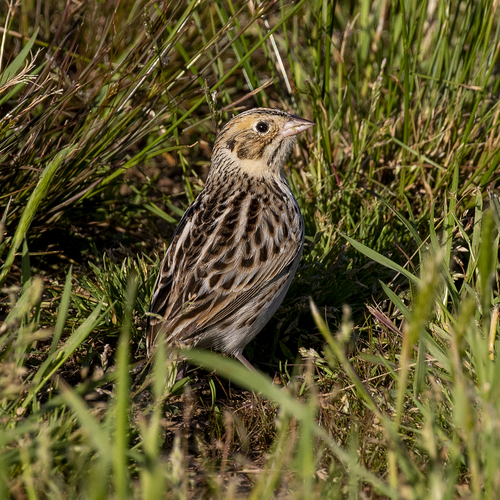
バードヒメドリ (Centronyx bairdii) バードヒメドリ
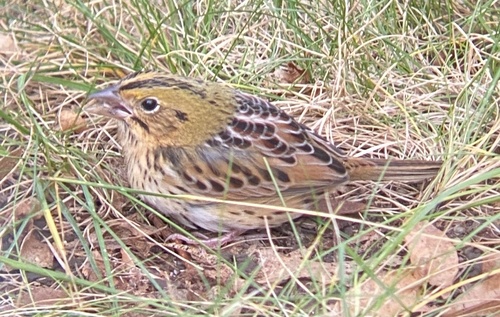
ヘンスローヒメドリ (Centronyx henslowii) ヘンスローヒメドリ

メディア

読み込み中…

要点

バードヒメドリとヘンスローヒメドリを区別する最も信頼できるフィールドマークは顔の色とパターンです:バードヒメドリは広いオーカーの中央冠ストライプを持つ黄褐色の顔を示し、ヘンスローヒメドリは明確なオリーブトーンの顔と首を持っています。さらに、ヘンスローヒメドリは錆色の翼と短くて暗い分岐した尾を持ち、バードヒメドリはこれらの特徴がありません。幼鳥と成鳥の羽毛は両者で似ていますが、バードヒメドリは一般的に大きくて重い傾向があります。両種は草原の縞模様の茶色いヒメドリですが、特に止まっている鳥においては頭のパターンと翼の色に注意を払うことが重要です。

識別のコツ

  1. 顔の色が重要です: バードヒメドリは黄褐色の顔を持ち、ヘンスローヒメドリはオリーブトーンの顔と首を示します。これは、止まっている鳥を区別する最も早い方法です。
  2. 冠ストライプ: バードヒメドリは広いオーカー(黄褐色)の中央冠ストライプを持ち、ヘンスローヒメドリは暗い線に挟まれた淡い、狭いストライプを持っています。オーカーのトーンはバードヒメドリに特有です。
  3. 翼の色: ヘンスローヒメドリは錆色の翼を持ち、止まっている時も飛んでいる時も見えます。バードヒメドリの翼は無地の茶色で、赤褐色や錆色のトーンはありません。
  4. 尾の形: ヘンスローヒメドリは短くて暗い、わずかに分岐した尾を持ち、バードヒメドリの尾は長くてあまり明確に分岐していません。これは微妙ですが、飛行中に役立つことがあります。
  5. 胸の縞模様: 両者は縞模様のある胸を持っていますが、バードヒメドリの縞は狭くて胸に限られ、ヘンスローヒメドリの縞は淡い茶色で、より拡散して見えることがあります。
  6. 腹部と喉: ヘンスローヒメドリは白い腹部と喉を持ち、縞模様の胸と対照的です。バードヒメドリは下部がより均一に色付いています。
  7. 幼鳥の羽毛: 両方の幼鳥は成鳥に似ていますが、バードヒメドリの幼鳥は全体的により重い縞模様を持つことがあります。オーカーの冠ストライプはすべての年齢で良いマークです。
  8. サイズと構造: バードヒメドリは大きくて重く、翼幅も長いです。直接比較すると、より大きく見えることがありますが、これは文脈なしでは常に信頼できるわけではありません。
  9. オレンジのトーンはなし: 両種とも顔にオレンジ色は見られません(シロスジヒメドリとは異なります);暖かい光や草の反射に惑わされないでください。
  10. バードヒメドリには緑がかったトーンはなし: ヘンスローヒメドリだけが顔と首に緑がかったオリーブの洗いを示し、バードヒメドリは常に黄褐色です。
  11. バードヒメドリには錆色の翼がない: 翼の覆い羽に錆色や赤褐色のトーンが見られた場合、それはヘンスローヒメドリです。
  12. 生息地の文脈: 北部大平原にいる場合、バードヒメドリの可能性が高いです;中西部や東部、特に雑草の生えたフィールドでは、ヘンスローヒメドリの可能性が高いです。ただし、確実な識別のために範囲だけに頼らないでください。
  13. 強い性差はなし: 両種は両性で同じように見えます;性別を識別の手がかりとして使用しないでください。
  14. 止まっている時と飛んでいる時の視点: ほとんどのフィールドマーク(顔、冠、翼の色)は止まっている時と飛んでいる時の両方で見えますが、尾の形は飛行中に判断しやすいです。
  15. 縞模様のパターン: バードヒメドリはより限られた、整然とした胸の縞模様を持ち、ヘンスローヒメドリは胸全体により拡散した縞模様に見えることがあります。

大きさ

バードヒメドリはヘンスローヒメドリよりも明らかに大きくて重いです。バードヒメドリの平均体重は約18.4 gで、長さは約12 cm、翼幅は約23 cmです。ヘンスローヒメドリは軽く(11–14 g)、やや短く(11–13 cm)、翼幅も小さい(16–20 cm)です。フィールドでは、バードヒメドリはより大きく見え、長い翼を持っているように見えることがありますが、サイズの重複や姿勢によって微妙に見えることがあります。

羽色

幼鳥と成鳥のバードヒメドリはどちらも黄褐色の顔を持ち、微妙な黒いマークと広いオーカーの中央冠ストライプを示します。彼らの胸は狭く縞模様があり、全体的な印象は清潔で温かみのある茶色のヒメドリです。幼鳥はより重い縞模様を持つことがありますが、オーカーの冠ストライプは保持します。対照的に、ヘンスローヒメドリはオリーブ色の顔と首(黄褐色ではない)を持ち、淡い冠ストライプは暗いストライプに挟まれています。上面は茶色の縞模様がありますが、翼は明確に錆色で、尾は短くて暗く、わずかに分岐しています。胸は淡い茶色の縞模様がありますが、腹部と喉は白です。飛行中または休んでいる時、ヘンスローヒメドリのオリーブ色の顔と錆色の翼は強い手がかりです。両種とも顔に強いオレンジ色のトーンは見られず(シロスジヒメドリとは異なります)、両者ともサバンナシトドの重い縞模様と白い冠を欠いています。

行動

両種は秘密主義的な草原のヒメドリで、しばしば密な植生の中で隠れ、近距離で飛び立ちます。情報源には強い行動の違いは記載されていませんが、バードヒメドリはその大きさのためにやや頑丈で動きが鈍いように見えることがあります。

生息環境

両者は草原の専門家ですが、バードヒメドリは北部大平原の草原(カナダ、北部アメリカ、冬にはメキシコ)に生息し、ヘンスローヒメドリはアメリカ東部の内陸のフィールドや草地で繁殖し、南東部アメリカで冬を越します。地域の豊富さや範囲が役立つことがありますが、両者は移動や限界生息地で重複することがあります。

より良い説明を送る

比較と同じ項目を使ってください。文章はすぐに公開されます。

The most reliable field mark to separate Baird's Sparrow from Henslow's Sparrow is the color and pattern of the face: Baird's shows a yellow-brown face with a broad ochre central crown stripe, while Henslow's has a distinct olive-toned face and neck. In addition, Henslow's has rust-colored wings and a short, dark, forked tail, while Baird's lacks these features. Juvenile and adult plumages are similar in both, but Baird's tends to be larger and heavier. Both species are streaked brown sparrows of grasslands, but careful attention to head pattern and wing color is key, especially on perched birds.

  1. Face color is critical: Baird's Sparrow has a yellow-brown face, while Henslow's Sparrow shows an olive-toned face and neck. This is often the fastest way to separate them on perched birds.
  2. Crown stripe: Baird's has a broad ochre (yellowish-brown) central crown stripe; Henslow's has a paler, narrower stripe flanked by dark lines. The ochre tone is unique to Baird's.
  3. Wing color: Henslow's Sparrow has rust-colored wings, visible both perched and in flight. Baird's Sparrow's wings are plain brown, lacking any rufous or rust tones.
  4. Tail shape: Henslow's has a short, dark, slightly forked tail; Baird's tail is longer and less distinctly forked. This is subtle but can help in flight.
  5. Breast streaking: Both have streaked breasts, but Baird's streaks are narrow and limited to the chest, while Henslow's are light brown and may appear more diffuse.
  6. Belly and throat: Henslow's has a white belly and throat, contrasting with the streaked breast; Baird's is more evenly colored below.
  7. Juvenile plumage: Both juveniles are similar to adults, but Baird's juveniles may be more heavily streaked overall. The ochre crown stripe remains a good mark at all ages.
  8. Size and structure: Baird's is larger and heavier, with a longer wingspan. In direct comparison, it may look bulkier, but this is not always reliable without context.
  9. No orange tones: Neither species shows orange on the face (unlike LeConte's Sparrow); don't be misled by warm light or grass reflections.
  10. No greenish tones in Baird's: Only Henslow's shows a greenish-olive wash to the face and neck; Baird's is always yellow-brown.
  11. Rusty wings absent in Baird's: If you see rusty or rufous tones in the wing coverts, it's Henslow's.
  12. Habitat context: If you are in the northern Great Plains, Baird's is more likely; in the Midwest or East, especially in weedy fields, Henslow's is more probable. However, do not rely on range alone for positive ID.
  13. No strong sexual dimorphism: Both species look the same in both sexes; do not use sex as an ID clue.
  14. Perched vs. flight views: Most field marks (face, crown, wing color) are visible both perched and in flight, but tail shape is easiest to judge in flight.
  15. Streaking pattern: Baird's has a more limited, neat chest streaking, while Henslow's can look more diffusely streaked across the breast.

Baird's Sparrow is noticeably larger and heavier than Henslow's Sparrow. Baird's averages about 18.4 g in body mass, with a length of roughly 12 cm and a wingspan near 23 cm. Henslow's is lighter (11–14 g), slightly shorter (11–13 cm), and has a smaller wingspan (16–20 cm). In the field, Baird's may appear bulkier and longer-winged, but size overlap and posture can make this subtle.

Juvenile and adult Baird's Sparrows both show a yellow-brown face with subtle black markings and a broad ochre central crown stripe. Their chest is narrowly streaked, and the overall impression is of a clean, warm-brown sparrow. Juveniles may have heavier streaking but keep the ochre crown stripe. Henslow's Sparrow, by contrast, has an olive face and neck (not yellow-brown), with a pale crown stripe flanked by dark stripes. Its upperparts are streaked brown, but the wings are distinctly rust-colored, and the tail is short, dark, and slightly forked. The breast is streaked light brown, but the belly and throat are white. In flight or at rest, the olive face and rusty wings of Henslow's are strong clues. Neither species shows strong orange tones on the face (unlike LeConte's), and both lack the heavy streaking and white crown of Savannah Sparrow.

Both species are secretive grassland sparrows that often skulk in dense vegetation and flush at close range. There is no strong behavioral difference noted in the sources, but Baird's Sparrow may appear slightly more robust and less quick-moving due to its larger size.

Both are grassland specialists, but Baird's Sparrow is found in prairies of the northern Great Plains (Canada, northern US, and into Mexico in winter), while Henslow's Sparrow breeds in fields and meadows of the interior eastern US and winters in the southeastern US. Local abundance and range may help, but both can overlap in migration or marginal habitats.

変更を破棄しますか?

保存していない編集があります。今離れると失われます。

バードヒメドリ · ヘンスローヒメドリ · 苦手な鳥