

Motmot

イワツバメ 対 ノドグロイワツバメ

Delichon dasypus 対 Delichon nipalense

イワツバメとノドグロイワツバメのクイズ
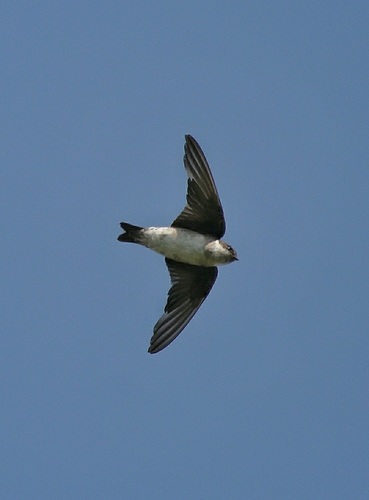
イワツバメ (Delichon dasypus) イワツバメ
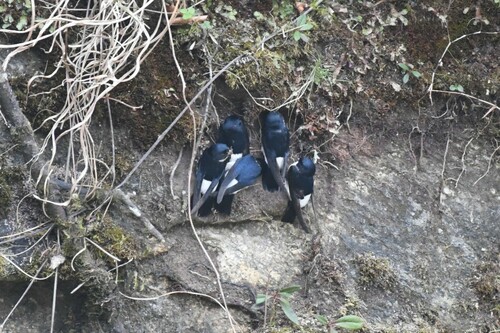
ノドグロイワツバメ (Delichon nipalense) ノドグロイワツバメ

メディア

読み込み中…

要点

アジアイワツバメとノドグロイワツバメを区別する最も信頼できるフィールドマークは、ノドグロイワツバメのすべての年齢における黒いあごと黒い尾羽の覆いの存在です。一方、アジアイワツバメは完全に淡い喉と尾羽を持っています。尾の形も重要です:ノドグロイワツバメははるかに四角い尾を持ち、アジアイワツバメの尾はわずかに分かれています。両種の幼鳥は鈍い色合いですが、ノドグロイワツバメの黒いあごは強い手がかりとなります。飛行中または止まっているときは、常に喉と尾羽、次に尾の形をチェックしてください。両種は青黒い上面と白い尾を共有しているため、特に混合コロニーや山の生息地では、これらのコントラストに焦点を当ててください。

識別のコツ

  1. まず喉と尾羽の覆いをチェックしてください: ノドグロイワツバメは常に黒いあご(亜種や地域によって程度が異なる)と黒い尾羽の覆いを示し、幼鳥でもそうです。アジアイワツバメはすべての年齢で淡い喉と尾羽を持っています。
  2. 尾の形が重要です: ノドグロイワツバメははるかに四角い尾を持ち、アジアイワツバメの尾はわずかに分かれています。これは止まっているときも飛行中も見えます。
  3. 幼鳥の混乱: 両種は幼鳥のとき鈍く、光沢が少ないですが、ノドグロイワツバメの黒いあごと尾羽は明確です。アジアイワツバメの幼鳥は喉や尾羽に黒がありません。
  4. 上面と尾: 両種は青黒い上面と白い尾を持っています。アジアイワツバメはわずかに上面が暗いかもしれませんし、一部の亜種は明るい青の光沢を持っていますが、これは微妙で信頼性がありません。
  5. 下面: アジアイワツバメは淡い灰色の下面を持ち、時には灰色の洗いがかかることがありますが、ノドグロイワツバメの下面は白ですが、これは変動や照明のために強い区別にはなりません。
  6. 性差: 両種は性別による形態的な違いはありませんが、オスのアジアイワツバメは新しい羽毛の状態で少し白く見えることがあります。これは強いフィールドマークではありません。
  7. 亜種の変異: ノドグロイワツバメの東部亜種(cuttingi)は喉と胸により広範な黒を持ち、西部の個体はあごに限られることがあります。常にあごに少なくともいくらかの黒を探してください。
  8. 飛行の特徴: ノドグロイワツバメの四角い尾は、その飛行を少し分かれたように見せ、わずかに重たく見えることがあります。アジアイワツバメの分かれた尾は微妙ですが存在します。
  9. 鳴き声: 鳴き声はフィールドで確実に区別できません。両種とも一般的に静かで、短く目立たない鳴き声を出します。
  10. 生息地の重複: 両種は類似の山の生息地で繁殖し、崖や建物に巣を作ることがあります。区別には生息地だけに頼らないでください。
  11. コロニーの文脈: 混合コロニーでは、個体を区別するために喉と尾羽の色、尾の形を使用してください。上面の光沢や尾の明るさには頼らないでください。
  12. くちばし、足、足指: 両種とも茶色がかったピンクの足と白い羽毛で覆われた足指、黒いくちばしを持っています。これらは区別には役立ちません。
  13. サイズ: ノドグロイワツバメはわずかに大きい(13 cm対12 cm)ですが、これはフィールドでは目立ちません。
  14. 照明の落とし穴: 光沢のある青黒い上面と白い尾は明るい光の中で似て見えることがあります。常に喉、尾羽、尾の形を優先してください。
  15. 季節的な混乱: アジアイワツバメは渡り鳥で、繁殖期以外にも存在することがありますが、両種はヒマラヤで一緒に見られることがあります。常に羽毛と構造を使用して同定してください。

大きさ

アジアイワツバメは平均して約12 cmの長さと18 gの質量を持ち、ノドグロイワツバメはわずかに大きく13 cmですが、質量は指定されていません。違いは微妙で、フィールドでは信頼できません。両種はコンパクトで広い翼を持つツバメですが、ノドグロイワツバメは特に東部亜種(D. n. cuttingi)でわずかに重たく見えることがあります。

羽色

行動

両種は空中の昆虫食者であり、しばしば地面の高いところで餌を取ります。ノドグロイワツバメは非常に速く飛ぶと説明されていますが、これは信頼できるフィールドの区別ではありません。両種は通常、崖の下にコロニーを作りますが、アジアイワツバメは建物をより好むことがあります。両種は泥の巣を作り、水の近くで泥を集める姿が見られることがあります。彼らの飛行スタイルは似ており、敏捷で急速な羽ばたきと滑空を伴いますが、ノドグロイワツバメの四角い尾はその飛行をわずかに分かれたように見せることがあります。

生息環境

両種はヒマラヤと隣接する山々で繁殖し、しばしば河谷や険しい尾根に生息しています。アジアイワツバメは渡り鳥で、中央/東アジアで繁殖し、さらに南で越冬しますが、ノドグロイワツバメは非渡り性で、ヒマラヤに居住しています。ノドグロイワツバメは高地の崖(1,000–4,000 m)に厳密に結びついていますが、アジアイワツバメは低い山や時には建物を含む幅広い標高範囲で見られます。ヒマラヤでは重複が可能なので、生息地だけでは診断できません。

声

両種は一般的に静かです。アジアイワツバメは波のような金属的なトリルやシビランスのツイッター、乾いた金属的なチープを出し、しばしば2音節または3音節で、一般的なイワツバメに似ていますが、よりざらついています。ノドグロイワツバメは飛行中に時折短い「チーイ」という呼び声を出し、短い3音の繁殖歌を歌いますが、それ以外は静かです。鳴き声の違いは微妙で、フィールドでの区別には信頼できません。

より良い説明を送る

比較と同じ項目を使ってください。文章はすぐに公開されます。

The most reliable field mark to separate Asian House Martin from Nepal House Martin is the presence of a black chin and black undertail coverts in Nepal House Martin of all ages, versus the entirely pale throat and undertail in Asian House Martin. Tail shape is also key: Nepal House Martin has a much squarer tail, while Asian House Martin’s is slightly forked. Juveniles of both species are duller, but the black chin on Nepal House Martin remains a strong clue. In flight or perched, always check the throat and undertail, then tail shape. Both species share blue-black upperparts and a white rump, so focus on these contrasts, especially in mixed colonies or mountain habitats.

  1. Check the throat and undertail coverts first: Nepal House Martin always shows a black chin (extent varies by subspecies and region) and black undertail coverts, even in juveniles. Asian House Martin has a pale throat and undertail at all ages.
  2. Tail shape is key: Nepal House Martin has a much squarer tail, while Asian House Martin’s tail is slightly forked. This is visible both perched and in flight.
  3. Juvenile confusion: Both species are duller and less glossy as juveniles, but the black chin and undertail of Nepal House Martin remain clear. Asian House Martin juveniles lack any black on the throat or undertail.
  4. Upperparts and rump: Both species have blue-black upperparts and a white rump. Asian House Martin may be slightly darker above, and some subspecies have a brighter blue gloss, but this is subtle and unreliable.
  5. Underparts: Asian House Martin has pale grey underparts, sometimes with a grey wash, while Nepal House Martin’s underparts are white, but this is not a strong separator due to variation and lighting.
  6. Sex differences: Both species are sexually monomorphic, but male Asian House Martin can be a bit whiter below in fresh plumage. This is not a strong field mark.
  7. Subspecies variation: In Nepal House Martin, the eastern race (cuttingi) has more extensive black on the throat and breast; western birds may have black limited to the chin. Always look for at least some black at the chin.
  8. Flight jizz: Nepal House Martin’s squarer tail can make its flight look less forked and slightly bulkier. Asian House Martin’s forked tail is subtle but present.
  9. Vocalizations: Calls are not reliably separable in the field; both are generally quiet and give short, unremarkable calls.
  10. Habitat overlap: Both species breed in similar mountain habitats and may nest on cliffs or buildings. Do not rely on habitat alone for separation.
  11. Colony context: In mixed colonies, use throat and undertail color, and tail shape, to separate individuals. Do not rely on upperpart gloss or rump brightness.
  12. Bill, legs, and feet: Both have brownish-pink legs and feet covered with white feathers, and a black bill. These are not useful for separation.
  13. Size: Nepal House Martin is slightly larger (13 cm vs 12 cm), but this is not noticeable in the field.
  14. Lighting pitfalls: Glossy blue-black upperparts and white rumps can look similar in bright light; always prioritize throat, undertail, and tail shape.
  15. Seasonal confusion: Asian House Martin is migratory and may be present outside the breeding season, but both can occur together in the Himalayas. Always use plumage and structure for ID.

Asian House Martin averages about 12 cm in length and 18 g in mass [wikidata], while Nepal House Martin is slightly larger at 13 cm, though mass is not specified. The difference is subtle and not reliable in the field. Both are compact, broad-winged swallows, but Nepal House Martin can appear a bit bulkier, especially in the eastern race (D. n. cuttingi) with slightly longer wings.

  • Juveniles/immatures: Both species are less glossy than adults. Nepal House Martin juveniles have a duskier throat and buff-washed underparts, but crucially retain a dark (blackish) chin and black undertail coverts. Asian House Martin juveniles are dark brown above, sometimes with a brownish rump, and have grey-white underparts with no black on the chin or undertail.
  • Adults: Asian House Martin is dark steel blue above with a white rump, pale grey underparts, and a slightly forked tail. Nepal House Martin is blue-black above with a pure white rump, white underparts, but always a black chin (extent varies by subspecies) and black undertail coverts, plus a much squarer tail. Both sexes are similar in both species, though male Asian House Martin can be whiter below in fresh plumage.
  • Subspecies: Nepal House Martin's eastern race (D. n. cuttingi) has the most extensive black on the throat and breast, while western birds may have black limited to the chin. Asian House Martin subspecies vary mainly in upperpart gloss and rump brightness, not in throat or undertail color.

Both species are aerial insectivores, often feeding high above ground. Nepal House Martin is described as exceptionally fast-flying, but this is not a reliable field separation. Both nest colonially under overhangs, typically on cliffs, but Asian House Martin may more readily use buildings. Both species build mud nests and may be seen collecting mud near water. Their flight style is similar: agile, with rapid wingbeats and gliding, but Nepal House Martin’s squarer tail may make its flight look slightly less forked.

Both species breed in the Himalayas and adjacent mountains, often in river valleys or on rugged ridges. Asian House Martin is migratory, breeding in central/eastern Asia and wintering further south, while Nepal House Martin is non-migratory and resident in the Himalayas from NW India through Nepal to northern Vietnam and adjacent China. Nepal House Martin is more strictly tied to high-altitude cliffs (1,000–4,000 m), while Asian House Martin can be found at a wider range of elevations, including lower mountains and sometimes buildings. Overlap is possible in the Himalayas, so habitat alone is not diagnostic.

Both species are generally quiet. Asian House Martin gives a rippling metallic trill or sibilant twitter, and a dry metallic cheep, often with two or three syllables—similar to Common House Martin but more rasping. Nepal House Martin gives an occasional short 'chi-i' call in flight and a brief three-note breeding song, but is otherwise quiet. Vocal differences are subtle and not reliable for separation in the field.

変更を破棄しますか?

保存していない編集があります。今離れると失われます。

イワツバメ · ノドグロイワツバメ · 苦手な鳥