

ミドリテリカッコウ 対 アカメテリカッコウ
Chrysococcyx maculatus 対 Chalcites minutillus
ミドリテリカッコウとアカメテリカッコウのクイズ
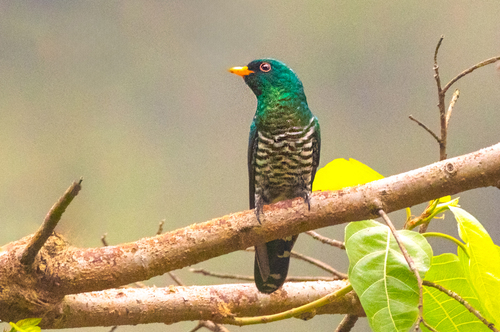 ミドリテリカッコウ
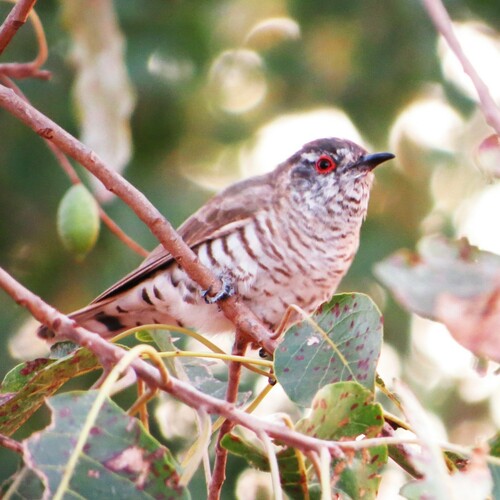 アカメテリカッコウ
要点
The most reliable field mark between Asian Emerald Cuckoo and Little Bronze-Cuckoo is the presence of a white underwing band in flight for Asian Emerald Cuckoo of all ages, which Little Bronze-Cuckoo lacks. Juvenile and female plumages can be confusing, but Asian Emerald Cuckoo is larger, with a more robust build and, in adult males, a striking iridescent green upperpart and white lower breast. Little Bronze-Cuckoo is noticeably smaller, with a slender body, bronze-green upperparts, and a distinctive white spot behind the eye. Both species have green-barred underparts, but the Asian Emerald Cuckoo’s pattern and contrast are different, especially in males. Structural and flight differences, as well as subtle facial and eye-ring details, are key for separation, especially in mixed flocks or dense foliage.
識別のコツ
- White underwing band in flight (all ages): Asian Emerald Cuckoo always shows a white band on the underwing when flying; Little Bronze-Cuckoo never does. This is the most reliable field mark, especially for immatures and females.
- Size and structure: Asian Emerald Cuckoo is larger and bulkier (18 cm), while Little Bronze-Cuckoo is tiny and slender (15–16 cm). Use this when both are seen in similar context or with known reference species.
- White spot behind the eye: Little Bronze-Cuckoo of all ages has a clear white spot behind the eye; Asian Emerald Cuckoo lacks this feature.
- Male plumage: Adult male Asian Emerald Cuckoo is iridescent dark green above with a white lower breast and green-barred belly. Little Bronze-Cuckoo males are bronze-green above, white below with dark barring, and never have a clean white lower breast.
- Female/juvenile confusion: Female Asian Emerald Cuckoo has coppery-green upperparts and a rusty brown crown/nape, with green-barred underparts. Little Bronze-Cuckoo females are similar to males but lack the iridescence and have the white eye spot. Juvenile Asian Emerald Cuckoo lacks the white lower breast and is more heavily barred below, but still shows the underwing band in flight.
- Bill and eye-ring: Asian Emerald Cuckoo has an orange/yellow bill tipped black and orange bare skin around the eye. Little Bronze-Cuckoo males have a red orbital ring, and the bill is less striking.
- Tail: Little Bronze-Cuckoo has a relatively long tail for its size, aiding in its agile flight. Asian Emerald Cuckoo’s tail is proportionally shorter and less noticeable.
- Flight style: Little Bronze-Cuckoo is more agile and undulating in flight, often darting through dense vegetation. Asian Emerald Cuckoo is more direct and less acrobatic.
- Habitat context: Asian Emerald Cuckoo is more likely in mature or montane forests; Little Bronze-Cuckoo is often in dense lowland vegetation, forest edges, or secondary growth.
- Perched posture: Asian Emerald Cuckoo often perches more upright and exposed, especially males. Little Bronze-Cuckoo is more likely to be seen flitting through cover.
- Vocalization: If you hear a sharp "chweek" in flight, suspect Asian Emerald Cuckoo. Otherwise, voice is not a strong separator.
- Underparts pattern: Asian Emerald Cuckoo males have a white lower breast sharply separated from the green-barred belly; Little Bronze-Cuckoo’s barring is more uniform across the underparts.
- Sexing Little Bronze-Cuckoo: Males have a red orbital ring, which is absent in females and all Asian Emerald Cuckoos.
- Juvenile confusion: Both species’ juveniles are duller, but only Asian Emerald Cuckoo juveniles retain the white underwing band in flight.
- When in doubt: Prioritize the underwing pattern in flight and the presence/absence of the white eye spot for quick separation, especially in mixed flocks or poor light.
大きさ
Asian Emerald Cuckoo is significantly larger, reaching about 18 cm in length, while Little Bronze-Cuckoo is the smallest cuckoo in the world at 15–16 cm. The size difference is apparent in the field, with Asian Emerald Cuckoo looking bulkier and more robust, and Little Bronze-Cuckoo appearing slender and more delicate. Weight also differs, with Little Bronze-Cuckoo weighing only 14.5–17 grams. This size gap is especially noticeable when both species are seen in the same area or habitat.
羽色
- Juvenile/immature flight: Asian Emerald Cuckoo of all ages shows a white band on the underwing in flight, a key diagnostic mark. Little Bronze-Cuckoo does not show this underwing band.
- Adult male Asian Emerald Cuckoo: Iridescent dark green head, upperparts, and upper breast; white lower breast; green-barred belly; orange bare skin around the eye; orange/yellow bill tipped black. No white spot behind the eye.
- Adult female Asian Emerald Cuckoo: Coppery-green upperparts, rusty brown crown and nape, green-barred underparts, white underwing band in flight. No white spot behind the eye.
- Juvenile Asian Emerald Cuckoo: Underparts lack the white lower breast, more heavily barred than adult male; still shows white underwing band in flight.
- Little Bronze-Cuckoo (all ages): Bronze-green upperparts, white underparts with dark barring, distinctive white spot behind the eye, slender body, long tail. Males have a red orbital ring. Juveniles are duller and may lack flank mottling. No white underwing band in flight.
- Underparts: Both species have green-barred underparts, but Asian Emerald Cuckoo males have a clean white lower breast, while Little Bronze-Cuckoo has more evenly barred white underparts.
行動
Little Bronze-Cuckoo is described as having a direct, subtly undulating flight and is highly maneuverable in dense vegetation, aided by its slender build and long tail. Asian Emerald Cuckoo, being larger and more robust, is less agile but still active in the forest canopy. Both species can be elusive, but Little Bronze-Cuckoo’s small size and rapid movements make it harder to track in thick foliage. Asian Emerald Cuckoo may be more often seen perched in the open, especially males displaying their iridescent plumage.
生息環境
Both species occur in subtropical or tropical moist forests, but Asian Emerald Cuckoo is found across a broader range in South and Southeast Asia, including montane and lowland forests. Little Bronze-Cuckoo is more often associated with dense vegetation and is noted for its agility in such habitats. Overlap is possible in Southeast Asia, but Asian Emerald Cuckoo is more likely in higher elevation or mature forest, while Little Bronze-Cuckoo can be found in a wider range of wooded habitats, including edges and secondary growth.
声
Asian Emerald Cuckoo gives a sharp "chweek" call in flight and various whistled twitters. Little Bronze-Cuckoo’s vocalizations are not detailed in the notes, so voice is not a strong separator unless the Asian Emerald Cuckoo’s distinctive flight call is heard.