

Motmot

アフリカギンバシ 対 ギンバシ

Euodice cantans 対 Euodice malabarica

アフリカギンバシとギンバシのクイズ
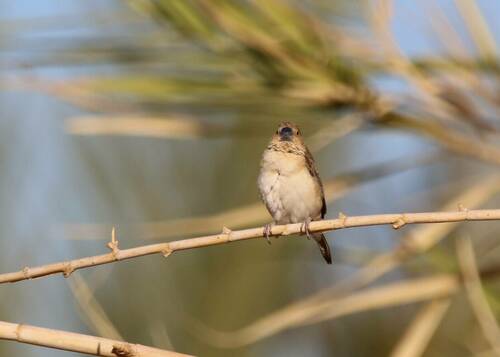
アフリカギンバシ (Euodice cantans) アフリカギンバシ
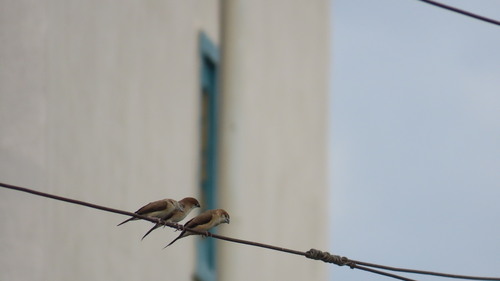
ギンバシ (Euodice malabarica) ギンバシ

メディア

読み込み中…

要点

アフリカギンバシとギンバシは非常に似ているエストリルダ科のフィンチですが、特に幼鳥では下部の色と上部の模様に注意を払うことで区別できます。最も信頼できるフィールドマークは下部のトーンです:アフリカギンバシの成鳥と幼鳥は白っぽい下部を示し、ギンバシの成鳥は白ですが、バフ色の脇腹を持ち、幼鳥は明確にバフ色です。成鳥のアフリカギンバシには上部に細かい模様が見られますが、ギンバシにはありません。尾の形状と長さ、くちばしの色や尾のコントラストの微妙な違いも役立ちます。両種は群れで行動し、乾燥した開けた生息地によく見られますが、導入された個体群を除いて、分布域はほとんど重なりません。

識別のコツ

  1. Underpart color in immatures: 幼鳥のアフリカギンバシは淡い白っぽい下部を持ち、幼鳥のギンバシは明確にバフ色です。これは若い鳥にとって最も信頼できるマークです。
  2. Adult upperpart vermiculation: 成鳥のアフリカギンバシは上部に細かい模様(繊細な縞模様)を示し、ギンバシにはありません。これは微妙なので、ギンバシではより均一な茶色を探してください。
  3. Flank color in adults: ギンバシの成鳥はバフ色の脇腹を持ち、アフリカギンバシの成鳥は下部がよりクリーンな白です。これは良い光の下で近距離で見ると最もよくわかります。
  4. Tail shape and length: ギンバシはやや長く、尖った尾を持ち、中央の羽は外側の羽よりも長く、テーパードな外観を与えます。アフリカギンバシの尾は長いですが、明らかに尖っているわけではありません。幼鳥のギンバシは成鳥よりも短い尾を持っています。
  5. Bill color: アフリカギンバシのくちばしは銀青色と表現され、ギンバシのくちばしは銀灰色です。この違いは微妙で、光や摩耗の影響を受けることがあります。
  6. Rump contrast: 両種とも白い尾羽を持っていますが、黒い尾とのコントラストはギンバシの方が尾の形状と上部の色が暗いため、より鮮明に見えることがあります。
  7. Wing color: 両種とも暗い翼を持っていますが、ギンバシの翼はより暗く、白い尾とのコントラストが強いと表現されています。
  8. Sex differences: 両種は羽毛において性別が同じであるため、性別は区別には役立ちません。
  9. Vocalizations: 鳴き声は似ており、詳細に比較しない限り、完全な歌が聞かれないと区別には役立ちません。
  10. Habitat and range: 自然分布域では、生息地が強い手がかりです—アフリカギンバシはサハラ以南のアフリカに、ギンバシは南アジアと中東にいます。導入された個体群では、生息地に頼らないでください。
  11. Behavior: 両種は群れで餌を食べ、草の茎にしがみつき、似たような求愛行動を示します。行動は区別には役立ちません。
  12. Size: ギンバシはわずかに大きい(11–11.5 cm対10 cm)ですが、これはフィールドでは役立ちません。
  13. Pitfalls: バフ色の下部を持つ幼鳥のギンバシはしばしばアフリカギンバシと間違われますが、下部の色が診断的です。バフ色がより淡く見える照明条件に注意してください。
  14. Flight views: 明確な上翼や飛行パターンの違いは記載されていないため、飛行中に見た場合は下部と尾の形状に頼ってください。
  15. Subspecies variation: アフリカギンバシの亜種E. c. orientalisは顔と上部が暗く、ギンバシと混同される可能性がありますが、下部の色と模様が依然として区別に役立ちます。

大きさ

両種はサイズと構造が非常に近く、ギンバシは平均してわずかに重い(ギンバシは12.0 g、アフリカギンバシの質量は不明ですが、アフリカは約10 cm、ギンバシは11–11.5 cmです)。フィールドでは、この違いは無視できるものであり、信頼できる区別にはなりません。

羽色

幼鳥と幼鳥は下部の色で最もよく区別されます:幼鳥のアフリカギンバシは淡い白っぽい下部を持ち、幼鳥のギンバシはバフ色の下部と短く尖った尾を示します。成鳥のアフリカギンバシは細かい模様(繊細な縞模様)のある淡茶色の上部を示し、ギンバシにはありません。ギンバシの成鳥はバフ茶色の上部、白い下部、バフ色の脇腹を持ち、暗い翼と黒く尖った尾を持っています。両種とも白い尾羽と黒い尾を持っていますが、ギンバシの尾は羽の形状のためにより尖って見えます。アフリカのくちばしは銀青色と表現され、ギンバシのくちばしは銀灰色です;これは微妙で、常に信頼できるわけではありません。両種の性別は似ています。

行動

両種は非常に社交的で、群れで餌を食べ、しばしば草の茎にしがみついて種子を探します。求愛行動と一般的な行動は非常に似ており、オスは草の茎を持って直立した姿勢を示します。フィールドでの区別においては、主要な行動の違いは記載されていません。

生息環境

アフリカギンバシはサハラ以南の乾燥したサバンナに生息し、ギンバシは中東とインド亜大陸の乾燥した地域に生息しています。両種は他の地域にも導入されており、一部の都市や乱れた生息地で重なることがあります。自然分布域では、生息地だけで区別が可能ですが、両種が導入された地域ではそうではありません。

声

両種は似たような鳴き声(tseepまたはtsiptsip)を持っていますが、歌の構造は異なります。これは微妙で、フィールドで簡単に使用できるわけではなく、完全な歌が聞かれ比較されない限りは役立ちません。アフリカギンバシのオスは単一の「tseep」を出し、メスは二重の「tsiptsip」を出し、飛行中には繰り返し「tseep tseep tseep」を出します。歌の違いは、カジュアルなフィールド観察よりも詳細な研究でより明らかになります。

より良い説明を送る

比較と同じ項目を使ってください。文章はすぐに公開されます。

African Silverbill and Indian Silverbill are extremely similar estrildid finches, but can be separated with careful attention to underpart color and upperpart pattern, especially in immatures. The most reliable field mark is the underpart tone: African Silverbill adults and immatures show whitish underparts, while Indian Silverbill adults have white but with buffy flanks, and immatures are distinctly buff below. Upperpart vermiculation is present in adult African but absent in Indian. Tail shape and length, as well as subtle differences in bill color and rump contrast, can also help. Both species are gregarious and often found in dry, open habitats, but their ranges rarely overlap except in introduced populations.

  1. Underpart color in immatures: Immature African Silverbills have pale whitish underparts, while immature Indian Silverbills are distinctly buff below. This is the most reliable mark for young birds.
  2. Adult upperpart vermiculation: Adult African Silverbills show fine vermiculation (delicate barring) on the upperparts, absent in Indian Silverbill. This can be subtle, so look for a more uniform brown in Indian.
  3. Flank color in adults: Indian Silverbill adults have buffy flanks, while African Silverbill adults are cleaner white below. This is best seen in good light and at close range.
  4. Tail shape and length: Indian Silverbill has a slightly longer, more pointed tail, with central feathers longer than the outer ones, giving a tapered look. African Silverbill's tail is long but less obviously pointed. Immature Indian Silverbills have a shorter tail than adults.
  5. Bill color: African Silverbill's bill is described as silver-blue, while Indian's is silver-grey. This difference is subtle and may be affected by light or wear.
  6. Rump contrast: Both have a white rump, but the contrast with the black tail may appear sharper in Indian Silverbill due to the tail shape and darker upperparts.
  7. Wing color: Both have dark wings, but the Indian Silverbill's wings are described as darker and more contrasting with the white rump.
  8. Sex differences: Both species are sexually monomorphic in plumage, so sex is not useful for separation.
  9. Vocalizations: Calls are similar and not reliable for separation unless the full song is heard and compared in detail.
  10. Habitat and range: In their native ranges, habitat is a strong clue—African Silverbill in sub-Saharan Africa, Indian Silverbill in South Asia and the Middle East. In introduced populations, do not rely on habitat.
  11. Behavior: Both species feed in flocks, cling to grass stems, and show similar courtship displays. Behavior is not a separator.
  12. Size: Indian Silverbill is marginally larger (11–11.5 cm vs 10 cm), but this is not useful in the field.
  13. Pitfalls: Immature Indian Silverbills with buff underparts are often mistaken for African Silverbill, but the underpart color is diagnostic. Beware of lighting conditions that can make buff appear paler.
  14. Flight views: No distinctive upperwing or flight pattern differences are described, so rely on underpart and tail shape if seen in flight.
  15. Subspecies variation: African Silverbill subspecies E. c. orientalis is darker on the face and upperparts, which could be confused for Indian Silverbill, but underpart color and vermiculation still help separate them.

Both species are very close in size and structure, with Indian Silverbill slightly heavier on average (12.0 g for Indian Silverbill per [wikidata]; no mass given for African Silverbill, but length is about 10 cm for African and 11–11.5 cm for Indian [wikipedia]). In the field, this difference is negligible and not a reliable separator.

Juvenile and immature birds are best separated by underpart color: immature African Silverbills have pale whitish underparts, while immature Indian Silverbills show buff underparts and a shorter, pointed tail. Adult African Silverbills show finely vermiculated (delicately barred) light-brown upperparts, which are lacking in Indian Silverbill. Indian Silverbill adults have buff-brown upperparts, white underparts, and buffy flanks, with a dark wing and black, pointed tail. Both species have a white rump and black tail, but the Indian's tail appears more pointed due to the feather shape. The African's bill is described as silver-blue, while the Indian's is silver-grey; this is subtle and not always reliable. Sexes are similar in both species.

Both species are highly social, feeding in flocks and often seen clinging to grass stems for seeds. Their courtship and general behavior are very similar, with males displaying by holding grass stems and performing upright postures. No major behavioral differences are noted in the sources for field separation.

African Silverbill is native to dry savanna south of the Sahara, while Indian Silverbill occupies drier regions of the Middle East and Indian subcontinent. Both species have been introduced to other regions and may overlap in some urban or disturbed habitats. In their native ranges, habitat alone is usually sufficient for separation, but not in areas where both have been introduced.

Both species have similar call notes (tseep or tsiptsip), but their songs differ in structure, though this is subtle and not easily used in the field unless the full song is heard and compared. African Silverbill males give a single 'tseep', females a double 'tsiptsip', and in flight, a repeated 'tseep tseep tseep'. Song differences are more apparent in detailed study than casual field observation.

変更を破棄しますか?

保存していない編集があります。今離れると失われます。

アフリカギンバシ · ギンバシ · 苦手な鳥