

Calandra siberiana vs Allodola
Alauda leucoptera contro Alauda arvensis
Fai un quiz con Calandra siberiana e Allodola
 Calandra siberiana
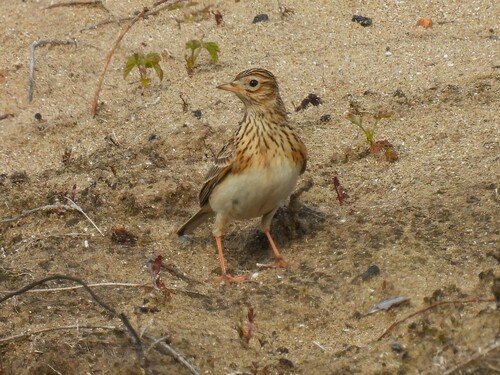 Allodola
In breve
Il segno di campo più affidabile per separare la Calandra siberiana dall'Allodola è il bold, contrastante schema alare visibile in volo: la Calandra siberiana mostra piume di volo interne bianche sorprendenti, primarie esterne nere e castagne nel resto dell'ala, mentre l'Allodola manca di questi blocchi di colore e mostra invece solo sottili bordi bianchi alla coda e all'ala posteriore. Entrambi sono allodole robuste e striate di campagna aperta, ma la Calandra siberiana è leggermente più robusta e ha una corona castagna nei maschi adulti. L'Allodola è più diffusa e familiare nell'Europa occidentale ed è meglio conosciuta per i suoi lunghi voli cantati in sospensione. Le differenze strutturali e di piumaggio sono più evidenti in volo, specialmente tra gli adulti, ma gli uccelli posati possono essere difficili da identificare senza una chiara visione della corona o delle ali.
Consigli di identificazione
- In volo, cerca il bold schema alare: La Calandra siberiana mostra primarie esterne nere, piume di volo interne bianche e castagne altrove sull'ala, creando un contrasto sorprendente. Questo è diagnostico per tutte le età e sessi ed è il segno di campo più affidabile.
- L'Allodola manca di marcature alari bold: In volo, l'Allodola mostra solo sottili bordi bianchi alla coda e all'ala posteriore, visibili principalmente da dietro. Non mostra mai i pannelli alari bianchi e castagni della Calandra siberiana.
- Il maschio posato della Calandra siberiana ha una corona castagna: Se vedi un'allodola con una corona rosso-bruna distintiva, specialmente in luce brillante, è probabile che sia un maschio di Calandra siberiana. L'Allodola ha una corona marrone striata e a volte solleva una corta cresta, ma non mostra mai castagna.
- Entrambe le specie sono striate sopra e chiare sotto: Non fare affidamento sulla striatura generale o sul colore della parte inferiore per separarle; entrambe sono striate di marrone/grigio sopra e bianche sotto.
- La forma della cresta non è diagnostica: L'Allodola può sollevare una breve cresta smussata, ma la Calandra siberiana può anche mostrare una leggera forma della corona; questo non è un separatore affidabile.
- Struttura e jizz: La Calandra siberiana è descritta come particolarmente robusta, ma questo è sottile e non sempre evidente sul campo. Entrambi sono allodole di dimensioni medie con proporzioni simili.
- Comportamento del volo cantato: L'Allodola è molto più probabile che venga vista eseguire voli cantati prolungati, alti e in sospensione. La Calandra siberiana può cantare in volo, ma è meno probabile che sospenda per lunghi periodi.
- Habitat e distribuzione: Nell'Europa occidentale, l'Allodola è comune; la Calandra siberiana è un raro vagabondo. Nelle regioni steppiche della Russia e del Kazakistan, entrambe possono verificarsi, ma la Calandra siberiana è più probabile nelle steppe aperte e più secche.
- Contesto stagionale: La Calandra siberiana è parzialmente migratoria, quindi l'apparizione al di fuori della sua area di nidificazione è rara e di solito in inverno. L'Allodola è residente o migratoria a seconda della latitudine, ma è diffusa tutto l'anno in gran parte della sua area.
- Comportamento di branco: La Calandra siberiana è gregaria in inverno e può essere vista in branchi; l'Allodola può anche formare branchi al di fuori della stagione di nidificazione.
- Voce: Entrambi hanno canti melodiosi e gorgheggianti; le differenze sono sottili e non affidabili per la separazione a meno che tu non sia molto familiare con entrambi.
- Uccelli giovani/immaturi: Non è stato notato alcun specifico schema alare giovanile per entrambe le specie; fare affidamento sul pattern alare adulto per tutte le età.
- Schema della coda: L'Allodola mostra bordi bianchi alla coda, ma questo è visibile solo quando vola via ed è meno audace rispetto allo schema alare della Calandra siberiana.
- Becco e zampe: Non sono state notate forti differenze nel colore/forma del becco o delle zampe; non utilizzare queste caratteristiche per la separazione.
- Insidie: Fai attenzione alle allodole volanti lontane con scarsa illuminazione o visioni brevi; cerca sempre di vedere il pattern dell'ala superiore in volo per un'identificazione sicura.
Taglia
Entrambe le specie sono molto simili in dimensione, con la Calandra siberiana che misura 17–19 cm di lunghezza e l'Allodola 18–19 cm. Entrambi hanno una struttura robusta, ma la Calandra siberiana è descritta come particolarmente grande e robusta per un'allodola, pesando circa 44 g. I maschi dell'Allodola hanno ali leggermente più larghe delle femmine, ma questo è sottile e non è un segno di campo affidabile per la separazione. In generale, la dimensione non è un forte differenziatore tra queste due specie sul campo.
Piumaggio
-
In volo (tutte le età): La Calandra siberiana è inconfondibile grazie al suo bold schema alare: primarie esterne nere, piume di volo interne bianche e castagne nel resto dell'ala. Questo crea un effetto 'flash', specialmente quando l'uccello decolla o gira in aria. L'Allodola, al contrario, ha ali marroni semplici con solo sottili bordi bianchi sulla coda e sull'ala posteriore, visibili principalmente quando vola via; manca di qualsiasi patch bianca o castagna audace.
-
Adulti posati: La Calandra siberiana mostra una corona castagna nei maschi adulti (femmine simili ma corona meno distintiva), con parti superiori grigie scure striate e parti inferiori bianche. L'Allodola è complessivamente più opaca, marrone sopra con parti inferiori chiare e una breve cresta smussata che può essere sollevata o abbassata. Entrambi sono striati, ma solo i maschi della Calandra siberiana mostrano la corona castagna.
-
Giovani/immaturi: Non è stato descritto alcun specifico schema alare giovanile o immaturo per entrambe le specie nelle fonti, quindi il pattern alare adulto rimane il segno chiave in volo per tutte le età.
Comportamento
Entrambe le specie sono allodole terricole di campagna aperta, spesso viste nutrirsi o camminare a terra. L'Allodola è famosa per i suoi lunghi voli cantati in sospensione, a volte salendo a grandi altezze e cantando per minuti alla volta. La Calandra siberiana è anche gregaria in inverno e può essere vista in branchi, ma il suo volo è più notevole per il bold schema alare piuttosto che per i prolungati voli cantati. Entrambe le specie si alzano facilmente da terra, ma i voli di esibizione dell'Allodola sono più propensi a catturare l'attenzione.
Habitat
La Calandra siberiana nidifica in steppe e pianure secche e aperte dal sud-ovest della Russia attraverso il Kazakistan fino alla Cina occidentale, e sverna più a sud-ovest. L'Allodola è molto più diffusa, trovata in tutta Europa, nel Paleartico e in popolazioni introdotte altrove, preferendo terreni agricoli aperti e brughiere. Nell'Europa occidentale, l'Allodola è molto più probabile; la Calandra siberiana è un vagabondo molto raro lì. Entrambi preferiscono paesaggi aperti e senza alberi, ma l'Allodola è più associata a terreni agricoli.
Voce
Entrambe le specie hanno canti melodiosi e gorgheggianti eseguiti in volo, ma l'Allodola è particolarmente nota per il suo lungo canto gorgheggiante e ininterrotto, spesso eseguito durante voli prolungati in sospensione ad alta quota. Il canto della Calandra siberiana è descritto come una versione più melodiosa di quello dell'Allodola, ma in pratica, la differenza è sottile e non facilmente utilizzabile per la separazione sul campo a meno che entrambi siano ben conosciuti. Il canto non è un separatore affidabile per la maggior parte degli osservatori.