

White-bearded Hermit vs Violet-throated Starfrontlet
Phaethornis hispidus contro Coeligena violifer
Fai un quiz con White-bearded Hermit e Violet-throated Starfrontlet
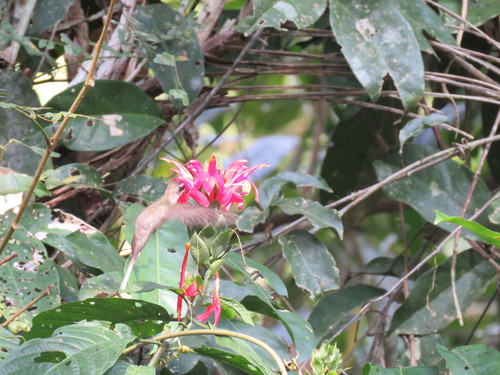 White-bearded Hermit
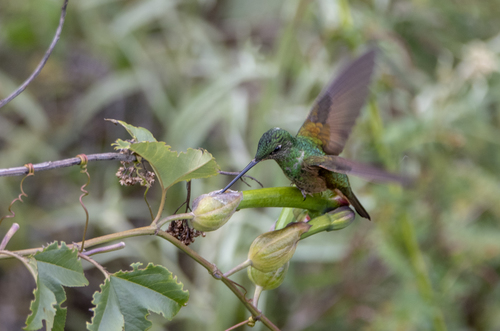 Violet-throated Starfrontlet
In breve
The most reliable field mark to separate White-bearded Hermit from Violet-throated Starfrontlet is the combination of facial pattern and throat color: the hermit shows a bold black mask with white supercilium and malar stripe plus a central white throat stripe, while the starfrontlet lacks this mask and instead has a bright violet or greenish throat patch (male) or a buffy, spotted throat (female). Both are medium-sized hummingbirds, but the starfrontlet is heavier and bulkier, often with a more deeply forked tail and a straight, black bill, contrasting with the hermit's longer, decurved bill and more slender build. In flight or perched, tail and bill structure, as well as facial pattern, are the quickest ways to avoid confusion. Immature-specific upperwing patterns are not described for either species in the sources, so focus on adult and general plumage and structure.
Consigli di identificazione
- Facial pattern is the fastest check: White-bearded Hermit always shows a black mask with a bold white supercilium and malar stripe, plus a white central throat stripe. Violet-throated Starfrontlet lacks this mask and instead has a white spot behind the eye (not a stripe), and a plain or spotted throat.
- Throat color is key in males: Male starfrontlets have a bright violet or bluish iridescent throat patch, often bordered below by a gray or whitish band. Hermits never show a colored throat patch—only a white stripe.
- Female throat pattern: Female starfrontlets have a buff throat with green spots, while female hermits have the same facial pattern as males, with a white throat stripe and mask.
- Bill shape: Hermit has a long, slender, and strongly decurved bill (females slightly shorter and more curved). Starfrontlet has a long, straight, black bill (females slightly longer than males, but always straight).
- Tail shape: Starfrontlet's tail is forked (deeper in males), with orange-buff, bronzy, or white-tipped feathers depending on subspecies. Hermit's tail is less deeply forked and more graduated, with bronzy green and gray margins.
- Body structure: Starfrontlet is bulkier and heavier, with a stouter body and thicker neck. Hermit is slender and elongated, with a more delicate appearance.
- Upperparts color: Both have bronzy green backs, but starfrontlet males may show a blackish blue or bottle green head, and some subspecies have a shiny golden copper back. Hermit upperparts are bronzy green with gray uppertail coverts.
- Underparts: Hermit is plain gray below. Starfrontlet males have a green upper breast, gray or whitish band, and cinnamon or golden green belly; females have a dark green breast and buffy, spotted throat.
- Tail color: Starfrontlet's tail is more colorful, with orange-buff, bronzy, or white-tipped feathers. Hermit's tail is more uniform bronzy green with gray margins.
- Perched jizz: Hermit appears more elongated and delicate, often flicking its tail. Starfrontlet perches more upright and appears bulkier.
- Flight style: Hermit is agile and sinuous in flight, often in the understory. Starfrontlet is more powerful, with a deeper forked tail visible in flight.
- Habitat context: In lowland Amazonian forest, hermit is much more likely. In higher elevation forest edge or clearings, especially in Bolivia or Peru, starfrontlet is favored.
- Sex differences: Female hermit is nearly identical to male but with a shorter, more decurved bill. Female starfrontlet lacks the bright throat patch and has a buff, spotted throat.
- No known age-specific flight marks: Neither species has described juvenile or immature upperwing patterns that aid separation.
- Size in hand or with experience: Starfrontlet is heavier and more robust, but this is subtle in the field unless both are seen together.
Taglia
Both species are similar in length (13–14.5 cm), but Violet-throated Starfrontlet is noticeably heavier (males up to 13 g, females up to 8 g) compared to the White-bearded Hermit (4–6 g for both sexes). The starfrontlet is bulkier, with a stouter body and a more robust appearance. The hermit is slimmer and lighter, with a more delicate, elongated look. Bill structure also differs: the hermit has a long, slender, and strongly decurved bill, while the starfrontlet's bill is straight, black, and relatively thick. Tail shape is another clue: the starfrontlet has a forked tail (deeper in males), while the hermit's tail is less deeply forked and more graduated.
Piumaggio
No age-specific upperwing or flight marks are described for either species, so rely on body and head plumage. The White-bearded Hermit of all ages and sexes shows bronzy green upperparts, gray underparts, and a distinctive face with a black mask, white supercilium, and malar stripe, plus a white central throat stripe. The Violet-throated Starfrontlet male has a blackish blue or greenish head (depending on subspecies), a shining bronzy green back, and a striking iridescent violet or bluish throat patch bordered by a gray or whitish band, with a green lower breast and cinnamon or golden green belly. Females lack the bright throat patch, instead showing a green head and a buff throat with green spots, and a darker green breast. The starfrontlet's tail is orange-buff or bronzy with colored tips or bands depending on subspecies, and is more deeply forked, especially in males. The hermit's tail is bronzy green with gray margins and lacks the bold color contrasts of the starfrontlet.
Comportamento
Both species forage by trap-lining, visiting a circuit of flowers, but the starfrontlet is more likely to be seen feeding at the edges of vegetation and occasionally hawking for insects. The hermit typically remains in the understory and is less likely to sally out for insects. In flight, the starfrontlet appears bulkier and more powerful, with a deeper forked tail, while the hermit is more slender and agile, often flicking its tail and showing a more sinuous flight. Perched, the hermit often appears more elongated due to its long bill and tail.
Habitat
Range overlap is limited to Bolivia and Peru. The White-bearded Hermit is widespread in lowland and foothill forests across the Amazon basin, often in dense, humid forest and along streams. The Violet-throated Starfrontlet is more localized, found in montane forests and edges, typically at higher elevations than the hermit. If seen in dense lowland rainforest, hermit is more likely; in higher elevation forest edge or clearings, starfrontlet is favored.
White-bearded Hermit · Violet-throated Starfrontlet · I miei uccelli difficili