

Stiaccino vs Saltimpalo siberiano
Saxicola rubetra contro Saxicola maurus
Fai un quiz con Stiaccino e Saltimpalo siberiano
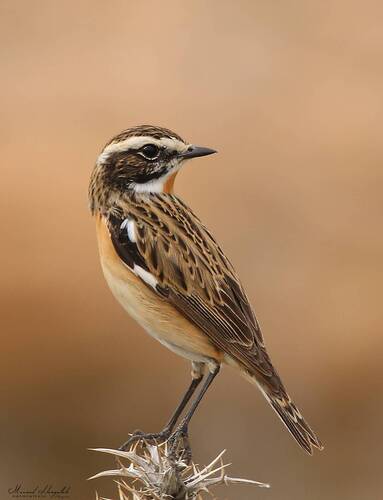 Stiaccino
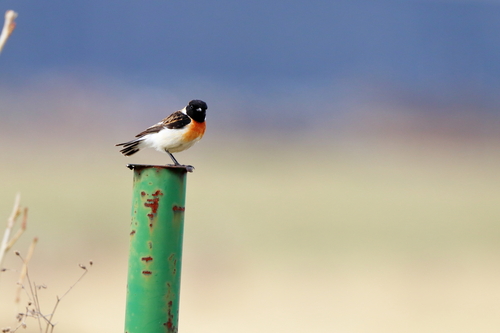 Saltimpalo siberiano
In breve
Il segno di campo più affidabile per separare lo Stiaccino dal Saltimpalo siberiano è il colore del sopracciglio: lo Stiaccino di tutte le età mostra un sopracciglio marrone, maculato che corrisponde alla schiena, mentre il Saltimpalo siberiano (soprattutto le femmine e gli immaturi) ha un sopracciglio arancione-buff chiaro o bianco, non striato, che si distingue in volo. Entrambe le specie hanno un forte sopracciglio chiaro, ma quello dello Stiaccino è più ampio e più evidente, specialmente rispetto alla femmina del Saltimpalo siberiano. Nelle viste in appollaiamento, lo Stiaccino è più snello con punte delle ali più lunghe, mentre il Saltimpalo siberiano appare più compatto. I maschi in riproduzione sono più facili da separare per il pattern del viso e del collare, ma la maggior parte degli errori nei quiz coinvolge femmine o immaturi, dove il pattern del sopracciglio e delle ali è fondamentale. Controlla sempre il sopracciglio in volo e il sopracciglio e le parti inferiori quando sono appollaiati.
Consigli di identificazione
- Colore del sopracciglio in volo (tutte le età): Lo Stiaccino mostra sempre un sopracciglio marrone, striato che corrisponde alla schiena; il Saltimpalo siberiano (soprattutto le femmine e gli immaturi) ha un sopracciglio arancione-buff chiaro o bianco, non striato. Questo è il segno migliore quando l'uccello sta volando via o muovendo la coda.
- Sopracciglio (appollaiato, tutte le età): Lo Stiaccino ha un ampio e forte sopracciglio bianco che si distingue, specialmente nelle femmine e negli immaturi. Il sopracciglio del Saltimpalo siberiano è più stretto e meno contrastante, anche se nei maschi in inverno può essere più evidente.
- Parti inferiori (appollaiato): Lo Stiaccino ha un ventre chiaro, da buff a biancastro e spesso un petto più chiaro, mentre il Saltimpalo siberiano è generalmente più bianco sotto ma con meno arancione sul petto. L'arancione dello Stiaccino è più esteso e caldo nei maschi in riproduzione, ma questo è meno affidabile nelle femmine e negli immaturi.
- Pattern del viso (maschi in riproduzione): Il maschio dello Stiaccino mostra una maschera facciale nerastro con un forte sopracciglio bianco e una striscia malare, e una gola e un petto arancione-buff brillante. Il maschio del Saltimpalo siberiano ha una testa e una schiena nere, un collare bianco completo e un sopracciglio bianco, con arancione limitato alla gola.
- Macchie sulle ali (maschi e alcune femmine): I maschi dello Stiaccino (tutto l'anno) e alcune femmine mostrano piccole macchie bianche sulle ali maggiori e sulle copritrici mediane interne; il Saltimpalo siberiano non ha questo pattern ma può mostrare bianco nelle scapolari o nel collare.
- Proiezione primaria (struttura): Lo Stiaccino ha punte delle ali più lunghe (proiezione primaria) rispetto al Saltimpalo siberiano, conferendogli un aspetto più allungato e meno 'grosso' quando è appollaiato. Questo è sottile ma può aiutare quando visto fianco a fianco.
- Pattern della coda: Entrambe le specie hanno code nerastre con bianco alla base delle piume esterne, ma il bianco è più esteso nel Saltimpalo siberiano.
- Collare (maschi in riproduzione): Il Saltimpalo siberiano mostra un collare bianco completo attorno al collo, mentre lo Stiaccino ha solo una striscia malare bianca e un sopracciglio, non un collare completo.
- Colore del petto (maschi in riproduzione): Lo Stiaccino ha una gola e un petto arancione-buff brillante; l'arancione del Saltimpalo siberiano è più limitato alla gola e meno esteso.
- Tempistica della muta (adulti vs giovani): Gli adulti dello Stiaccino hanno una muta completa dopo la riproduzione e prima della migrazione, mentre i giovani mantengono le piume da volo giovanili con una muta parziale del corpo. I dettagli della muta del Saltimpalo siberiano sono meno diagnostici sul campo.
- Impressione generale: Lo Stiaccino appare più snello e allungato a causa delle ali più lunghe, specialmente quando è appollaiato in posizione eretta. Il Saltimpalo siberiano è più compatto e eretto.
- Habitat/contesto: Nell'Europa occidentale, lo Stiaccino è molto più probabile trovarlo in habitat aperti di prateria e montagna, mentre il Saltimpalo siberiano è un raro vagrante. Tuttavia, non fare affidamento solo sull'habitat dove entrambe le specie possono verificarsi.
- Confusione stagionale: In autunno e inverno, entrambe le specie diventano più opache e simili, ma il colore del sopracciglio e il sopracciglio rimangono affidabili.
- Differenze sessuali: Le femmine e gli immaturi del Saltimpalo siberiano sono i più facilmente confusi con lo Stiaccino; controlla sempre il sopracciglio e il sopracciglio.
- Trappole: Non fare affidamento solo sul colore delle parti inferiori, poiché entrambe possono apparire chiare sotto. Utilizza sempre una combinazione di sopracciglio, sopracciglio e pattern delle ali dove possibile.
Taglia
Entrambe le specie sono simili in dimensioni, vicine al Pettirosso, con lo Stiaccino che misura 12–14 cm di lunghezza e pesa 13–26 g [wikipedia]. Il Saltimpalo siberiano non ha una misura precisa qui, ma è descritto come comparabile. Sul campo, lo Stiaccino può apparire leggermente più snello e meno 'grosso' rispetto al Saltimpalo siberiano, con una proiezione primaria (punte delle ali) più lunga, ma queste differenze sono sottili e meglio utilizzate in combinazione con i segni del piumaggio.
Piumaggio
- Uccelli giovanili/immaturi e femmine in volo: Il sopracciglio è la caratteristica più diagnostica. Lo Stiaccino di tutte le età ha un sopracciglio marrone, striato che corrisponde alla schiena, mentre il Saltimpalo siberiano (soprattutto le femmine e gli immaturi) mostra un sopracciglio arancione-buff chiaro o bianco, non striato, che contrasta con la schiena più scura. Questo è più evidente quando l'uccello sta volando via o muovendo la coda.
- Uccelli appollaiati: Lo Stiaccino mostra un ampio e forte sopracciglio bianco e un ventre chiaro, da biancastro. Il sopracciglio del Saltimpalo siberiano è più stretto e meno contrastante, e le parti inferiori sono generalmente più bianche con meno arancione sul petto. Il maschio in riproduzione del Saltimpalo siberiano ha una testa e una schiena nere con un collare bianco completo e un sopracciglio bianco, mentre il maschio dello Stiaccino mostra una gola e un petto arancione-buff, una maschera facciale nerastro e un sopracciglio bianco, ma non ha il collare bianco completo e il sopracciglio bianco.
- Pattern delle ali: I maschi dello Stiaccino (tutto l'anno) e alcune femmine mostrano piccole macchie bianche sulle ali maggiori e sulle copritrici mediane interne; il Saltimpalo siberiano può mostrare bianco nelle scapolari o nel collare ma non lo stesso pattern delle macchie sulle ali. Entrambe le specie hanno code scure con bianco alla base delle piume esterne, ma questo è più esteso nel Saltimpalo siberiano.
- Cambiamenti stagionali: I maschi dello Stiaccino in inverno assomigliano alle femmine ma mantengono le macchie bianche sulle ali. I maschi del Saltimpalo siberiano in inverno sviluppano un sopracciglio ma possono essere separati dal collare bianco e dal sopracciglio.
Comportamento
Entrambe le specie si appollaiano in posizione eretta su arbusti o vegetazione bassa e si lanciano per catturare insetti. Lo Stiaccino è noto per il frequente movimento della coda e delle ali, spesso lampeggiando il bianco nella coda e nelle ali come display. Il Saltimpalo siberiano si comporta in modo simile ma può apparire leggermente più compatto e meno attivo nel movimento della coda. Entrambi utilizzano posatoi prominenti, ma lo Stiaccino spesso appare più snello e allungato a causa delle sue ali più lunghe.
Habitat
Lo Stiaccino nidifica in campagna aperta in tutta Europa e in Asia occidentale, preferendo praterie ruvide, prati e pascoli montani con arbusti sparsi. Il Saltimpalo siberiano nidifica più a est, nell'East Palearctic, e trascorre l'inverno nei tropici del Vecchio Mondo. Nell'Europa occidentale, il Saltimpalo siberiano è un raro vagrante, quindi il contesto può aiutare: lo Stiaccino è atteso in habitat aperti e erbosi con posatoi, mentre il Saltimpalo siberiano è più probabile trovarlo in contesti orientali o migratori. Tuttavia, l'habitat non è diagnostico dove gli areali si sovrappongono.