
Western Banded Snake-Eagle vs Crowned Eagle
Circaetus cinerascens contro Stephanoaetus coronatus
Fai un quiz con Western Banded Snake-Eagle e Crowned Eagle
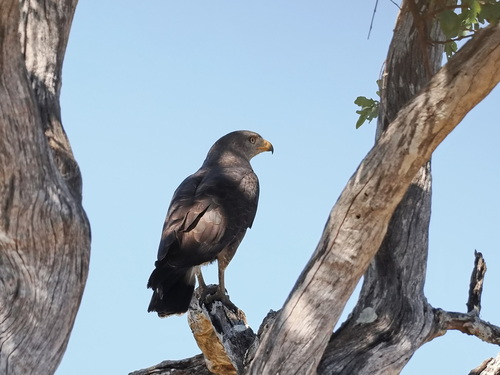 Western Banded Snake-Eagle
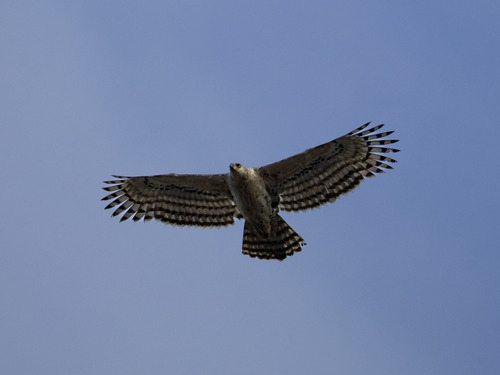 Crowned Eagle
In breve
Il segno di campo più affidabile per separare il Western Banded Snake-Eagle dal Crowned Eagle—specialmente negli uccelli immaturi—è la dimensione e la struttura complessive: il Crowned Eagle è enormemente più grande e massiccio, con una lunga coda pesantemente barrata e ali più corte, mentre il Western Banded Snake-Eagle è molto più piccolo, con una coda più corta e più compatto. Le piume giovanili possono sovrapporsi in alcune caratteristiche chiare e striate, ma i giovani Crowned Eagle mostrano una testa e parti inferiori sorprendentemente bianche con macchie nere audaci sulle cosce, e una coda molto più lunga e pesantemente barrata. In vista da posato o in volo, la massa e le proporzioni del Crowned Eagle sono inconfondibili rispetto al compatto, con testa grande e coda corta del Western Banded Snake-Eagle. L'habitat può anche aiutare: il Crowned Eagle predilige le foreste dense, mentre il Western Banded Snake-Eagle si trova più spesso in boschi aperti o al margine delle foreste.
Consigli di identificazione
- La dimensione è il primo controllo: il Crowned Eagle è enorme—se l'uccello appare grande quanto un Martial Eagle o molto più grande di un buzzard, non è un Western Banded Snake-Eagle. Usa questo specialmente quando è posato o con altri rapaci per scala.
- Lunghezza e barratura della coda: il Crowned Eagle ha una coda molto lunga con tre o più audaci barre chiare e una punta nera stretta, visibile in volo e quando è posato. La coda del Western Banded Snake-Eagle è corta e priva di tale pesante barratura.
- Forma dell'ala in volo: il Crowned Eagle ha ali relativamente corte e larghe per la sua dimensione, facendo sembrare la coda ancora più lunga. Le ali del Western Banded Snake-Eagle sono proporzionalmente più lunghe e più strette per il suo corpo compatto, e la coda è sempre corta.
- Parti inferiori giovanili: il giovane Crowned Eagle è bianco sotto con macchie nere audaci su cosce e gambe; i giovani Western Banded Snake-Eagle sono bianchi sotto con striature marroni chiare, principalmente sul ventre e sulle cosce, mai con macchie nere audaci.
- Schiena e copritrici superiori delle ali: il giovane Crowned Eagle mostra un effetto squamato sulla schiena e sulle copritrici superiori delle ali a causa dei bordi delle piume chiare; i giovani Western Banded Snake-Eagle hanno parti superiori più chiare e marroni con piume bordate di bianco ma mancano dell'effetto di squamatura forte.
- Testa e petto: il giovane Crowned Eagle ha una testa bianca con possibili macchie scure e un colletto maculato; il Western Banded Snake-Eagle ha una testa, un collo e un petto striati di scuro.
- Piumaggio adulto: entrambi gli adulti sono più scuri, ma il Crowned Eagle è sempre più massiccio, con una costruzione più potente, e la lunga coda barrata è diagnostica. Gli adulti Western Banded Snake-Eagle possono essere tutti grigio-marrone scuro sotto (subadulti) o striati, ma mai così massicci o con coda lunga.
- Colore degli occhi e delle gambe: il Western Banded Snake-Eagle ha occhi, orecchie e gambe gialli; il giovane Crowned Eagle ha piedi gialli opachi e colore degli occhi variabile (khaki a ocra gialla), ma questo è sottile e non affidabile a distanza.
- Cresta: il Western Banded Snake-Eagle è descritto come avente un 'petto crestato', ma il Crowned Eagle è anche noto per una cresta prominente; questo non è un forte separatore.
- Habitat: il Crowned Eagle è quasi sempre in foreste dense o boschi ripariali; il Western Banded Snake-Eagle preferisce boschi più aperti e margini forestali. Usa questo contesto se il piumaggio è ambiguo.
- Comportamento: il Crowned Eagle è riservato, spesso posato in foreste profonde o che vola in alto; il Western Banded Snake-Eagle è più probabile da vedere posato apertamente al margine della foresta o in boschi aperti.
- Volo: il volo del Crowned Eagle è potente e pesante, con battiti d'ala lenti e profondi e una lunga coda che segue; il Western Banded Snake-Eagle è più leggero e compatto in volo.
- Confusione con altre specie: il giovane Crowned Eagle può essere confuso con il giovane Martial Eagle, ma non con il Western Banded Snake-Eagle a causa delle differenze di dimensione e modello di coda.
- Subadulto Western Banded Snake-Eagle: può apparire tutto scuro sotto, il che potrebbe confondere con un adulto Crowned Eagle a distanza, ma la coda corta e la piccola dimensione li separano comunque.
- Nessuna forte differenza vocale notata nelle fonti: usa segni visivi e strutturali per la separazione.
Taglia
Il Crowned Eagle è enormemente più grande del Western Banded Snake-Eagle, con una massa corporea adulta di circa 3673,5 g [wikidata] rispetto al molto più leggero snake-eagle (nessuna massa fornita, ma lunghezza 50-58 cm, apertura alare 120-134 cm [wikipedia]). Il Crowned Eagle è uno dei rapaci più pesanti dell'Africa, apparendo estremamente robusto e potente, mentre il Western Banded Snake-Eagle è di dimensioni medie e molto più leggero nella costruzione. Sul campo, la dimensione del Crowned Eagle è immediatamente evidente, specialmente quando è posato o in volo.
Piumaggio
Le piume giovanili e immature sono fondamentali per la separazione:
- Giovane Crowned Eagle: testa e parti inferiori sorprendentemente bianche, con macchie nere audaci su cosce e gambe. La schiena è marrone chiaro o grigio-marrone con bordi di piume chiari, spesso dando un aspetto squamato, specialmente sulle copritrici superiori delle ali. La coda è lunga, nera con tre barre chiare e una punta nera stretta. Alcuni giovani sono così pesantemente striati che possono essere scambiati per uccelli più grandi, ma la lunga coda pesantemente barrata e le ali corte sono sempre presenti. Il cere è grigio, i piedi gialli opachi e il colore degli occhi variabile. [wikipedia]
- Giovane Western Banded Snake-Eagle: parti superiori più chiare e marroni rispetto agli adulti, con piume bordate di bianco. La testa, il collo e il petto sono striati di scuro; le parti inferiori sono bianche con striature marroni chiare, principalmente sul ventre e sulle cosce. I subadulti possono essere tutti grigio-marrone scuro senza striature sotto. Gli occhi, le orecchie e le gambe sono gialli. La coda è corta e non pesantemente barrata. [wikipedia]
Gli adulti di entrambe le specie sono più scuri, ma il Crowned Eagle appare sempre più massiccio, con una coda più lunga e pesantemente barrata e ali più corte, mentre il Western Banded Snake-Eagle è più compatto, con una testa grande e coda corta.
Comportamento
Il Crowned Eagle è un potente cacciatore forestale riservato, spesso visto posato silenziosamente nella densa chioma o che vola sopra le foreste. È noto per la sua forza e capacità di catturare prede grandi. Il Western Banded Snake-Eagle è più spesso visto posato apertamente in boschi o al margine della foresta, a caccia di serpenti e altre piccole prede. Il suo comportamento è meno riservato e raramente vola in alto come il Crowned Eagle.
Habitat
Il Crowned Eagle è uno specialista delle foreste dense e dei boschi ripariali, specialmente nell'Africa sub-sahariana orientale e centrale. Evita il paese aperto. Il Western Banded Snake-Eagle preferisce boschi aperti, margini forestali e habitat fluviali, e non si trova tipicamente in foreste profonde. Se vedi un grande aquila in una foresta fitta, è molto più probabile che sia un Crowned Eagle; in boschi aperti, il Western Banded Snake-Eagle è la scommessa migliore.
Western Banded Snake-Eagle · Crowned Eagle · I miei uccelli difficili