
Motmot

Oca delle nevi vs Canada Jay

Anser caerulescens contro Perisoreus canadensis

Fai un quiz con Oca delle nevi e Canada Jay
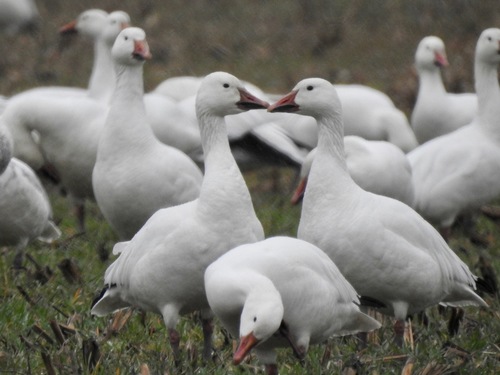
Oca delle nevi (Anser caerulescens) Oca delle nevi
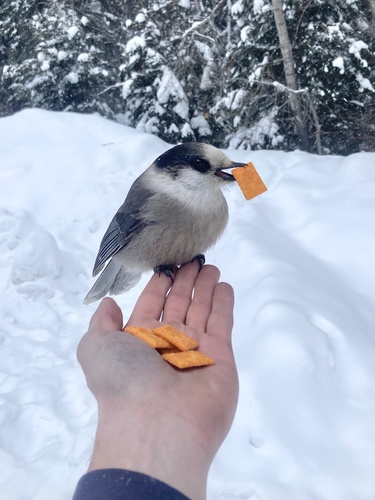
Canada Jay (Perisoreus canadensis) Canada Jay

Media

Caricamento…

In breve

The most reliable way to separate Snow Goose from Canada Jay is by overall structure and size: Snow Goose is a large, heavy-bodied waterfowl with a long neck and pink bill, while Canada Jay is a much smaller, short-billed, round-headed songbird. In flight or at rest, Snow Goose (including both white and blue morphs) shows either all-white plumage with black wingtips or a mix of bluish-gray and white, whereas Canada Jay is always gray and white, never pure white or blue-gray. Juvenile Canada Jays are uniformly dark gray, which could briefly confuse a distant observer, but their size and jizz are completely different from any goose. Bill shape and leg color are also strong clues. Even at a distance, the context—open wetlands for Snow Goose versus boreal forest for Canada Jay—will usually clarify any confusion.

Consigli di identificazione

  1. Size is decisive: Snow Goose is a large waterfowl, Canada Jay is a small songbird. Even at a distance, the size gap is huge.
  2. Bill shape: Snow Goose has a long, pink bill with a black 'grin patch' (cutting edge); Canada Jay has a short, stubby, all-black bill.
  3. Leg color: Snow Goose has rose-red legs (duller in immatures), Canada Jay has black legs and feet.
  4. Plumage (adult): White-morph Snow Goose is all white with black wingtips; blue-morph is bluish-gray with white head/neck/tail tip. Canada Jay is never pure white or blue-gray, always gray and white with a distinct white face and dark nape.
  5. Plumage (juvenile): Juvenile Snow Goose (blue morph) is slate-gray with little white, but still goose-shaped; juvenile Canada Jay is uniformly dark gray, smaller, and rounder.
  6. Wing pattern in flight: Snow Goose (all ages) shows black primaries contrasting with white or gray upperwing; Canada Jay has no black wingtips, just uniform gray wings with paler tips.
  7. Head pattern: Canada Jay has a white face and forehead with a dark nape/hood; Snow Goose (white morph) has an all-white head, sometimes stained rusty, blue morph has white only on head/neck.
  8. Tail: Snow Goose has a short, broad tail (white or with white tip); Canada Jay has a long, rounded, gray tail with pale tips.
  9. Behavior: Snow Geese are seen in large, noisy flocks in open areas; Canada Jays are solitary or in small groups, moving quietly through trees.
  10. Habitat: Snow Goose prefers open wetlands and fields; Canada Jay is found in dense boreal or subalpine forest.
  11. Voice: Snow Goose gives loud honks; Canada Jay gives soft whistles, clicks, and chatters, sometimes mimicking other species.
  12. Feeding: Snow Goose grazes on the ground; Canada Jay often perches, caches food, and forages in trees.
  13. Context: If the bird is with ducks or geese, it's likely a Snow Goose; if with chickadees or other jays, it's likely a Canada Jay.
  14. Flock size: Large groups suggest Snow Goose; solitary or pairs suggest Canada Jay.
  15. Seasonal confusion: Juvenile/immature plumages may cause confusion at a distance, but structure and habitat will clarify the ID.

Taglia

Snow Goose is vastly larger than Canada Jay. Adult Snow Goose averages about 2630 g in mass [wikidata], with a length of 64–79 cm and a wingspan of 135–165 cm [wikipedia]. Canada Jay, by contrast, is a medium-sized songbird weighing only 65–70 g, with a length of 25–33 cm and a wingspan around 45 cm [wikipedia]. Even a juvenile Snow Goose dwarfs the largest Canada Jay; there is no overlap in size. If you see the bird near other species for scale, this difference is unmistakable.

Piumaggio

Juvenile and immature plumages are most likely to cause confusion in poor light or at great distance. Juvenile Snow Geese in the blue morph are drab or slate-gray, lacking the white head and belly of adults, but still have a goose-like shape and blackish wingtips in flight. White-morph juveniles are mostly white with dark wingtips. Canada Jay juveniles are uniformly dark gray all over, lacking any white on the head or belly, and quickly molt into the adult pattern by late summer. Adult Snow Geese (white morph) are bright white with black wingtips; blue morph adults are mostly bluish-gray with white on the head, neck, and tail tip. Canada Jays (adults) have a white face and forehead, gray nape/hood, and medium gray upperparts with paler underparts. Unlike Snow Goose, Canada Jay never shows pure white wings or black wingtips. Both species can show some head staining (rusty on Snow Goose from soil, not present on Canada Jay). Leg and bill color also differ: Snow Goose has pink bill and rose-red legs (duller in immatures), while Canada Jay has a short black bill and black legs.

Comportamento

Snow Goose is a flocking waterfowl, usually seen in large groups, especially when feeding or migrating. They walk or graze in open fields and marshes, and are strong, direct fliers. Canada Jay is a solitary or small-group bird, often seen hopping among branches, gliding between trees, or perching quietly in conifers. It is inquisitive, sometimes approaching humans for food, and rarely if ever seen in large flocks. Their flight is buoyant and undulating, typical of corvids, and they spend much time perched or moving through dense forest rather than open ground.

Habitat

Snow Goose is found in open habitats: wetlands, lakes, marshes, and agricultural fields, especially during migration and winter. They are rarely found in forests. Canada Jay, on the other hand, is strictly a bird of boreal and subalpine forests, especially coniferous woods, and is seldom seen in open fields or wetlands. If you see a bird in a dense northern forest, it is almost certainly a Canada Jay; in open marshes or fields, especially with water, Snow Goose is the likely candidate.

Voce

Snow Goose is extremely vocal, with loud honking calls that can carry for over a mile, often heard from flocks in flight or on the ground. Canada Jay has a much softer, more varied voice: whistled quee-oo, clicks, chuckles, and a wide range of mimicked sounds, but never the loud, carrying honk of a goose. If you hear a chorus of honks, it's Snow Goose; if you hear quiet whistles or chatters in the woods, it's Canada Jay.

Invia una descrizione migliore

Usa le stesse sezioni del confronto. Il testo viene pubblicato subito.

The most reliable way to separate Snow Goose from Canada Jay is by overall structure and size: Snow Goose is a large, heavy-bodied waterfowl with a long neck and pink bill, while Canada Jay is a much smaller, short-billed, round-headed songbird. In flight or at rest, Snow Goose (including both white and blue morphs) shows either all-white plumage with black wingtips or a mix of bluish-gray and white, whereas Canada Jay is always gray and white, never pure white or blue-gray. Juvenile Canada Jays are uniformly dark gray, which could briefly confuse a distant observer, but their size and jizz are completely different from any goose. Bill shape and leg color are also strong clues. Even at a distance, the context—open wetlands for Snow Goose versus boreal forest for Canada Jay—will usually clarify any confusion.

  1. Size is decisive: Snow Goose is a large waterfowl, Canada Jay is a small songbird. Even at a distance, the size gap is huge.
  2. Bill shape: Snow Goose has a long, pink bill with a black 'grin patch' (cutting edge); Canada Jay has a short, stubby, all-black bill.
  3. Leg color: Snow Goose has rose-red legs (duller in immatures), Canada Jay has black legs and feet.
  4. Plumage (adult): White-morph Snow Goose is all white with black wingtips; blue-morph is bluish-gray with white head/neck/tail tip. Canada Jay is never pure white or blue-gray, always gray and white with a distinct white face and dark nape.
  5. Plumage (juvenile): Juvenile Snow Goose (blue morph) is slate-gray with little white, but still goose-shaped; juvenile Canada Jay is uniformly dark gray, smaller, and rounder.
  6. Wing pattern in flight: Snow Goose (all ages) shows black primaries contrasting with white or gray upperwing; Canada Jay has no black wingtips, just uniform gray wings with paler tips.
  7. Head pattern: Canada Jay has a white face and forehead with a dark nape/hood; Snow Goose (white morph) has an all-white head, sometimes stained rusty, blue morph has white only on head/neck.
  8. Tail: Snow Goose has a short, broad tail (white or with white tip); Canada Jay has a long, rounded, gray tail with pale tips.
  9. Behavior: Snow Geese are seen in large, noisy flocks in open areas; Canada Jays are solitary or in small groups, moving quietly through trees.
  10. Habitat: Snow Goose prefers open wetlands and fields; Canada Jay is found in dense boreal or subalpine forest.
  11. Voice: Snow Goose gives loud honks; Canada Jay gives soft whistles, clicks, and chatters, sometimes mimicking other species.
  12. Feeding: Snow Goose grazes on the ground; Canada Jay often perches, caches food, and forages in trees.
  13. Context: If the bird is with ducks or geese, it's likely a Snow Goose; if with chickadees or other jays, it's likely a Canada Jay.
  14. Flock size: Large groups suggest Snow Goose; solitary or pairs suggest Canada Jay.
  15. Seasonal confusion: Juvenile/immature plumages may cause confusion at a distance, but structure and habitat will clarify the ID.

Snow Goose is vastly larger than Canada Jay. Adult Snow Goose averages about 2630 g in mass [wikidata], with a length of 64–79 cm and a wingspan of 135–165 cm [wikipedia]. Canada Jay, by contrast, is a medium-sized songbird weighing only 65–70 g, with a length of 25–33 cm and a wingspan around 45 cm [wikipedia]. Even a juvenile Snow Goose dwarfs the largest Canada Jay; there is no overlap in size. If you see the bird near other species for scale, this difference is unmistakable.

Juvenile and immature plumages are most likely to cause confusion in poor light or at great distance. Juvenile Snow Geese in the blue morph are drab or slate-gray, lacking the white head and belly of adults, but still have a goose-like shape and blackish wingtips in flight. White-morph juveniles are mostly white with dark wingtips. Canada Jay juveniles are uniformly dark gray all over, lacking any white on the head or belly, and quickly molt into the adult pattern by late summer. Adult Snow Geese (white morph) are bright white with black wingtips; blue morph adults are mostly bluish-gray with white on the head, neck, and tail tip. Canada Jays (adults) have a white face and forehead, gray nape/hood, and medium gray upperparts with paler underparts. Unlike Snow Goose, Canada Jay never shows pure white wings or black wingtips. Both species can show some head staining (rusty on Snow Goose from soil, not present on Canada Jay). Leg and bill color also differ: Snow Goose has pink bill and rose-red legs (duller in immatures), while Canada Jay has a short black bill and black legs.

Snow Goose is a flocking waterfowl, usually seen in large groups, especially when feeding or migrating. They walk or graze in open fields and marshes, and are strong, direct fliers. Canada Jay is a solitary or small-group bird, often seen hopping among branches, gliding between trees, or perching quietly in conifers. It is inquisitive, sometimes approaching humans for food, and rarely if ever seen in large flocks. Their flight is buoyant and undulating, typical of corvids, and they spend much time perched or moving through dense forest rather than open ground.

Snow Goose is found in open habitats: wetlands, lakes, marshes, and agricultural fields, especially during migration and winter. They are rarely found in forests. Canada Jay, on the other hand, is strictly a bird of boreal and subalpine forests, especially coniferous woods, and is seldom seen in open fields or wetlands. If you see a bird in a dense northern forest, it is almost certainly a Canada Jay; in open marshes or fields, especially with water, Snow Goose is the likely candidate.

Snow Goose is extremely vocal, with loud honking calls that can carry for over a mile, often heard from flocks in flight or on the ground. Canada Jay has a much softer, more varied voice: whistled quee-oo, clicks, chuckles, and a wide range of mimicked sounds, but never the loud, carrying honk of a goose. If you hear a chorus of honks, it's Snow Goose; if you hear quiet whistles or chatters in the woods, it's Canada Jay.

Scartare le modifiche?

Hai modifiche non salvate. Se esci ora, andranno perse.

Oca delle nevi · Canada Jay · I miei uccelli difficili