

Snail Kite vs Red-shouldered Hawk
Rostrhamus sociabilis contro Buteo lineatus
Fai un quiz con Snail Kite e Red-shouldered Hawk
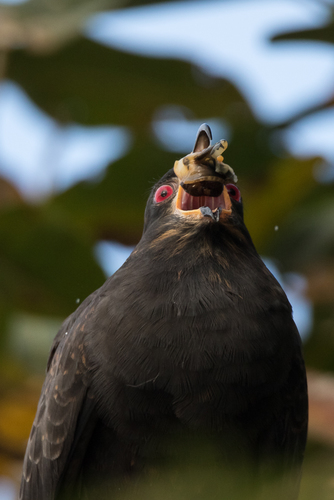 Snail Kite
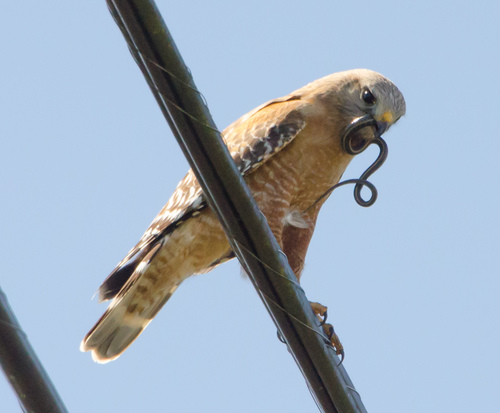 Red-shouldered Hawk
In breve
Il segno distintivo più affidabile tra Snail Kite e Red-shouldered Hawk è il becco: Snail Kite mostra un becco lungo, sottile e profondamente ricurvo, adattato per estrarre le lumache, mentre Red-shouldered Hawk ha un becco tipico dei buteo, più corto e meno curvo. In volo, i giovani Red-shouldered Hawks mostrano segni chiari a forma di mezzaluna sulle primarie, che mancano nei Snail Kites. I Snail Kites sono complessivamente più snelli, con ali più lunghe e strette e una lunga coda con un posteriore bianco e copritrici della coda, mentre i Red-shouldered Hawks sono più robusti, con ali più larghe e una coda contrassegnata da bande bianche strette. Il piumaggio adulto è anche distinto: i maschi di Snail Kite sono di un blu-grigio scuro, le femmine e i giovani sono marroni con parti inferiori striate, mentre i Red-shouldered Hawks hanno parti inferiori barrate di rosso e una testa marrone. Entrambe le specie possono trovarsi nelle paludi della Florida, ma la loro struttura, stile di volo e forma del becco sono costantemente diversi.
Consigli di identificazione
- Bill shape: Snail Kite ha un becco lungo, sottile e profondamente ricurvo (adattato per le lumache), visibile anche da lontano; il becco di Red-shouldered Hawk è più corto, più spesso e meno curvo, tipico dei buteo. Questo è diagnostico in tutte le età e sessi.
- Flight silhouette: Snail Kite è snello, con ali lunghe, strette e arrotondate e una lunga coda a punta quadrata. Red-shouldered Hawk è più robusto, con ali più larghe e una coda che appare più corta e più arrotondata in proporzione.
- White rump and undertail: Snail Kite (tutte le età) mostra un posteriore e copritrici della coda bianchi prominenti in volo, particolarmente evidenti da dietro o sotto. Red-shouldered Hawk non mostra mai un posteriore bianco; la sua coda è scura con bande bianche strette.
- Tail pattern: Red-shouldered Hawk (tutte le età) ha una coda con diverse bande bianche strette; la coda di Snail Kite è semplicemente scura con una base bianca (posteriore/coda), priva di bande.
- Juvenile upperwing: I giovani Red-shouldered Hawks mostrano segni chiari a forma di mezzaluna sulle primarie dell'ala superiore in volo, una chiave di separazione dai giovani Snail Kite, che mancano di queste mezzalune e hanno ali più uniformi.
- Adult male plumage: Il maschio adulto di Snail Kite è di un blu-grigio scuro complessivo, unico tra i rapaci nordamericani. Gli adulti di Red-shouldered Hawk non sono mai di questo colore; sono marroni sopra con parti inferiori barrate di rosso.
- Adult female/juvenile plumage: Le femmine e i giovani Snail Kites sono marroni sopra, pesantemente striati sotto, con un volto biancastro e una corona striata. I giovani Red-shouldered Hawk sono più chiari sotto con striature marroni ma mancano del motivo facciale e hanno una struttura più robusta, simile ai buteo.
- Leg color: Il maschio adulto di Snail Kite ha gambe e cere rosse; le femmine hanno gambe gialle/arancioni. Red-shouldered Hawk ha gambe gialle lunghe in tutti i piumaggi, ma questo è meno affidabile a distanza.
- Flight style: Snail Kite vola lentamente, spesso planando con la testa in giù, cercando lumache. Red-shouldered Hawk ha un volo più costante e potente, con battiti e planate più frequenti.
- Perched posture: Snail Kite si posa più in basso, spesso su canne o tronchi bassi nelle paludi, con una postura più snella e eretta. Red-shouldered Hawk si posa più in alto, spesso sugli alberi, e appare più robusto.
- Habitat: Snail Kite si trova quasi sempre in paludi aperte con lumache di mela; Red-shouldered Hawk si trova in aree boschive o forestali, spesso vicino all'acqua ma raramente in paludi aperte.
- Group size: I Snail Kites sono spesso visti in gruppi, specialmente al di fuori della stagione di riproduzione. I Red-shouldered Hawks sono solitamente solitari o in coppie.
- Iris color: I Snail Kites adulti hanno iridi rosse o marrone-arancioni; i giovani hanno iridi marroni scure. Il colore dell'iride di Red-shouldered Hawk non è distintivo per la separazione.
- Sexual dimorphism: Entrambe le specie mostrano un dimorfismo sessuale limitato, ma la dimensione da sola non è affidabile per la separazione.
- Vocalization: Non diagnostico per la separazione basata sulle note disponibili.
Taglia
Red-shouldered Hawk è notevolmente più grande e pesante, con una media di 625,5 g rispetto ai 420 g di Snail Kite. I Red-shouldered Hawks sono anche più lunghi (maschi 38–58 cm, femmine fino a 61 cm) e hanno un'apertura alare leggermente più ampia (90–127 cm) rispetto a Snail Kite (36–48 cm di lunghezza, 99–120 cm di apertura alare). Sul campo, Snail Kite appare più snello e più galleggiante, mentre Red-shouldered Hawk è più robusto e massiccio, con gambe proporzionalmente più lunghe e un corpo più pesante.
Piumaggio
-
Juvenile/immature birds: I giovani Red-shouldered Hawks hanno un colore complessivo marrone con lunghe code contrassegnate da bande bianche strette e segni chiari a forma di mezzaluna distintivi sulle primarie dell'ala superiore in volo. Le loro parti inferiori sono chiare con striature marroni, ma le mezzalune delle ali e le bande della coda sono chiave. I giovani Snail Kites assomigliano alle femmine adulte: marroni sopra, pesantemente striati chiari sotto, con una corona striata e un posteriore e copritrici della coda bianchi. Mancano delle mezzalune delle ali e hanno un modello di ali più uniforme in volo.
-
Adult males: I maschi di Snail Kite sono di un blu-grigio scuro complessivo con piume di volo più scure, gambe rosse e un posteriore bianco. I Red-shouldered Hawks non mostrano mai questa colorazione; invece, gli adulti hanno una testa marrone, un petto e una pancia barrati di rosso e parti superiori scure con macchie chiare. La coda è sempre a bande.
-
Adult females: Le femmine di Snail Kite sono marroni scure sopra, pesantemente striati sotto, con un volto biancastro e gambe gialle/arancioni. Le femmine di Red-shouldered Hawk assomigliano ai maschi, con barrature rosse e una testa marrone, mancando del posteriore bianco e del motivo facciale del kite.
-
Tail: Entrambe le specie hanno lunghe code, ma quella di Snail Kite è più a punta quadrata e mostra un posteriore e copritrici della coda bianchi prominenti in volo, mentre la coda di Red-shouldered Hawk è più arrotondata e distintamente a bande con barre bianche strette.
Comportamento
I Snail Kites sono gregari e spesso visti in gruppi, specialmente nei dormitori invernali, e volano lentamente con la testa rivolta verso il basso, scandagliando le paludi alla ricerca di lumache. Il loro volo è galleggiante e meno diretto, con ali lunghe e arrotondate e frequenti planate. I Red-shouldered Hawks sono solitamente solitari o in coppie, spesso visti planare o posati in alto sugli alberi. Il loro volo è più potente, con battiti e planate costanti, e spesso vocalizzano mentre volano. I giovani Red-shouldered Hawks hanno uno stile di volo più simile a quello degli Accipiter, rispetto al volo costante, lento e di ricerca del kite.
Habitat
I Snail Kites sono specialisti delle paludi d'acqua dolce con abbondanti lumache di mela, spesso visti sopra paludi, laghi e campi allagati. Sono rari e locali negli Stati Uniti (principalmente in Florida), ma possono essere comuni in habitat adatti in America Centrale e Meridionale. I Red-shouldered Hawks si trovano in una gamma più ampia di habitat boschivi, specialmente vicino all'acqua, comprese paludi, foreste ripariali e aree suburbane. In Florida, entrambe le specie possono trovarsi in habitat umidi, ma Snail Kite è strettamente legato a paludi aperte con lumache, mentre Red-shouldered Hawk preferisce i margini forestali e alberi più grandi.